Artwork
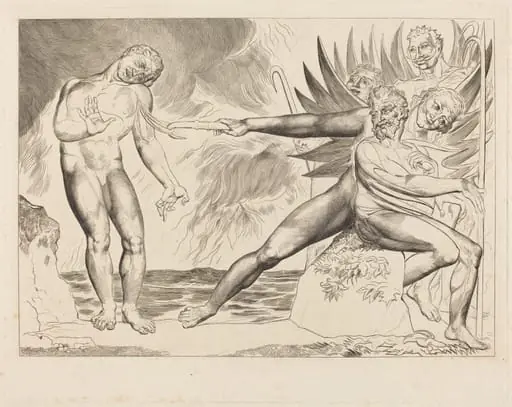
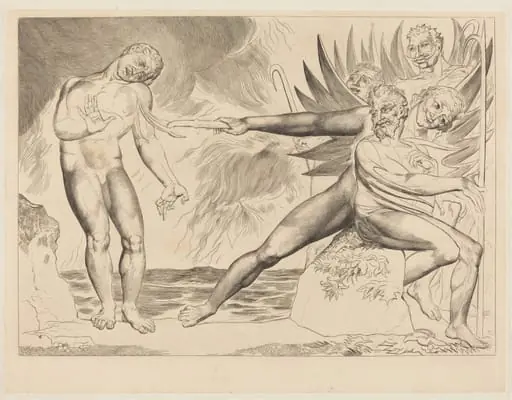
The Circle of the Traitors; Dante's Foot Striking Bocca degli Abbate
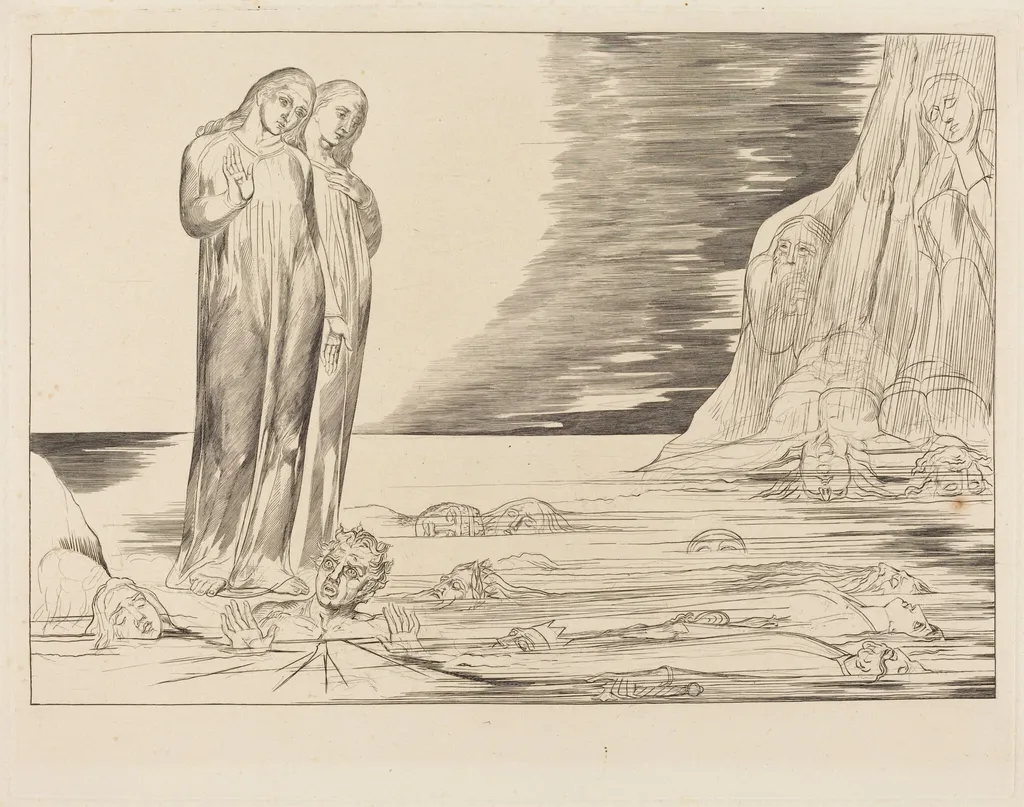
The Circle of the Traitors; Dante's Foot Striking Bocca degli Abbate is an ink print by the Romanticist artist William Blake. It dates from 1827 and is held in the collection of the National Gallery of Art.
About this work
Overview
Created in 1827, this engraving by William Blake is one of his final works, produced as part of a series illustrating Dante’s *Inferno*.
Created in 1827, this engraving by William Blake is one of his final works, produced as part of a series illustrating Dante’s *Inferno*. Executed shortly before his death, it reflects his lifelong commitment to visualizing literary and spiritual themes through printmaking. Blake’s interpretation diverges from literal illustration, instead conveying psychological intensity and moral weight through stark composition and expressive line work.
Subject & Meaning
The scene depicts Dante, in the ninth circle of Hell, striking Bocca degli Abbate, a traitor condemned to eternal torment. Bocca’s contorted body and outstretched limbs signify his punishment for betrayal, while Dante’s raised foot asserts moral judgment. The surrounding figures, frozen in horror, amplify the gravity of treachery as the ultimate sin in Dante’s cosmology. Blake emphasizes inner turmoil over narrative detail, aligning with his belief in spiritual revelation through symbolic action.
Technique & Style
Blake employed intaglio engraving to achieve sharp, linear clarity and dramatic contrast. Deep shadows and bold contours define the figures, enhancing their emotional tension. Textures in fabric and skin are rendered with meticulous precision, yet the overall composition avoids naturalism in favor of symbolic clarity. The dark, claustrophobic space intensifies the scene’s psychological weight, characteristic of Blake’s late style, where form serves inner vision rather than external realism.
History & Provenance
Commissioned by John Linnell, this engraving was among the last works Blake completed before his death in August 1827. It was produced as part of a larger, unfinished project to illustrate Dante’s *Divine Comedy*. Only a small number of impressions were printed during Blake’s lifetime, and the plates remained in his possession until his death. The work entered public collections decades later, gaining recognition as a key example of his visionary printmaking.
Context
Blake’s engagement with Dante emerged during a period when Romantic artists sought to elevate imagination over reason. While contemporaries focused on nature or emotion, Blake turned to medieval allegory to explore moral and spiritual conflict. His illustrations of the *Inferno* reflect neither academic tradition nor popular taste, but a deeply personal synthesis of theology, poetry, and visual symbolism rooted in his own mystical worldview.
Legacy
Though largely overlooked in his lifetime, Blake’s Dante engravings later influenced Symbolist and modernist artists drawn to his fusion of text and image. The *Circle of the Traitors* stands as a testament to his belief that art must convey inner truths beyond surface representation. Today, it is studied as a pivotal work in the history of literary illustration and as a defining expression of Romantic individualism in visual form.
Artist & collection
Artist
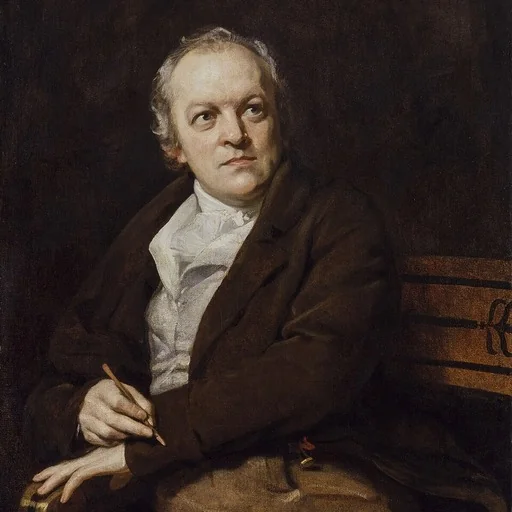
William Blake (28 November 1757 – 12 August 1827) was an English poet, painter and printmaker.

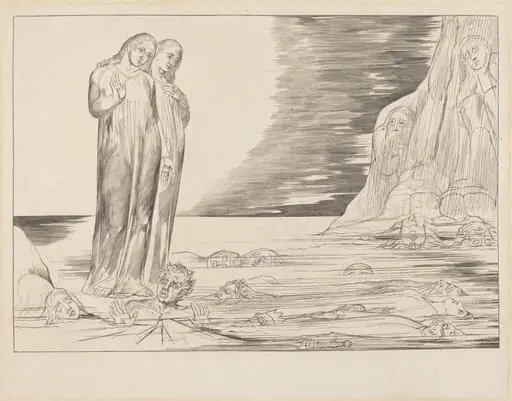 The Circle of the Traitors; Dante's Foot Striking Bocca degli Abbate
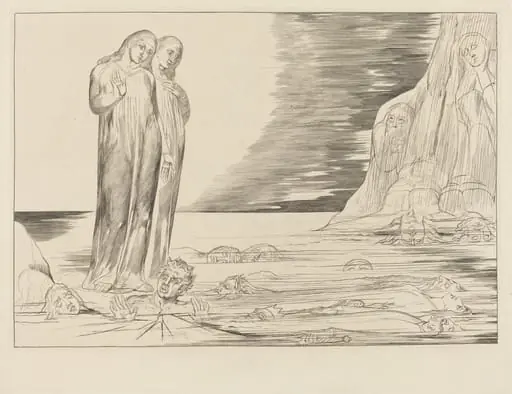 The Circle of the Traitors; Dante's Foot Striking Bocca degli Abbate
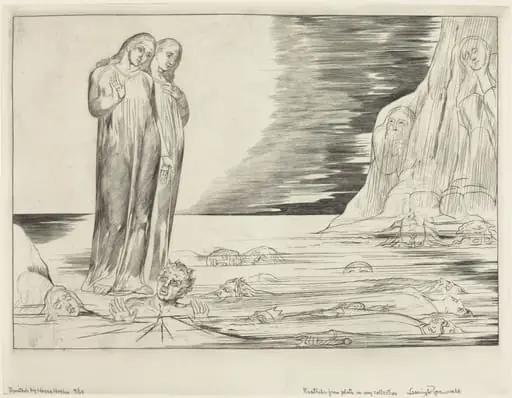 The Circle of the Traitors; Dante's Foot Striking Bocca degli Abbate
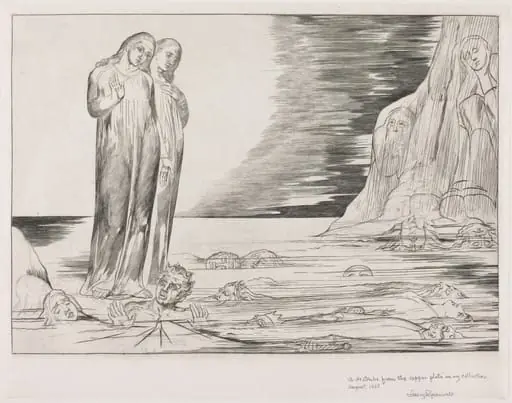 The Circle of the Traitors; Dante's Foot Striking Bocca degli Abbate
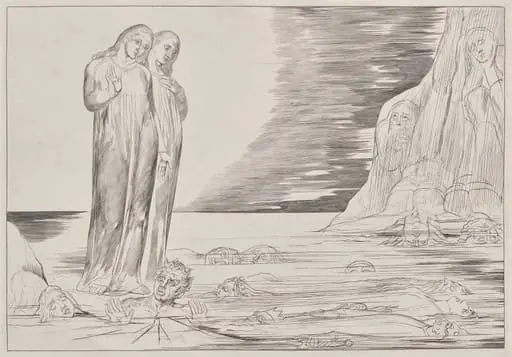 The Circle of the Traitors: Dante's Foot Strriking Bocca degli Abbate, from Dante's Inferno, Canto XXXII Illustration to Dante's The Divine Comedy
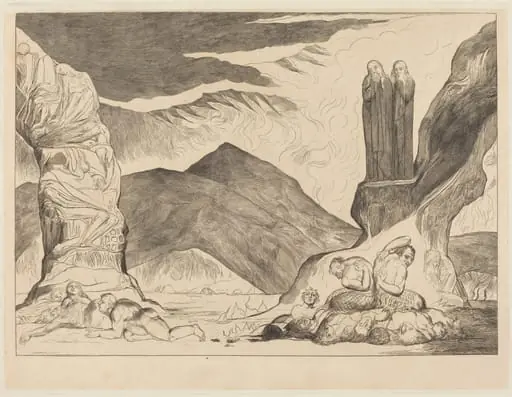 The Circle of the Falsifiers: Dante and Virgil Covering their Noses because of the st
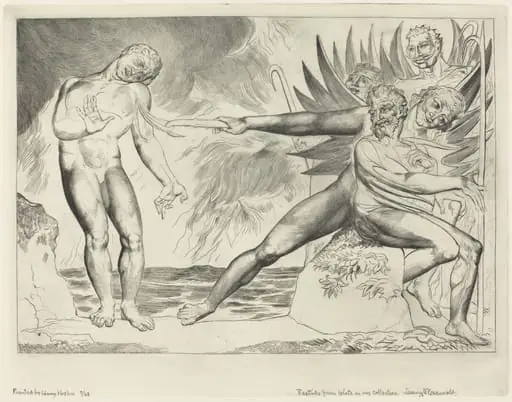 The Circle of the Corrupt Officials; The Devils Tormenting Ciampolo
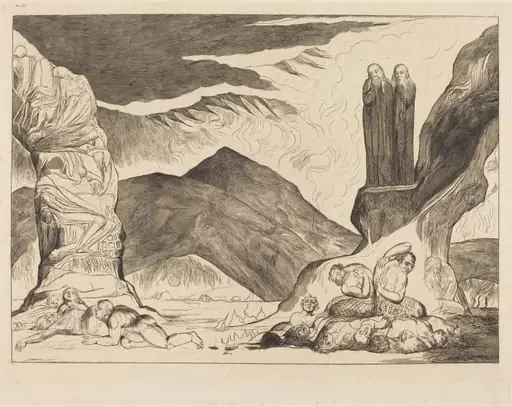 The Circle of the Falsifiers: Dante and Virgil Covering their Noses because of the st
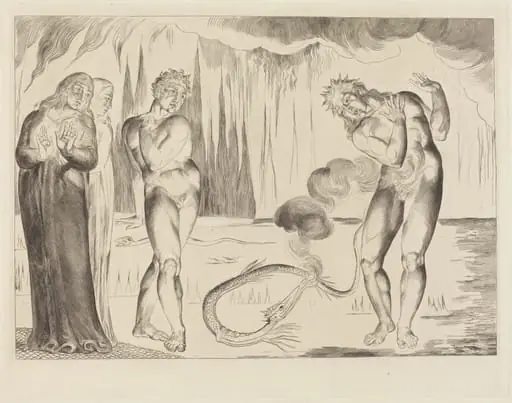 The Circle of the Thieves; Buoso Donati Attacked by the Serpent
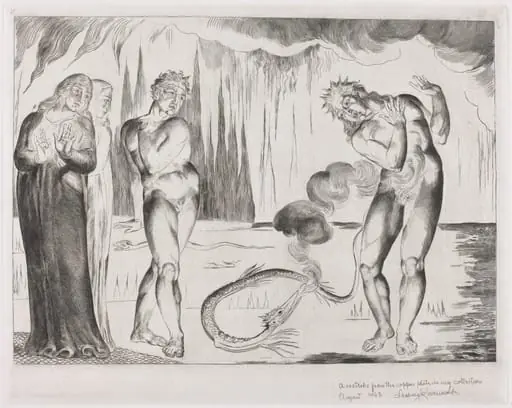 The Circle of the Thieves; Buoso Donati Attacked by the Serpent
 The Circle of the Corrupt Officials; the Devils Tormenting Ciampolo
 The Circle of the Corrupt Officials; the Devils Tormenting Ciampolo