Artwork
Thenot and Colinet
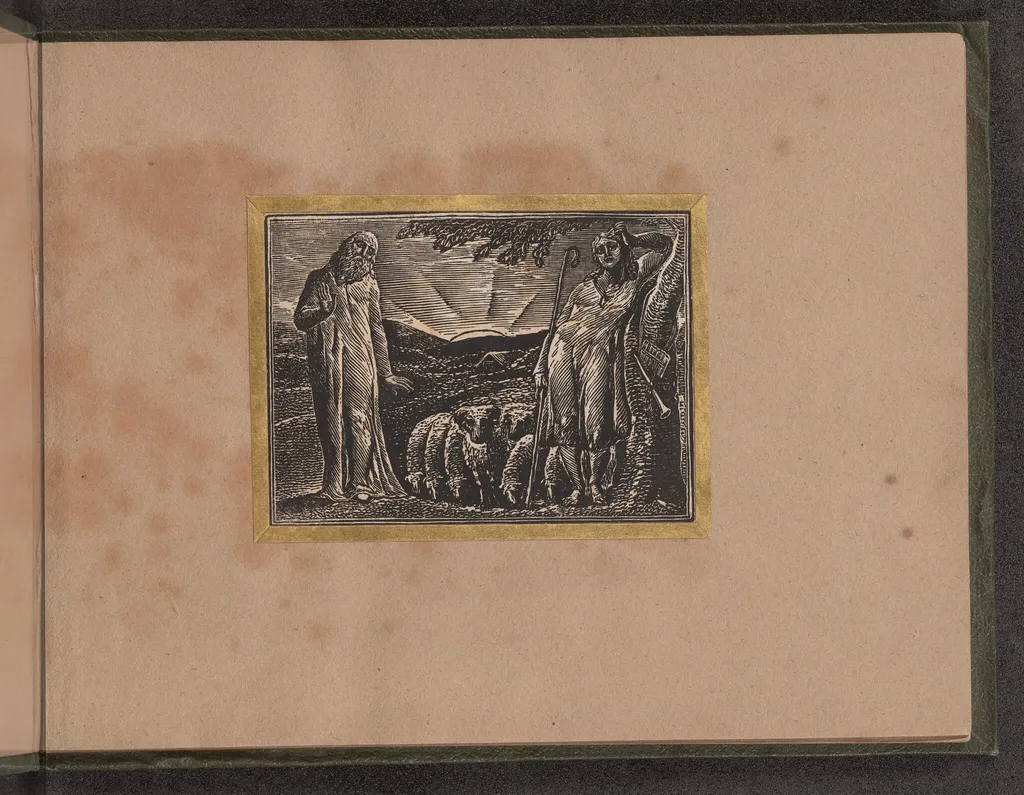
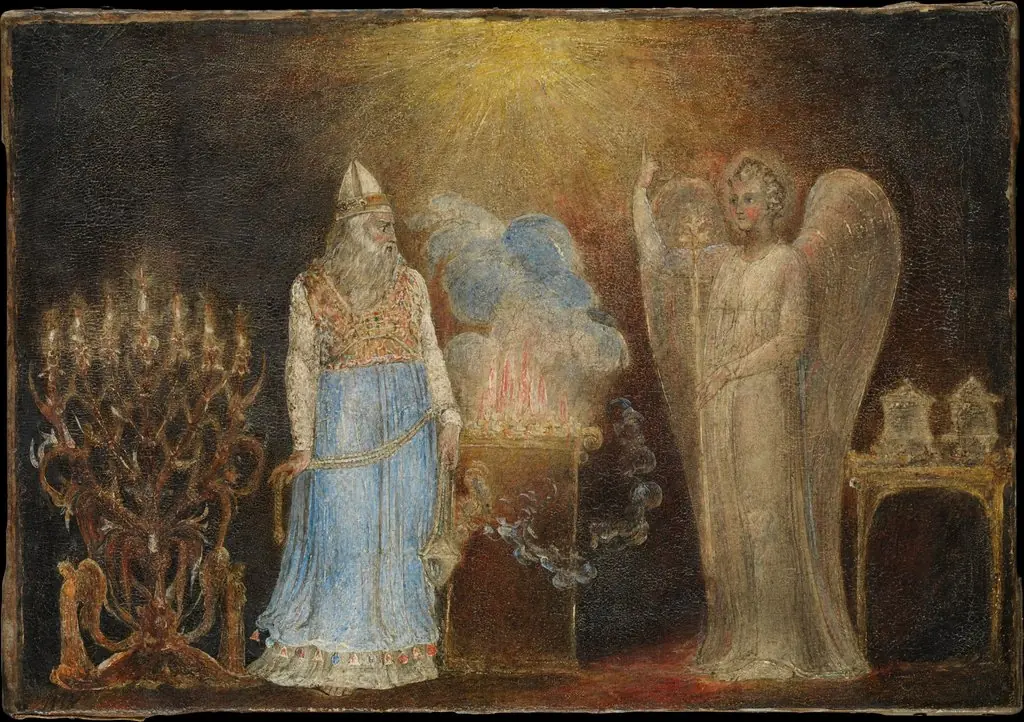
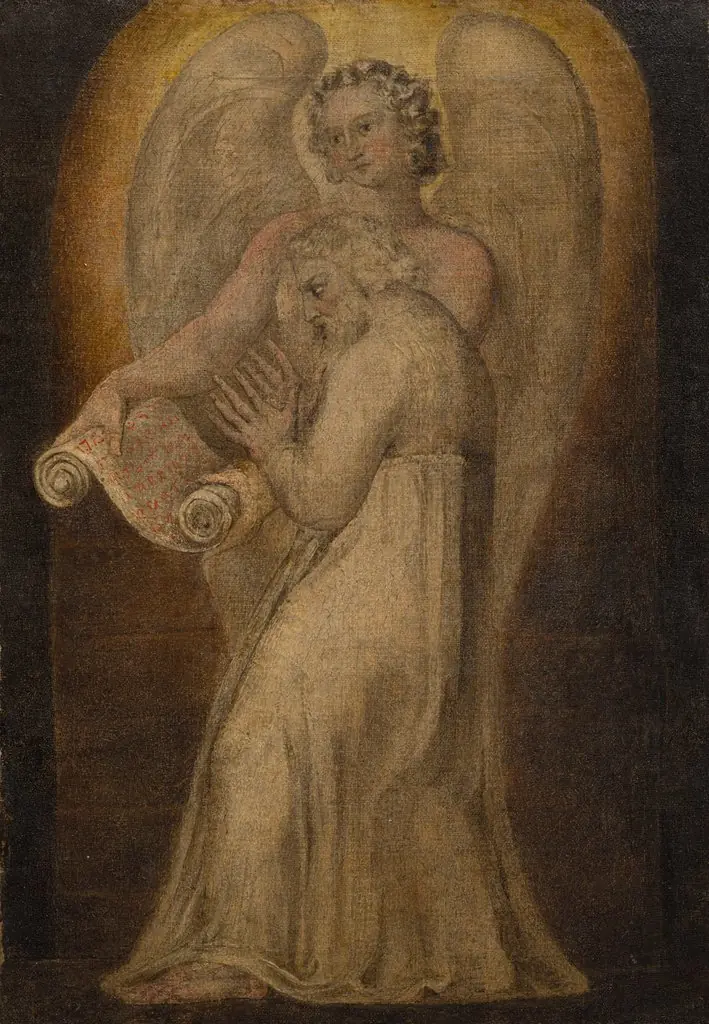
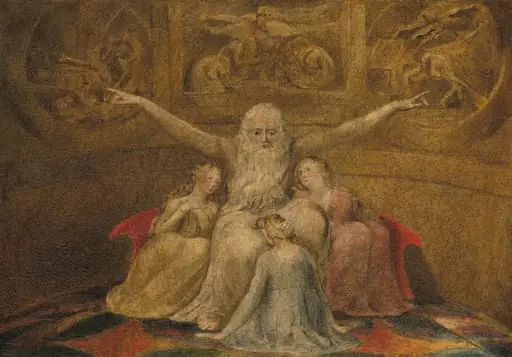
Thenot and Colinet is an ink print by the Romanticist artist William Blake. It dates from 1821 and is held in the collection of the National Gallery of Art.
About this work
Overview
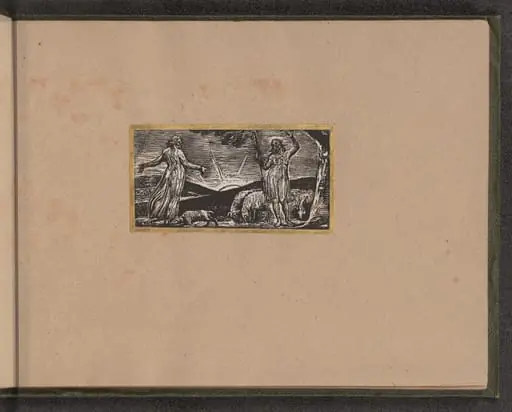
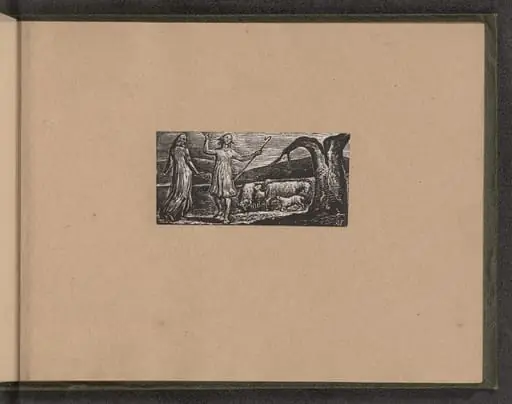
Created in 1821, *Thenot and Colinet* is a black‑and‑white wood engraving by the English poet‑artist William Blake. The print depicts two robed figures standing beside a small flock of sheep within a modest landscape, rendered in stark contrast and fine line work typical of Blake’s printmaking practice.
Subject & Meaning
The composition presents a pair of cloaked individuals, one holding a staff while the other gazes downward, positioned near sheep that suggest a pastoral or biblical motif. The figures’ gestures and the tranquil setting invite contemplation of guidance, humility, or spiritual shepherding, themes recurrent in Blake’s symbolic visual language.
Technique & Style
Blake employed traditional wood engraving methods, incising the design into a block of wood and using cross‑hatching to achieve tonal variation. The precise, angular lines generate depth and texture, while the monochrome palette reflects the pre‑color‑printing era’s reliance on line and shade to convey form and atmosphere.
History & Provenance
Although Blake’s prints were largely overlooked during his lifetime, *Thenot and Colinet* later entered scholarly attention as part of his broader oeuvre that bridges poetry and visual art. The work now resides in collections that document Blake’s contributions to Romantic‑era illustration and print culture.
Artist & collection
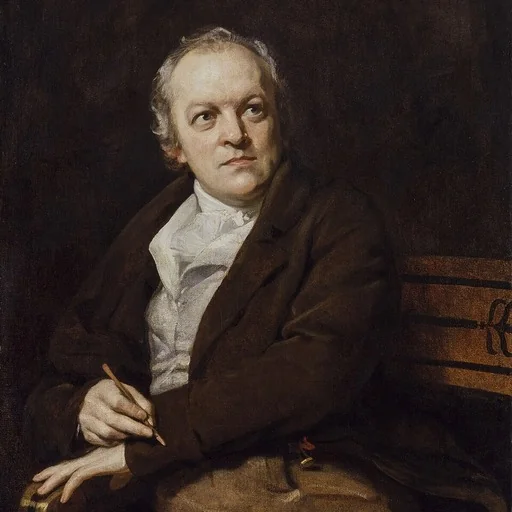
Artist
William Blake (28 November 1757 – 12 August 1827) was an English poet, painter and printmaker.