Artwork
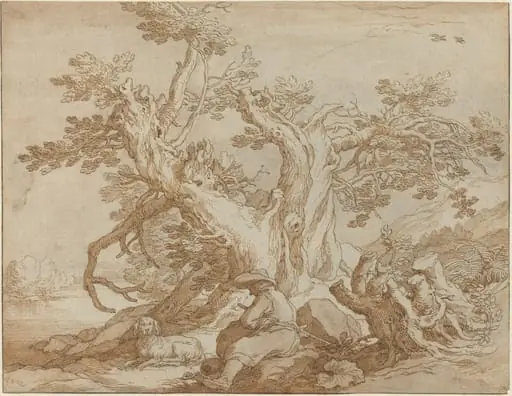
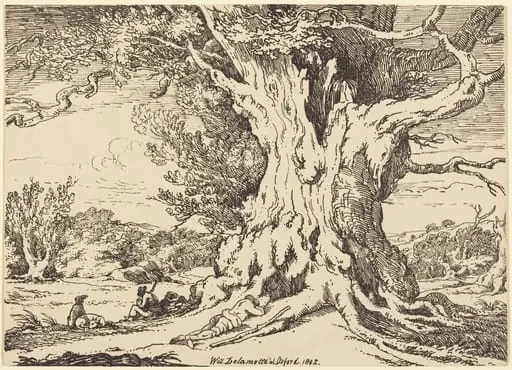
A Man and His Dog Resting by a Great Tree
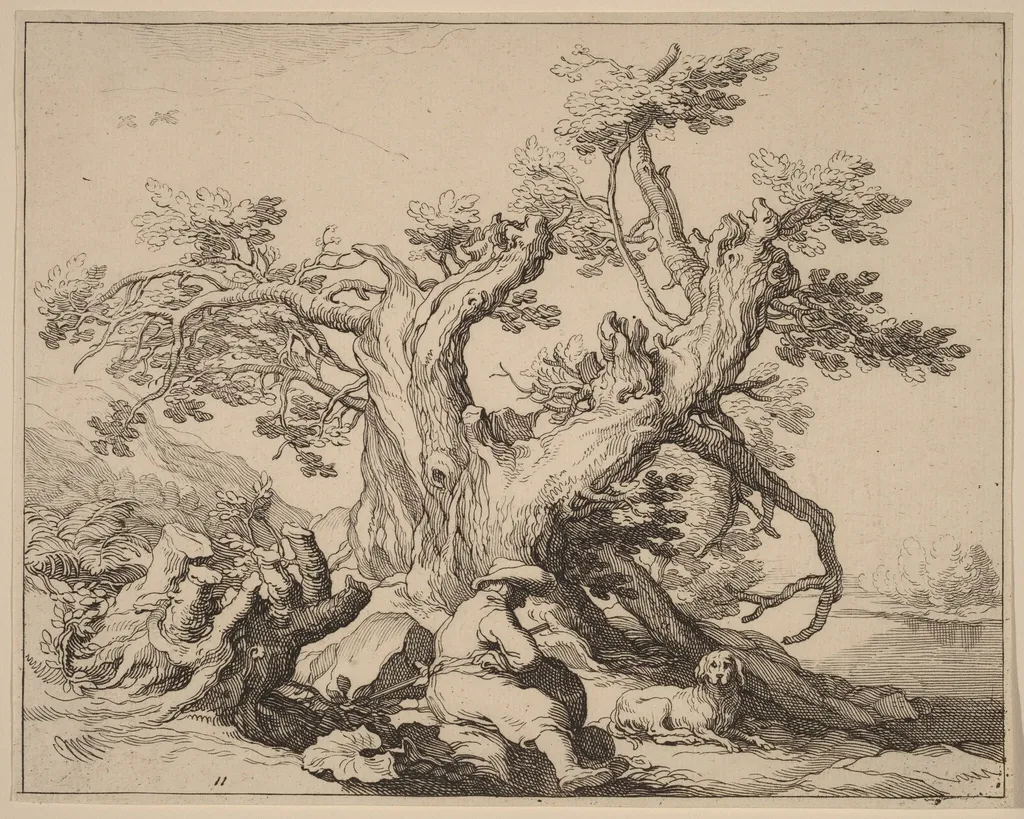
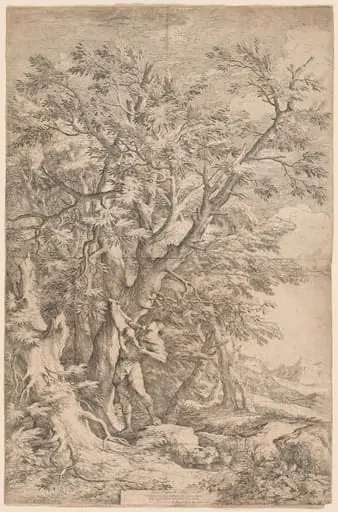
A Man and His Dog Resting by a Great Tree is an ink print by the Baroque artist Frederick Bloemaert. It dates from 1635 and is held in the collection of the National Gallery of Art.
About this work
Overview
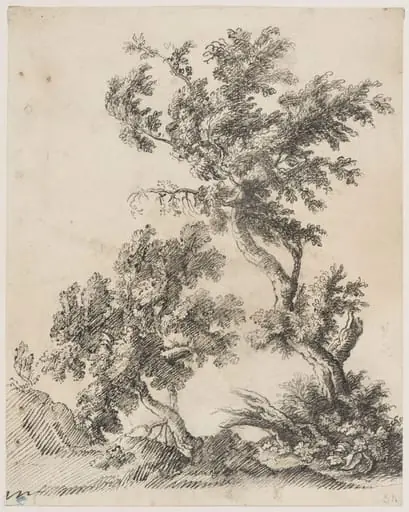
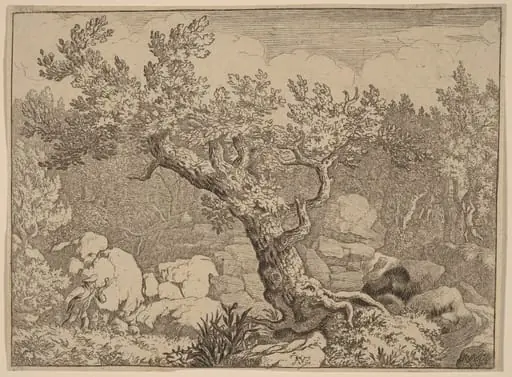
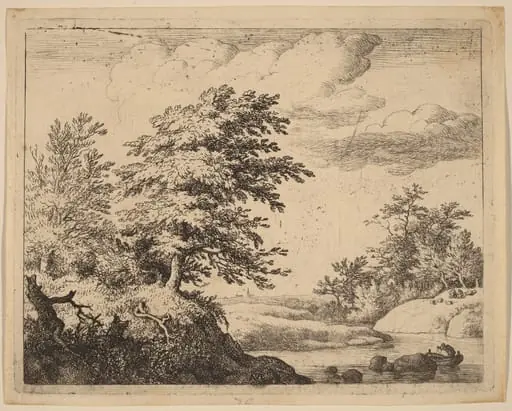
Frederick Bloemaert’s etching, dated around 1635, portrays a solitary figure reclining beneath an expansive, spreading tree. A dog lies close at his side, both appearing weary. The composition fills the sheet with the tree’s massive canopy and tangled roots, creating a dominant natural backdrop for the quiet scene.
Subject & Meaning
The work captures a moment of rest and contemplation, the man’s indistinct facial features suggesting introspection or a lapse into reverie. The dog’s presence reinforces themes of companionship and shared fatigue, while the enveloping tree may symbolize shelter or the passage of time.
Technique & Style
Executed as an etching on laid paper, Bloemaert employs delicate line work and nuanced shading to render the bark’s texture and the foliage’s volume. The gradations of tone give the tree a solid, three‑dimensional presence, and the soft focus on the figure’s face demonstrates a subtle handling of atmospheric effect.
History & Provenance
Created in the early seventeenth century, the print is part of Bloemaert’s broader output of narrative and genre scenes. It has survived in several impressions, circulating among collectors of Dutch printmaking, though specific ownership records prior to the nineteenth century remain sparse.
Context
Bloemaert worked within the Dutch Golden Age, a period marked by detailed realism and an interest in everyday subjects. This etching reflects contemporary tastes for pastoral tranquility and the technical experimentation with line and tone that characterized the era’s print workshops.
Legacy
The image exemplifies Bloemaert’s skill in translating complex natural forms into the linear language of etching. It continues to be referenced in studies of early modern print techniques and the representation of human‑animal relationships in Dutch art.
Artist & collection