Artwork
Man between Two Fir Trees
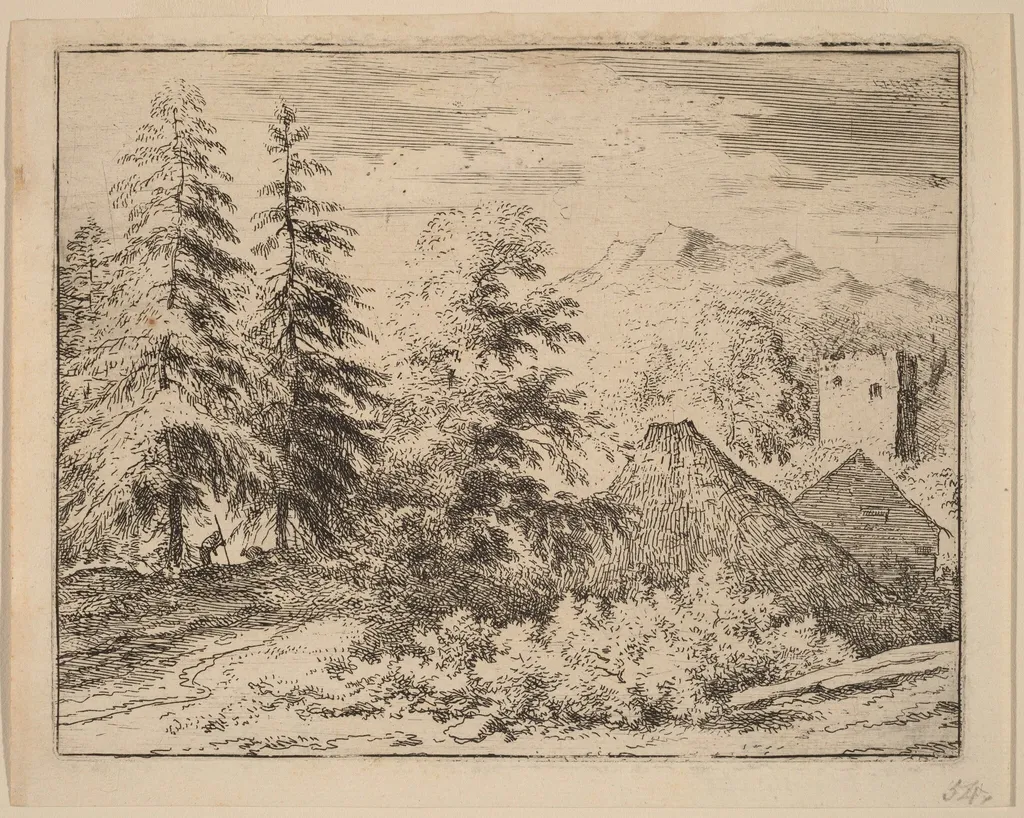
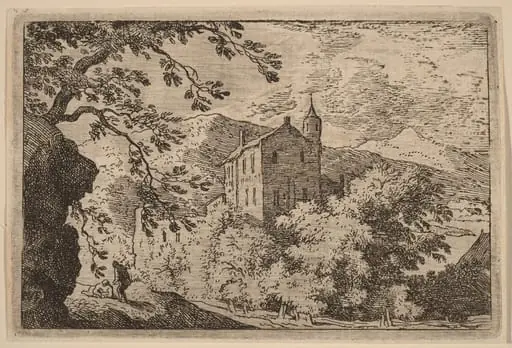
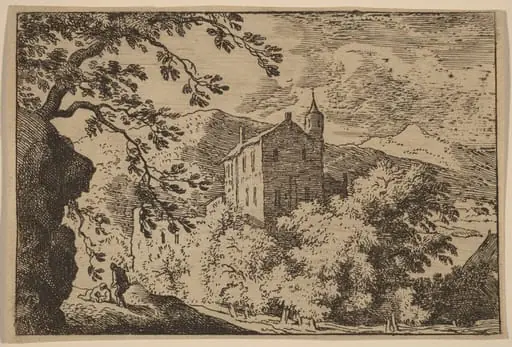
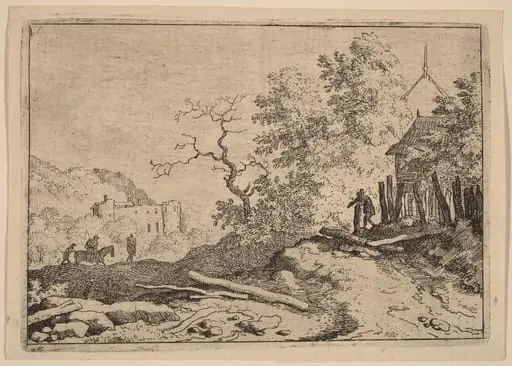
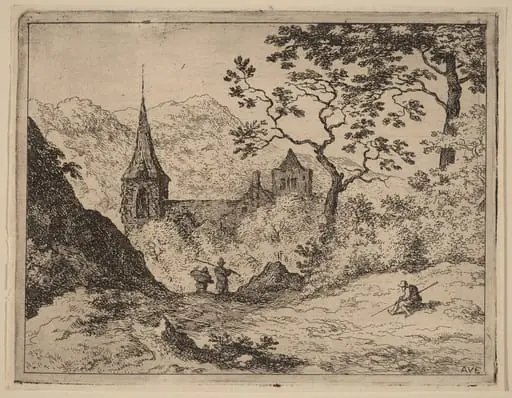
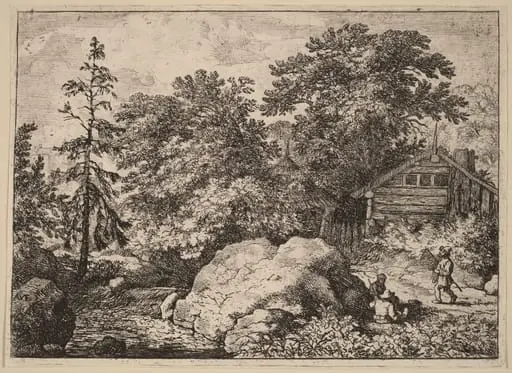
Man between Two Fir Trees is an ink print by the Baroque artist Allart van Everdingen. It dates from 1650 and is held in the collection of the National Gallery of Art.
About this work
Overview
Created around 1650 by the Dutch artist Allart van Everdingen, this print combines etching and drypoint to depict a quiet woodland scene.
Created around 1650 by the Dutch artist Allart van Everdingen, this print combines etching and drypoint to depict a quiet woodland scene. As a printmaker active during the Dutch Golden Age, Everdingen frequently explored natural landscapes, and this work exemplifies his interest in atmospheric depth and subtle tonal variation. The technique allows for fine lines and rich blacks, enhancing the mood without overt drama.
Subject & Meaning
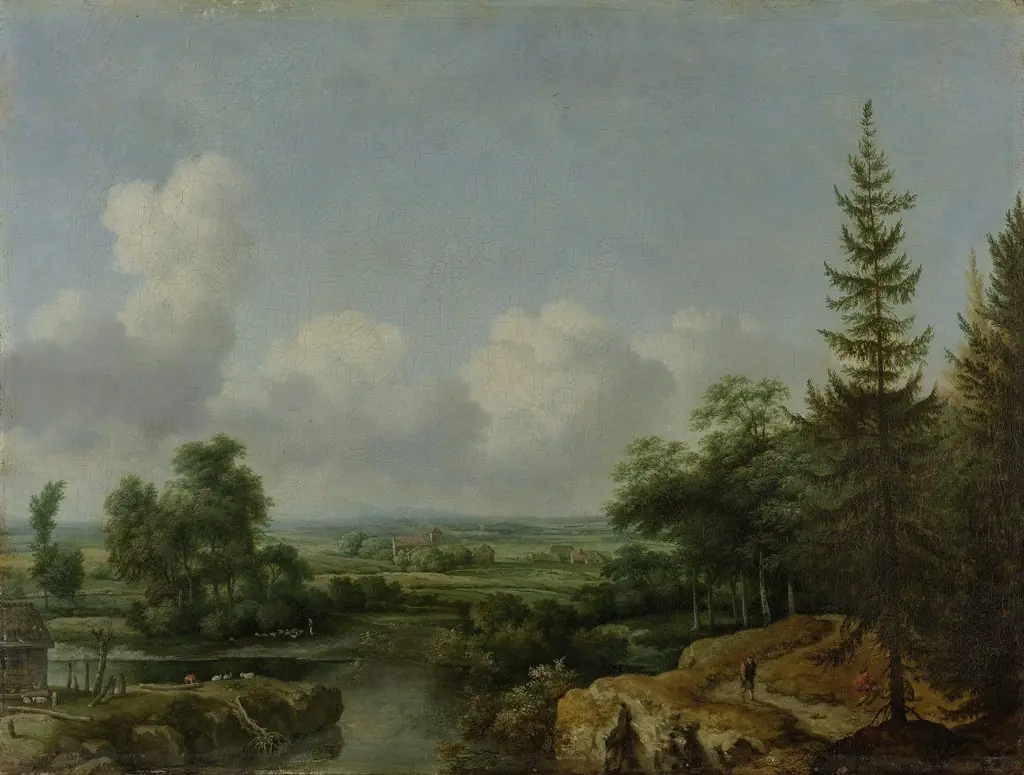
A solitary figure stands between two tall fir trees, facing the viewer with stillness. The figure, neither heroic nor narrative-driven, functions as a quiet observer within the landscape. Behind, a modest cottage and distant mountains suggest habitation and scale, while the sky, softly rendered with cloud formations, reinforces a contemplative tone. The scene invites reflection rather than storytelling, aligning with contemporary Dutch sensibilities toward introspection in nature.
Technique & Style
Everdingen employed etching for the overall composition and drypoint for heightened texture and shadow. The drypoint’s burr creates soft, velvety darks in the tree trunks and foliage, while etched lines define distant forms with precision. The interplay of light and muted tones guides the eye from foreground to horizon, with no sharp contrasts. This restrained handling reflects a preference for naturalism over theatricality, typical of his mature printmaking.
History & Provenance
The print was produced during Everdingen’s most active period as a printmaker, following his travels through Scandinavia, which influenced his treatment of coniferous forests and rugged horizons. Though no early ownership records are widely documented, the work appears in several 18th-century collections of Dutch prints. Its survival in multiple impressions suggests it was circulated among collectors interested in landscape and topographical imagery.
Context
In mid-17th-century Holland, landscape prints were popular among urban elites seeking connection to the natural world. Everdingen’s work stood apart by emphasizing mood over topographical accuracy. Unlike many contemporaries who depicted cultivated fields or canals, he favored wilder, northern vistas—reflecting both personal experience and a growing cultural interest in the sublime qualities of untamed nature.
Legacy
Though less celebrated than his paintings, Everdingen’s prints influenced later generations of landscape etchers, particularly in their use of atmospheric depth and tonal gradation. This work, among others, contributed to a shift in printmaking from illustrative to evocative ends. Its quiet composition remains a reference point for studies of Dutch print culture’s quieter, more meditative currents.
Artist & collection
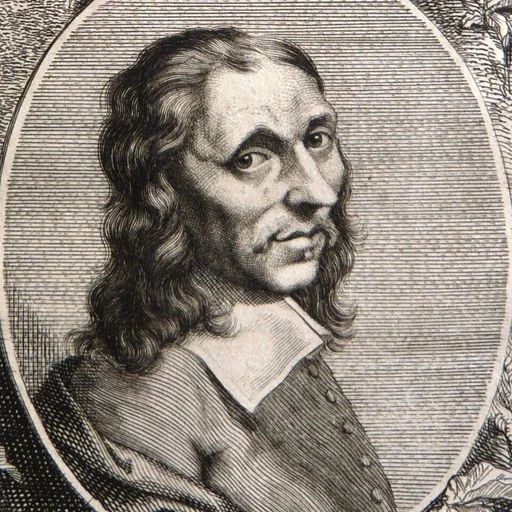
Artist
Allaert van Everdingen (Dutch pronunciation: ; bapt. 18 June 1621 – 8 November 1675 (buried)), was a Dutch Golden Age painter and printmaker in etching and mezzotint.