Artwork
Angel Pieta
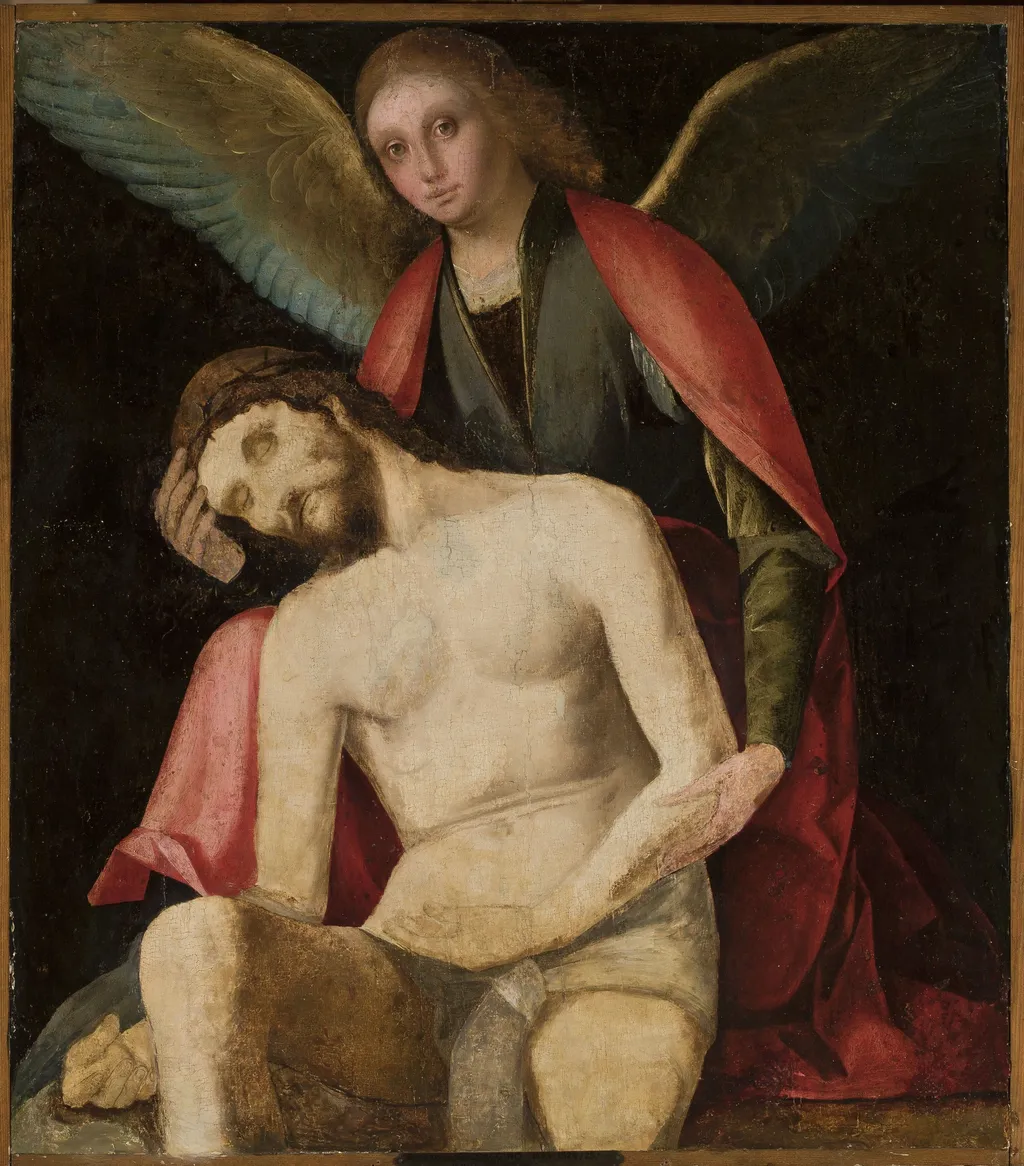
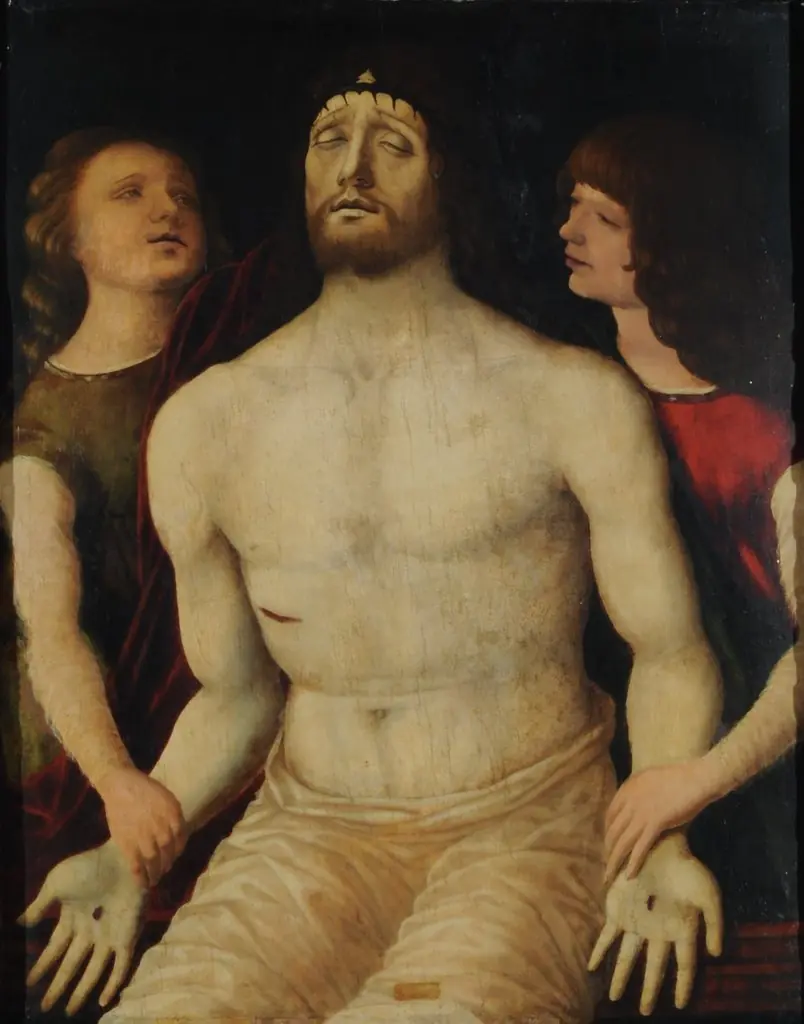
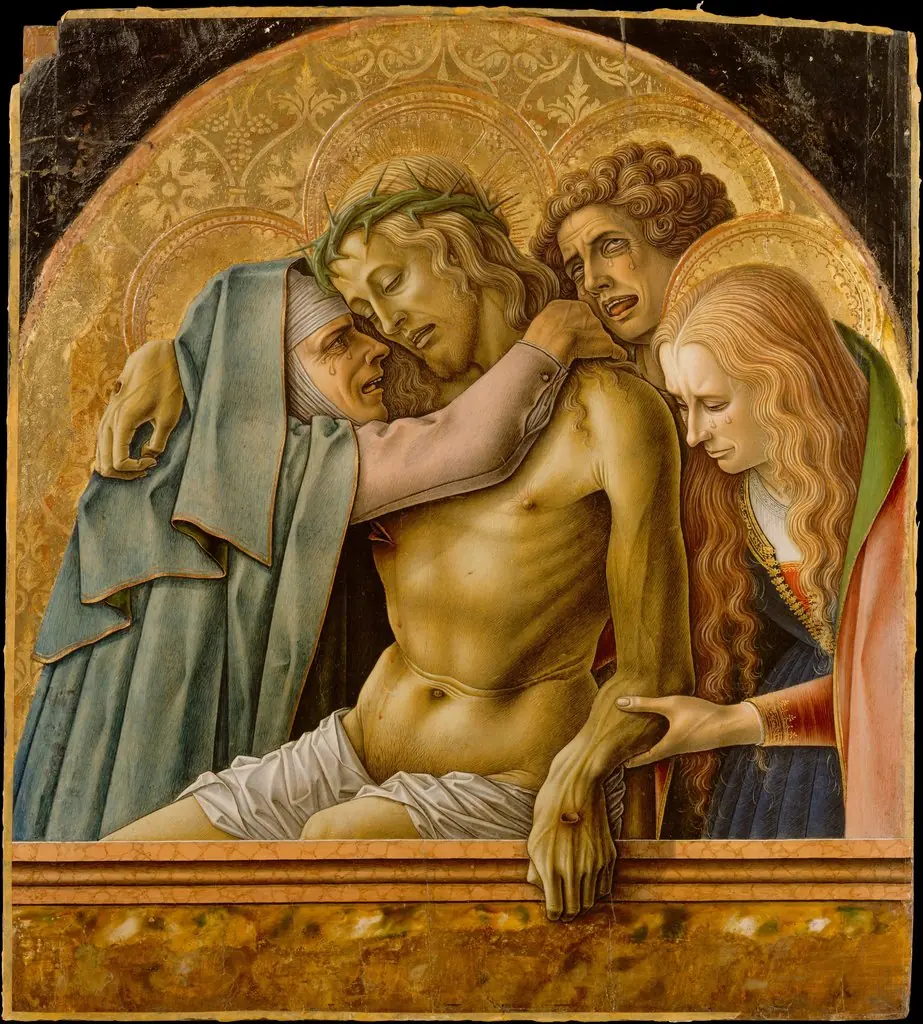
Angel Pieta is a tempera painting by the Early Renaissance artist Boccaccino Boccaccio. It dates from 1450 and is held in the collection of the National Museum in Warsaw.
About this work
Overview
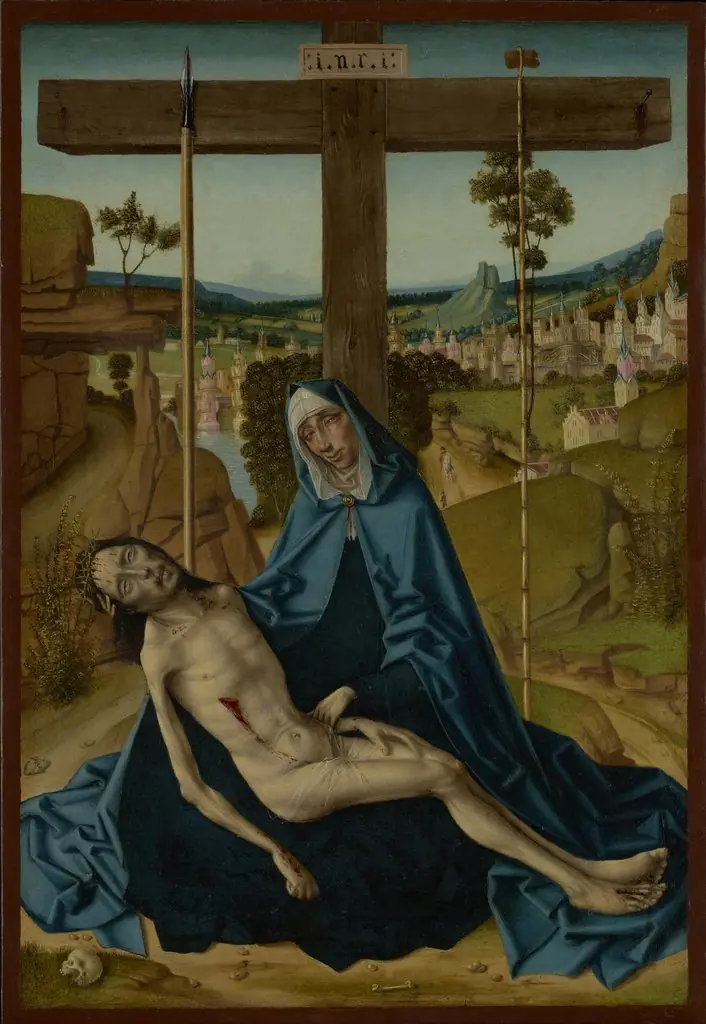
Created around 1450, the tempera work titled Angel Pieta is attributed to the Italian painter Boccaccino Boccaccio. The panel measures a modest size and is part of the collection of the National Museum in Warsaw. Its composition centers on a winged angel supporting a crucifixion figure, rendered in a subdued palette that emphasizes the solemn atmosphere.
Subject & Meaning
The image presents a celestial being cradling a naked, crown‑of‑thorns‑wearing man whose head droops in grief. The angel’s expression is tranquil yet grave, suggesting a compassionate intercession. The juxtaposition of the divine messenger with the suffering figure evokes themes of redemption and mourning, inviting contemplation of the human cost of sacrifice.
Technique & Style
Executed in tempera, the painting employs pigment mixed with egg yolk, a medium that yields matte, luminous colors and fine detail.
Executed in tempera, the painting employs pigment mixed with egg yolk, a medium that yields matte, luminous colors and fine detail. The artist applied thin, layered strokes to model the angel’s drapery—a red cape over a green robe—and to suggest the delicate translucency of the wings against a dark backdrop. The overall style reflects the early Renaissance move toward naturalistic form while retaining a devotional simplicity.
History & Provenance
The panel entered the National Museum in Warsaw during the 20th century, though its early ownership remains undocumented. Its attribution to Boccaccino Boccaccio is based on stylistic comparison with other mid‑15th‑century works from the Lombard region. The painting has been displayed in several exhibitions focusing on tempera technique and devotional imagery.
Context
Produced in the mid‑1400s, the work aligns with a period when Italian artists increasingly explored emotional expression in religious subjects. The depiction of an angel bearing the dead Christ anticipates later Pietà compositions, while its use of tempera reflects the pre‑oil practices common in Northern Italy before the widespread adoption of oil paint in the following century.
Artist & collection
Artist
This 15th–16th century painter worked in tempera and oil, blending devotional scenes with tender human touches.