Artwork
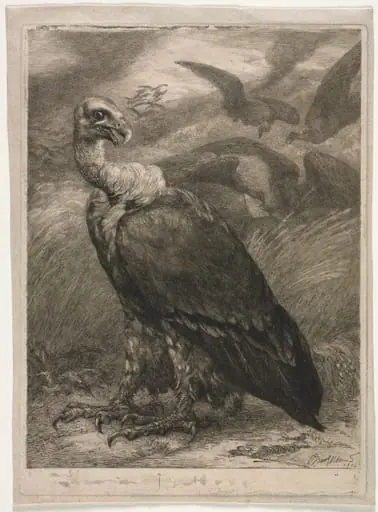
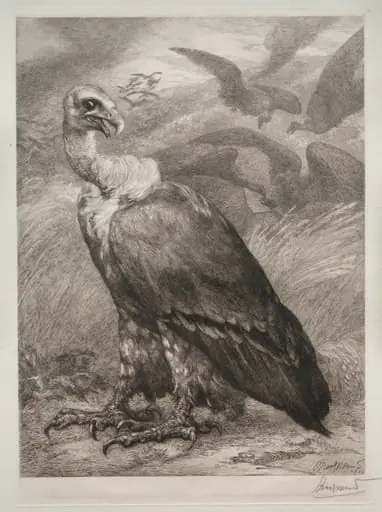
Aigle au vol
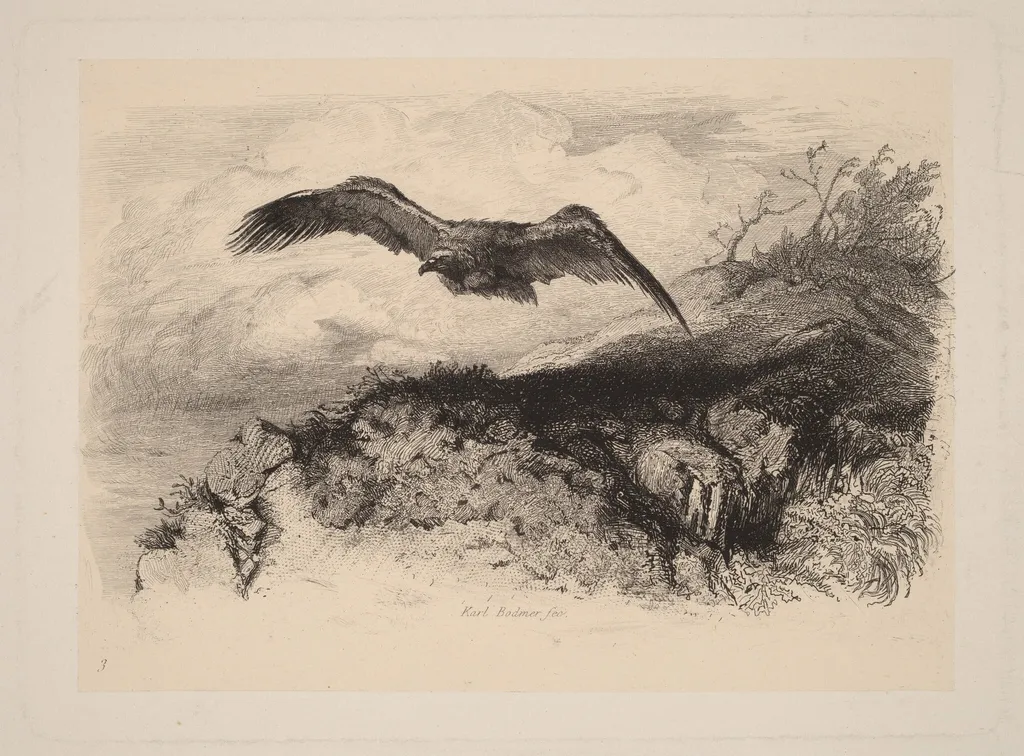
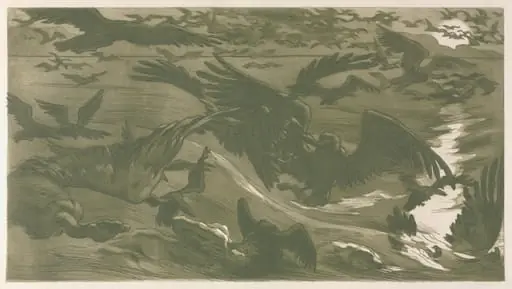
Aigle au vol is an ink print by the Romanticist artist Karl Bodmer. It dates from 1851 and is held in the collection of the National Gallery of Art.
About this work
Overview
Aigle au vol is an 1851 etching by Karl Bodmer, a Swiss-French artist known for his versatile printmaking and illustrative work across mediums like watercolor, lithography, and engraving.
Subject & Meaning
The etching depicts a golden eagle in mid-flight, with sparse, sharp lines emphasizing the bird's power. Beyond artistic expression, it served educational purposes for hunters and scientists studying eagle anatomy, characteristic of 19th-century bird etchings.
Technique & Style
Bodmer showcases his technical proficiency in etching through bold, scratchy marks that convey the eagle's dynamism against a plain background, highlighting his skill in suggestive detail.
History & Provenance
Created in 1851, the work reflects Bodmer's contribution to mid-19th-century printmaking. His career, spanning Germany and France, focused on documenting landscapes and cityscapes, though this piece diverges into wildlife.
Context
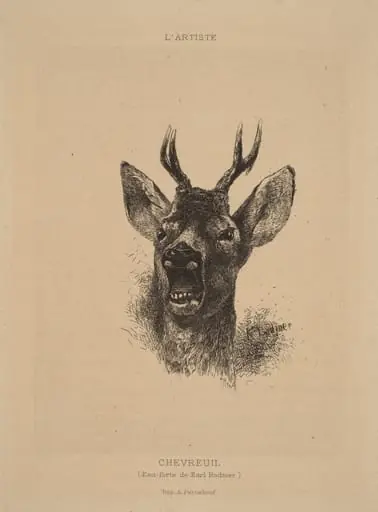
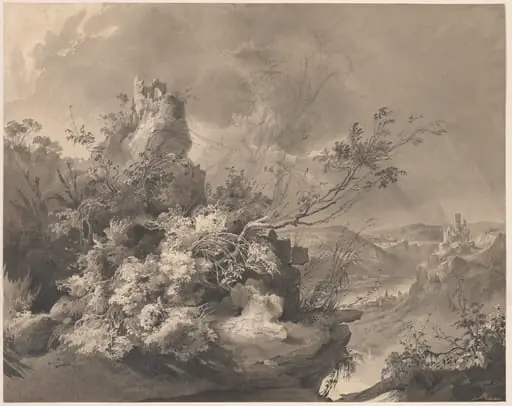
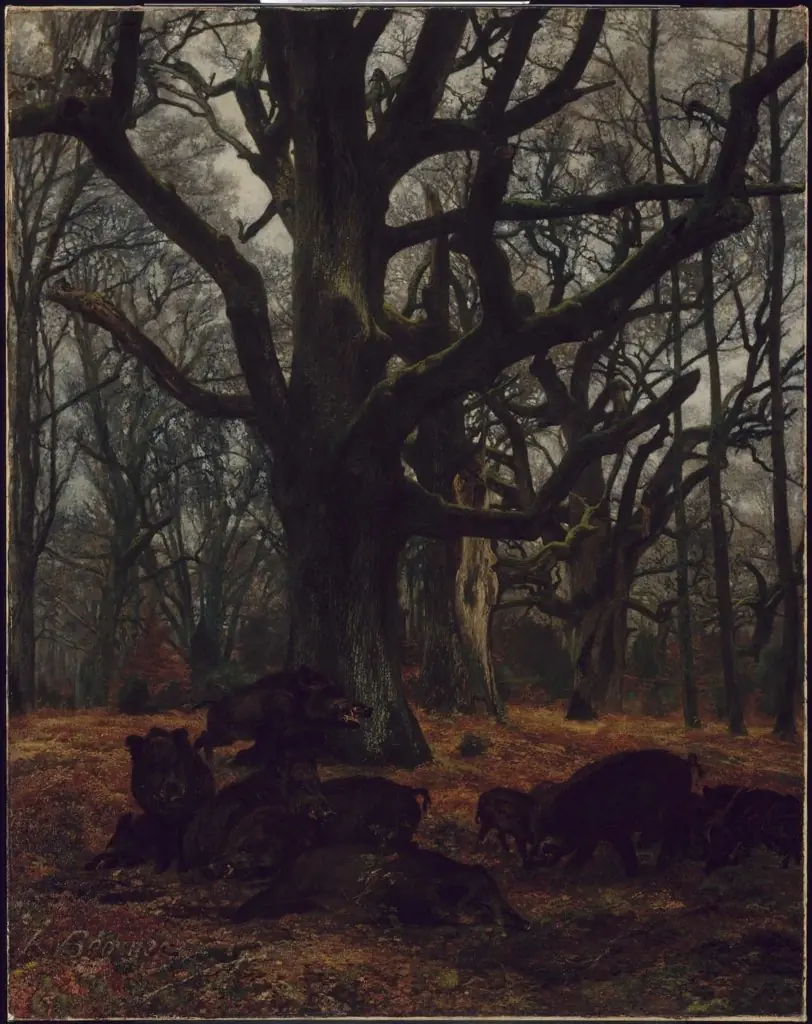
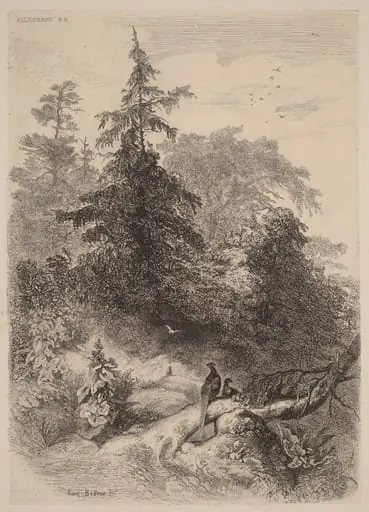
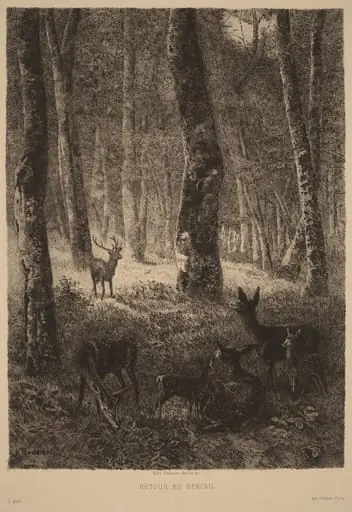
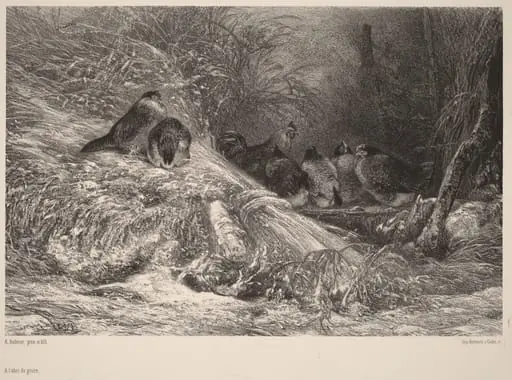
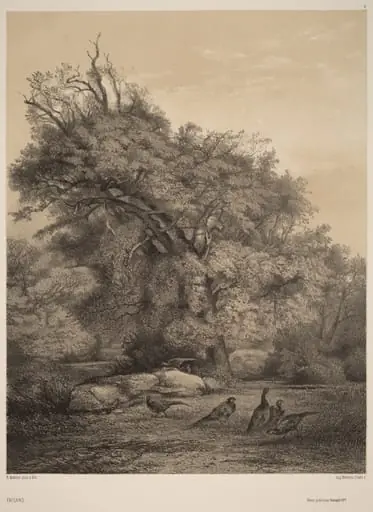
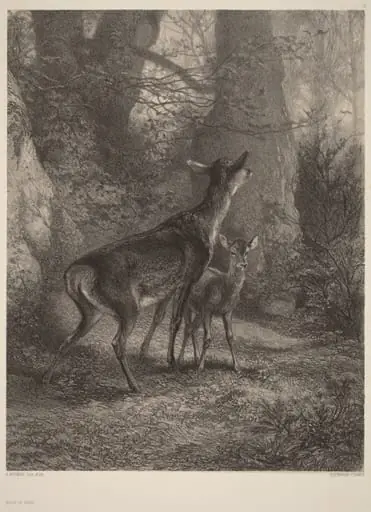
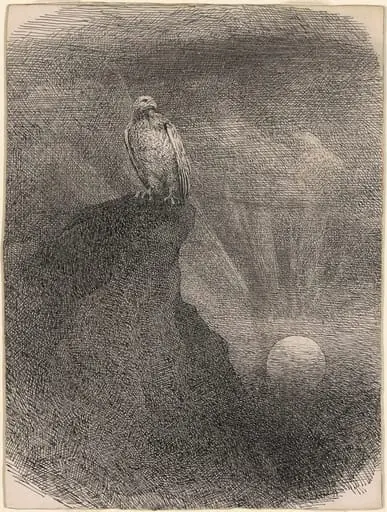
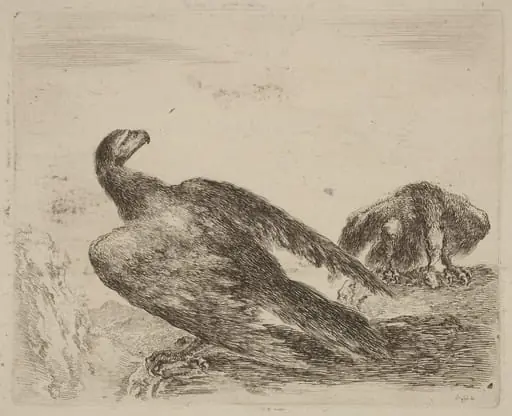
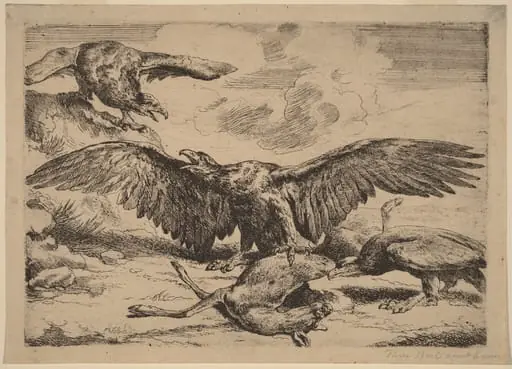
Aigle au vol aligns with the 19th-century practice of using etchings for both artistic and scientific purposes, particularly in ornithology. Comparing with another Bodmer etching can provide insight into his consistent techniques and stylistic choices.
Own this work as a print
Artist & collection
Artist
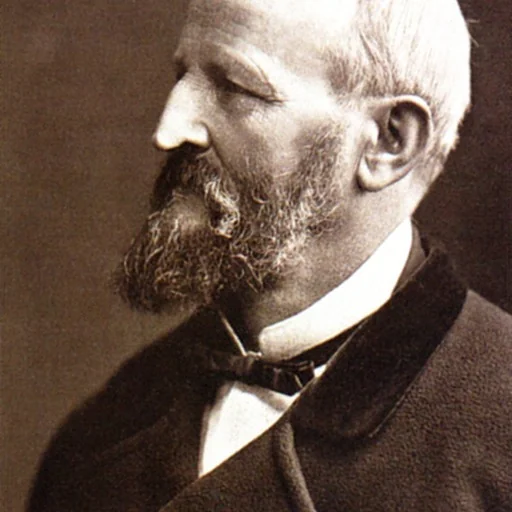
Johann Carl Bodmer (11 February 1809 – 30 October 1893) was a Swiss-French printmaker, etcher, lithographer, zinc engraver, draughtsman, painter, illustrator, and hunter.