Artwork
Faisans
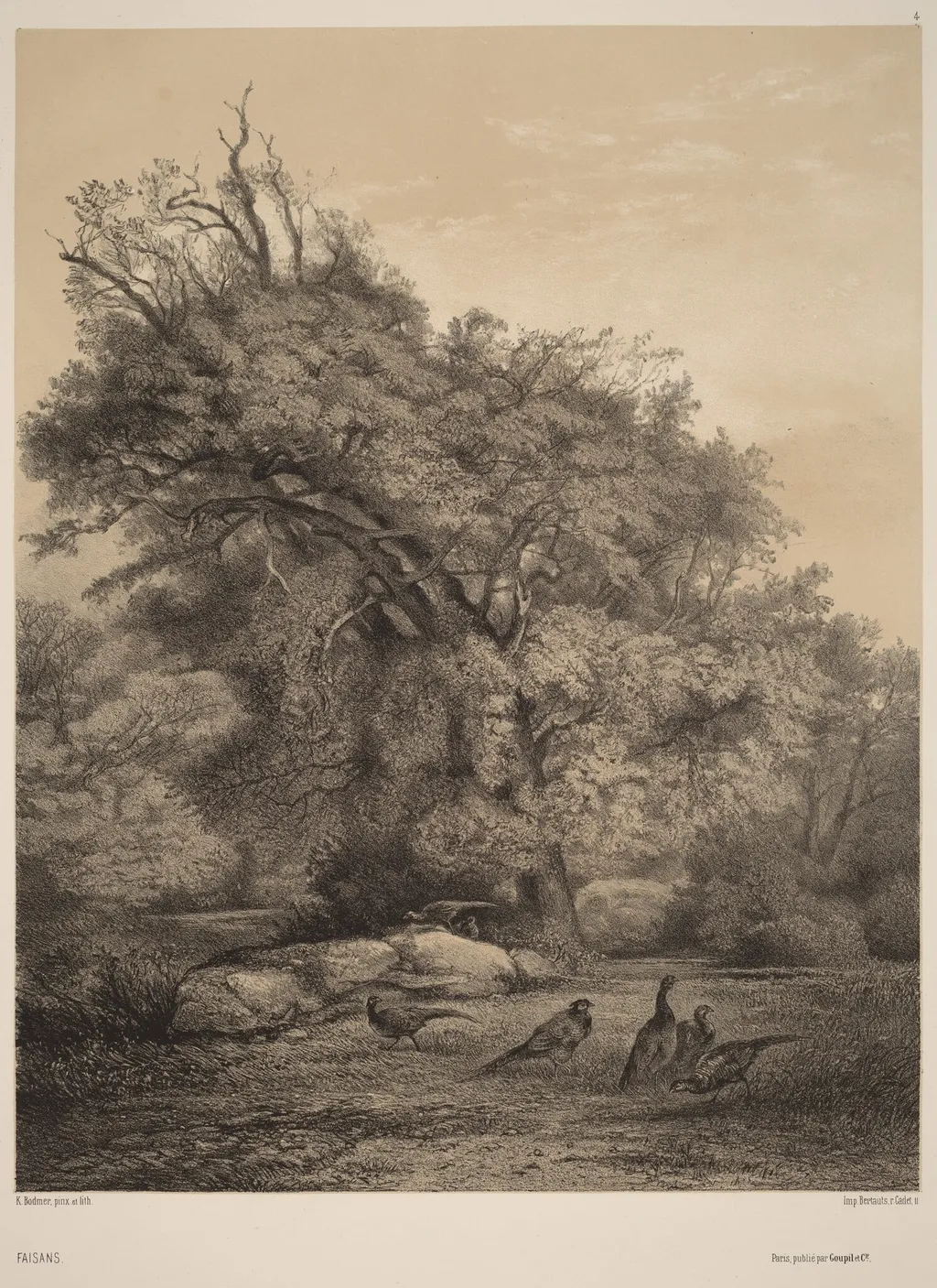
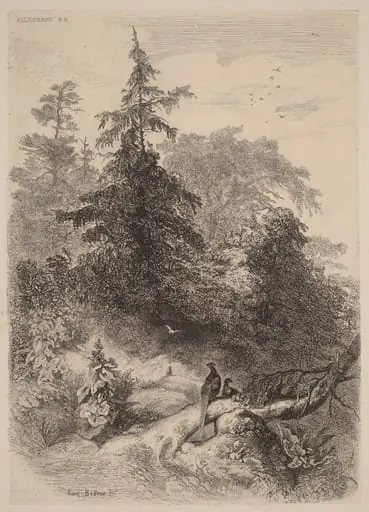
Faisans is an ink print by the Romanticist artist Karl Bodmer. It dates from 1851 and is held in the collection of the National Gallery of Art.
About this work
He printed this in 1843, long after the technique started in painting.
This lithograph shows three pheasants perched on a branch. Their feathers catch the light in soft whites and deep browns. The background fades to gray, making the birds pop.
Karl Bodmer used a trick called chiaroscuro here. That’s where artists play with strong light and dark to create drama. He printed this in 1843, long after the technique started in painting.
Want to see more dark-and-light prints? Try lithographs by Bodmer, Karl.
Overview
Faisans is a chiaroscuro lithograph produced in 1851 by the Swiss‑French artist Johann Karl Bodmer, who signed his works as Karl Bodmer. The print depicts three pheasants perched on a branch, their plumage rendered in a range of whites and browns that stand out against a muted gray background.
Subject & Meaning
The composition focuses on the birds as the central motif, emphasizing their natural coloration and the play of light across their feathers. By isolating the pheasants against a subdued backdrop, Bodmer draws attention to the delicate textures of the avian forms and suggests a quiet, observational study of wildlife.
Technique & Style
Bodmer employed the chiaroscuro lithographic process, a method that uses multiple stones to layer light and dark tones, creating a heightened contrast reminiscent of chiaroscuro painting. The technique allows the soft illumination on the birds’ feathers to emerge from the darker, atmospheric background, producing a three‑dimensional effect within the two‑dimensional medium.
History & Provenance
Bodmer, active in the mid‑nineteenth century, worked in both Germany and France, gaining a reputation for detailed landscape and cityscape prints. Faisans reflects his broader interest in natural subjects and his mastery of printmaking methods that were popular among European illustrators of the period.
Context
The chiaroscuro lithograph emerged in the early nineteenth century as a response to the desire for greater tonal range in print media. By the 1850s, artists like Bodmer were adapting the technique to depict a variety of subjects, from architecture to fauna, demonstrating its versatility beyond its initial decorative uses.
Own this work as a print
Artist & collection
Artist
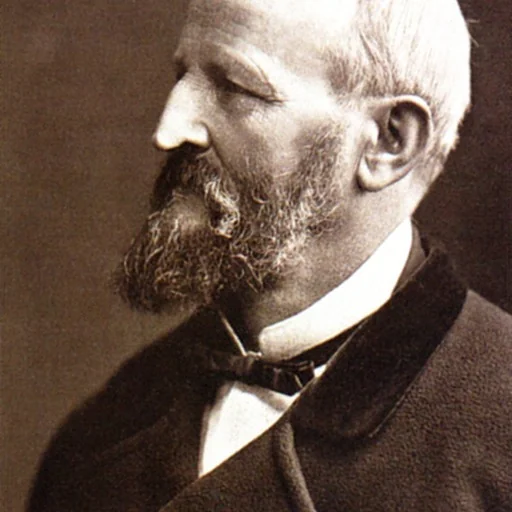
Johann Carl Bodmer (11 February 1809 – 30 October 1893) was a Swiss-French printmaker, etcher, lithographer, zinc engraver, draughtsman, painter, illustrator, and hunter.

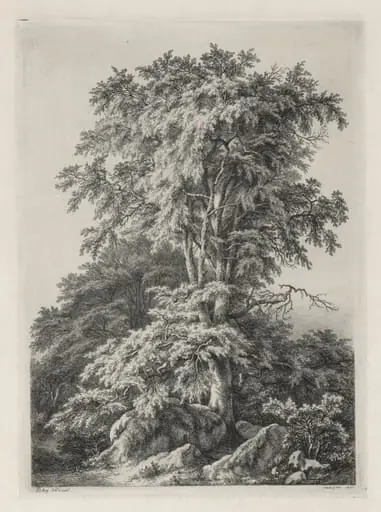 Studies Drawn and Engraved after Nature: The Beach, Fontainebleau (Études dessinées et Gravées D'après nature: Le hêtre, Fontainebleau)
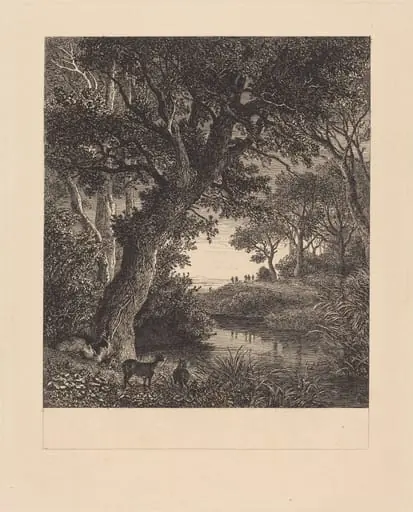 Hunters Leaving a Forest
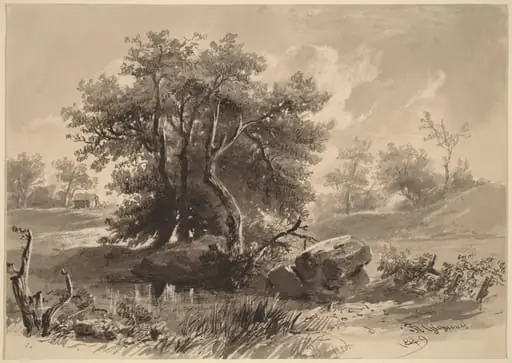 The Trees, Bedford, New York
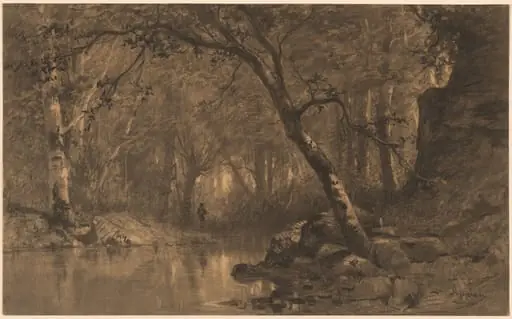 A Woodland River with a Fisherman
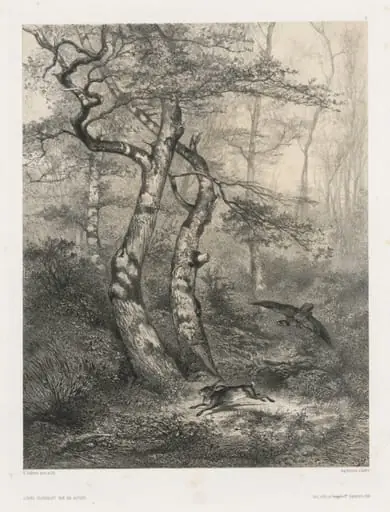 Hare Pursued by a Goshawk
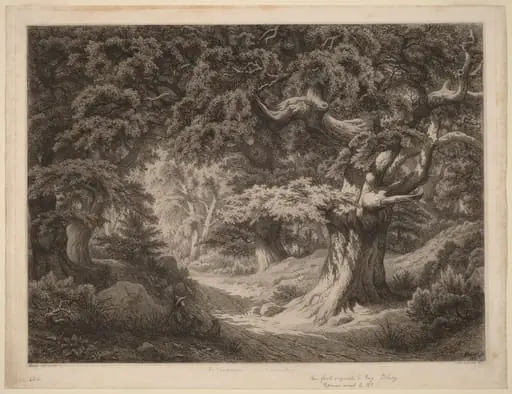 Le Charlemagne (forêt de fontainebleau)
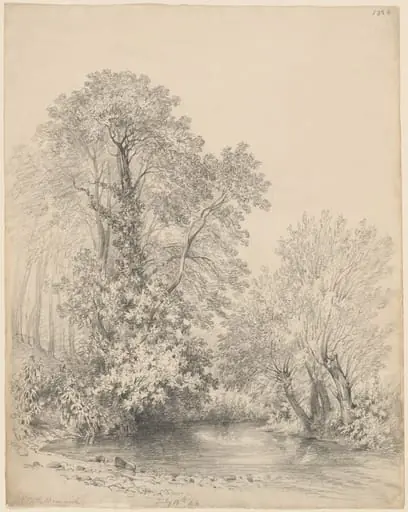 Trees by the River at Castle Bromwich
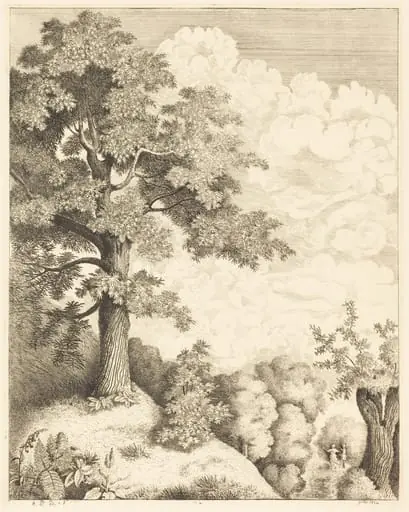 View of Santron
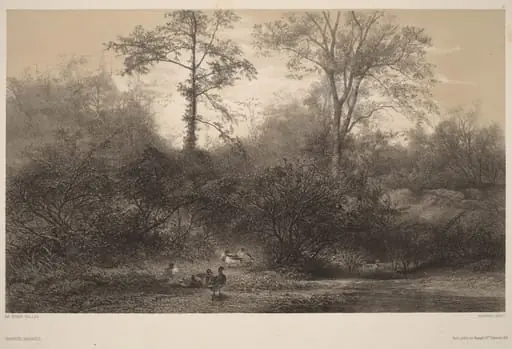 Canards Sauvages