Artwork
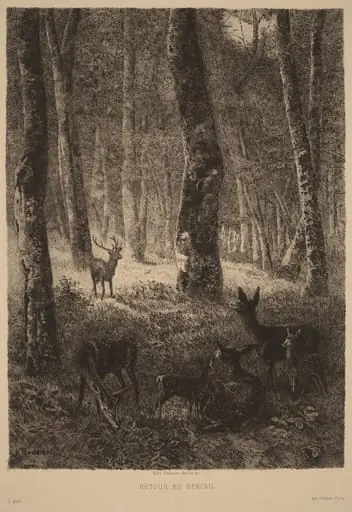
Biche et Faon
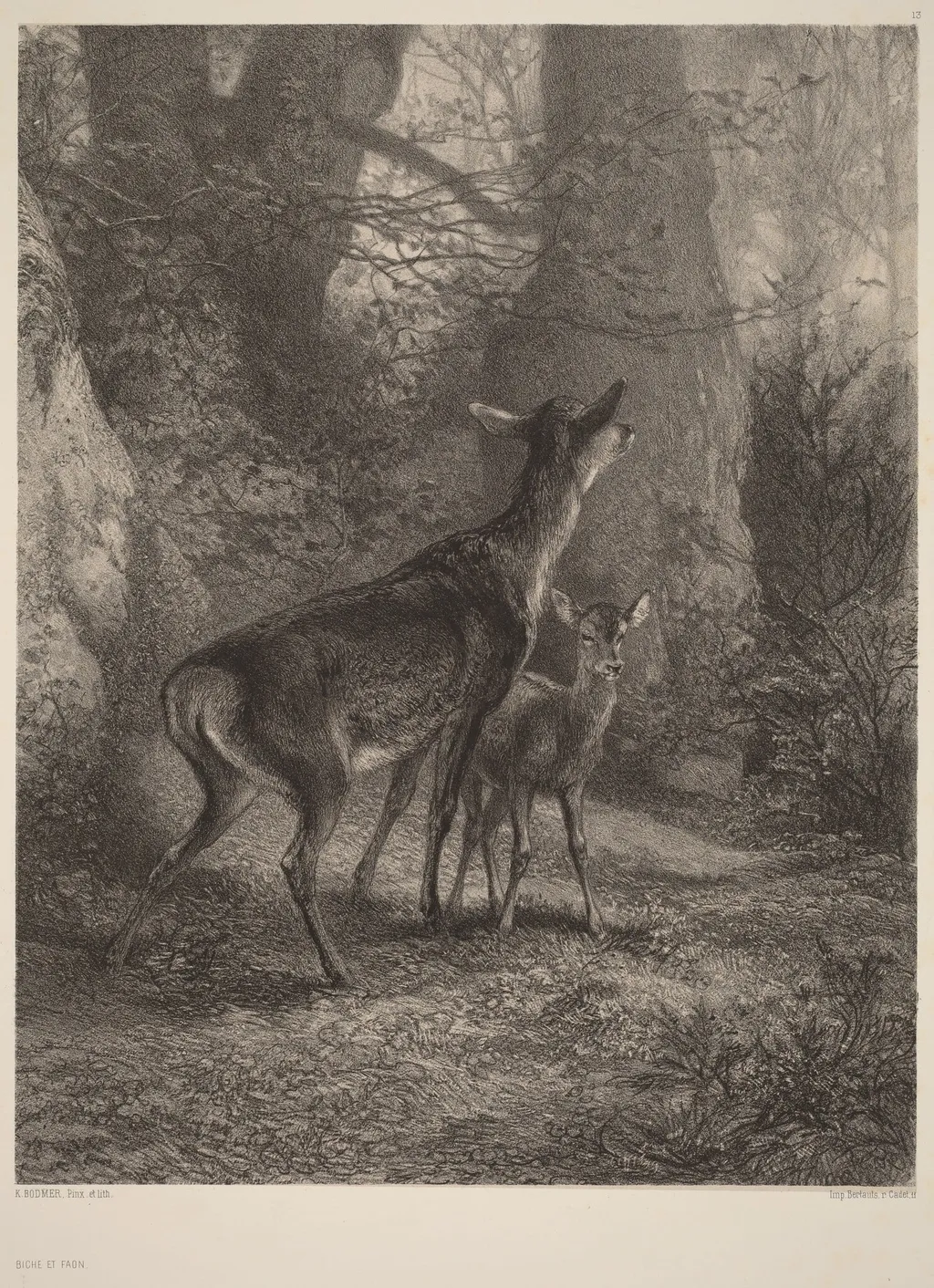
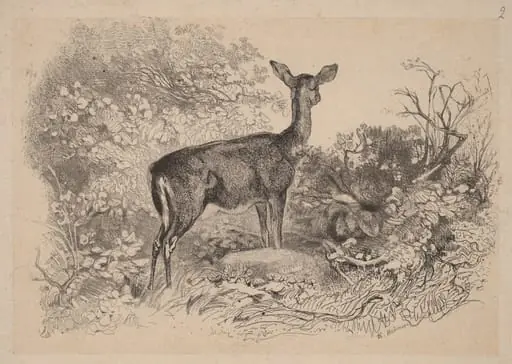
Biche et Faon is an ink print by the Romanticist artist Karl Bodmer. It dates from 1851 and is held in the collection of the National Gallery of Art.
About this work
Overview
Created during Bodmer’s time in Europe after his travels in North America, the work reflects his sustained interest in natural subjects.
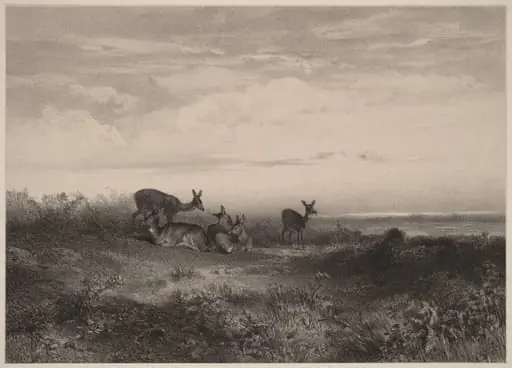
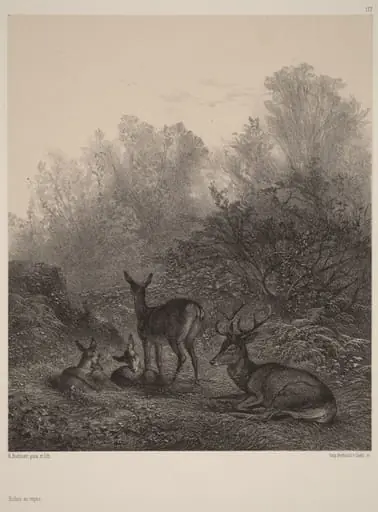
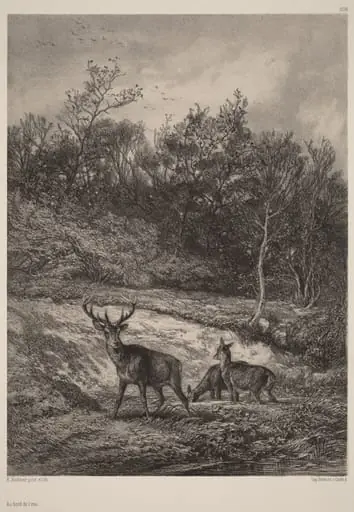
Karl Bodmer’s 1851 lithograph *Biche et Faon* portrays a doe and her young fawn in a quiet woodland setting. Created during Bodmer’s time in Europe after his travels in North America, the work reflects his sustained interest in natural subjects. Though executed in lithography, the print conveys the observational precision he developed while documenting wildlife during his expeditions across the American West.
Subject & Meaning
The image captures a tender moment between a doe and her fawn, the latter nursing while the mother turns toward the viewer with alert stillness. The scene evokes quiet intimacy and vulnerability, framed by the natural rhythms of the forest. Bodmer avoids anthropomorphism, instead presenting the animals as part of an undisturbed ecosystem, their presence grounded in observed behavior rather than symbolic interpretation.
Technique & Style
Bodmer employed lithography to render fine textures—soft fur, dappled foliage, and rough bark—with remarkable subtlety. The use of tonal gradation and delicate line work creates a sense of atmospheric depth, while sunlight is suggested through carefully placed highlights rather than direct rendering. His technique prioritizes observational accuracy over dramatic effect, aligning with his scientific approach to natural history illustration.
History & Provenance
Bodmer produced this print in 1851, several years after returning from his 1832–1834 expedition with Prince Maximilian of Wied through the American West. Though inspired by his earlier field sketches, the lithograph was made in France, where he settled after his travels. It belongs to a series of wildlife studies he developed in the 1840s and 1850s, drawing on memory and preserved drawings rather than direct observation.
Context
In mid-19th-century Europe, interest in natural history and exotic wildlife was growing, fueled by scientific exploration and colonial expansion. Bodmer’s work intersected with this trend, offering detailed, non-romanticized depictions of North American fauna. His images were valued for their fidelity, serving both artistic and ethnographic audiences, and contributed to broader European understandings of the American frontier’s ecology.
Legacy
Bodmer’s wildlife lithographs, including *Biche et Faon*, remain significant for their technical restraint and documentary value. Unlike many contemporaries who idealized nature, he presented animals with quiet realism. His prints are now held in major collections as primary visual records of North American wildlife as observed during a pivotal era of exploration and ecological change.
Own this work as a print
Artist & collection
Artist
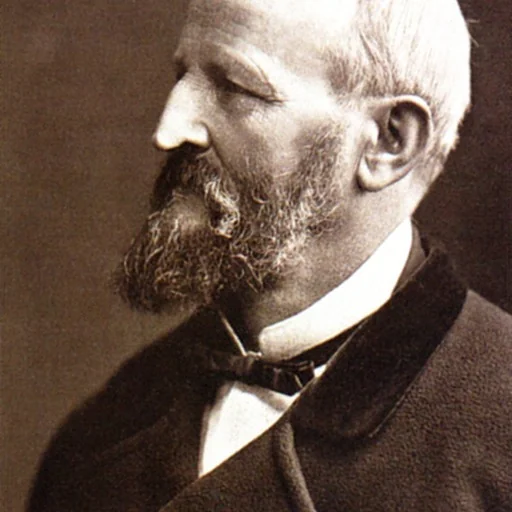
Johann Carl Bodmer (11 February 1809 – 30 October 1893) was a Swiss-French printmaker, etcher, lithographer, zinc engraver, draughtsman, painter, illustrator, and hunter.