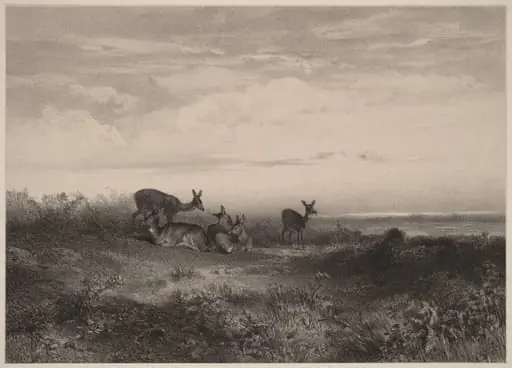
Artwork
Biche, Aigle
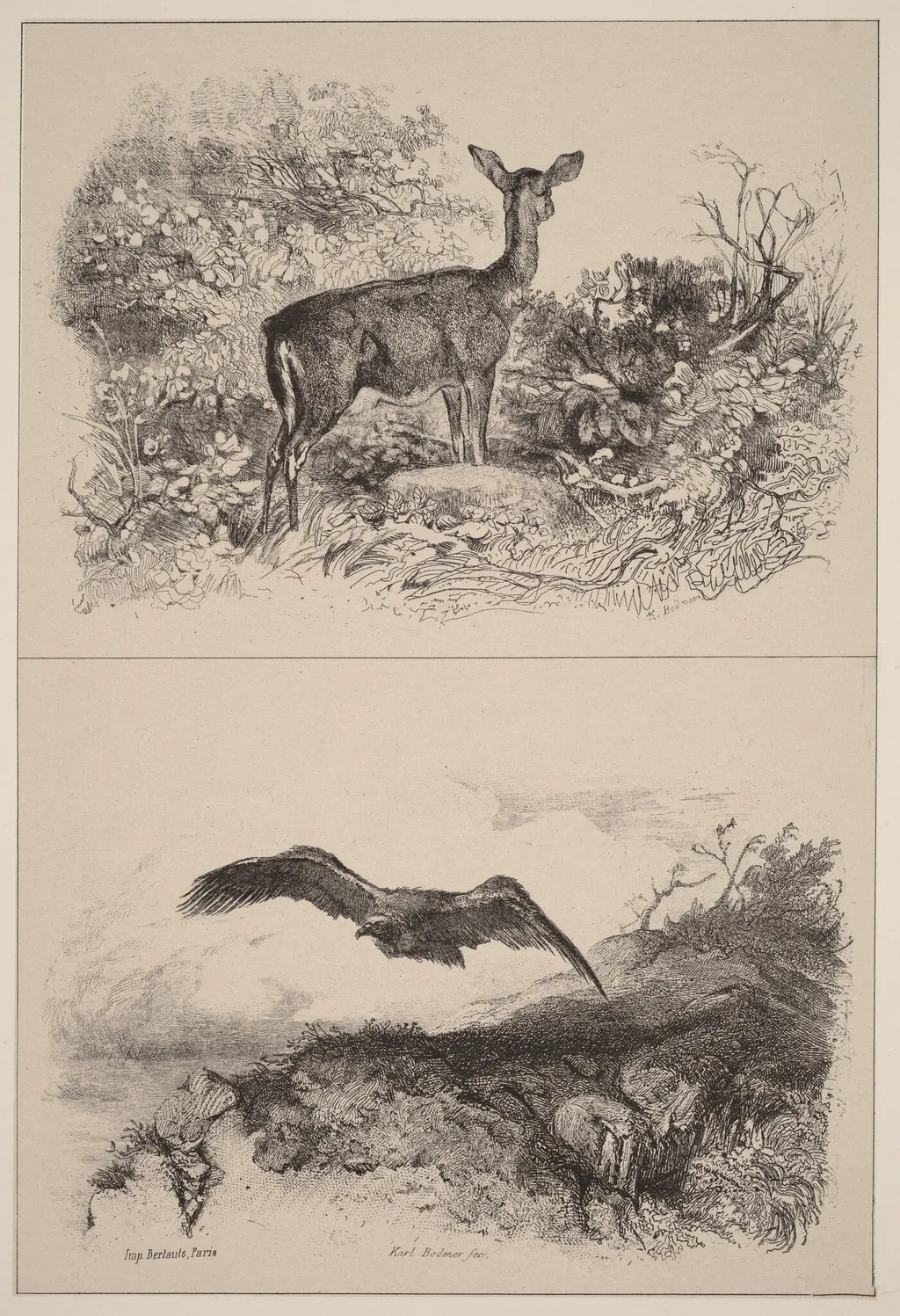
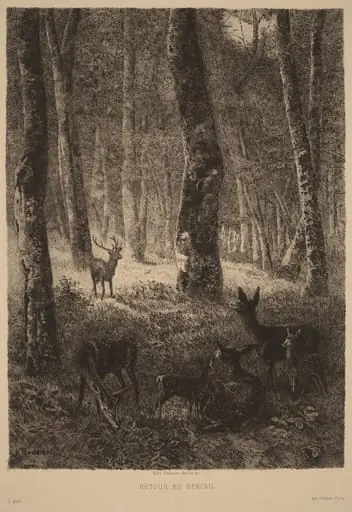
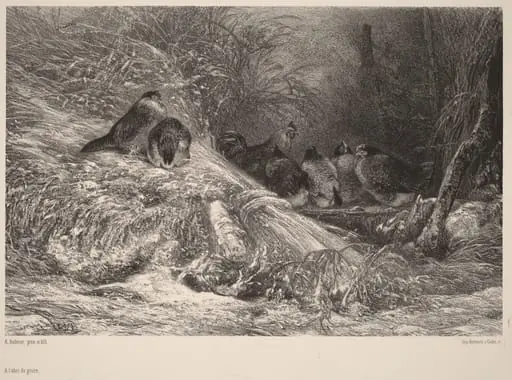
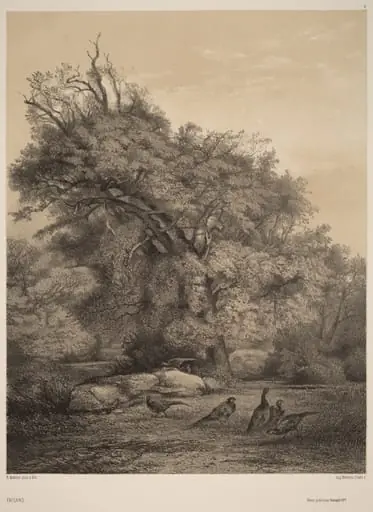
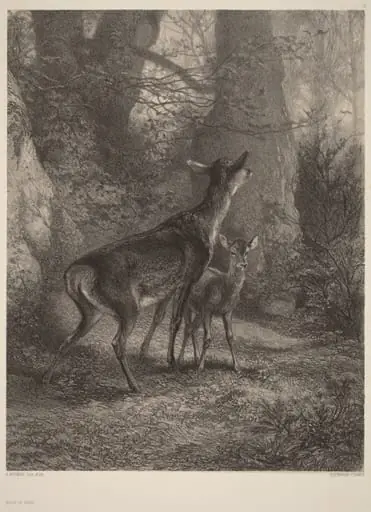
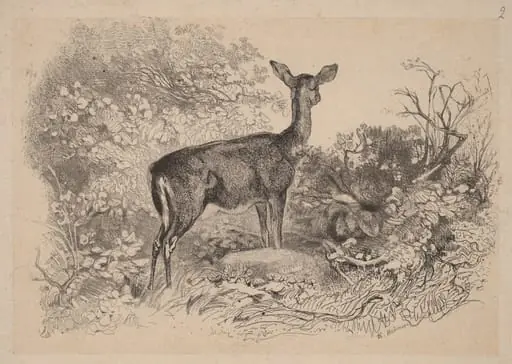
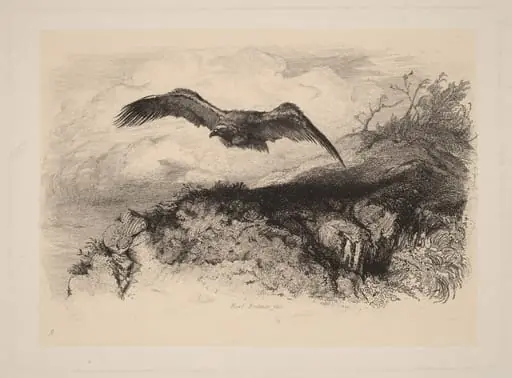
Biche, Aigle is an ink print by the Romanticist artist Karl Bodmer. It dates from 1851 and is held in the collection of the National Gallery of Art.
About this work
Overview
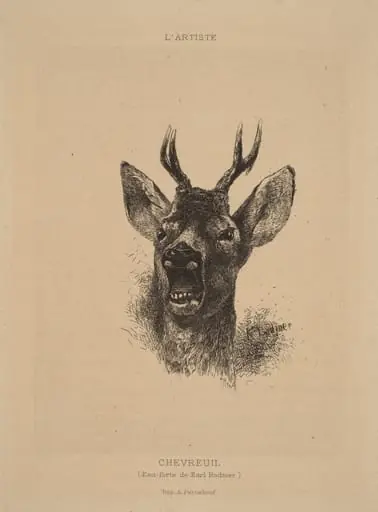
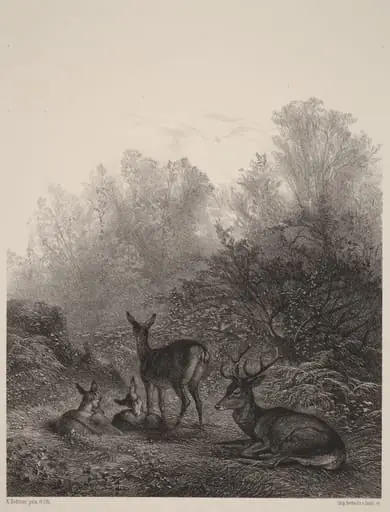
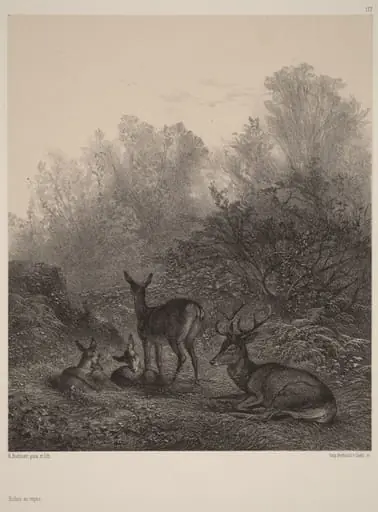
Biche, Aigle is a lithograph created by Swiss-French artist Karl Bodmer in 1851, during his later career in France. The print depicts two distinct animal scenes set in a natural, wild environment.
Subject & Meaning
The composition features two contrasting animal encounters: a serene deer standing amidst foliage on a rocky hillside, and below, a dramatic scene of an eagle in mid-dive, wings outstretched, targeting a smaller animal. The juxtaposition highlights the dual aspects of nature—serenity and predation.
Technique & Style
Characterized by quick, expressive lines, the lithograph conveys movement and texture, particularly evident in the rendering of feathers and fur. This dynamic, sketchy style was a hallmark of 19th-century naturalistic art, suited for capturing the drama of natural scenes.
History & Provenance
Created in 1851, Biche, Aigle reflects Bodmer's established practice in lithography, alongside his work in etching, drawing, and illustration. His body of work often focused on landscapes and cityscapes along European rivers.
Context
The piece is contextualized within the broader artistic trends of the 1800s, where such naturalistic and dynamic depictions of wildlife were popular, reflecting a growing interest in the natural world.
Artist & collection
Artist
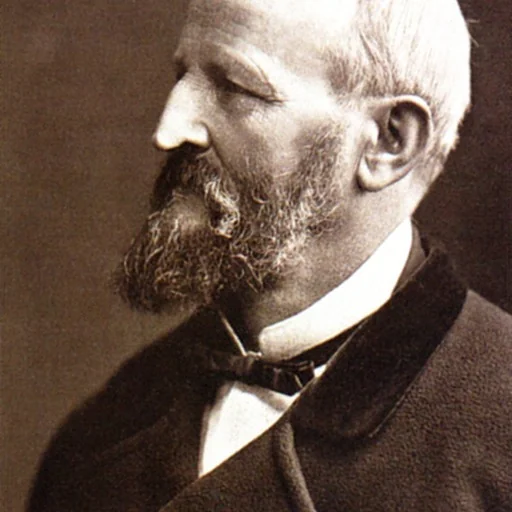
Johann Carl Bodmer (11 February 1809 – 30 October 1893) was a Swiss-French printmaker, etcher, lithographer, zinc engraver, draughtsman, painter, illustrator, and hunter.