Artwork
Cerfs au Gagnage
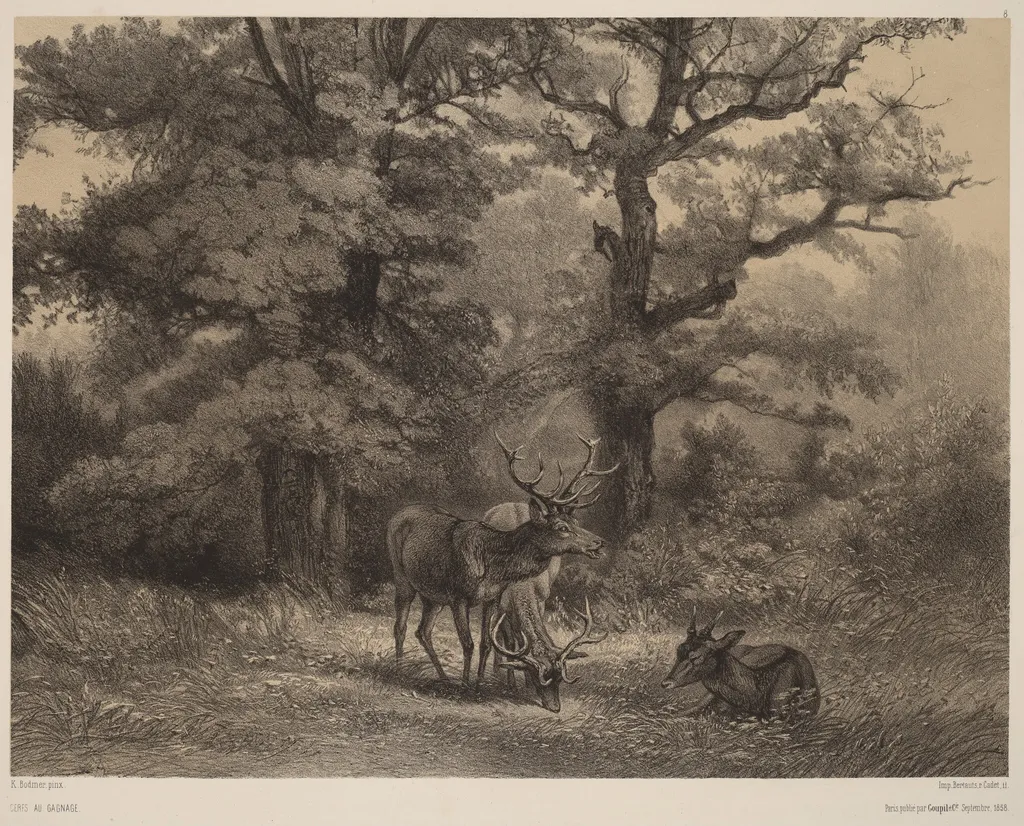
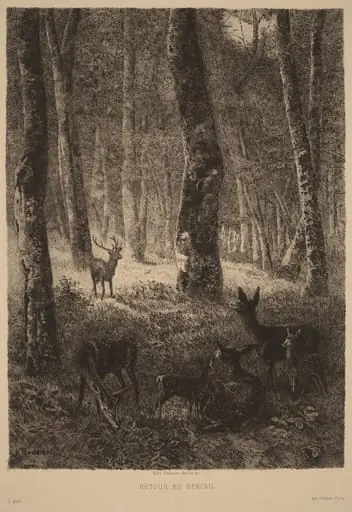
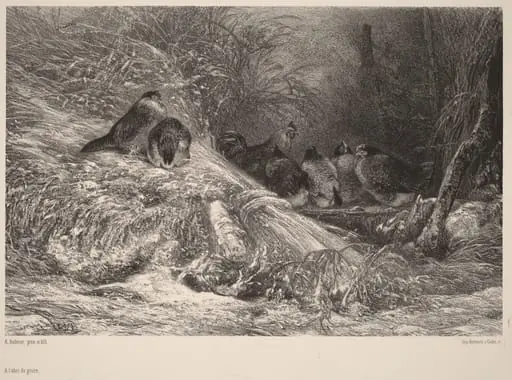
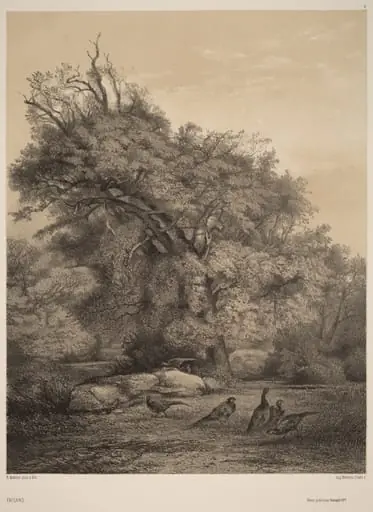
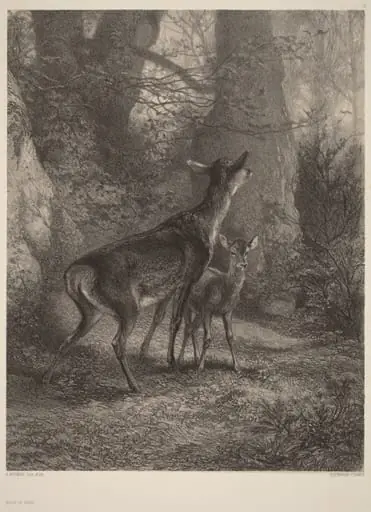
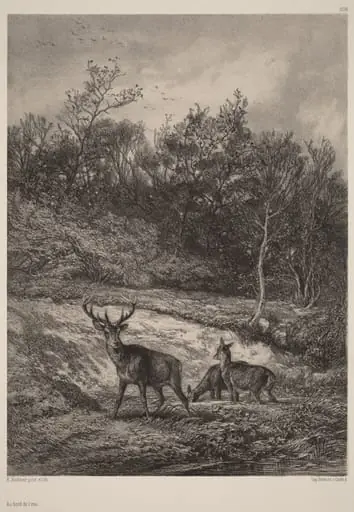
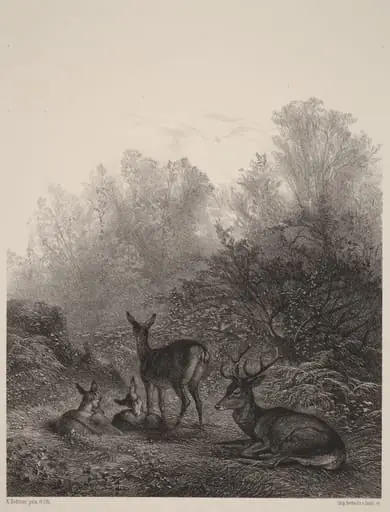
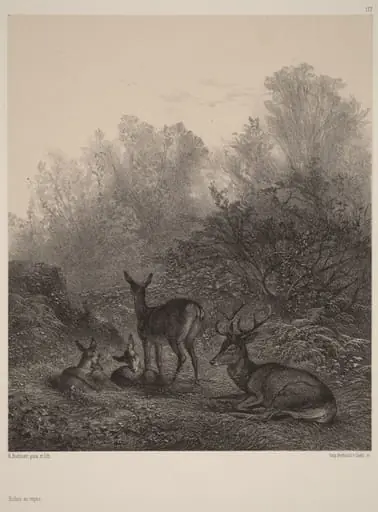
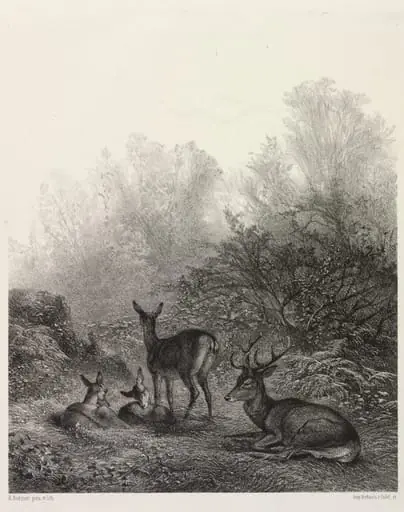
Cerfs au Gagnage is an ink print by the Romanticist artist Karl Bodmer. It dates from 1851 and is held in the collection of the National Gallery of Art.
About this work
Overview
The work belongs to his broader output of naturalistic prints, combining technical precision with atmospheric depth.
Created in 1851, *Cerfs au Gagnage* is a chiaroscuro lithograph by Swiss-French artist Karl Bodmer. The work belongs to his broader output of naturalistic prints, combining technical precision with atmospheric depth. Unlike his earlier landscape studies in Germany, this piece focuses on wildlife within a secluded woodland setting, emphasizing mood through tonal contrast rather than topographical detail.
Subject & Meaning
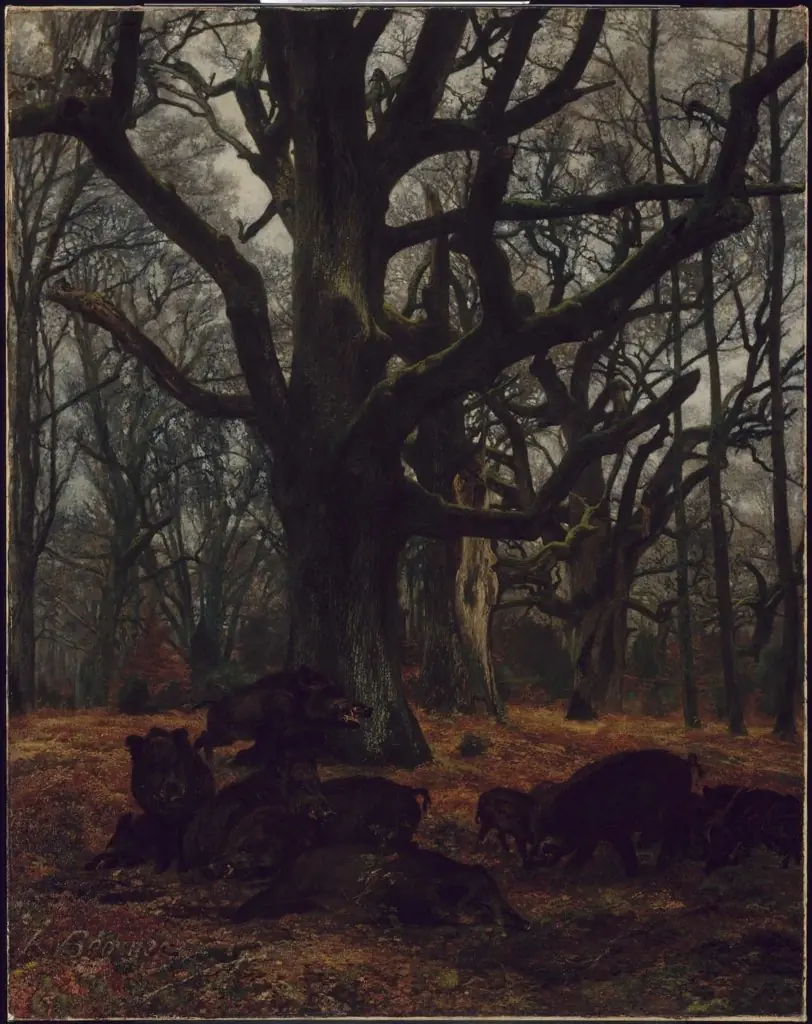
The print depicts two deer in a forest clearing—one standing alert, antlers raised, the other recumbent, seemingly at rest. The title, translating to 'Deer at Rest,' suggests a moment of pause in the wild. The composition avoids narrative drama, instead conveying quiet coexistence between creature and environment. The dim, encroaching trees frame the animals as transient figures within an ancient, undisturbed space.
Technique & Style
Bodmer employed chiaroscuro lithography to achieve dramatic shifts between light and shadow. By layering ink on stone and selectively wiping the surface, he created soft gradations that mimic twilight’s fading glow. The thick, tangled tree trunks are rendered with dense lines, while the deer emerge from darkness with subtle tonal modeling. This method enhances the sense of depth and stillness without relying on outline or color.
History & Provenance
Bodmer produced this print during a period of sustained interest in natural history imagery, following his earlier fieldwork in North America. Though not part of a published series, *Cerfs au Gagnage* aligns with his post-expedition prints made in Europe. Its survival in private and institutional collections suggests it was valued for its technical mastery and quiet realism, though few records detail its early ownership.
Context
In mid-19th-century Europe, scientific illustration and romanticized nature coexisted in print culture. Bodmer’s work bridges these traditions: his attention to anatomical accuracy echoes naturalist studies, while the moody lighting reflects contemporary German Romantic aesthetics. Unlike theatrical hunting scenes popular at the time, this image avoids human presence, focusing instead on the autonomy of the wild.
Legacy
Though less widely known than his North American expeditions, *Cerfs au Gagnage* exemplifies Bodmer’s skill in translating observational drawing into print. It influenced later European wildlife illustrators who favored atmospheric tone over detail. The print remains a quiet testament to his ability to evoke solitude and presence through the interplay of light and form, without sentimentality or embellishment.
Own this work as a print
Artist & collection
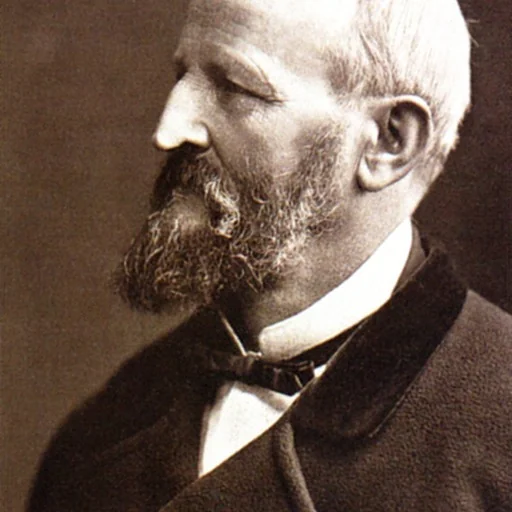
Artist
Johann Carl Bodmer (11 February 1809 – 30 October 1893) was a Swiss-French printmaker, etcher, lithographer, zinc engraver, draughtsman, painter, illustrator, and hunter.