Artwork
New York State Militia, 1st Division, 9th Regiment, 3rd Brigade
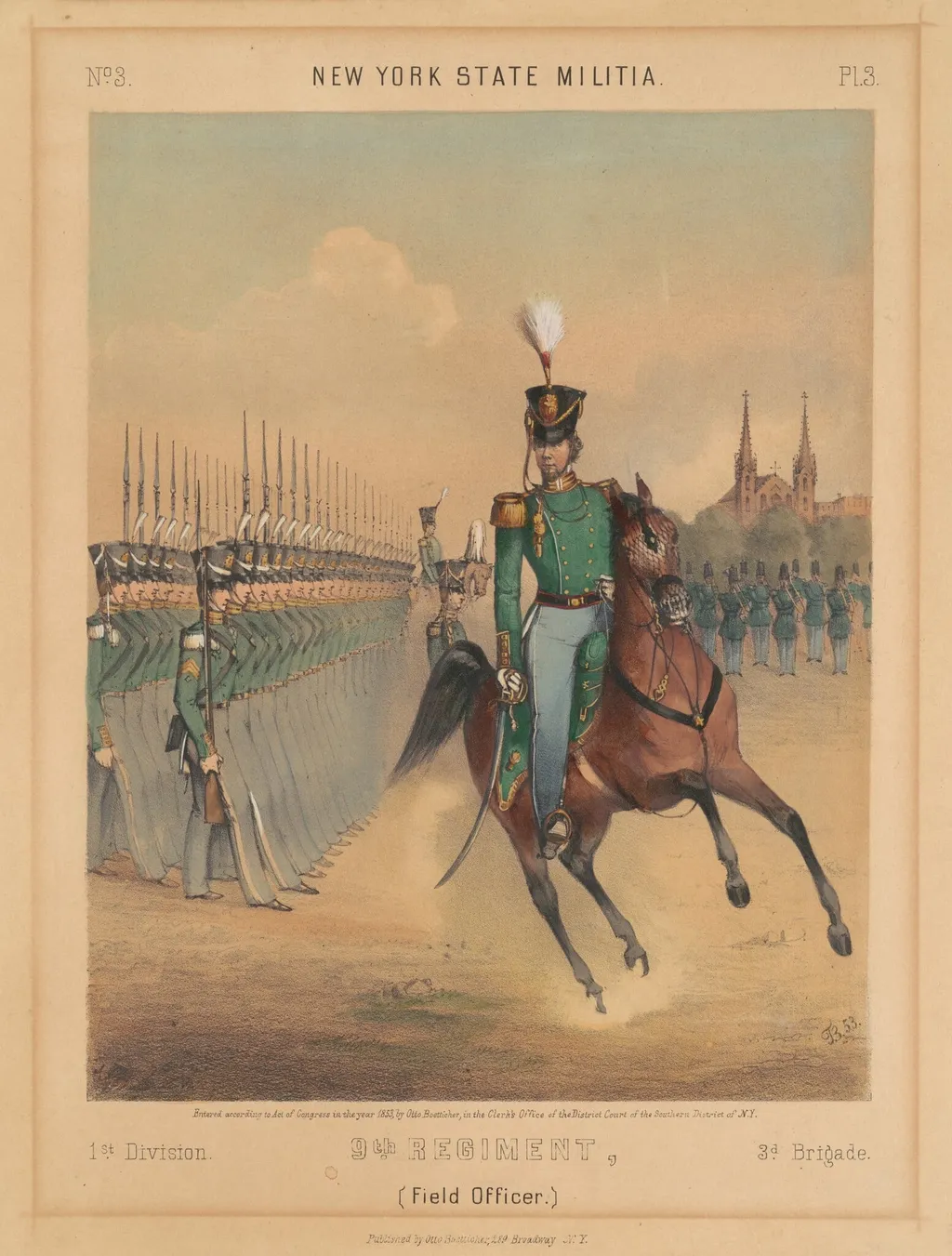
New York State Militia, 1st Division, 9th Regiment, 3rd Brigade is an ink print by the Impressionist artist Otto Boetticher. It dates from 1853 and is held in the collection of the National Gallery of Art.
About this work
Overview
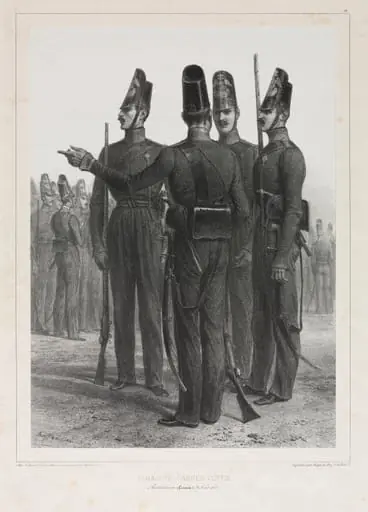
Otto Boetticher’s hand‑colored lithograph, produced in 1853, depicts the 9th Regiment of the 3rd Brigade within New York’s State Militia. Executed on wove paper, the image presents a mounted officer leading a column of infantry, set against a modestly clouded sky and a distant church with twin spires.
Subject & Meaning
The composition foregrounds a cavalry officer in a green jacket, blue trousers, and a tall hat trimmed with a white feather, guiding soldiers in uniformed ranks who carry long rifles. The orderly march conveys discipline and civic pride, reflecting mid‑nineteenth‑century notions of militia as a symbol of local defense and communal identity.
Technique & Style
Boetticher employed lithography, a planographic process in which a grease‑based image is drawn on a stone or metal plate, then inked and transferred to paper. After the initial print, he applied hand‑coloring to accentuate the uniforms and sky, a common practice that added depth and realism to mass‑produced images of the era.
History & Provenance
Created shortly after the Mexican‑American War, the print served both as a visual record of New York’s militia organization and as a collectible item for supporters and family members. Its labeling identifies the specific unit, linking the work to official militia documentation of the period.
Context
In the 1850s, state militias were integral to local security and civic ceremony, often parading in public spaces. Boetticher’s depiction aligns with contemporary visual culture that celebrated military readiness amid growing national tensions that would soon culminate in the Civil War.
Artist & collection

Artist
Otto Botticher (19 May 1811 – 1 July 1886) was a German-born painter and lithographer best known for his 1863 rendering of a baseball game at a prisoner of war camp during the American Civil War.

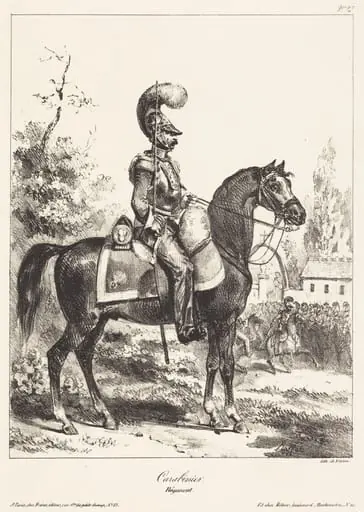 Carabinier
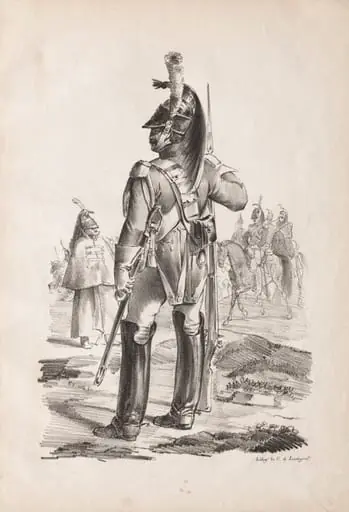 Military Costumes: Grenadier of the Royal Guard
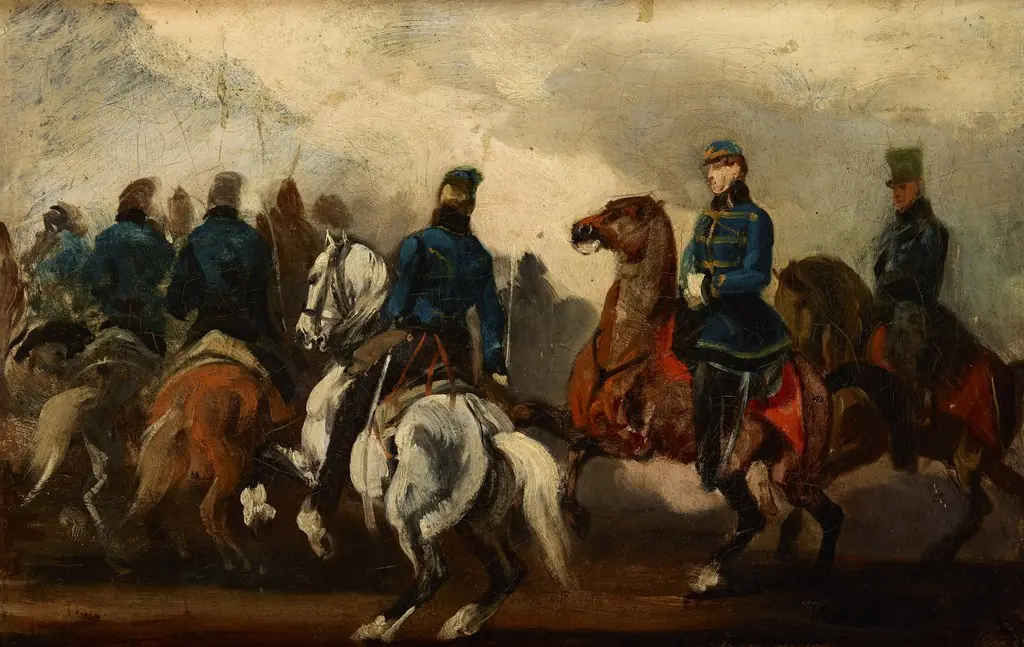 Detachment of Austrian Hussars
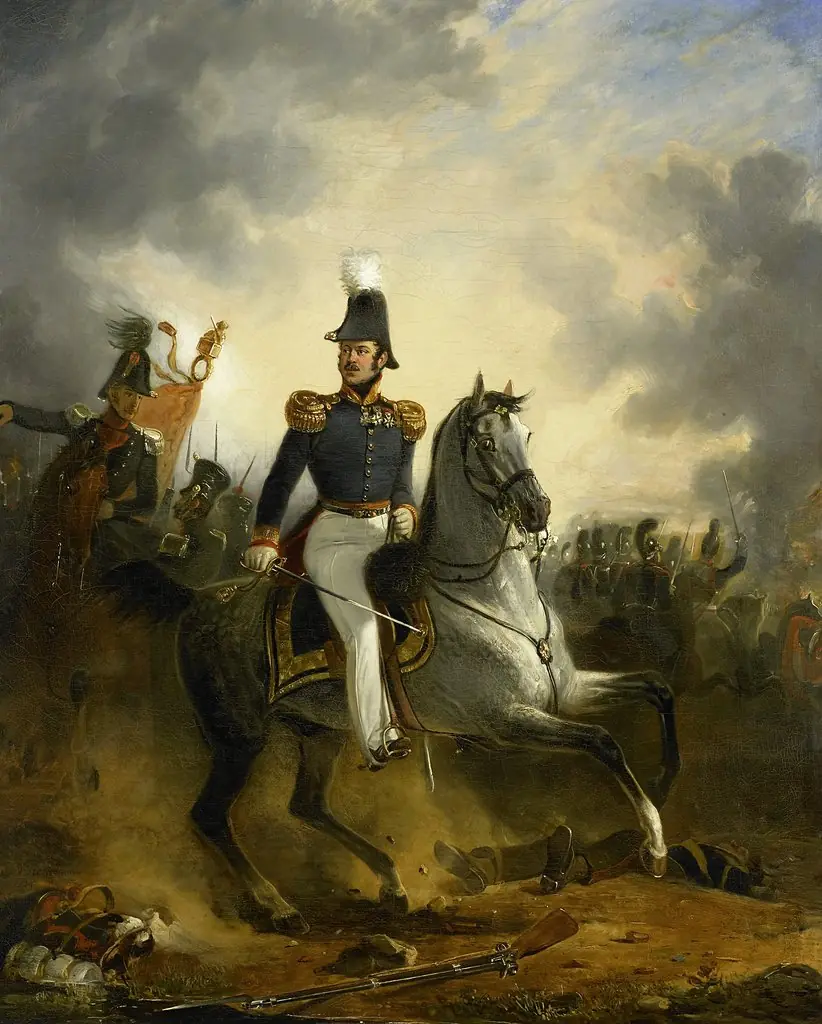 Lieutenant-General Frederik Knotzer in the Battle of Houthalen, during the 10 Days' Campaign, 1831
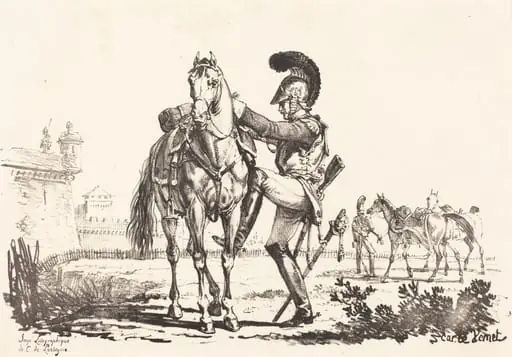 Carabinier Mounting a Horse
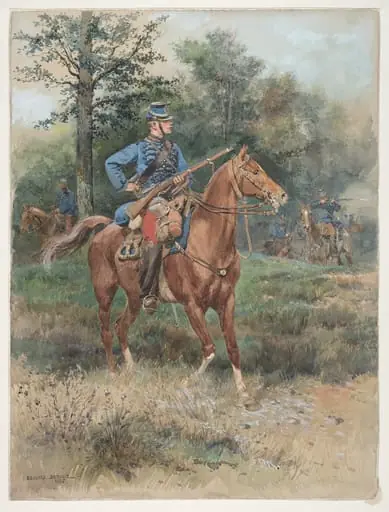 Chasseur à Cheval (Soldier on Horseback)
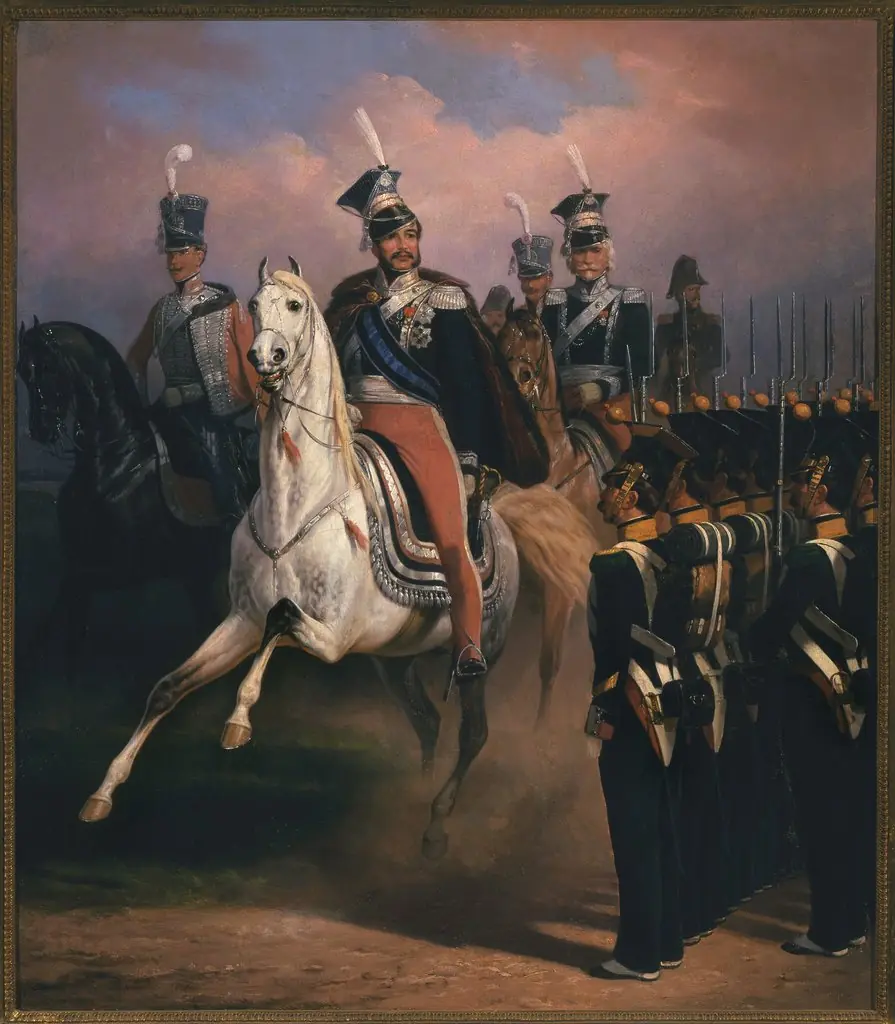 Prince Józef Poniatowski before the front of grenadiers
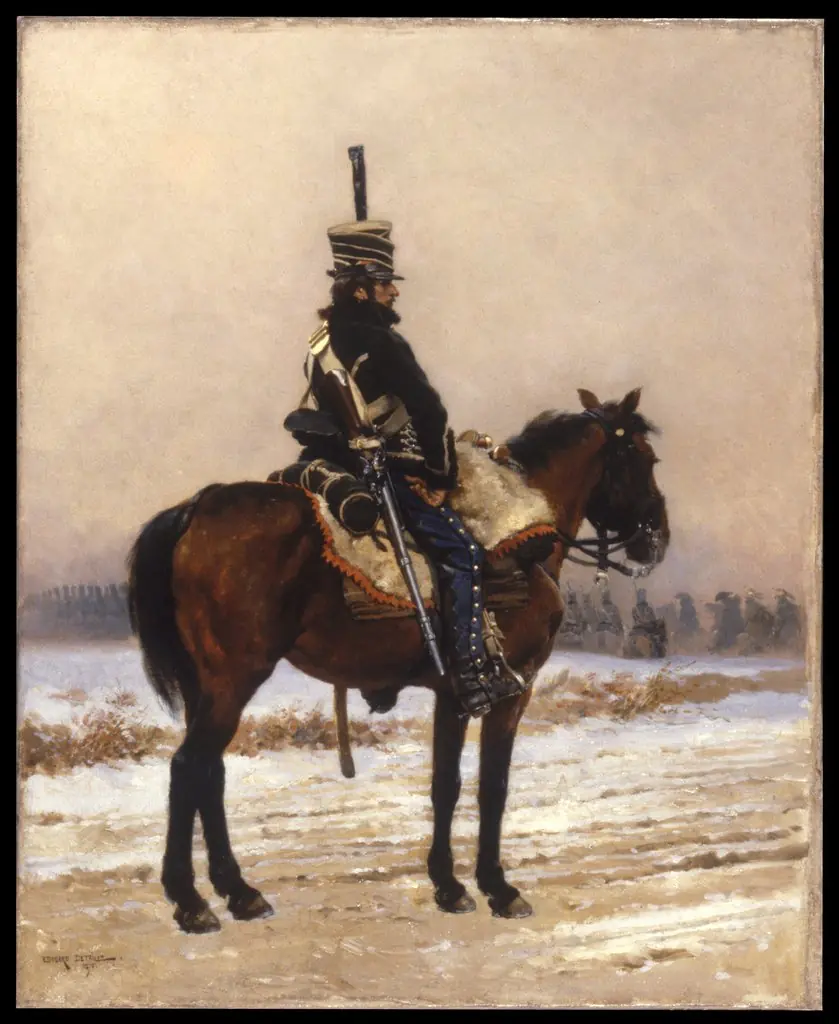 The Picket
 Arnoutes Gardes-Côtes