Artwork
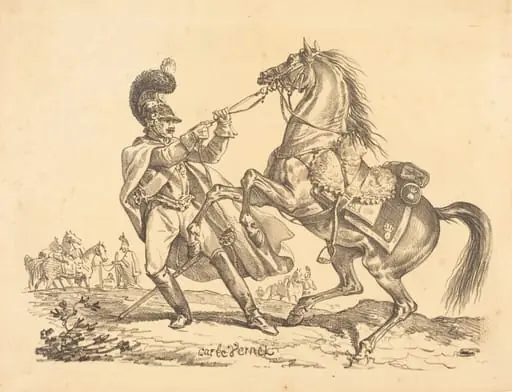
Carabinier Mounting a Horse
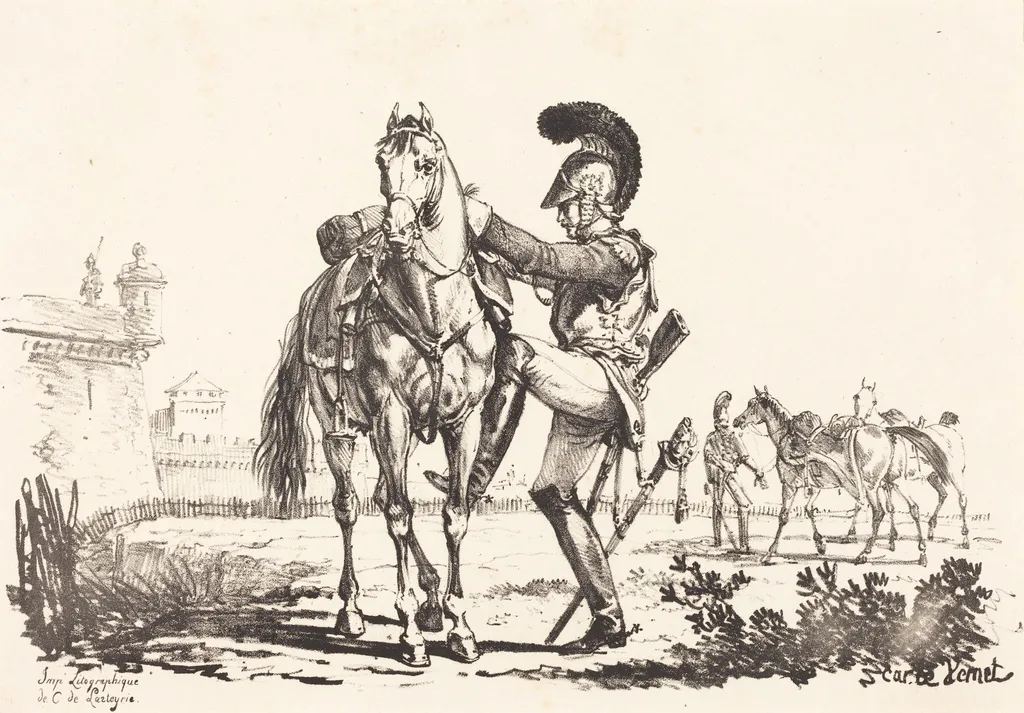
Carabinier Mounting a Horse is an ink print by the Romanticist artist Carle Vernet. It dates from 1797 and is held in the collection of the National Gallery of Art.
About this work
Overview
Carabinier Mounting a Horse is a lithograph created by French artist Carle Vernet in 1797. As the son of painter Claude-Joseph Vernet, Carle Vernet specialized in military and genre scenes, with a particular emphasis on cavalry and equestrian themes.
Subject & Meaning
The lithograph depicts a dynamic scene of a carabinier (a type of cavalryman) in the act of mounting his horse. The image conveys a sense of energy and movement, capturing a fleeting moment of interaction between the rider and his horse.
Technique & Style
Executed in lithograph, a technique that allowed for expressive line work, the piece showcases Vernet's ability to evoke movement and tension through bold, dynamic composition. The style aligns with early Romantic tendencies, emphasizing emotion and action.
History & Provenance
Created in 1797, the work reflects Vernet's established interest in military subjects. While specific provenance details are not provided, the piece is characteristic of his output during this period, showcasing his thematic preoccupations.
Context
Set against a rural backdrop with visible buildings, trees, and grass, the scene suggests a countryside or military encampment setting. This context grounds the action within a plausible, everyday scenario for a carabinier.
Legacy
Carabinier Mounting a Horse exemplifies Vernet's contribution to the Romantic movement through its emphasis on movement and emotional intensity. It stands as part of a broader body of work by Vernet that influenced the depiction of military and equestrian subjects in early 19th-century art.
Own this work as a print
Artist & collection

Artist
Antoine Charles Horace Vernet, better known as Carle Vernet, was a French painter, the youngest child of painter Claude-Joseph Vernet and the father of painter Horace Vernet.

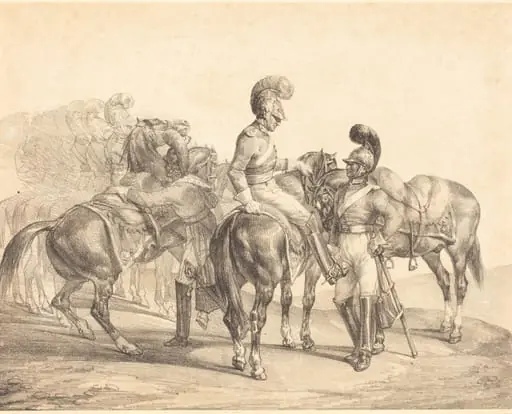 A Party of Life Guards
 Cuirassier retenant son cheval qui se cabre
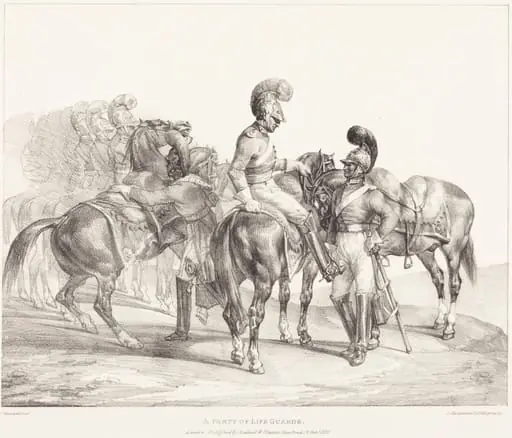 A Party of Life Guards
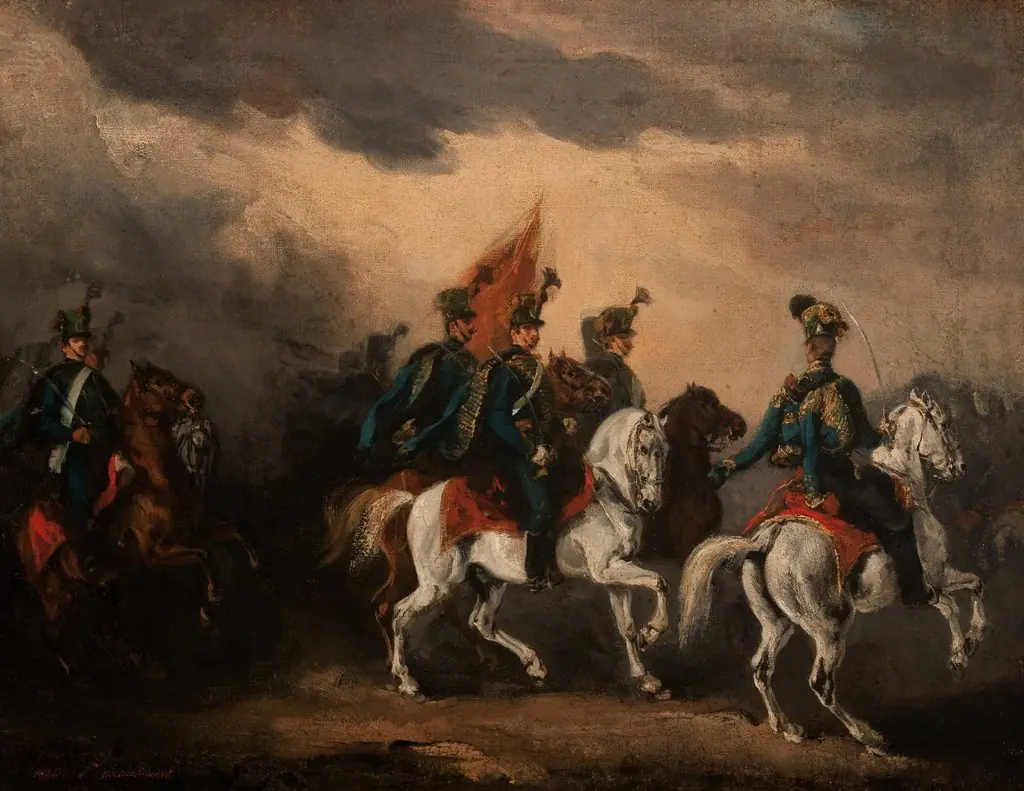 Blue Hussars
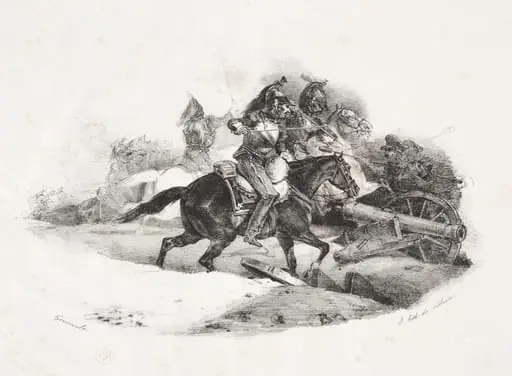 Cuirassiers Charging an Artillery Battery
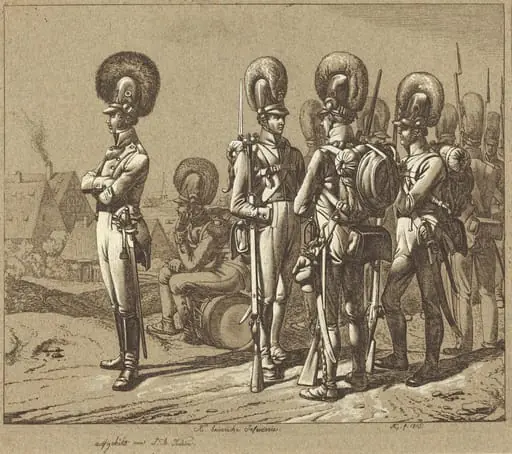 K. baierische Infanterie (Bavarian Infantrymen)
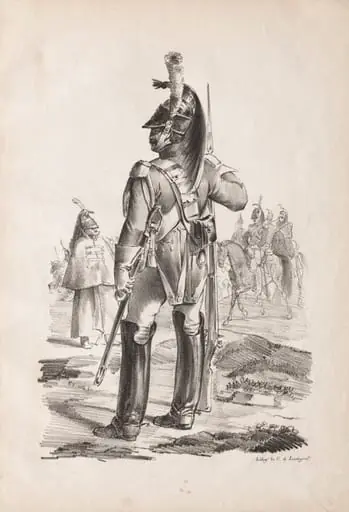 Military Costumes: Grenadier of the Royal Guard
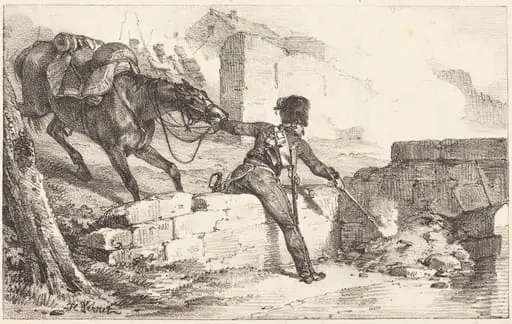 Artilleryman Lighting a Mine
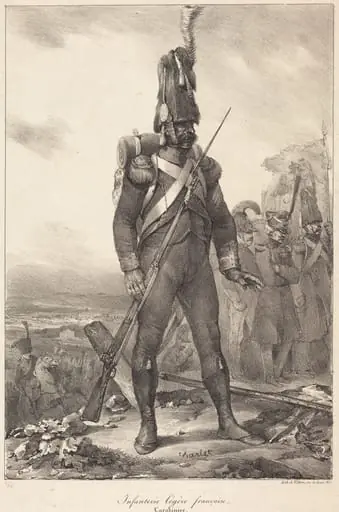 Infanterie legère française, Carabinier
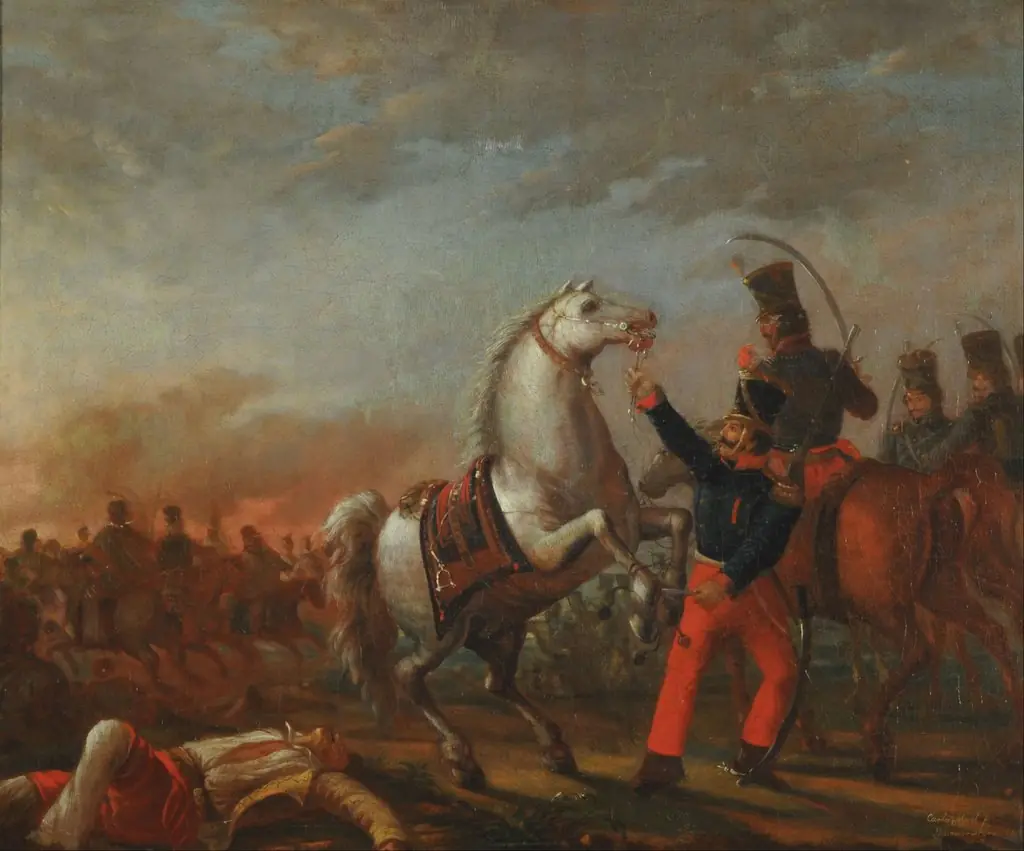 Carga de caballería - Serie Usos y Costumbres de Buenos Aires
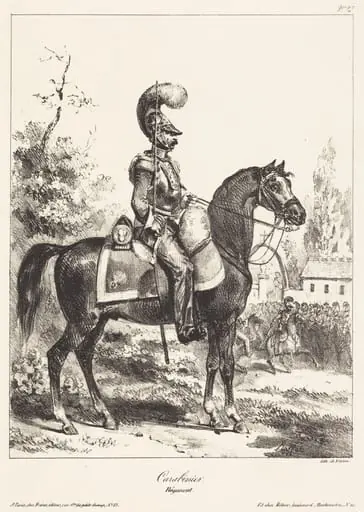 Carabinier