Artwork
Saint Vincent
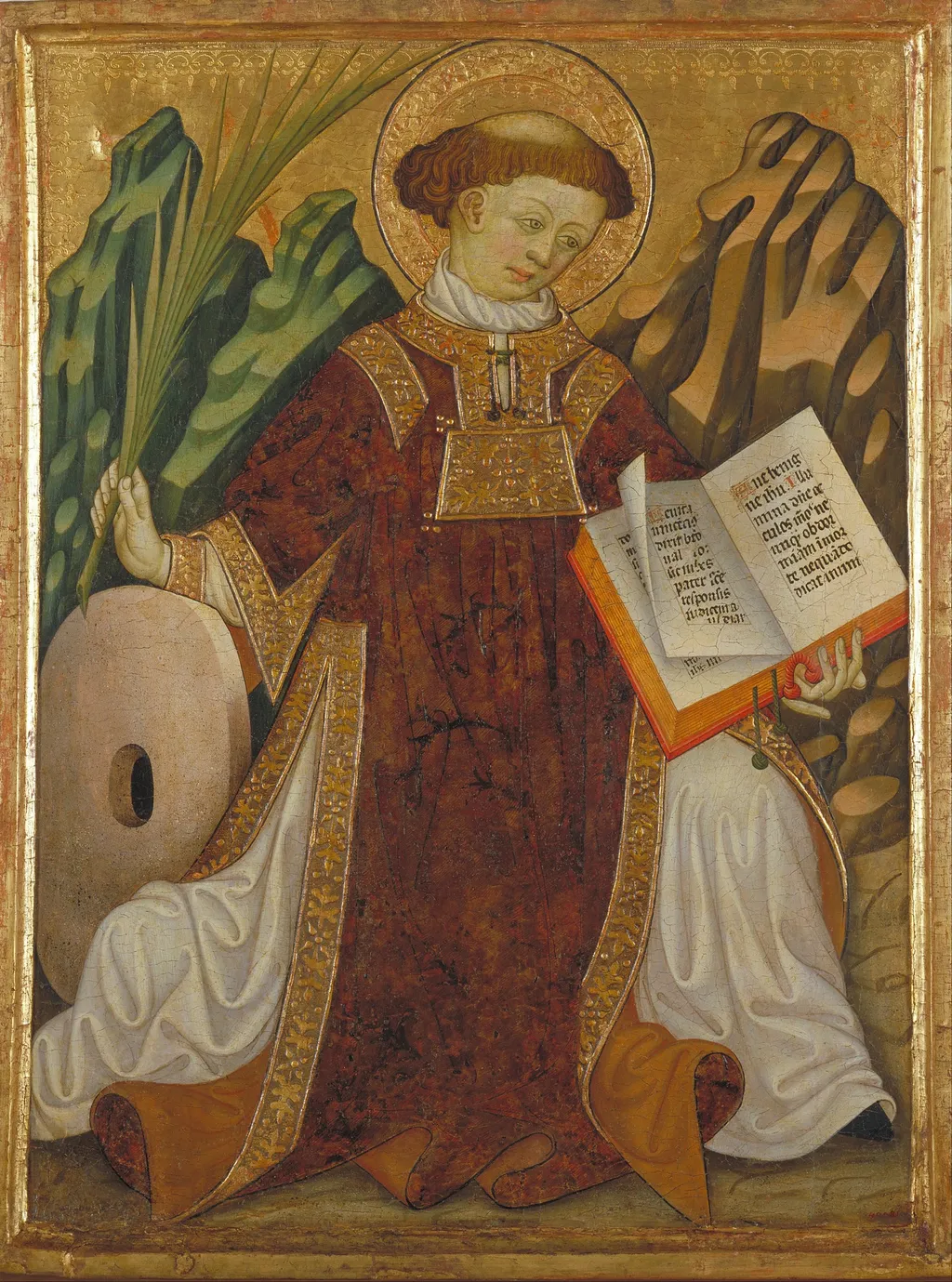
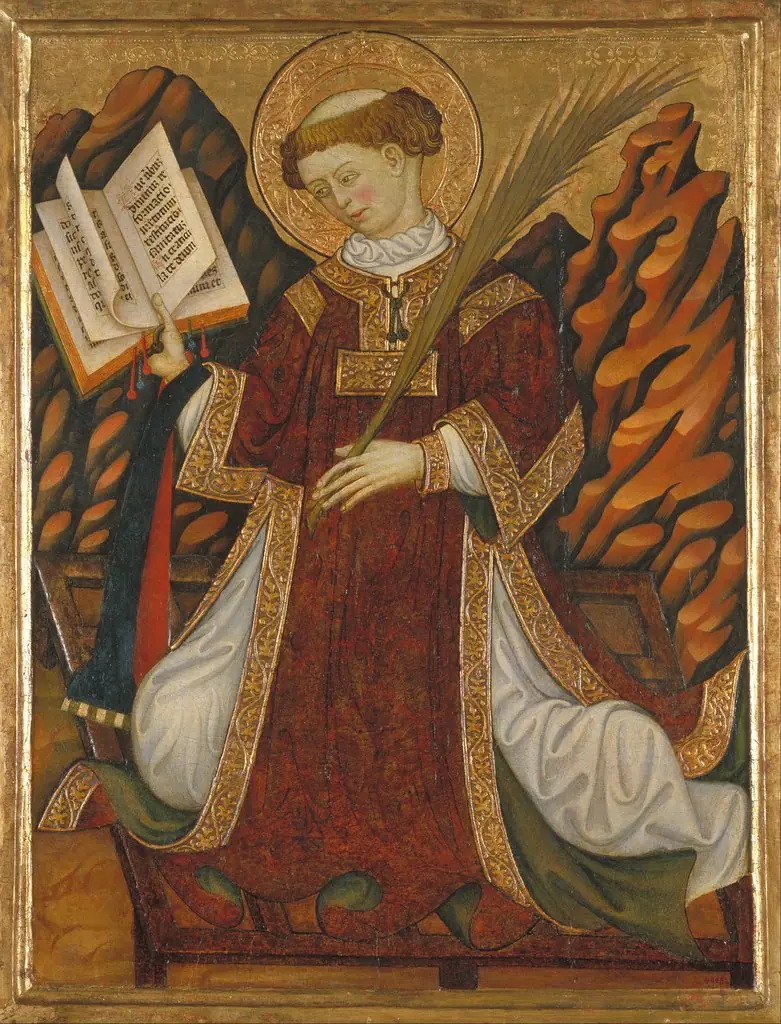
Saint Vincent is an unspecified painting by the Early Renaissance artist Bonanat Zaortiga the Elder. It dates from 1450 and is held in the collection of the Museu Nacional d'Art de Catalunya.
About this work
Overview
Saint Vincent is a 15th-century religious painting created around 1450 by Bonanat Zaortiga the Elder. The work is part of the collection at the Museu Nacional d'Art de Catalunya.
Subject & Meaning
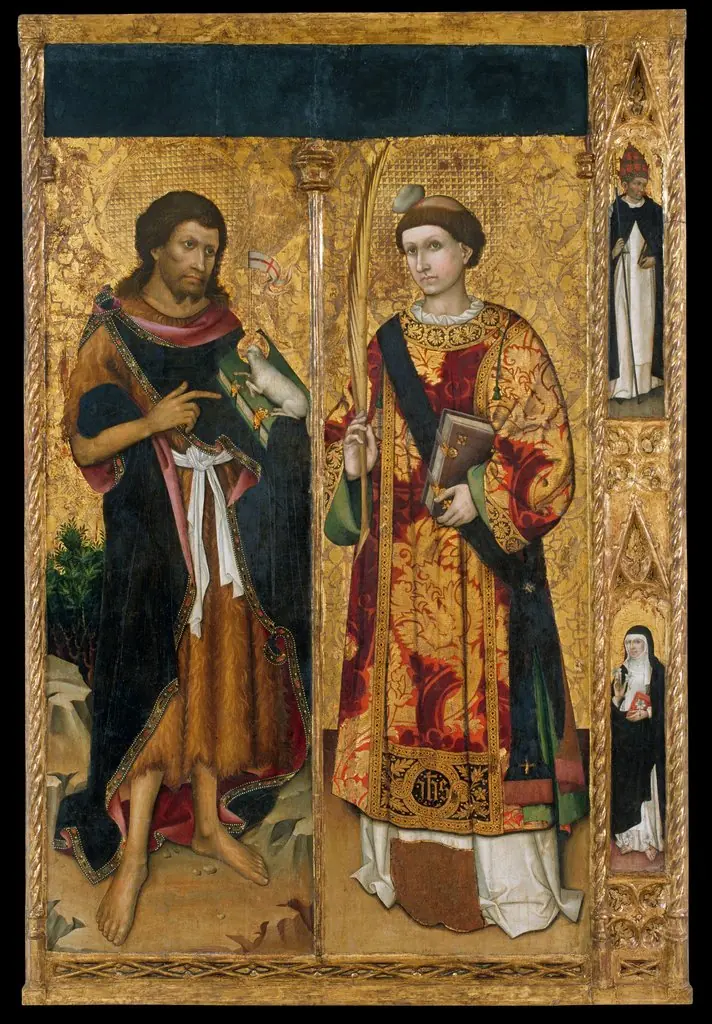
The painting portrays Saint Vincent in a state of serene devotion. He is identifiable by the palm branch (symbolizing martyrdom) in his right hand and an open book (representing wisdom or scripture) in his left. A halo surrounds his head, signifying his sainthood.
Technique & Style
The artist employed a detailed, ornate style, evident in the intricate gold designs on the saint's red robe and the white collar. The use of chiaroscuro contributes to the serene and devotional atmosphere, though the specific application of this technique in 'Saint Vincent' is not elaborated here.
History & Provenance
Created circa 1450, the painting's history prior to its current location is not detailed here. It is now housed at the Museu Nacional d'Art de Catalunya.
Context
The depiction of Saint Vincent in front of a contrasting backdrop—a rocky landscape with greenery on one side—may symbolize the harmony between the spiritual and natural worlds, though this interpretation requires further contextual art historical analysis.
Legacy
The painting's impact or influence on subsequent artistic works is not specified in the provided information.
Artist & collection
Artist
This artist painted altarpieces and religious panels in 15th-century Valencia, Spain.