Artwork
Hl. Augustinus
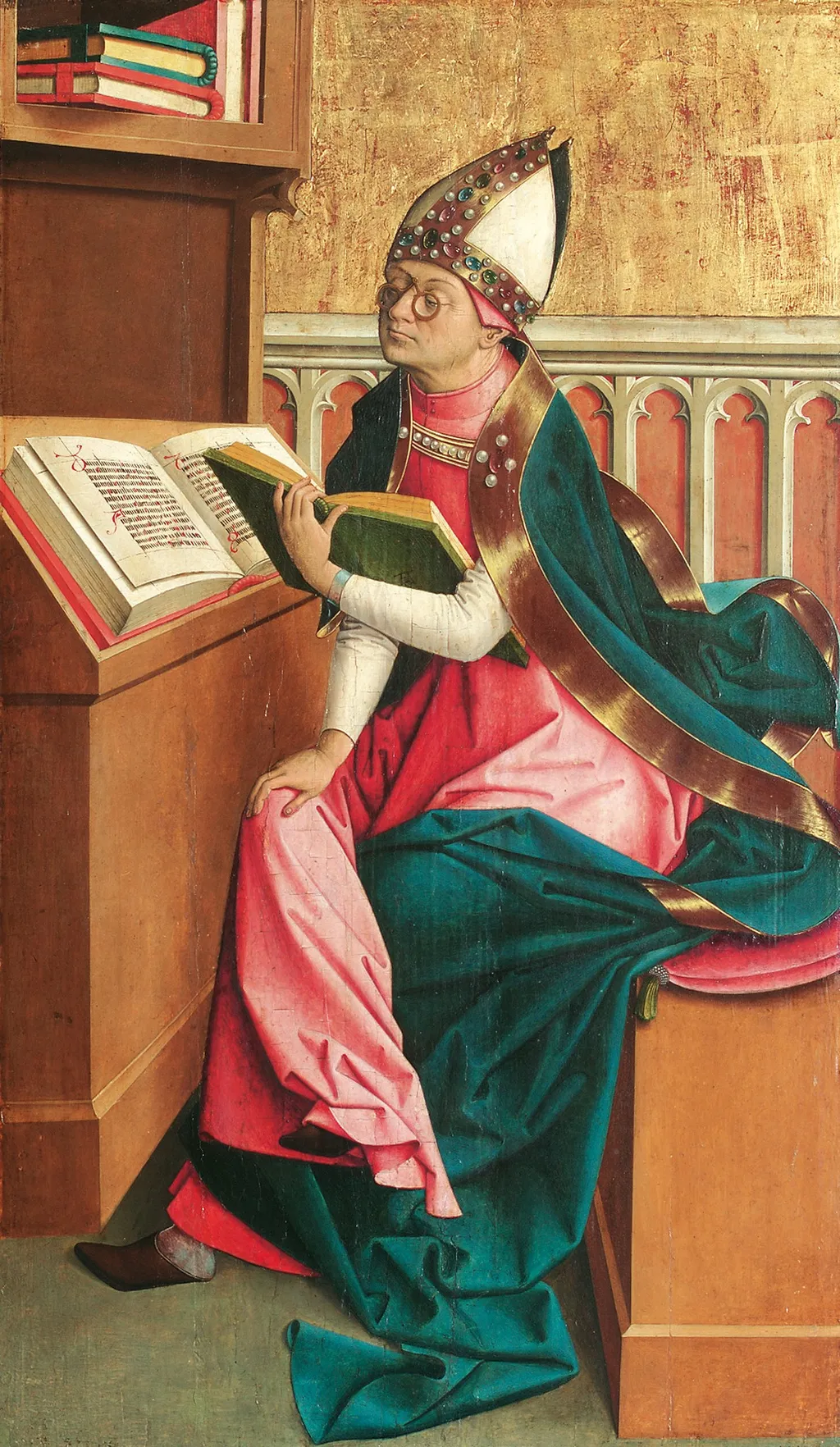
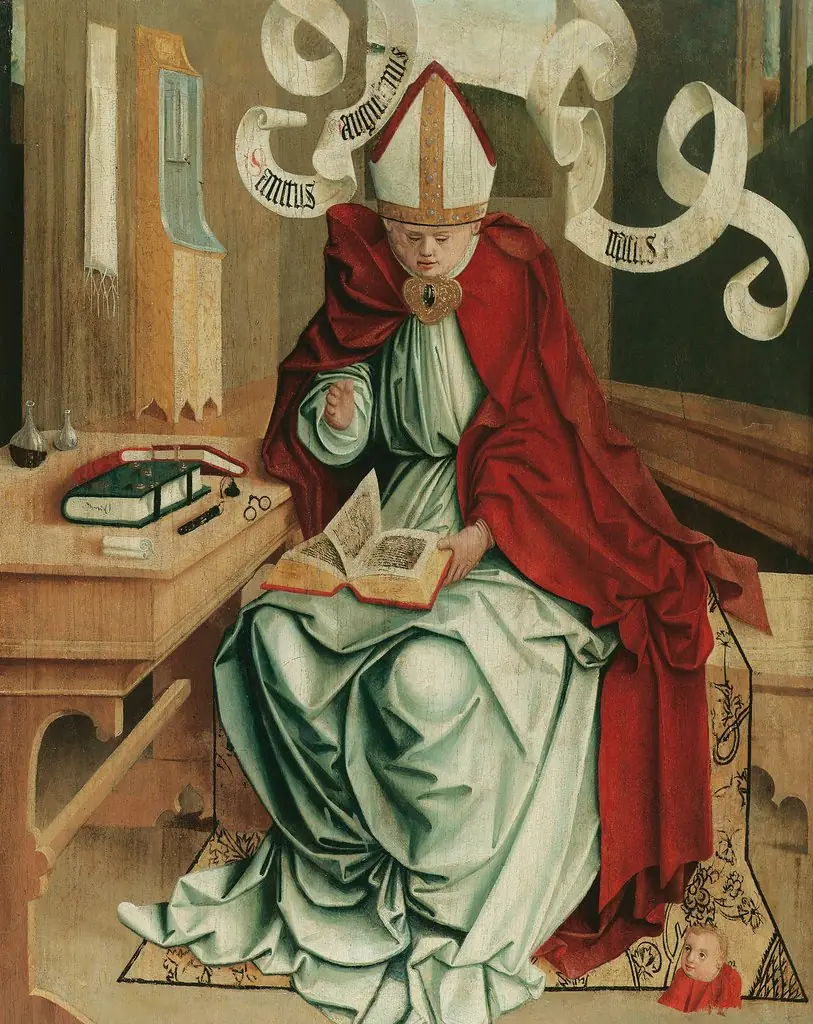
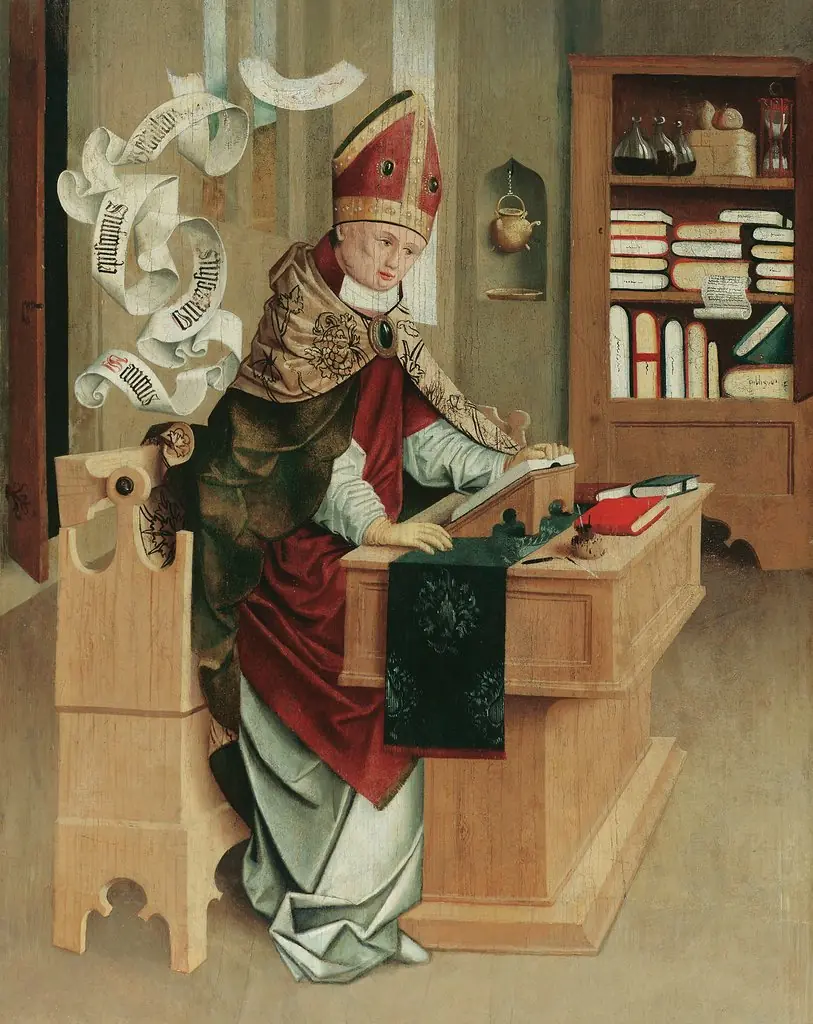
Hl. Augustinus is an unspecified painting by the Northern Renaissance artist Master of Großgmain. It dates from 1500 and is held in the collection of the Kunsthistorisches Museum.
About this work
Overview
Created around 1500, this panel painting is attributed to the anonymous artist known as the Master of Großgmain. It is part of the collection of the Kunsthistorisches Museum in Vienna. The work presents a solitary figure seated on a wooden bench, rendered with careful attention to fabric, accessories, and interior details.
Subject & Meaning
The sitter is identified as Saint Augustine, a pivotal theologian of the early Church. He is shown in a red robe beneath a green cloak, a jeweled mitre‑like hat, and holding a book, symbols of his scholarly authority and spiritual insight. The setting, with a wall, railing, and a cabinet of books, reinforces his role as a learned monk.
Technique & Style
The painting demonstrates the fine brushwork typical of early‑16th‑century Central European art. Precise rendering of textures—such as the sheen of the jeweled hat and the folds of the garments—indicates a high level of craftsmanship. The composition balances a modest interior space with a clear, frontal figure, reflecting the period’s devotional realism.
History & Provenance
The work entered the Kunsthistorisches Museum’s holdings in the 19th century, although earlier ownership records are sparse. Its attribution to the Master of Großgmain rests on stylistic comparison with other signed or documented works by the same hand, linking it to the artistic milieu of the Upper Austrian region.
Context
During the turn of the 16th century, depictions of saints in scholarly poses were common in monastic settings, serving both didactic and devotional purposes. The inclusion of a book and a cabinet of texts reflects the growing emphasis on theological study and the humanist interest in classical learning that began to permeate religious art of the era.
Artist & collection

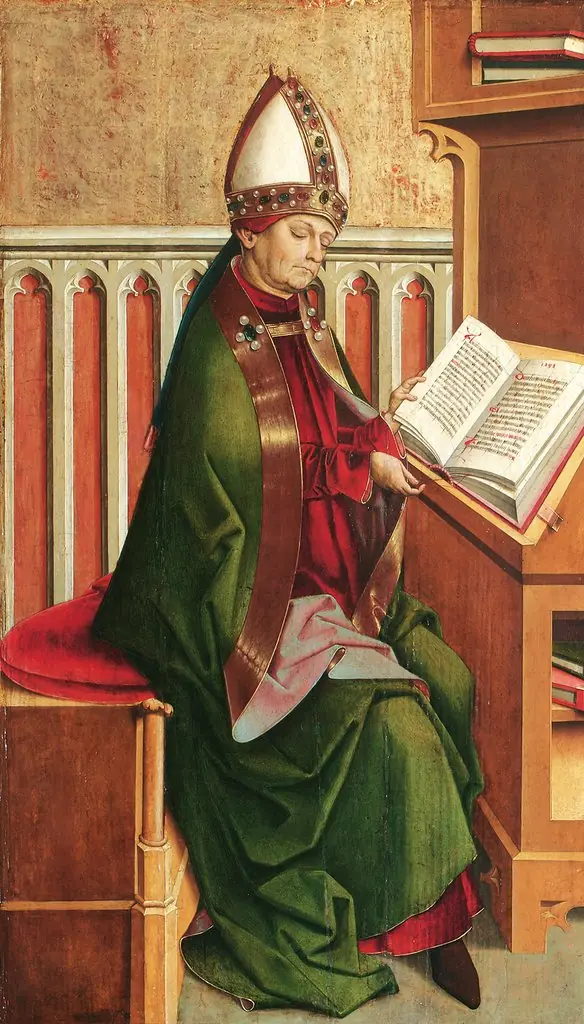 Hl. Ambrosius
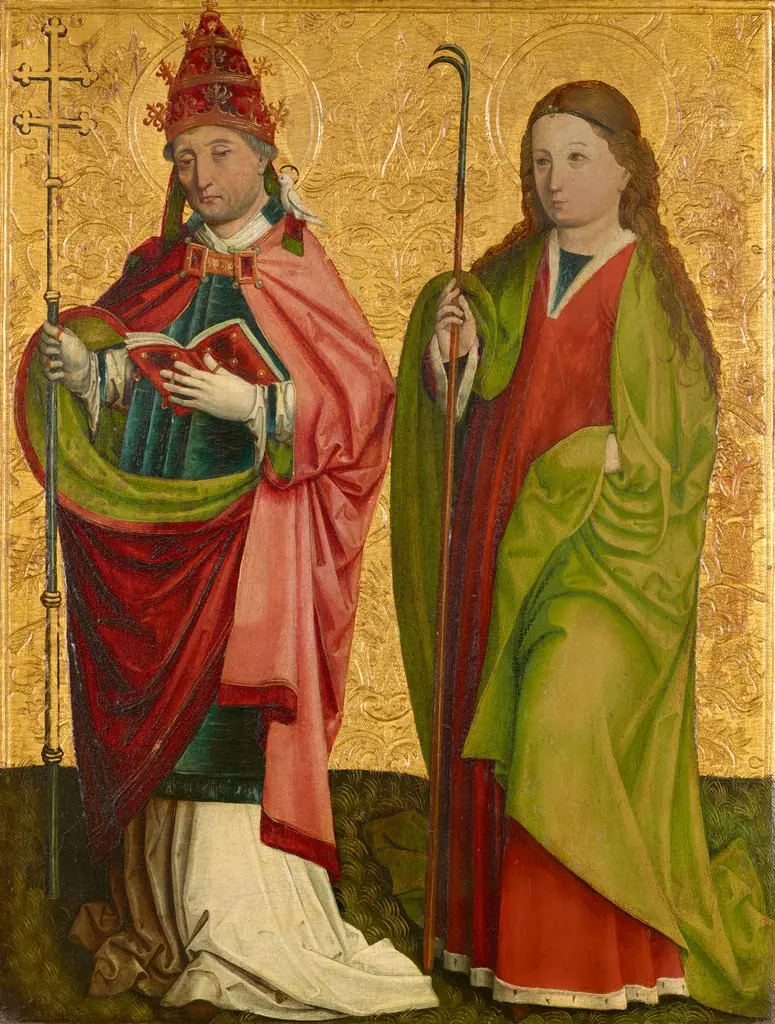 Rechter Flügel des sog. Pretschlaipfer-Triptychons: Hll. Gregor und Agathe (Innenseite); Hll. Erasmus und Barbara (Außenseite)
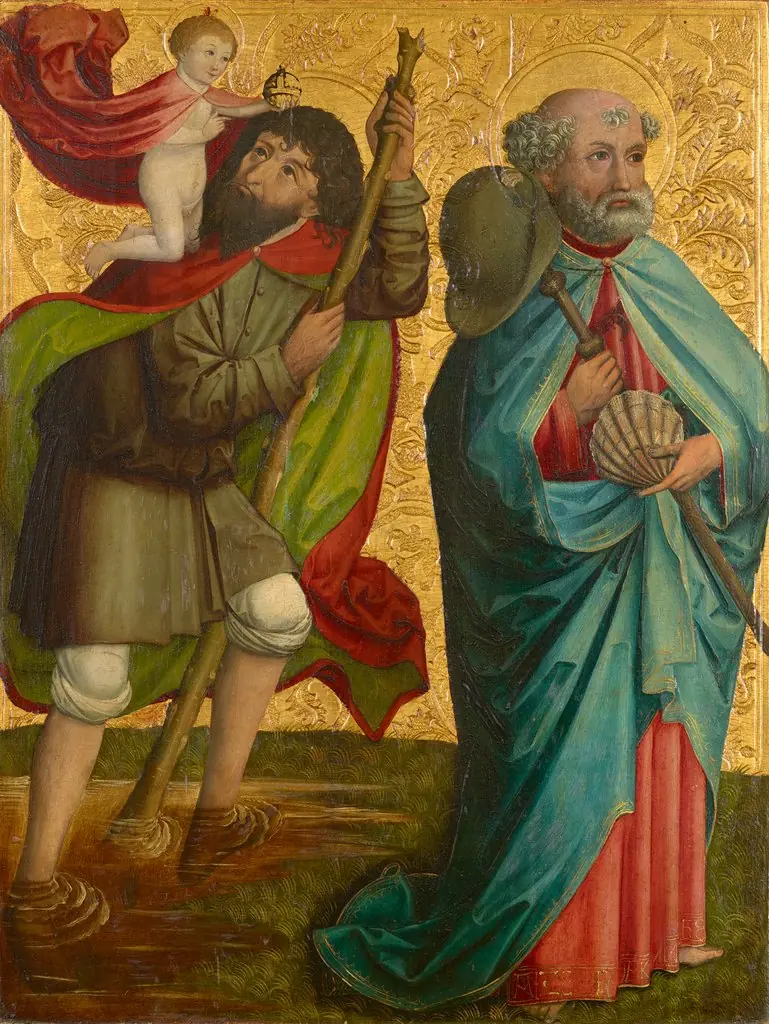 Linker Flügel des sog. Pretschlaipfer-Triptychons: Hll. Christophorus und Jakobus Major (Innenseite); Verkündigung an Maria (Außenseite)
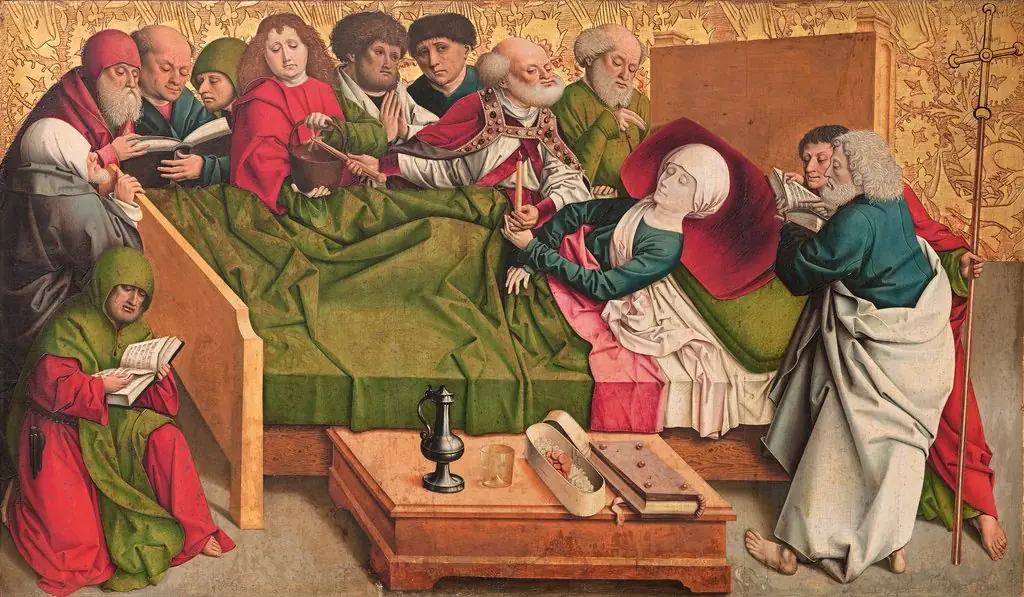 Marientod, Mitteltafel des sog. Pretschlaipfer-Triptychons