Artwork
Entree de la rade de Rio-Janeiro
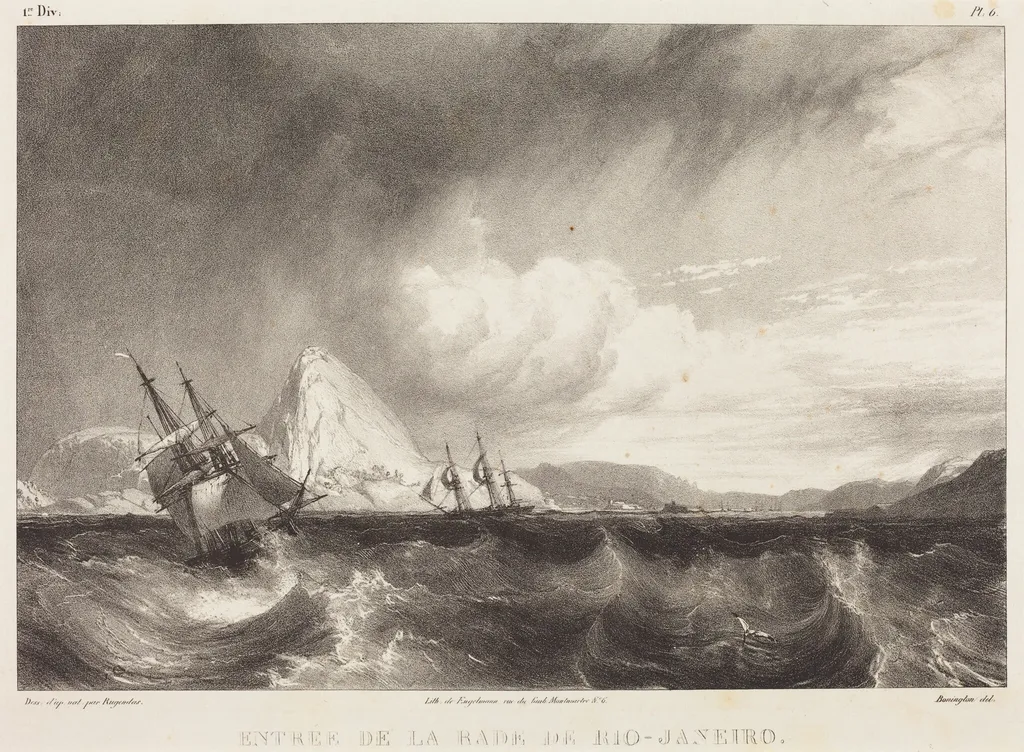
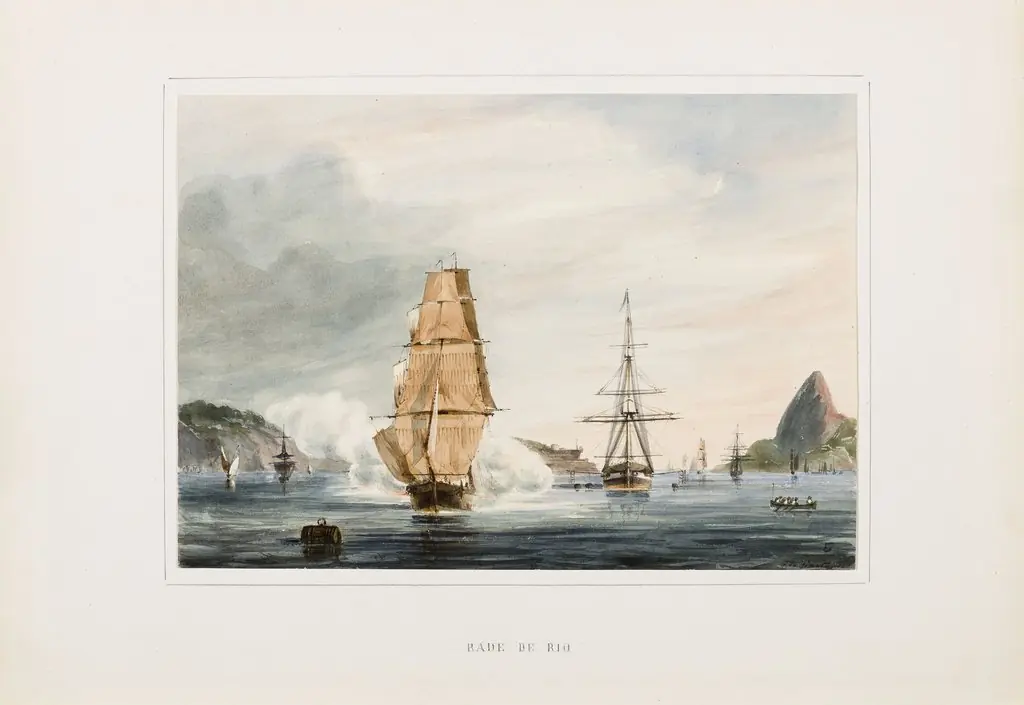
Entree de la rade de Rio-Janeiro is an ink print by the Romanticist artist Richard Parkes Bonington. It dates from 1827 and is held in the collection of the National Gallery of Art.
About this work
Overview
Created in 1827, this lithograph by Richard Parkes Bonington captures the entrance to Rio de Janeiro’s harbor during a turbulent moment.
Created in 1827, this lithograph by Richard Parkes Bonington captures the entrance to Rio de Janeiro’s harbor during a turbulent moment. Executed in the medium of lithography, the print reflects Bonington’s brief but influential career as a landscape artist who bridged English and French artistic traditions. Though he died at age 25, his work in printmaking helped expand the expressive potential of the medium in early 19th-century Europe.
Subject & Meaning
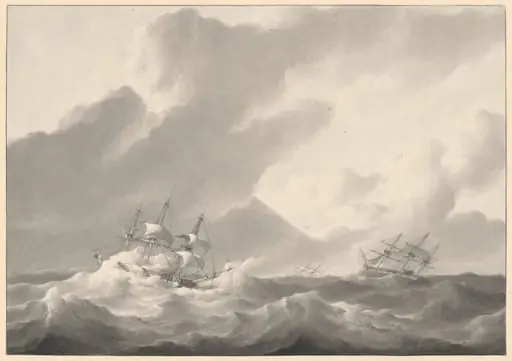
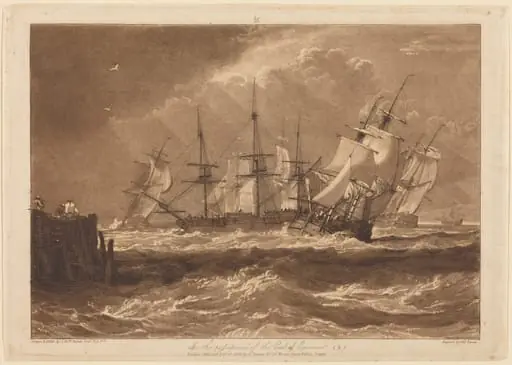
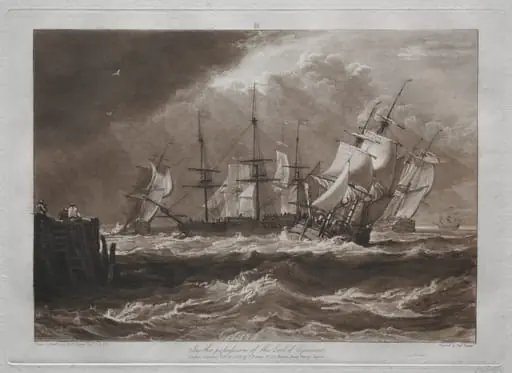
The scene depicts three vessels battling heavy seas near a towering coastal mountain, their forms bent under the force of wind and wave. While the title identifies the location as Rio’s harbor, the mood is less topographical than emotional—emphasizing nature’s power over human endeavor. The absence of human figures heightens the sense of isolation and elemental struggle, aligning the image with Romantic ideals of nature’s sublime force.
Technique & Style
Bonington employed lithography to achieve a rapid, sketch-like quality, using fluid, incised lines to suggest motion and texture. The sky and sea are rendered with loose, energetic strokes that convey turbulence, while the mountain emerges as a solid, dark mass against the swirling clouds. The technique allows for subtle tonal gradations, enhancing the atmospheric tension without relying on heavy shading or detail.
History & Provenance
Produced during Bonington’s time in France, the print was likely made for a broader audience interested in exotic locales and Romantic landscapes. It was part of a series of lithographs documenting coastal scenes, circulated among collectors and artists. Though few impressions survive, its creation coincided with growing European fascination with South American geography following colonial exploration.
Context
In the 1820s, lithography was emerging as a viable medium for fine art reproduction, particularly in France. Bonington, influenced by French Romantic painters like Delacroix, adapted its immediacy to capture transient effects of light and weather. His work stood apart from more rigid British topographical prints, offering instead a subjective, emotionally charged vision of place that resonated with contemporary aesthetic shifts.
Legacy
Bonington’s lithographs, including this one, demonstrated how printmaking could convey the same emotional depth as oil painting. His approach influenced later British artists who sought to break from academic conventions, particularly in landscape and seascape subjects. Though his career was short, his integration of spontaneity and atmosphere into printmaking left a measurable mark on 19th-century British art practices.
Artist & collection
Artist
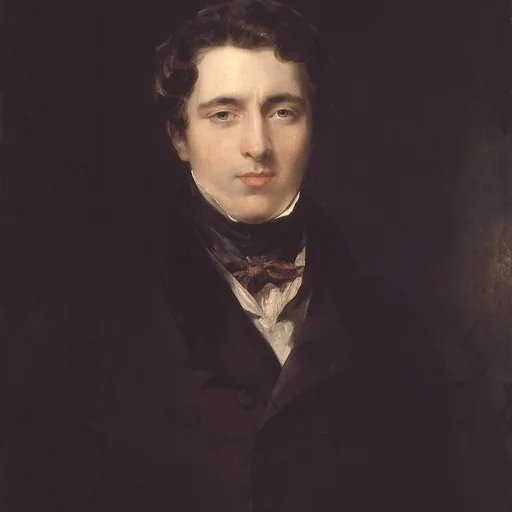
Richard Parkes Bonington (25 October 1802 – 23 September 1828) was an English Romantic landscape painter.