Artwork
Aigle Liant un Lièvre (An Eagle Pouncing on a Hare)
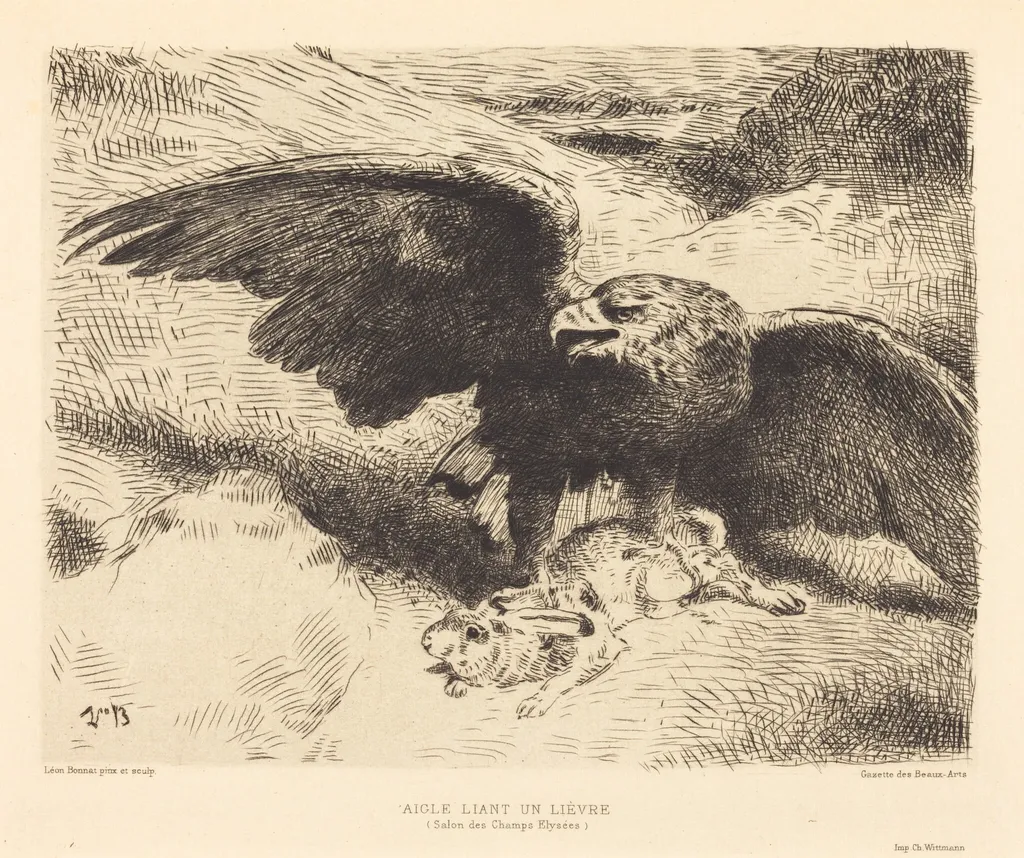
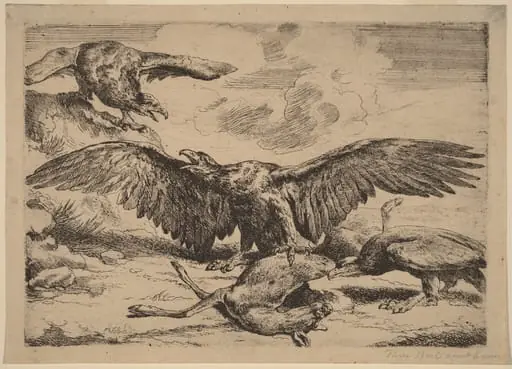
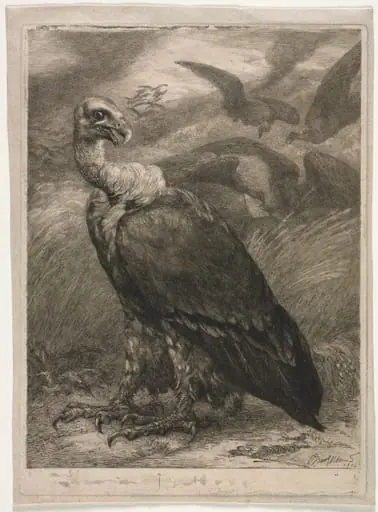
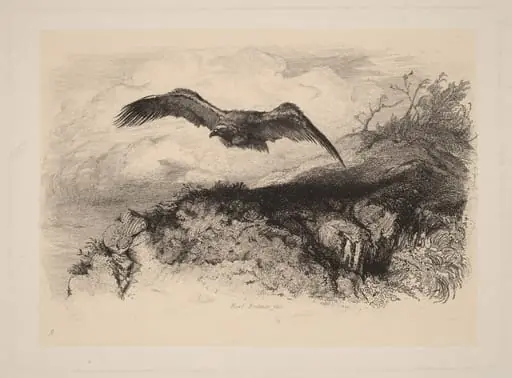
Aigle Liant un Lièvre (An Eagle Pouncing on a Hare) is an ink print by the Romanticist artist Léon Bonnat. It dates from 1878 and is held in the collection of the National Gallery of Art. Created in 1878, *Aigle Liant un Lièvre* is a drypoint print by French artist Léon Joseph Florentin Bonnat.
About this work
Overview
Executed in black ink on laid paper, the work belongs to a lesser-known body of graphic studies produced alongside his larger painted commissions.
Created in 1878, *Aigle Liant un Lièvre* is a drypoint print by French artist Léon Joseph Florentin Bonnat. Executed in black ink on laid paper, the work belongs to a lesser-known body of graphic studies produced alongside his larger painted commissions. Bonnat, primarily recognized for portraiture and historical subjects, turned to the natural world here with focused intensity, using the intimate scale and fine line of drypoint to capture a fleeting moment of predation.
Subject & Meaning
The print portrays an eagle mid-dive, wings outstretched, talons aimed at a hare that appears unaware, its head turned away as if alert to distant sounds. The scene avoids overt symbolism, instead presenting nature’s violence with quiet immediacy. The hare’s stillness contrasts with the eagle’s dynamic motion, heightening the sense of inevitability. There is no narrative embellishment—only the raw tension of survival in the wild.
Technique & Style
Bonnat employed drypoint, a printmaking method that scratches lines directly into a metal plate, producing rich, velvety blacks and fine, expressive strokes. The contrast between the eagle’s dense, textured feathers and the hare’s lighter, smoother fur is achieved through varying line density. Background tones are minimized, allowing the figures to emerge through chiaroscuro effects, with shadow and light defining form rather than detail.
History & Provenance
The print was made during Bonnat’s tenure at the École des Beaux-Arts, where he encouraged students to study from life and nature. Though few of his graphic works were widely distributed, this piece likely circulated among artists and collectors familiar with his draftsmanly precision. Its survival in institutional collections suggests it was valued for its technical mastery rather than its popularity.
Context
In late 19th-century France, naturalism in art extended beyond human subjects to include animals observed in their habitats. Bonnat’s print aligns with broader interests in zoological accuracy and the sublime forces of nature, paralleling developments in scientific illustration and the growing public fascination with wildlife. Unlike romanticized depictions, this work avoids sentimentality, favoring direct observation.
Legacy
Though overshadowed by Bonnat’s portraits and large-scale paintings, *Aigle Liant un Lièvre* remains a testament to his skill as a draftsman. It exemplifies how academic artists engaged with printmaking not as a secondary medium, but as a means of disciplined study. The print continues to be referenced in discussions of French graphic art and the intersection of science and visual representation in the 1870s.
Own this work as a print
Artist & collection
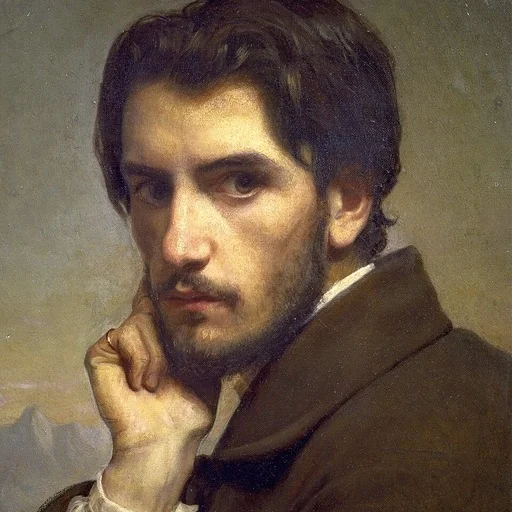
Artist
Léon Joseph Florentin Bonnat (French pronunciation: ; 20 June 1833 – 8 September 1922) was a French painter, Grand Officer of the Légion d'honneur, art collector and professor at the Ecole des Beaux Arts.