Artwork
Isola Bella
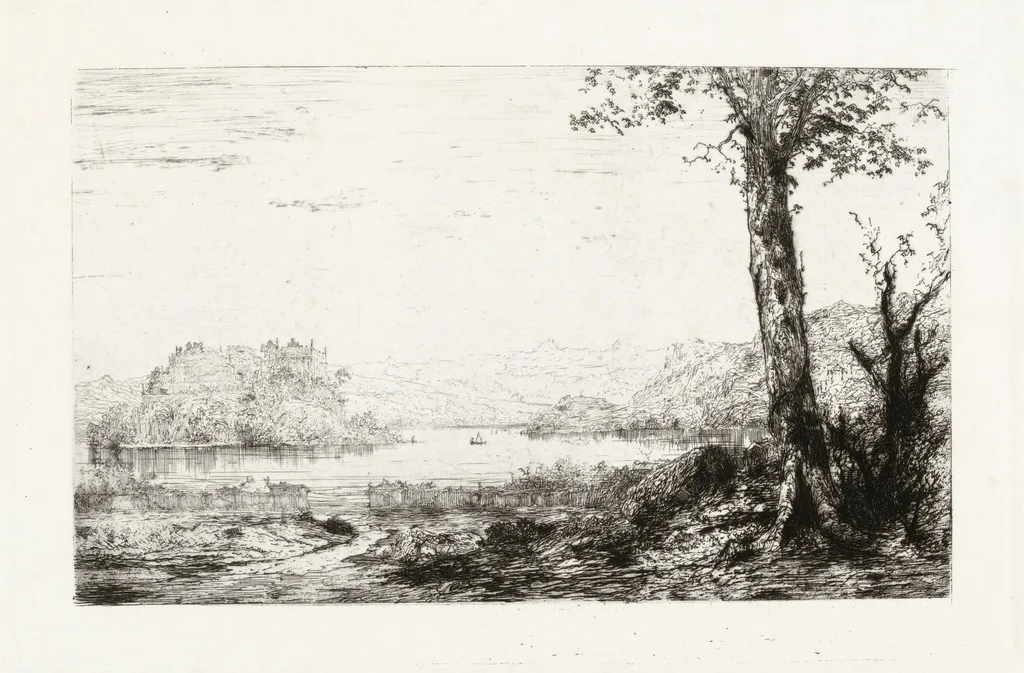
Isola Bella is an ink print by the Impressionist artist Giberto Borromeo. It dates from 1870 and is held in the collection of the National Gallery of Art.
About this work
Overview
Behind the water, a gently sloping hill supports sparse architecture and foliage, suggesting a cultivated landscape.
Isola Bella is a black-and-white etching produced in 1870 by Giberto Borromeo on wove paper. The composition captures a tranquil lakeside scene with a large tree on the right, rippling water near the shore, and a distant boat gliding over smoother currents. Behind the water, a gently sloping hill supports sparse architecture and foliage, suggesting a cultivated landscape. The work exemplifies 19th-century printmaking’s focus on subtle tonal variation and naturalistic detail.
Subject & Meaning
The scene depicts a quiet stretch of water near Isola Bella, one of the Borromean Islands in Lake Maggiore. Rather than emphasizing grandeur, the artist presents a contemplative, understated view—focusing on the interplay of light, water, and vegetation. The presence of a solitary boat and scattered buildings implies human presence without intrusion, evoking a sense of peaceful seclusion rather than tourist spectacle.
Technique & Style
Borromeo employed fine, controlled etching lines to render textures: the choppy near-shore water, the dappled foliage, and the soft gradations of light on the hillside. The use of wove paper allowed for delicate line work and even ink absorption. The tonal range is restrained, relying on line density rather than heavy shading to suggest depth and atmosphere, characteristic of academic printmaking in mid-to-late 19th-century Italy.
History & Provenance
Created in 1870, the etching likely originated as part of a series documenting the Borromean Islands, reflecting the artist’s familial connection to the region. While specific early ownership records are not widely documented, the work aligns with a broader tradition of Italian artists recording local landscapes for private collectors and print enthusiasts during the post-unification period.
Context
In the late 19th century, etching experienced a revival across Europe as artists sought to reclaim printmaking as a medium for personal expression. Borromeo’s work fits within this movement, balancing topographical accuracy with poetic observation. Unlike grand historical prints, Isola Bella reflects a quieter, more intimate engagement with place, mirroring contemporary shifts toward realism and domesticated nature in visual culture.
Legacy
The etching remains a modest but representative example of Italian landscape printmaking from the period. It contributes to the understanding of how regional identities were visually preserved through intimate, non-monumental imagery. Though not widely exhibited today, it continues to be studied for its technical restraint and its quiet documentation of a specific Italian lakeside environment.
Artist & collection


![Aux Iles Borromeo [Lago maggiore] (On the Borromean Islands [Lago Maggiore]), by Giberto Borromeo](https://artifactworldgallery.com/img/giberto-borromeo--aux-iles-borromeo-lago-maggiore-on-the-borromean-islands-lag--1506786a1c7a94aa-w320.webp)
![Forest on Lago Maggiore [Foresta sul Lago Maggiore], by Giberto Borromeo](https://artifactworldgallery.com/img/giberto-borromeo--forest-on-lago-maggiore-foresta-sul-lago-maggiore--6d25270befdb299f-w320.webp)
 Untitled (Landscape with Fisherman)
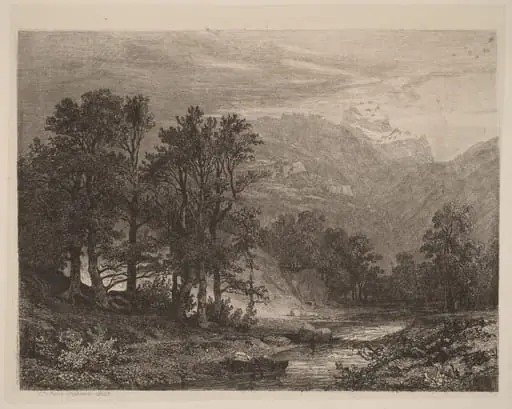 Mountain Stream
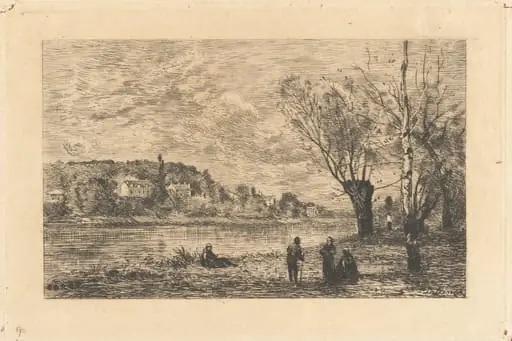 Ville d’Avray
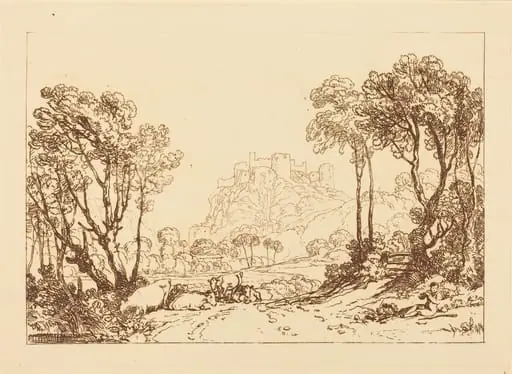 The Castle Above the Meadows
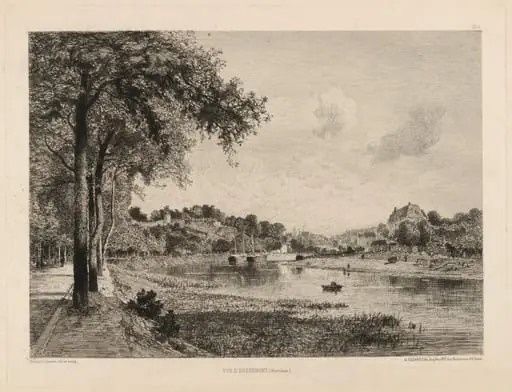 Vue d’Hennebont (Morbihan)
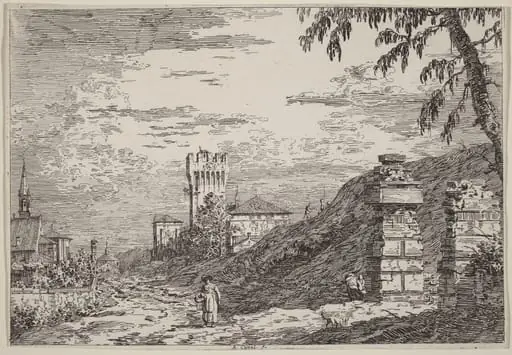 Landscape with Tower and Two Ruined Pillars
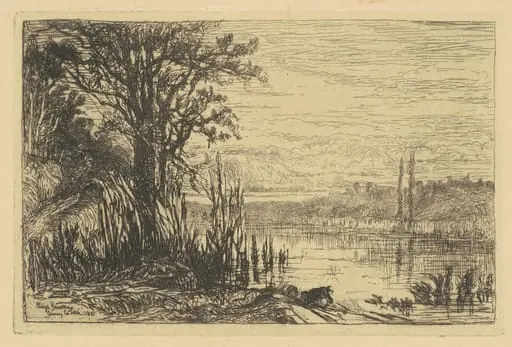 The Pond at Cernay-la-Ville
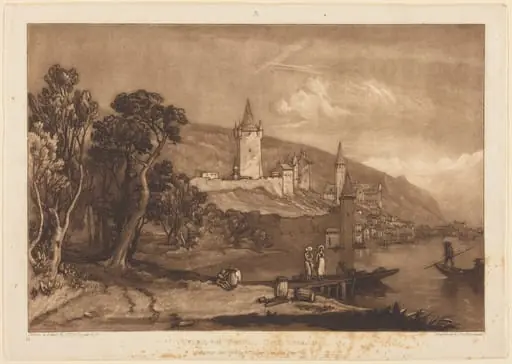 Ville de Thun
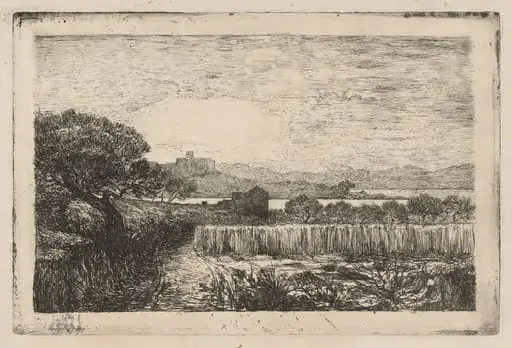 Village Overlooking a Bay
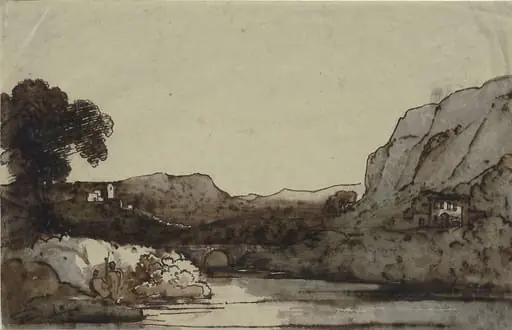 Landscape with Bridge and Mountains
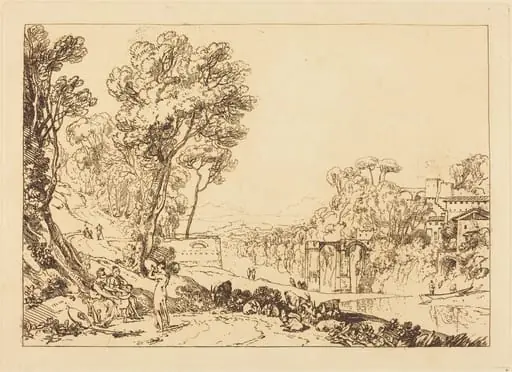 The Woman and Tambourine
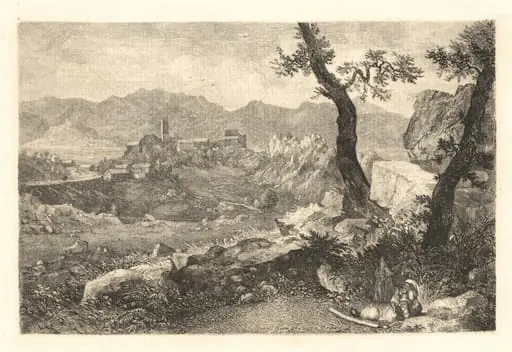 A View near Rome