Artwork
A View near Rome
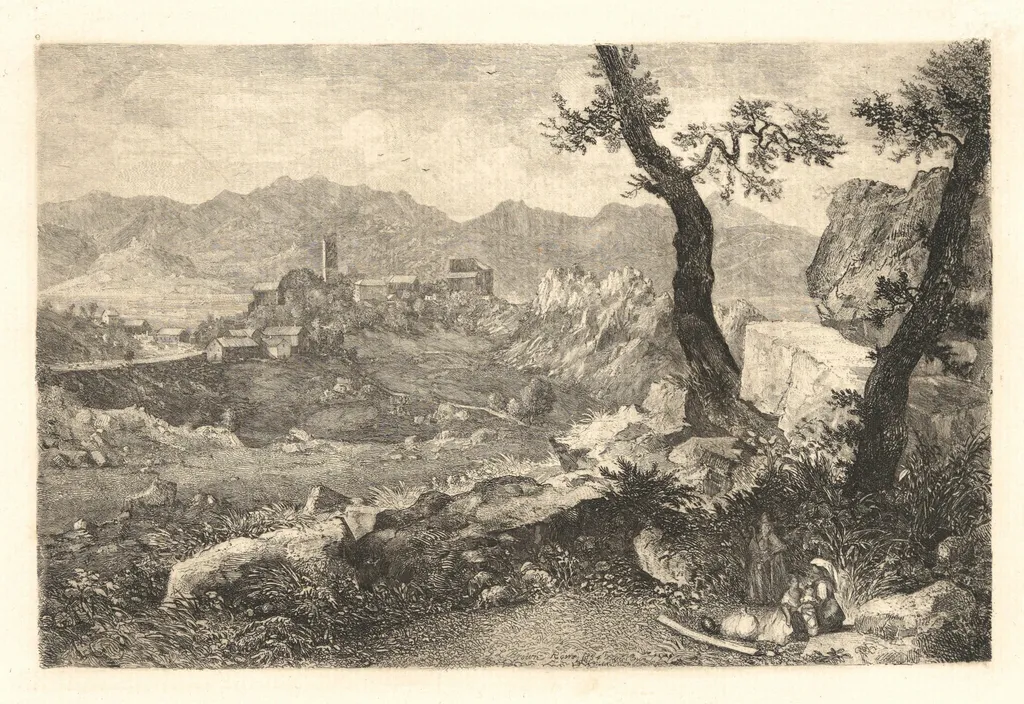
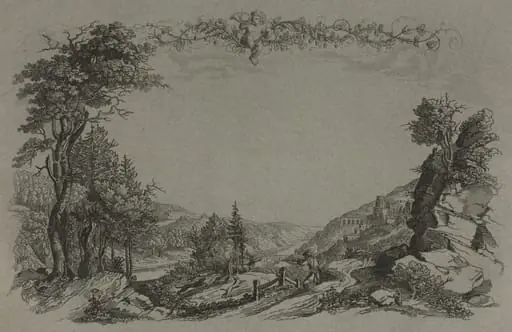
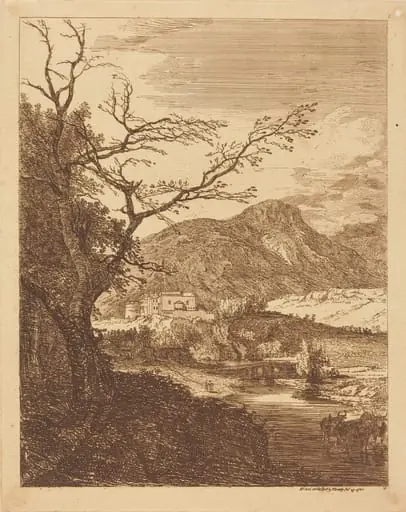
A View near Rome is an ink print by the Impressionist artist George Loring Brown. It dates from 1854 and is held in the collection of the National Gallery of Art.
About this work
Overview
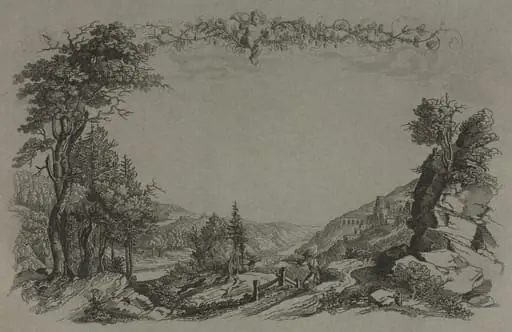
George Loring Brown’s 1854 etching *A View near Rome* depicts a tranquil rural scene rendered in black ink on Japanese paper. The composition balances natural elements with human presence, using a winding road to guide the viewer’s gaze toward a distant settlement nestled among hills. The print’s tonal range and fine detailing exemplify the artist’s command of the etching medium.
Subject & Meaning
The work reflects 19th-century romanticized interpretations of Italy’s landscapes, often associated with artistic inspiration and historical reverie.
The scene captures an idealized vision of the Roman countryside, evoking a sense of pastoral calm. A solitary figure seated beneath a prominent tree in the foreground suggests contemplation or rest, while the road and distant town imply connectivity between nature and human habitation. The work reflects 19th-century romanticized interpretations of Italy’s landscapes, often associated with artistic inspiration and historical reverie.
Technique & Style
Brown employs etching to achieve delicate gradations of light and shadow, particularly in the sky and foliage. The use of Japanese paper enhances the print’s texture, allowing the ink to adhere with subtle variations in density. Fine lines define the tree’s bark and the undulating terrain, while broader strokes convey the softness of distant hills. The technique underscores the interplay between precision and atmospheric effect.
History & Provenance
Created in 1854, *A View near Rome* belongs to a period when American artists frequently traveled to Europe for study and inspiration. Brown, known for his landscapes, often depicted Italian scenes, reflecting the era’s fascination with classical and picturesque motifs. The print’s ownership history remains undocumented in available records, though its survival attests to its preservation as a work on paper.
Context
The etching emerges from a broader 19th-century tradition of landscape art, where European vistas served as both subject and symbol. Artists like Brown sought to capture the sublime beauty of Italy, a destination central to the Grand Tour. Prints such as this circulated among collectors, offering accessible yet refined representations of foreign landscapes to audiences in America and beyond.
Artist & collection
Artist
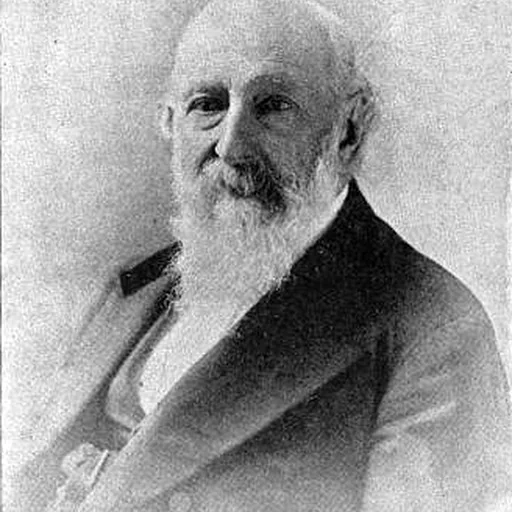
George Loring Brown was born in Boston on February 2, 1814, and began his career apprenticed to the wood engraver Alonzo Hartwell, later working as an illustrator of children's books.