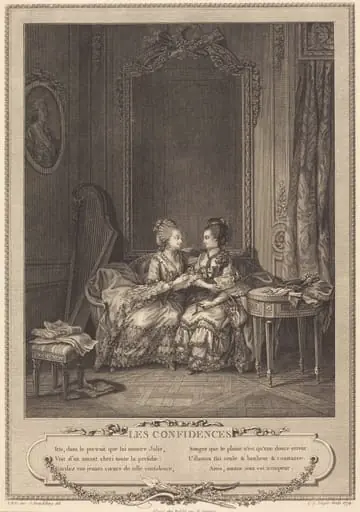
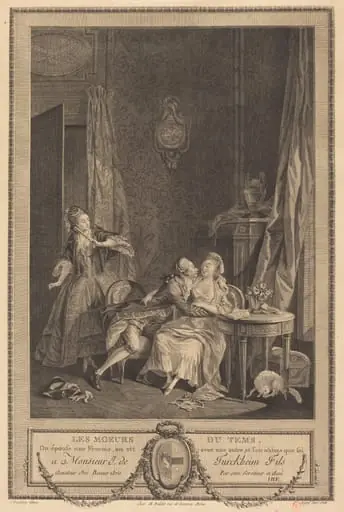
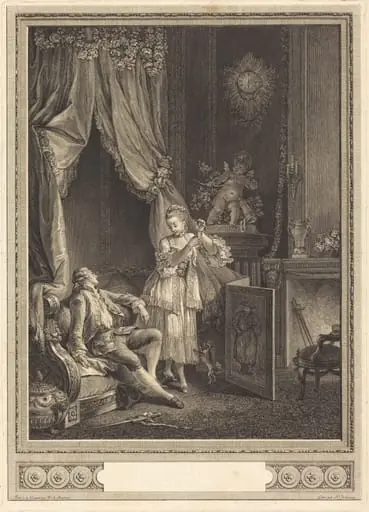
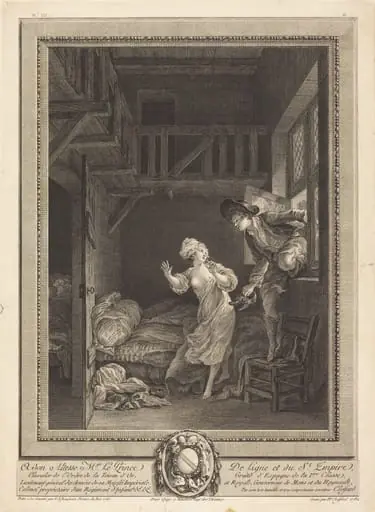
Artwork
Le coucher
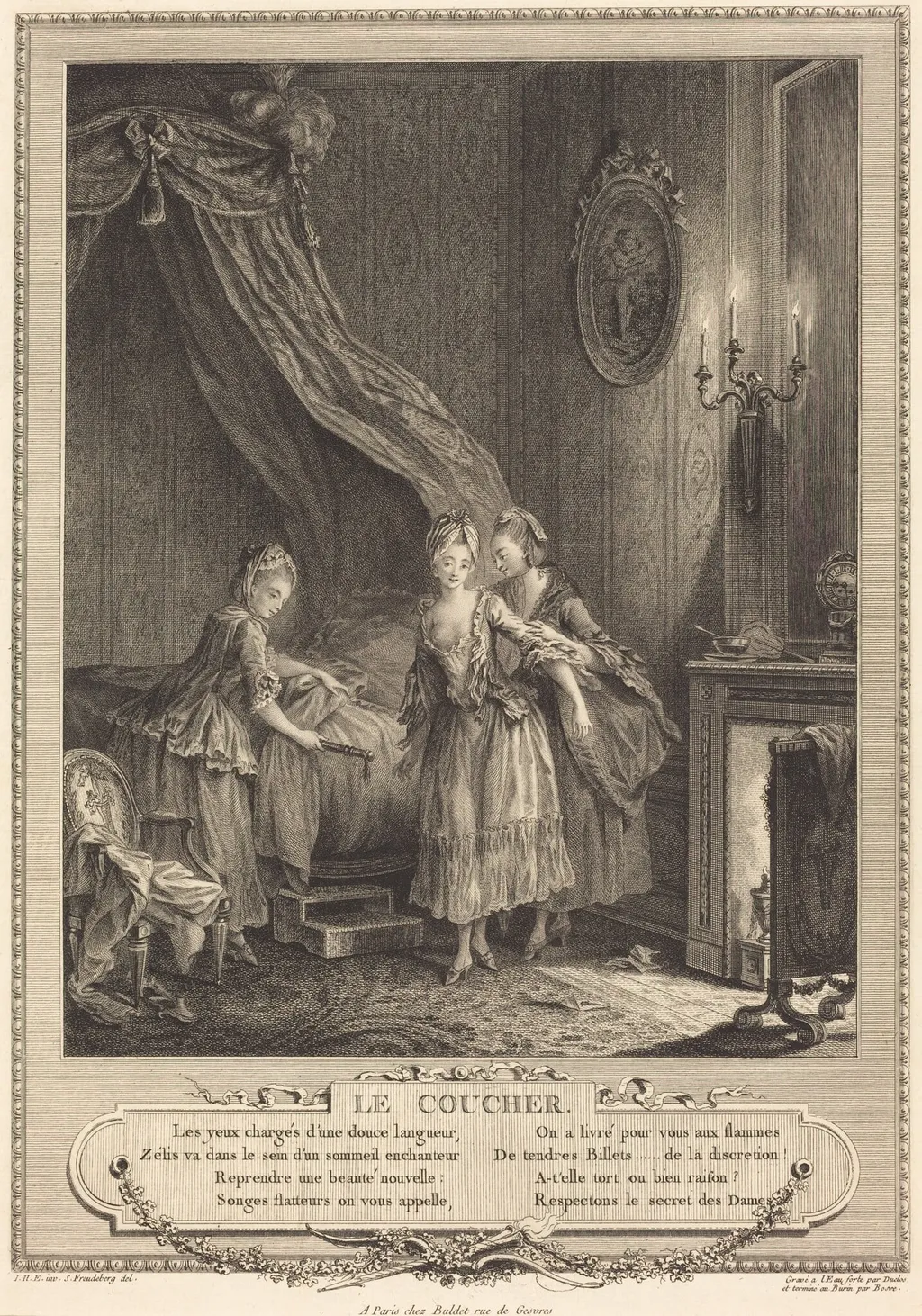
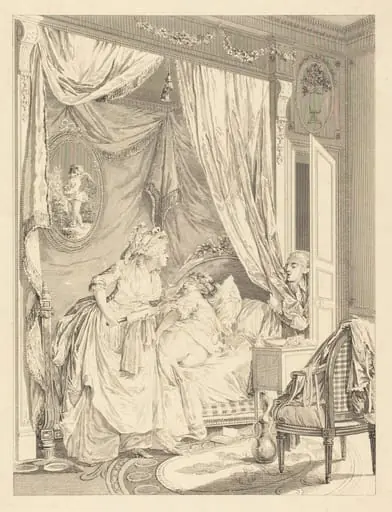
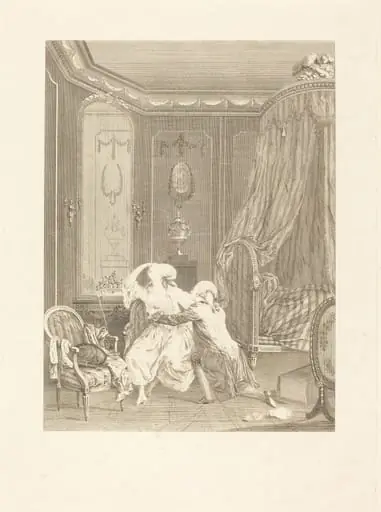
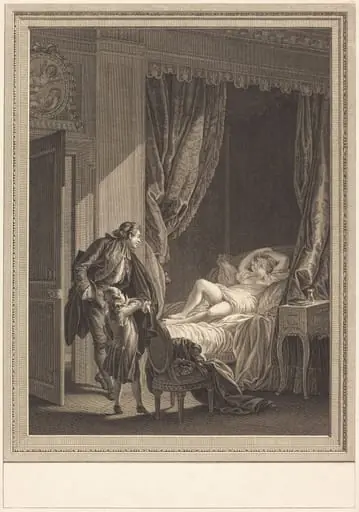
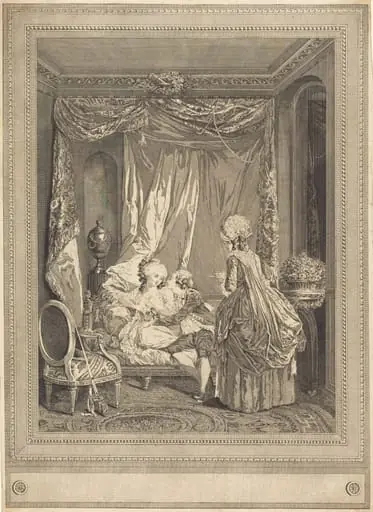
Le coucher is an ink print by the Baroque artist Louis Bosse. It dates from 1760 and is held in the collection of the National Gallery of Art.
About this work
Overview
The composition centers on domestic stillness, with subtle gestures and ambient light suggesting a moment of transition between day and night.
Le coucher is a print from 1760 by Louis Bosse, executed in etching and possibly engraving. It depicts a quiet interior scene with three women in a modestly lit chamber, engaged in private, post-daily routines. The composition centers on domestic stillness, with subtle gestures and ambient light suggesting a moment of transition between day and night. The title, meaning 'the bedtime,' frames the image as an intimate, unguarded interlude.
Subject & Meaning
The scene portrays three women in a private chamber: one near a bed in a loosely fastened robe, another arranging her hair, and a third holding a candle. Their actions imply the winding down of the day, not sleep itself. The mirror and fireplace reinforce themes of reflection and warmth, while the absence of men or overt narrative suggests a space reserved for women’s private rituals. The work captures quiet dignity in everyday solitude.
Technique & Style
Bosse employed etching, with possible engraving details, to achieve fine lines and tonal gradations. The soft interplay of light and shadow—especially from the fire and candle—was rendered through delicate hatching and cross-contouring. Fabrics are suggested with flowing, irregular lines, and the mirror reflects ambient glow without literal detail. The technique prioritizes mood over precision, favoring atmospheric suggestion over rigid definition.
History & Provenance
Created in 1760, Le coucher emerged during a period when French printmakers increasingly focused on intimate domestic scenes. While Bosse’s career is not extensively documented, this work aligns with the genre of private life studies popular among mid-18th-century artists. Its survival in institutional collections suggests early recognition, though its original ownership and circulation remain largely unrecorded.
Context
In 1760s France, prints like this reflected a growing interest in the private lives of women, distinct from grand historical or mythological subjects. Domestic interiors, especially those of the middle and upper classes, became subjects of artistic attention, often emphasizing restraint and quiet emotion. Le coucher fits within this trend, offering a restrained alternative to theatrical or moralizing imagery of the time.
Legacy
Le coucher contributes to a modest but enduring tradition of French printmaking that valued subtlety over spectacle. Though not widely reproduced or celebrated in its time, it remains a quiet example of how etching could convey psychological nuance in everyday settings. Its preservation in collections underscores its role as a document of 18th-century domestic aesthetics and gendered space.
Artist & collection