Artwork
Outdoor study
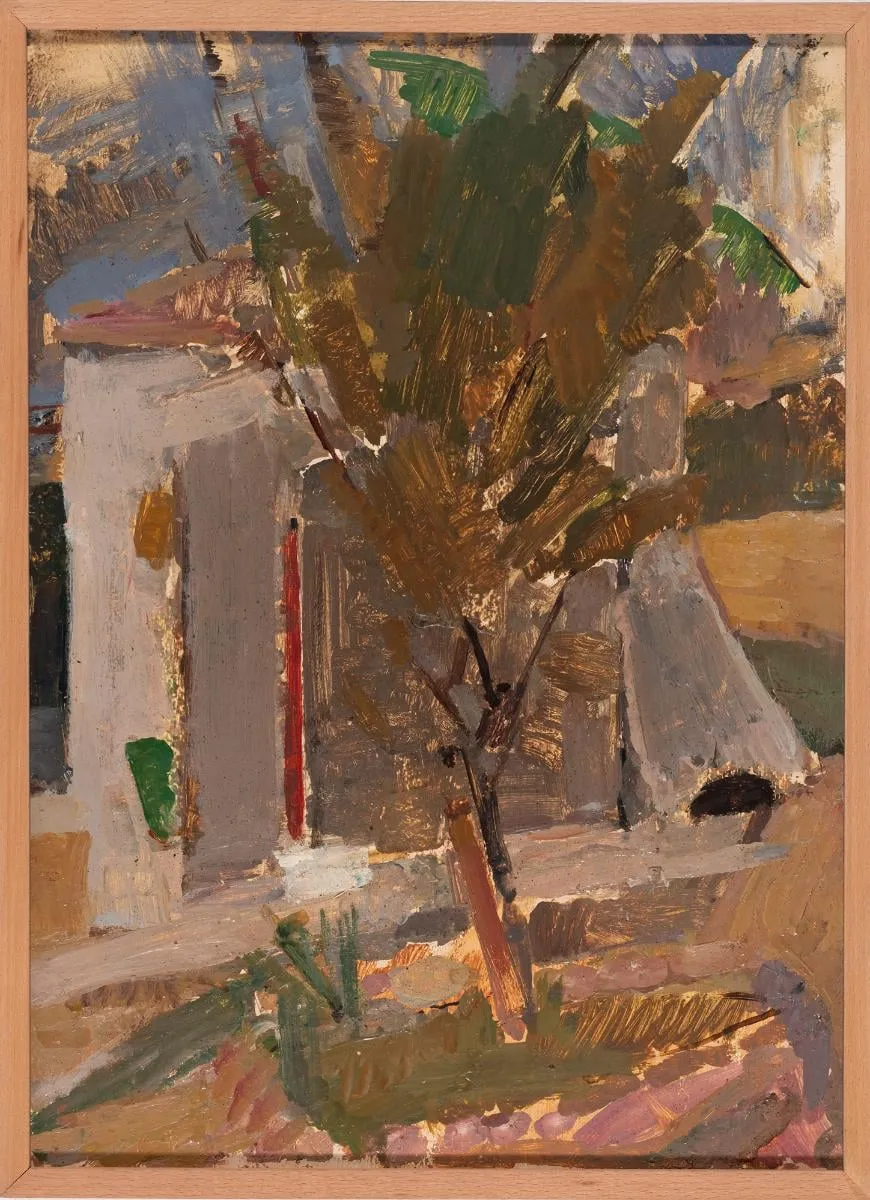
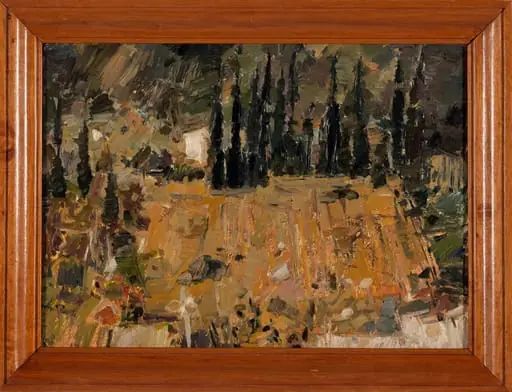
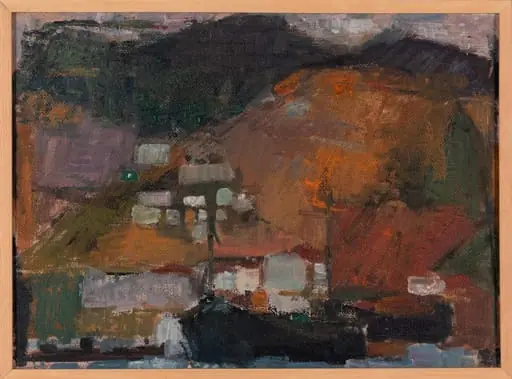
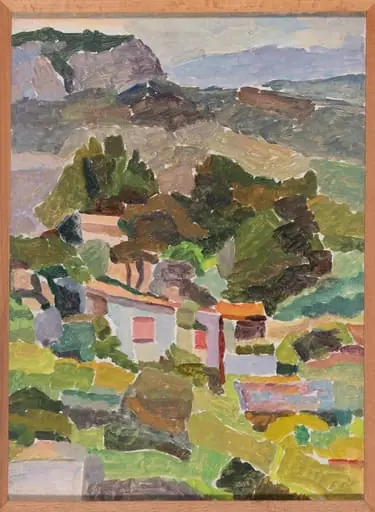
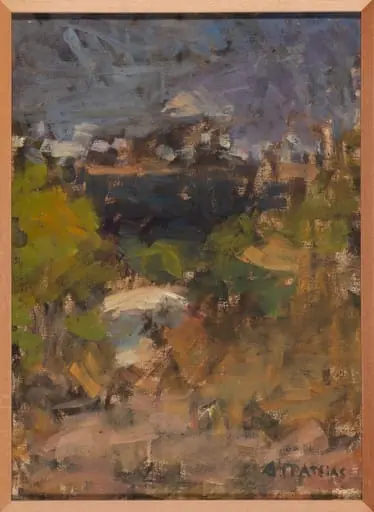
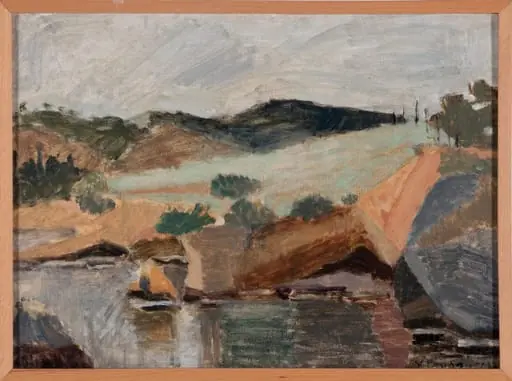
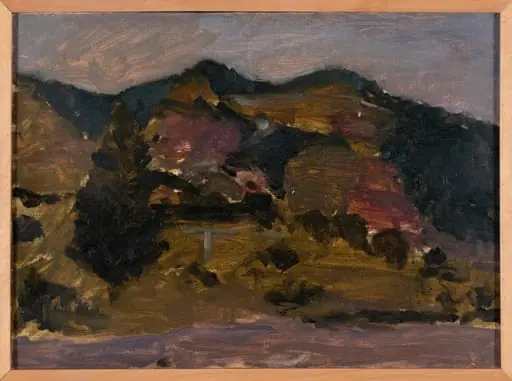
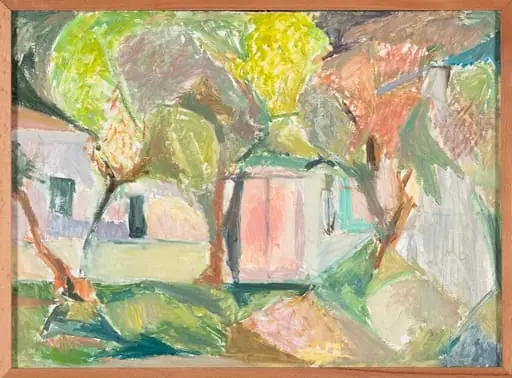
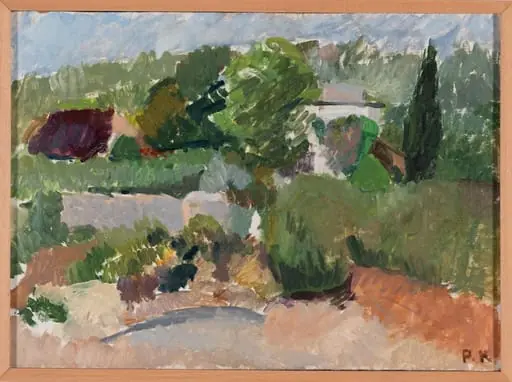
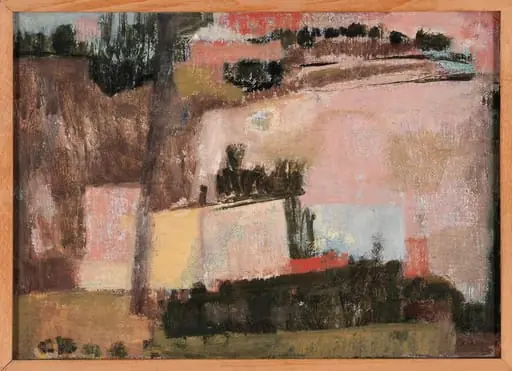
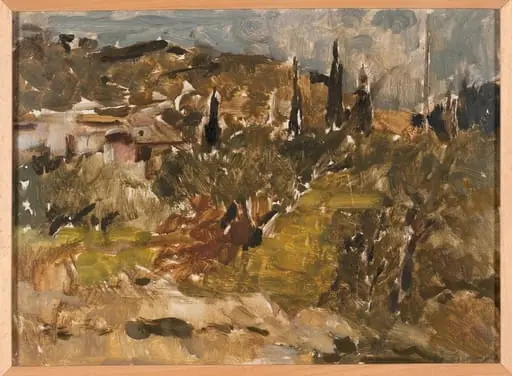
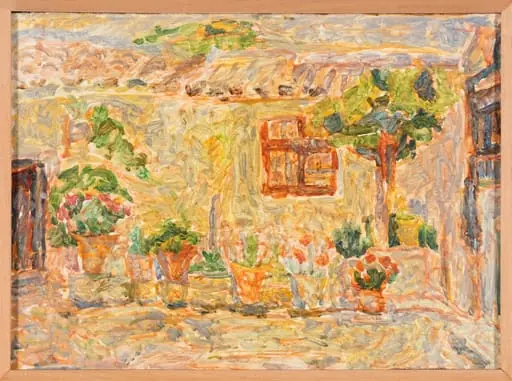
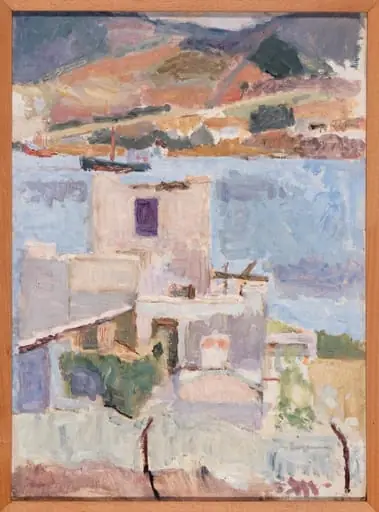
Outdoor study is a drawing by Botsoglou Chronis. It dates from 1963 and is held in the collection of the Athens School of Fine Arts.
About this work
Overview
It is part of the permanent collection at the Museum of Ethnography, where it is presented as an example of the artist’s engagement with everyday landscapes.
Created in 1963 by Botsoglou Chronis, this outdoor study is a modest oil painting capturing a quiet moment in a Mediterranean setting. It is part of the permanent collection at the Museum of Ethnography, where it is presented as an example of the artist’s engagement with everyday landscapes. The composition avoids dramatic elements, focusing instead on the quiet coexistence of natural and built forms.
Subject & Meaning
The painting centers on a single palm tree standing before a plain white structure, its trunk rendered in layered browns and its foliage in muted greens. A thin red vertical line on the building’s left edge introduces subtle contrast without disrupting the scene’s serenity. The absence of figures or narrative suggests an emphasis on presence rather than action—perhaps an observation of place as a quiet, enduring condition.
Technique & Style
Brushwork is deliberate and tactile, with visible strokes defining the tree’s texture and the ground’s uneven surface. The artist uses loose, non-idealized forms to convey light and volume, avoiding sharp outlines. The sky and distant elements are suggested with thin washes of blue and white, indicating a preference for implication over detail. Cross-hatching appears in shadowed areas, adding depth without heavy modeling.
History & Provenance
The painting entered the Museum of Ethnography’s collection shortly after its creation, likely through direct acquisition or donation by the artist. No significant exhibition history or ownership changes are documented prior to its institutional acquisition. Its preservation in a museum focused on cultural expression aligns with its unembellished depiction of local environments.
Context
Painted during a period of postwar cultural reevaluation in Greece, the work reflects a broader trend among artists to turn away from grand historical themes toward intimate, observed moments. The simplicity of the scene—palm, wall, ground—echoes regional architectural and botanical realities, grounding the piece in a specific, unidealized landscape tradition.
Legacy
While not widely reproduced or critically analyzed, the painting remains a representative example of Chronis’s quieter, observational mode. It contributes to understanding how mid-20th-century Greek artists engaged with their immediate surroundings, favoring restraint and material honesty over spectacle. Its presence in an ethnographic museum underscores its value as a cultural document rather than a formal experiment.
Artist & collection
Artist
Chronis Botsoglou made spare metal and pencil studies in the 1960s. Three of his hammered “nude” figures in metal live here, along with a 1964 “Head” and a 1963 “Outdoor study” drawn on paper. He left no movement label,…