Artwork
Outdoor study
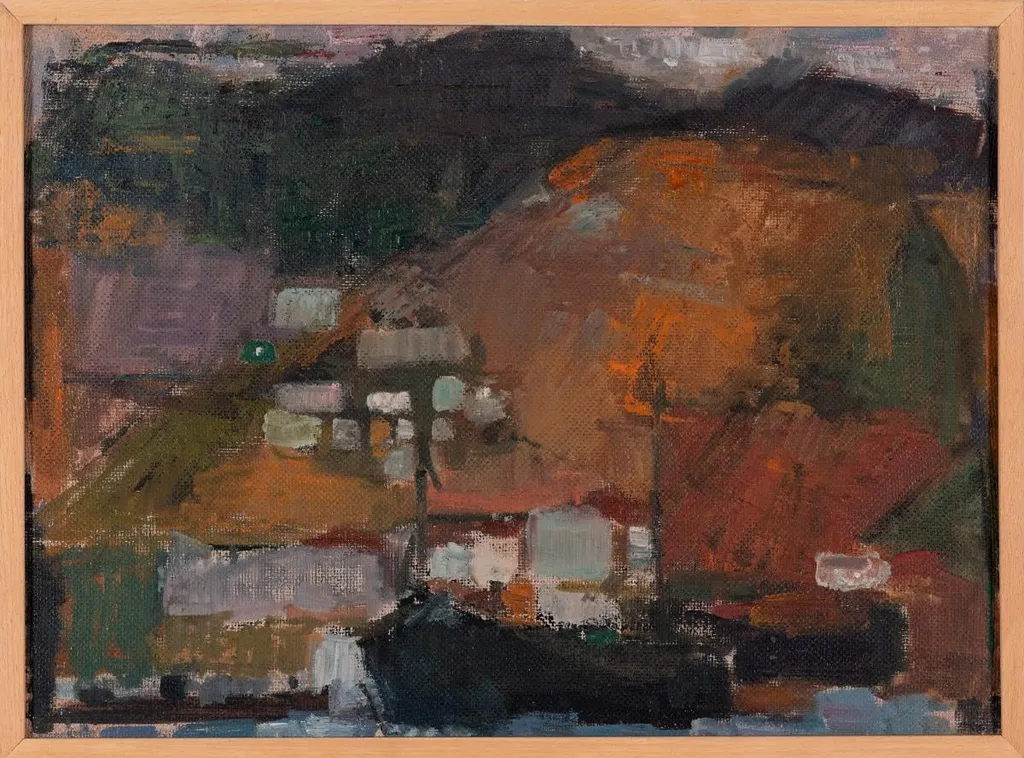
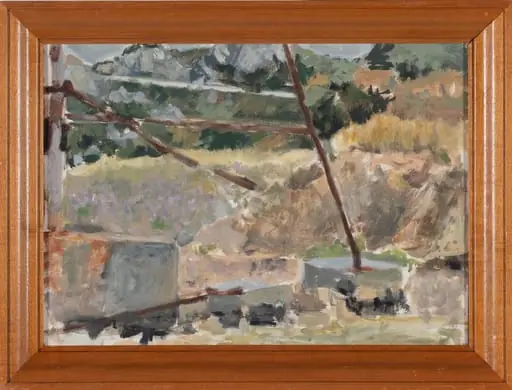
Outdoor study is a drawing by Iota Kalliakmani. It dates from 1963 and is held in the collection of the Athens School of Fine Arts.
About this work
Overview
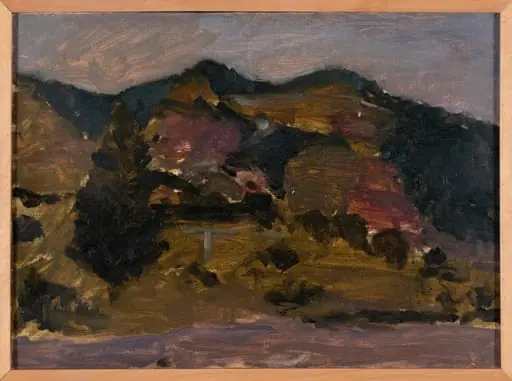
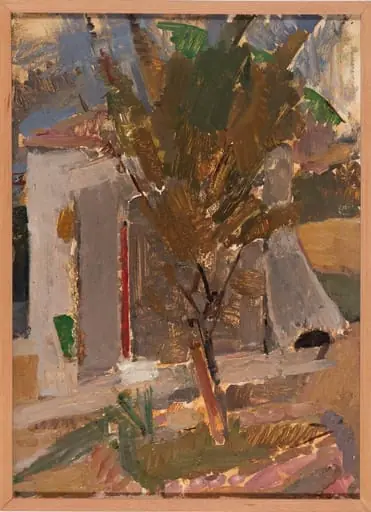
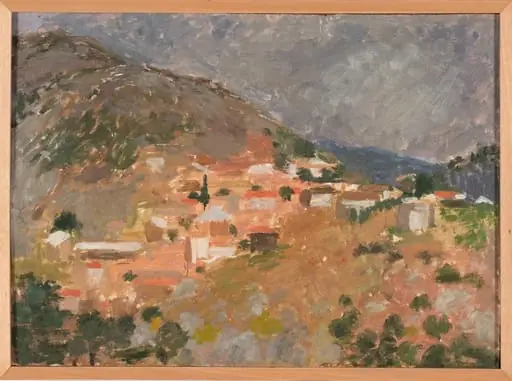
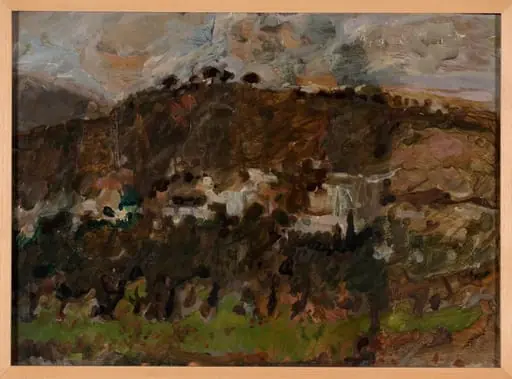
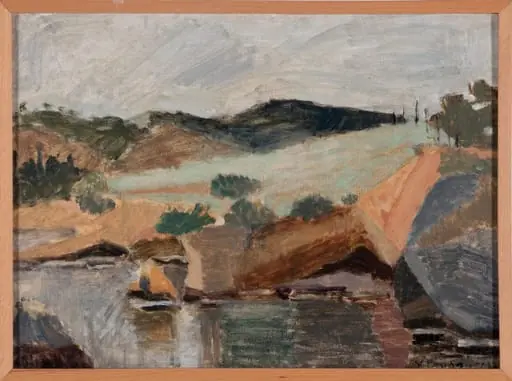
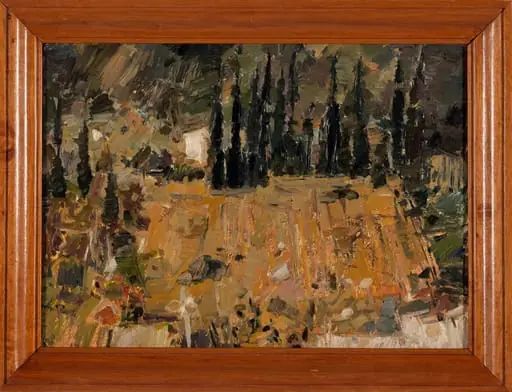
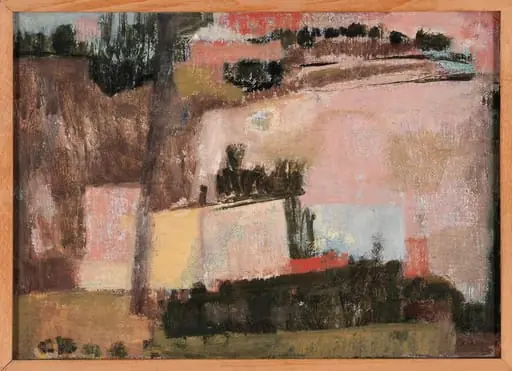
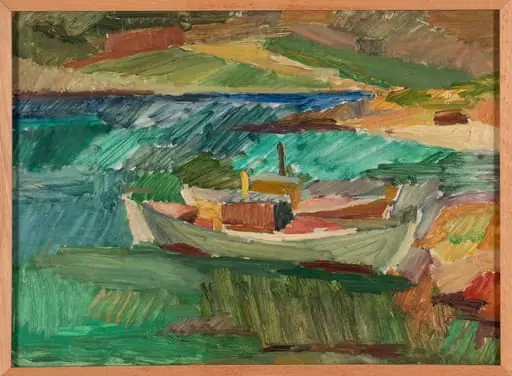
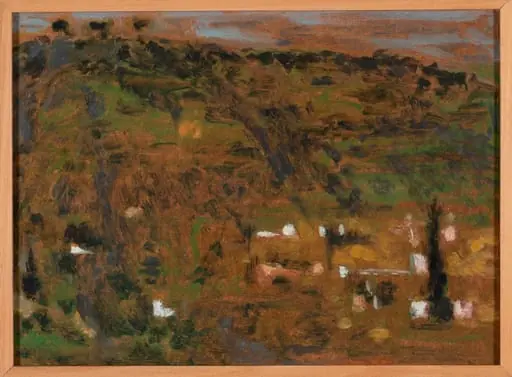
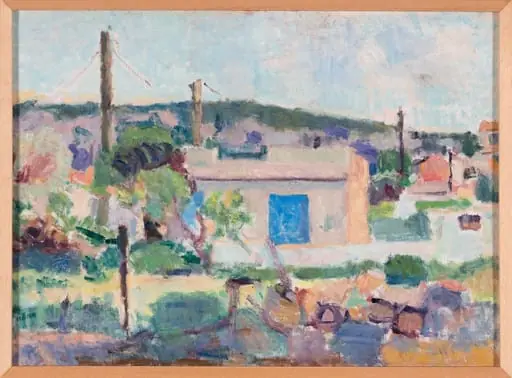
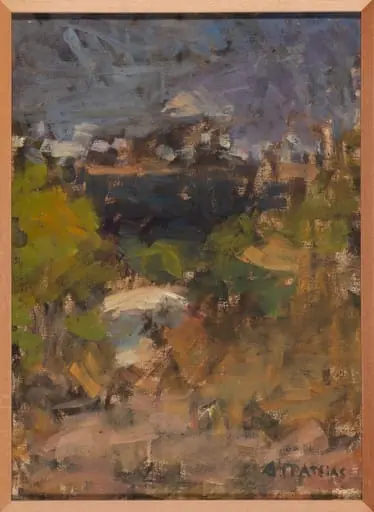
Created in 1963 by Iota Kalliakmani, this oil painting captures a rural landscape in a spontaneous, gestural manner. It is part of the permanent collection at the Museum of Ethnography. The work conveys a sense of immediacy, as if observed directly from the field, with minimal refinement and an emphasis on movement over detail.
Subject & Meaning
The scene depicts a modest village nestled in a valley, surrounded by undulating hills. Structures are reduced to basic geometric forms, suggesting everyday dwellings rather than architectural significance. The absence of human figures and the muted palette imply a quiet, unremarkable corner of the countryside, valued for its quiet presence rather than its spectacle.
Technique & Style
Kalliakmani applied paint with rapid, textured strokes, avoiding smooth transitions or precise contours. The surface is built up in layers of earthy browns and greens, punctuated by small areas of white and blue—perhaps sky or water. The brushwork is energetic and uneven, indicating direct observation and a preference for expressive mark-making over polished finish.
History & Provenance
The painting entered the Museum of Ethnography’s collection shortly after its creation. There is no record of public exhibition prior to its acquisition, and its provenance remains tied to the artist’s personal practice. It was likely produced during a period of fieldwork or personal study, consistent with the artist’s broader interest in rural life.
Context
In early 1960s Greece, many artists turned to landscapes as a means of reconnecting with local identity amid rapid modernization. Kalliakmani’s approach aligns with this trend, though her style diverges from idealized depictions, favoring raw observation over romanticized nostalgia. The work reflects a broader movement toward authenticity in postwar Greek art.
Legacy
Though not widely reproduced, the painting contributes to understanding Kalliakmani’s commitment to direct, unembellished representation. Its presence in a museum of ethnography underscores its value as a document of place and practice, rather than as a conventional fine art object. It remains a quiet example of an artist’s personal engagement with the land.
Artist & collection
Artist
Greek artist Iota Kalliakmani made spare metal sculptures and pencil drawings in the early 1960s.