Artwork
Outdoor study
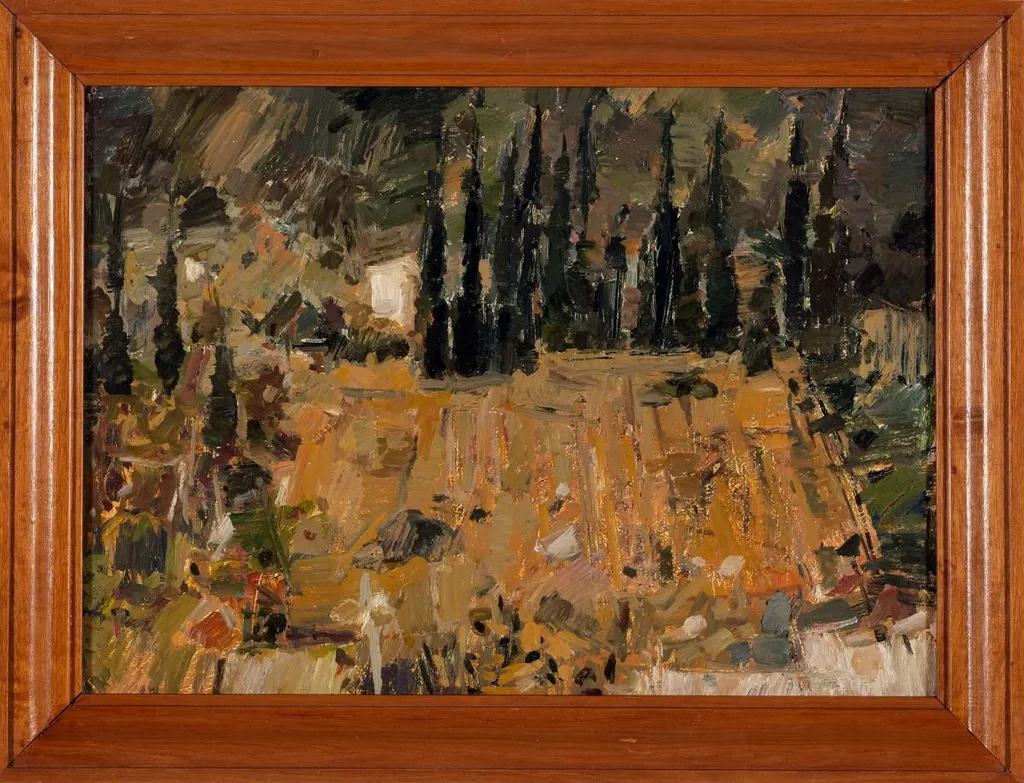
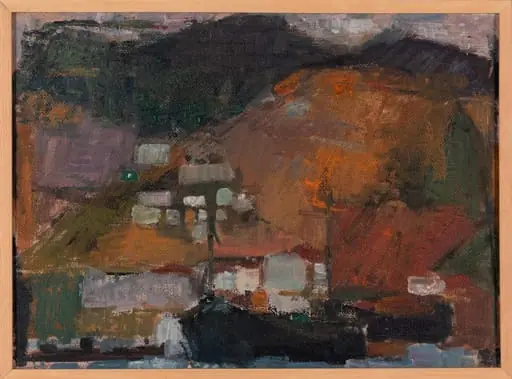
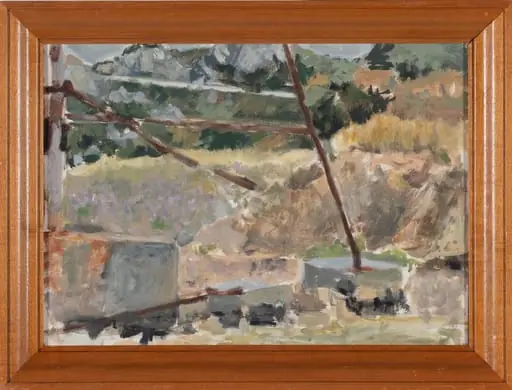
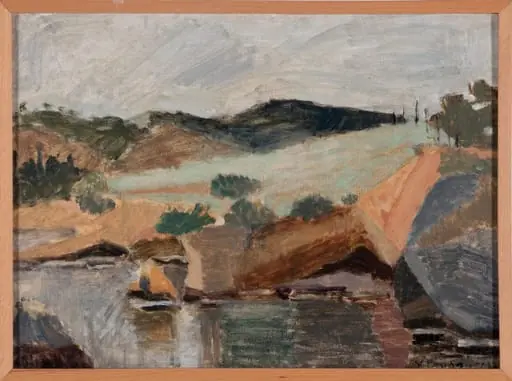
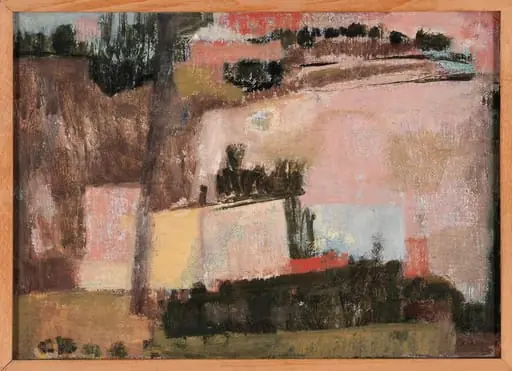
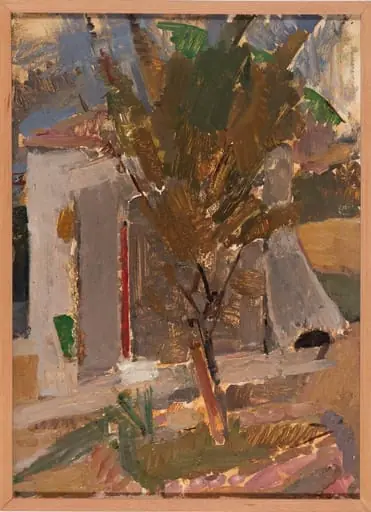
Outdoor study is a drawing by Nikos Beach. It dates from 1962 and is held in the collection of the Athens School of Fine Arts.
About this work
Overview
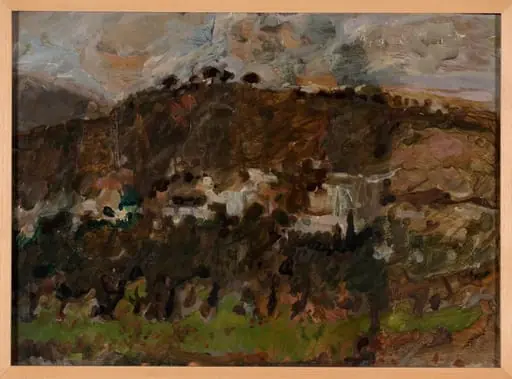
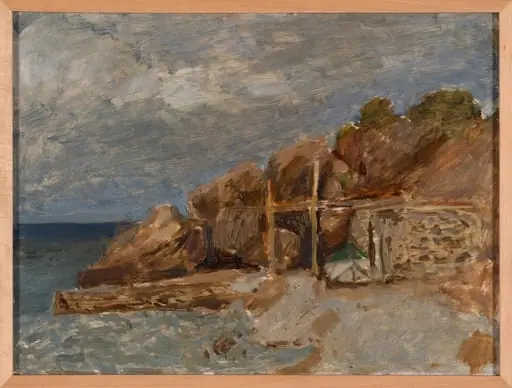
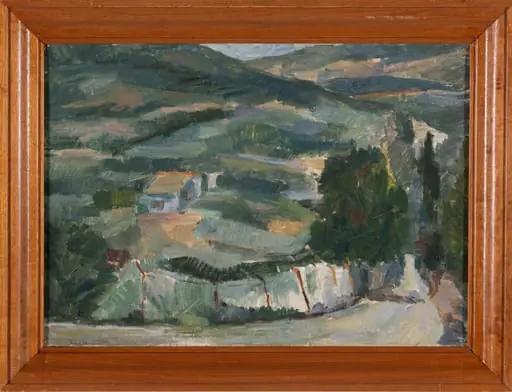
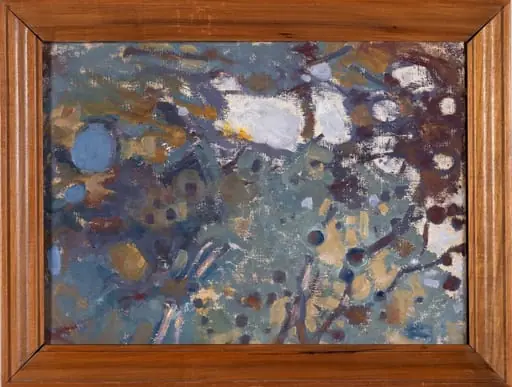
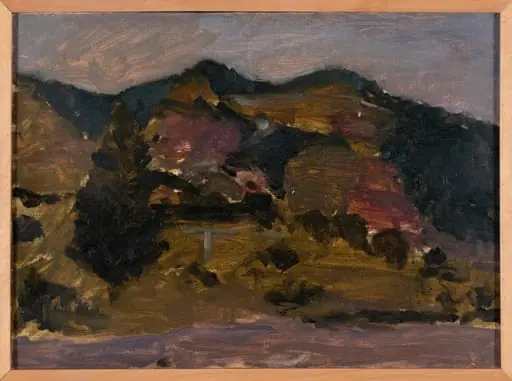
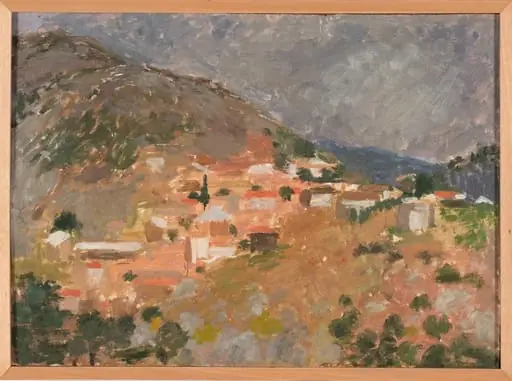
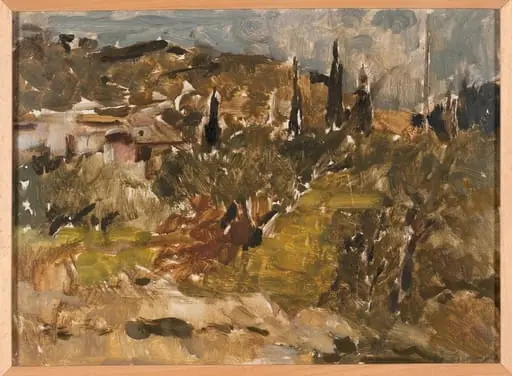
Created in 1962 by Nikos Beach, this oil on canvas work is part of the Museum of Ethnography’s collection. It captures a fleeting moment in a natural setting, rendered with rapid, unrefined brushwork that prioritizes immediacy over polish. The composition lacks formal structure, suggesting an impromptu outdoor session rather than a studio composition.
Subject & Meaning
The scene depicts a patch of open land beneath a canopy of trees, with no figures or clear focal point. The absence of narrative detail shifts attention to the act of perception itself—how light falls, how foliage gathers, how earth meets sky. The work suggests an artist engaged in direct observation, valuing sensory experience over symbolic content.
Technique & Style
Thick, uneven strokes of brown, green, and yellow dominate the surface, applied with visible urgency. Brushmarks remain unblended, preserving the physicality of the artist’s hand. A small area in the center catches heightened light, creating a subtle contrast against the muted surroundings. The deliberate roughness rejects traditional finish, aligning with a practice of spontaneity.
History & Provenance
The painting entered the Museum of Ethnography’s holdings shortly after its creation, likely through direct acquisition or donation by the artist. Its presence in an ethnographic institution, rather than a fine arts museum, hints at its perceived connection to everyday visual culture or regional artistic practice, though no documented provenance beyond this is known.
Context
Emerging in the early 1960s, the work reflects a broader postwar interest in informal, gestural approaches to landscape. While not part of any named movement, its raw execution parallels tendencies in European and American painting that favored process over polish, emphasizing the artist’s presence in the moment of creation.
Legacy
The painting remains a quiet example of Beach’s commitment to direct observation. It has not been widely exhibited or reproduced, but within the museum’s collection, it serves as a tangible record of an artist’s personal method—unembellished, unpolished, and rooted in the act of seeing.
Artist & collection
Artist
Nikos Beach worked in metal and on paper, making angular wall pieces and quick outdoor sketches in the mid-1960s.