Artwork
Saint Joseph and the Infant Jesus
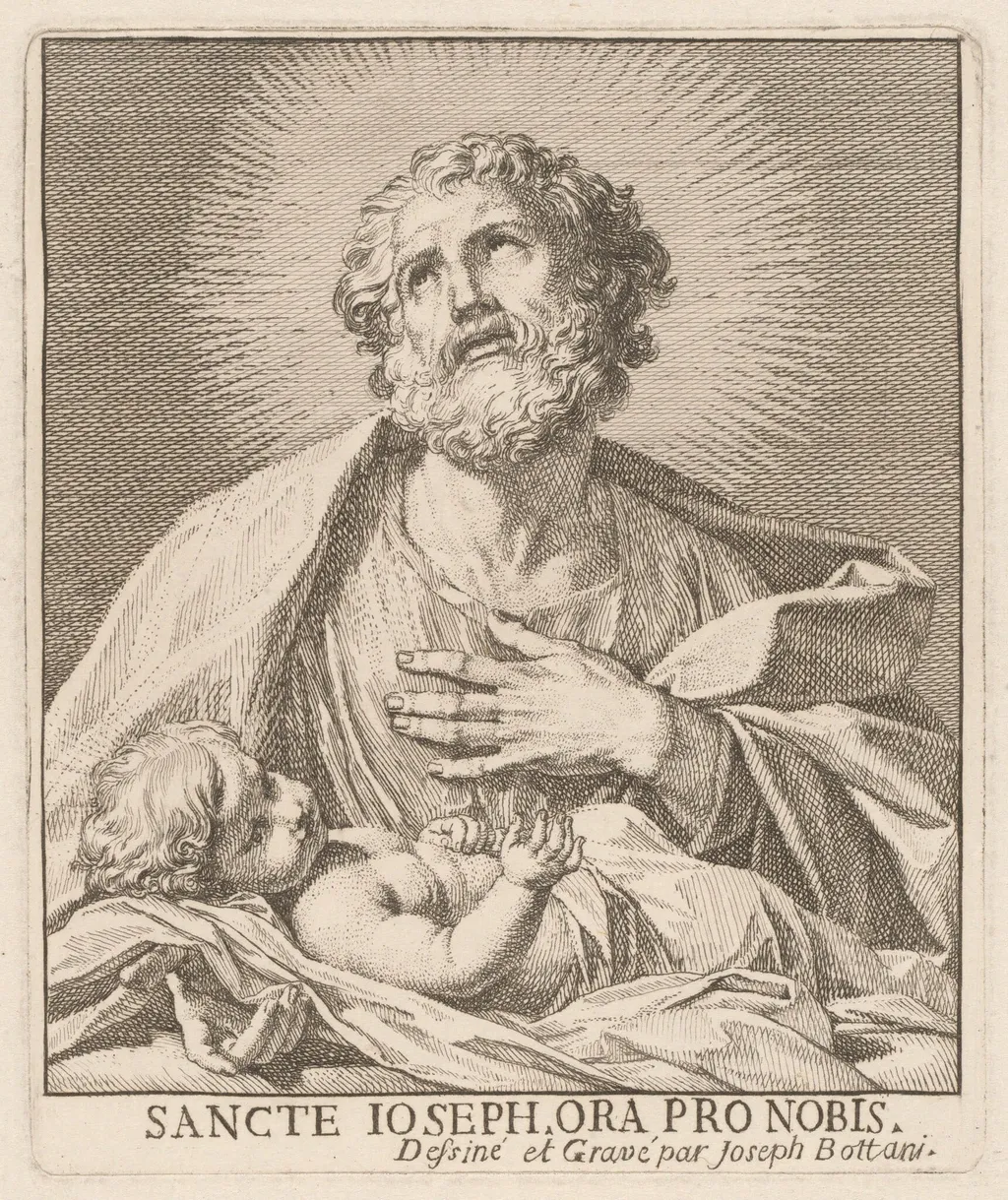
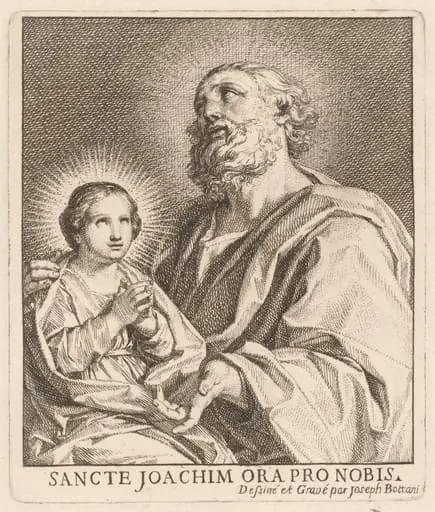
Saint Joseph and the Infant Jesus is an ink print by the Baroque artist Giuseppe Bottani. It dates from 1701 and is held in the collection of the National Gallery of Art.
About this work
Overview
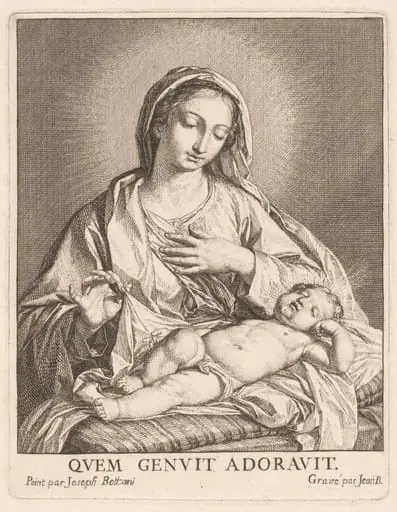
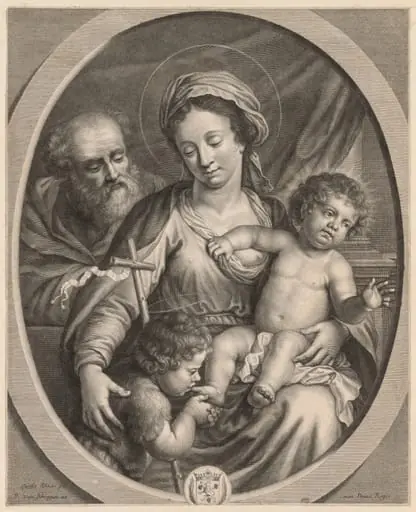
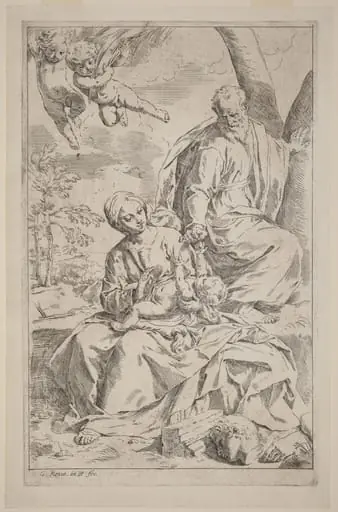
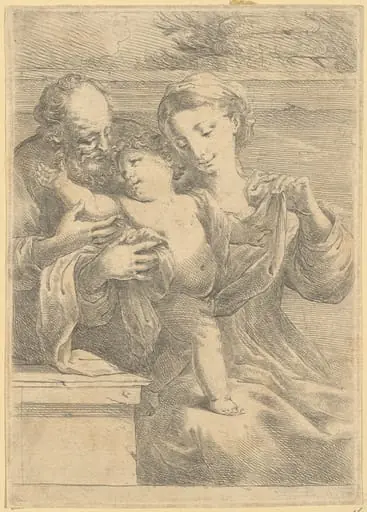
Giuseppe Bottani’s print titled *Saint Joseph and the Infant Jesus* dates from 1701. Executed as an etching with engraving on laid paper, the work presents a monochrome image of the biblical caretaker and the child. The composition is framed by a Latin inscription at the base, “Sancte Ioseph, Ora Pro Nobis,” invoking Saint Joseph’s intercession.
Subject & Meaning
The scene depicts an aged Joseph, his beard and curls rendered in soft contour, cradling a sleeping infant Jesus. Joseph’s expression combines weariness with tenderness, emphasizing his role as protector. The infant’s small hand emerges from the embrace, reinforcing the intimate bond and the theological theme of divine guardianship.
Technique & Style
Bottani combines etching’s fluid lines with the sharper incisions of engraving, allowing both delicate shading and precise detailing. The laid paper’s texture contributes subtle tonal variation, while the restrained line work avoids ornamentation, focusing attention on the figures’ emotional presence rather than elaborate background elements.
History & Provenance
Created in the early eighteenth century, the print reflects the Catholic devotional practices of the period, particularly the veneration of Saint Joseph. While specific ownership records are scarce, the work has been catalogued among Bottani’s religious prints and appears in several museum collections dedicated to Baroque printmaking.
Context
During the early 1700s, prints served both as devotional objects and as means of disseminating religious imagery to a broader audience. Bottani’s choice of a modest composition aligns with contemporary Counter‑Reformation ideals, which favored clear, affective representations that could inspire personal piety.
Legacy
The print exemplifies the intersection of technical skill and spiritual narrative in Baroque printmaking. Its straightforward yet expressive approach continues to inform studies of religious iconography and the role of prints in shaping devotional visual culture.
Artist & collection