Artwork
The Holy Family
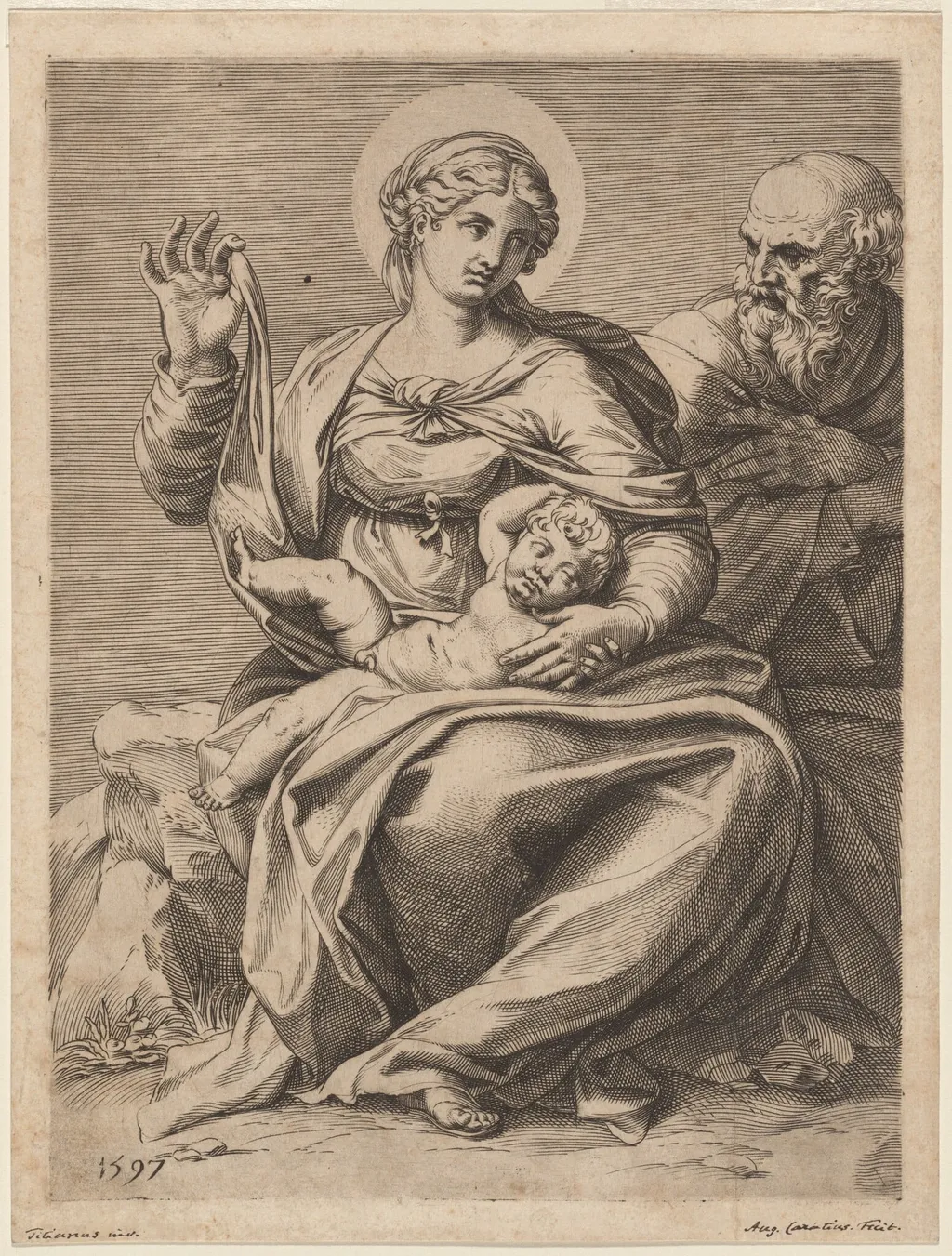
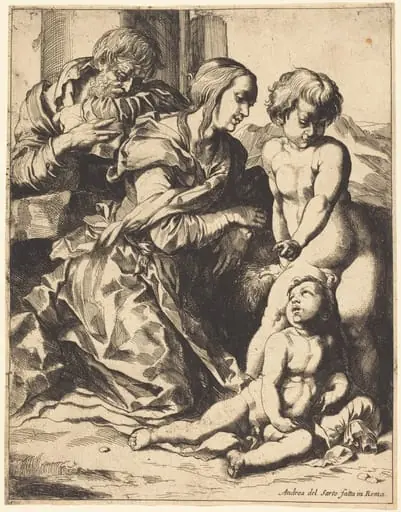
The Holy Family is an ink print by the Renaissance artist Agostino Carracci. It dates from 1597 and is held in the collection of the National Gallery of Art.
About this work
Overview
The Holy Family is an engraving on laid paper created by Agostino Carracci in 1597. It is a print that showcases the artist's skill in using line work to convey a three-dimensional scene.
Subject & Meaning
The engraving depicts a scene from Christian iconography, featuring the Virgin Mary, the infant Jesus, and other figures associated with the Holy Family, including a bearded man, likely Saint Joseph.
Technique & Style
Carracci employed cross-hatching, a technique involving closely spaced parallel lines, to create the illusion of volume and depth in the figures. This method allows the engraving to achieve a sense of three-dimensionality through the strategic use of light and shadow.
Context
The work reflects Carracci's involvement with the Accademia degli Incamminati, a Bolognese art academy he co-founded with his brother Annibale and cousin Ludovico. The academy promoted a style that countered the prevailing Mannerist aesthetic of the time.
Artist & collection
Artist
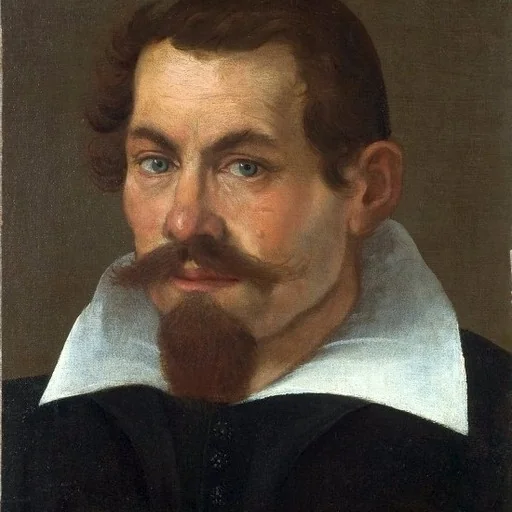
Agostino Carracci ( kə-RAH-chee, UK also kə-RATCH-ee, Italian: ; also Caracci; 16 August 1557 – 22 March 1602) was an Italian painter, printmaker, tapestry designer, and art teacher.

 The Holy Family
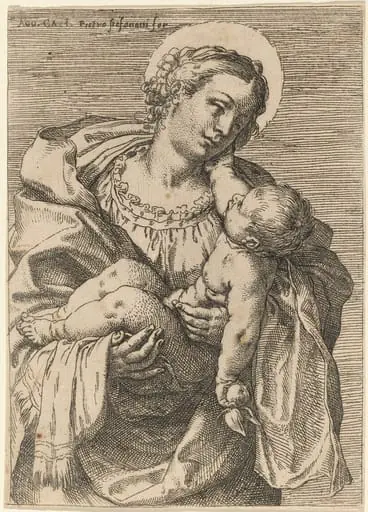 The Madonna and Child with an Apple
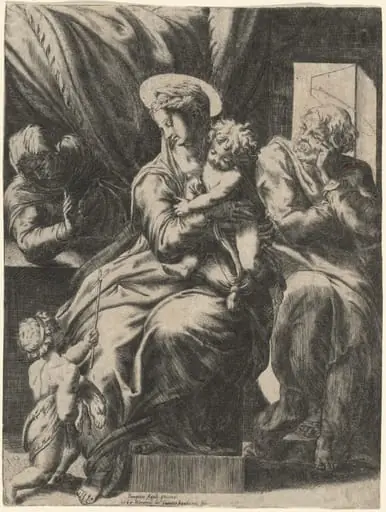 Holy Family with Saint Elizabeth and the Young John the Baptist
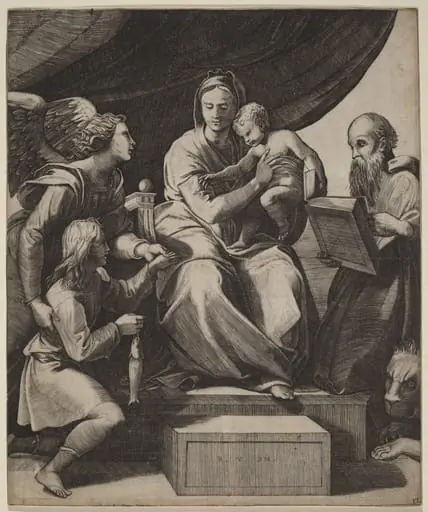 The Virgin with a Fish
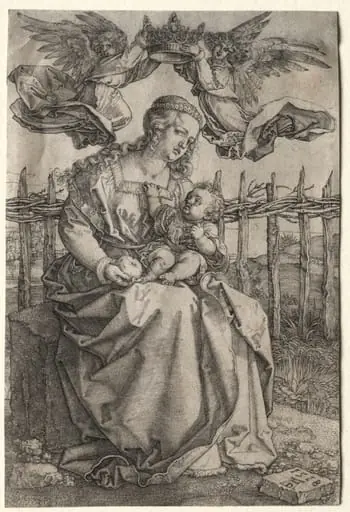 The Virgin Crowned by Two Angels
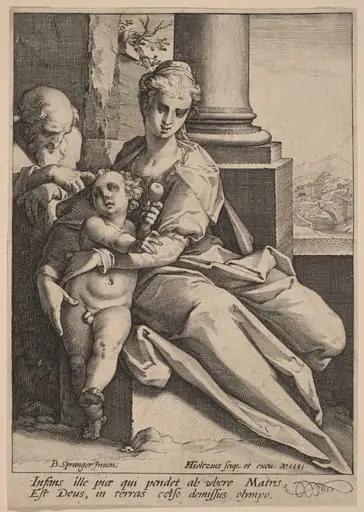 The Holy Family
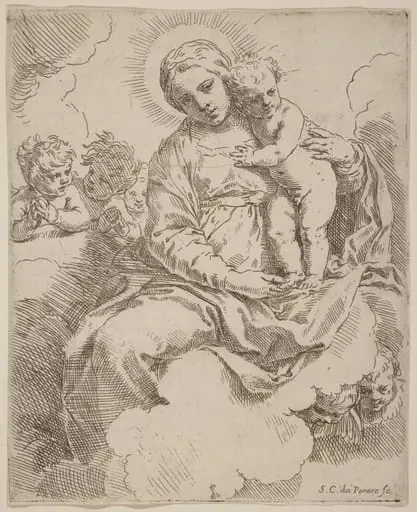 The Virgin and Child
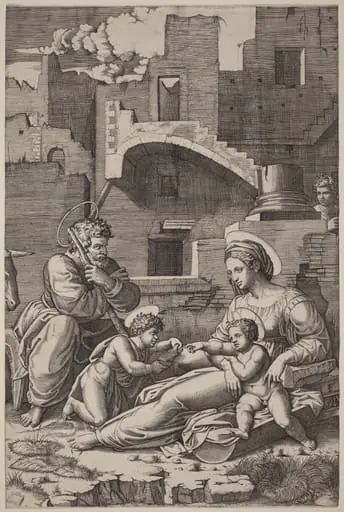 The Holy Family with the Young Saint John the Baptist (The Madonna of the Long Thigh)
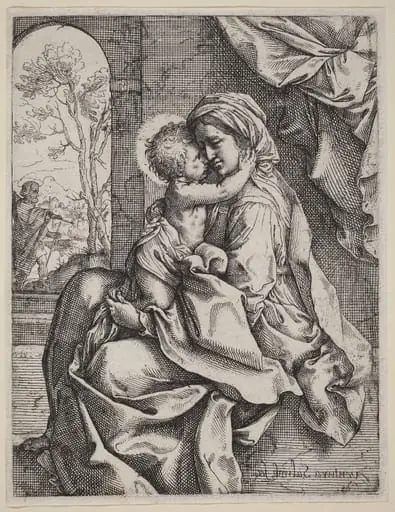 Virgin and Child
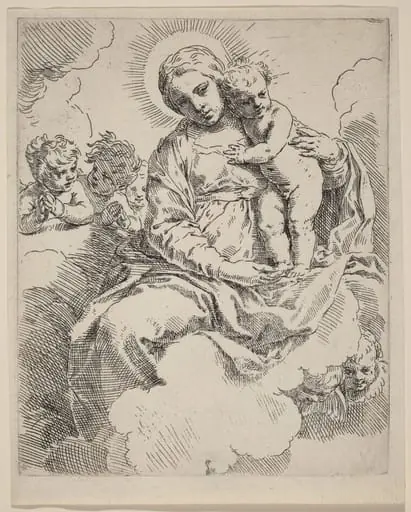 The Virgin and Child
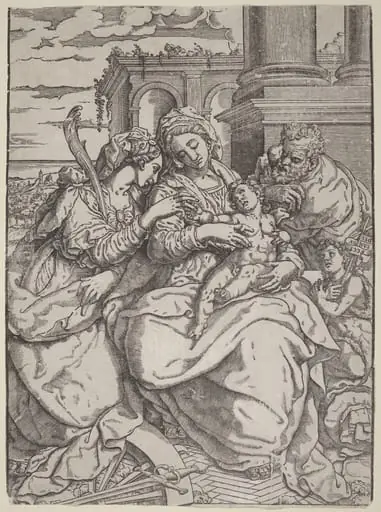 Madonna and Child with Saint Catherine
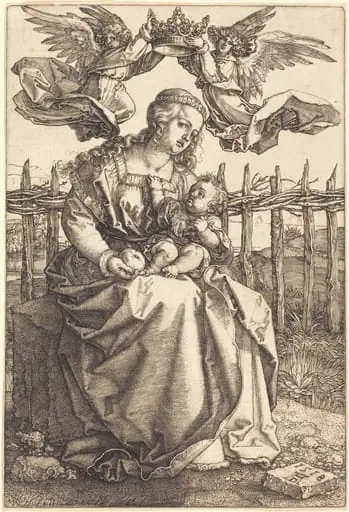 The Virgin and Child Crowned by Two Angels