Artwork
Saint Joachim and the Infant Virgin Mary
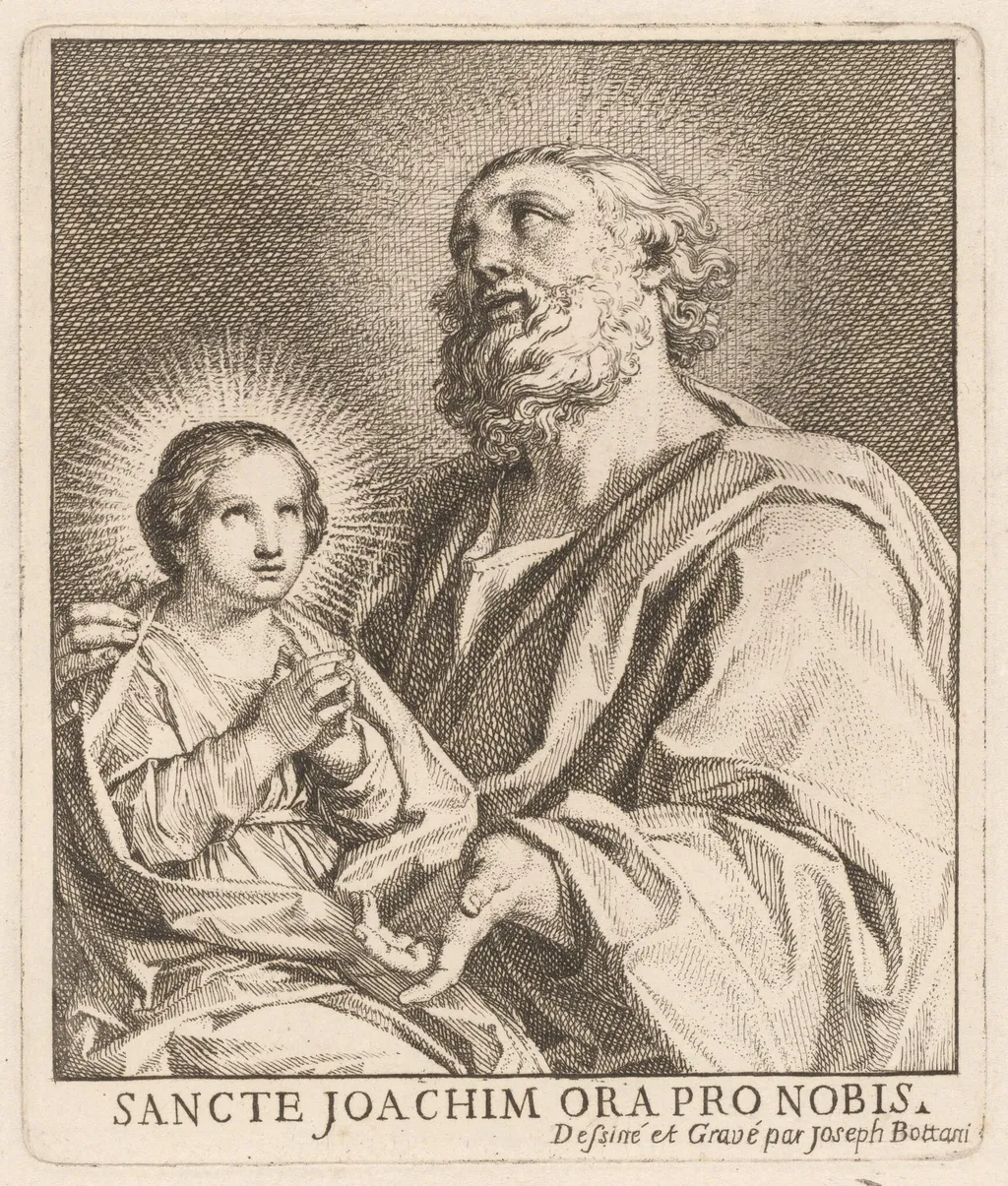
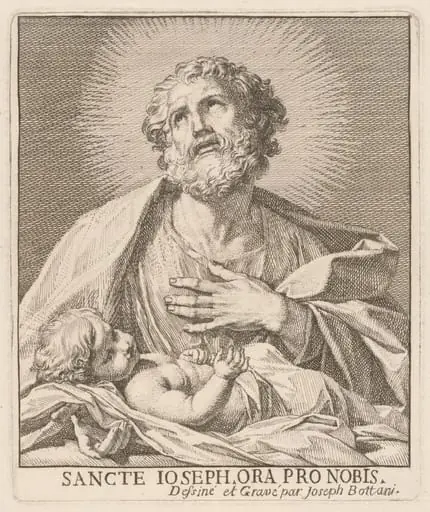
Saint Joachim and the Infant Virgin Mary is an ink print by the Baroque artist Giuseppe Bottani. It dates from 1701 and is held in the collection of the National Gallery of Art.
About this work
Overview
Giuseppe Bottani's 1701 etching, *Saint Joachim and the Infant Virgin Mary*, is a religious print depicting a poignant scene of devotion. Executed in black and white on laid paper, the work showcases the artist's skill in capturing nuanced expressions and textures through etching.
Subject & Meaning
The etching portrays Saint Joachim, identified by the accompanying Latin inscription *"Sancte Joachim ora pro nobis"* (Saint Joachim, pray for us), holding the Infant Virgin Mary. The calm, upward gaze of the child towards the aged, wrinkled Joachim conveys a sense of serene devotion, highlighting their sacred bond in Christian tradition.
Technique & Style
Bottani utilized etching to achieve detailed, expressive lines, evident in the intricate rendering of Joachim's beard, hair, and facial wrinkles, as well as the loose, flowing attire of the infant Mary. The medium allowed for a rich, high-contrast black-and-white palette.
History & Provenance
Created in 1701, specific details regarding the etching's commission, early ownership, or exhibition history are not provided in the available information.
Context
This work reflects the Baroque period's emphasis on religious themes and emotional depth. Bottani's etching would have served as a devotional image, potentially for private contemplation, given its intimate scale and heartfelt portrayal.
Legacy
While *Saint Joachim and the Infant Virgin Mary* demonstrates Bottani's etching prowess and contributes to the religious art of its time, its broader influence or presence in notable collections is not specified in the provided context.
Artist & collection