Artwork
Copy after the painting The Trials of Moses (Moses at the Well) by Sandro Botticelli in the Sistine Chapel (Rome)
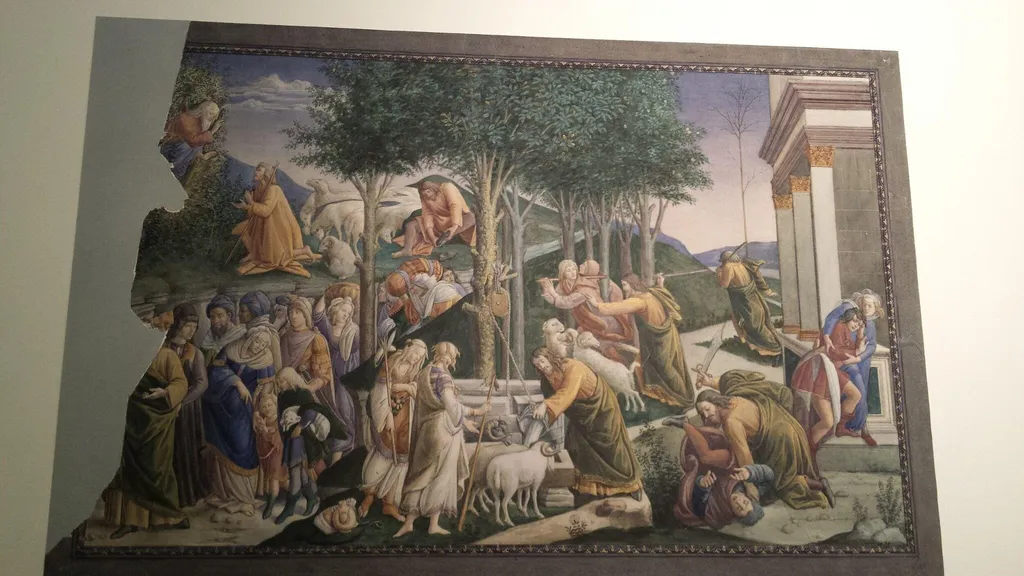
Copy after the painting The Trials of Moses (Moses at the Well) by Sandro Botticelli in the Sistine Chapel (Rome) is a watercolor work on paper by the Early Renaissance artist Sandro Botticelli. It is held in the collection of the Victoria and Albert Museum.
About this work
Overview
This watercolour is a faithful reproduction created by Eliseo Fattorini between 1830 and 1887, based on Sandro Botticelli’s fresco in the Sistine Chapel.
This watercolour is a faithful reproduction created by Eliseo Fattorini between 1830 and 1887, based on Sandro Botticelli’s fresco in the Sistine Chapel. Commissioned by the Arundel Society, it was part of a broader effort to disseminate images of Renaissance art through hand-painted copies. Though intended for publication, this particular work was never printed, remaining instead as a study piece within the Society’s archive.
Subject & Meaning
The scene depicts Moses at a well, a moment from the Book of Exodus where he helps the daughters of Jethro. In the Sistine Chapel’s original cycle, this episode is paired with scenes from Christ’s life to illustrate theological continuity between the Old and New Testaments. Fattorini’s copy preserves the narrative clarity and symbolic intent of Botticelli’s composition, emphasizing divine providence through human action.
Technique & Style
Fattorini rendered the scene in watercolour, a medium chosen for its translucency and suitability for detailed replication. His approach reflects the Arundel Society’s emphasis on accuracy over artistic interpretation, capturing the linear grace and restrained palette of Botticelli’s fresco. While sfumato is not prominent in the original, the watercolour subtly suggests soft transitions in skin tones and drapery through layered washes.
History & Provenance
The watercolour was produced for the Arundel Society, established in 1848 to make high-quality reproductions of medieval and Renaissance art accessible to scholars and the public. Fattorini, an Italian artist known for his reproductive work, was among those commissioned to translate frescoes into portable watercolours. This piece remained unpublished and is now preserved as part of the Society’s archival collection.
Context
In the 1840s and 1850s, British antiquarians and art lovers sought to revive interest in early Italian painting, viewing it as morally and aesthetically superior to contemporary trends. The Arundel Society responded by documenting works like Botticelli’s Sistine Chapel frescoes, which had been largely overlooked outside Italy. This watercolour reflects a wider cultural movement to preserve and study pre-Renaissance and early Renaissance art.
Legacy
Though not widely circulated, Fattorini’s watercolour contributed to the scholarly understanding of Botticelli’s narrative style and the Sistine Chapel’s iconographic program. It stands as a testament to 19th-century efforts to bridge art historical study and public education, preserving visual records of artworks before modern photographic reproduction became commonplace.
Artist & collection

Artist
Sandro Botticelli was a Florentine painter who loved the drama of stories—myths, saints, and ancient tales.

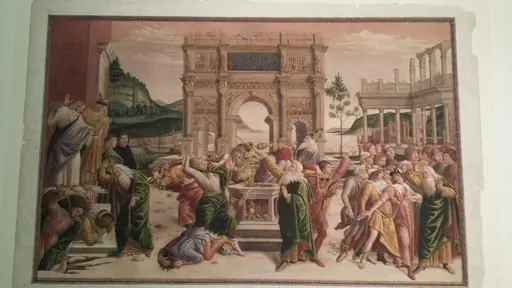 Copy after the Punishment of the Rebels ( Destruction of Koran, Dathan and Abirim ), Sandro Botticelli in the Sistine Chapel (Rome)
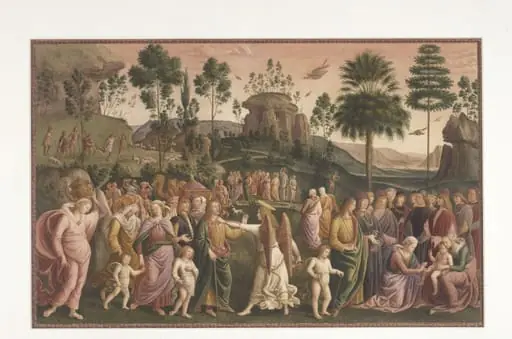 Copy after the painting Moses and the Angel by Perugino in the Collegio del Cambio, Perugia.
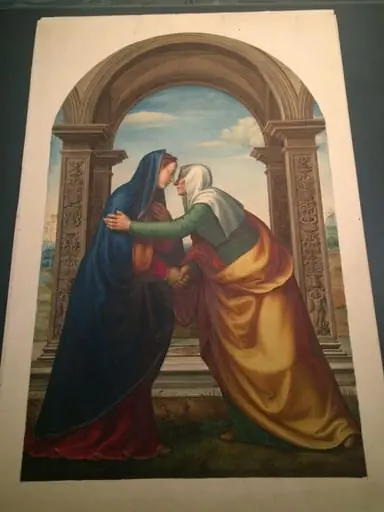 Copy after The Visitation (The meeting of Mary and Elizabeth), Mariotto Albertinelli in the Uffizi (Florence)
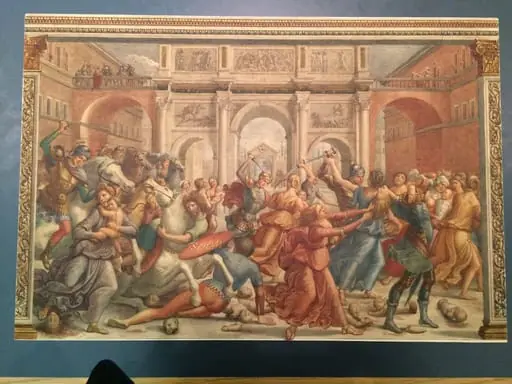 Watercolour, copy after the Massacre of the Innocents, Domenico Ghirlandaio in the Tornabuoni Chapel, Santa Maria Novella (Florence)
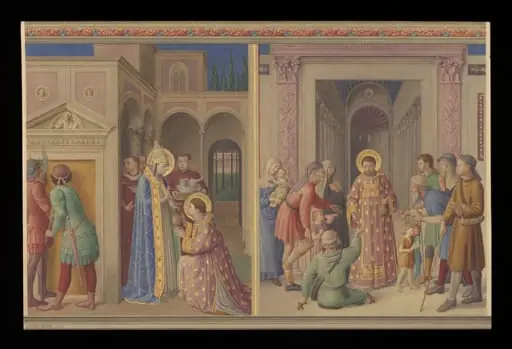 Copy after St Lawrence receiving the treasure of the Church and St Lawrence distributing Alms, Fra Angelico in the Niccoline Chapel (Vatican, Rome)
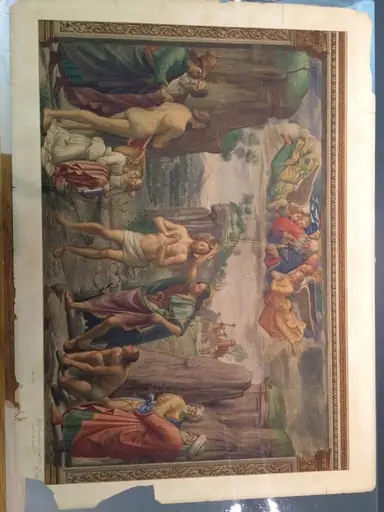 Watercolour, copy after the Baptism of Christ, Domenico Ghirlandaio in the Tornabuoni Chapel, Santa Maria Novella (Florence)
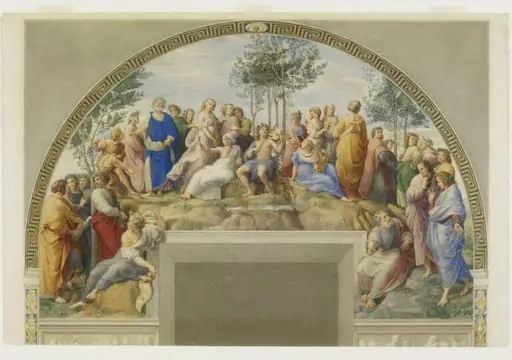 Copy after Raphael’s fresco representing the ‘Poets on Mount Parnassus’ in the Stanza della Segnatura (Vatican Palace, Rome, 1510-11), 1864-66