Artwork
Copy after the painting Moses and the Angel by Perugino in the Collegio del Cambio, Perugia.
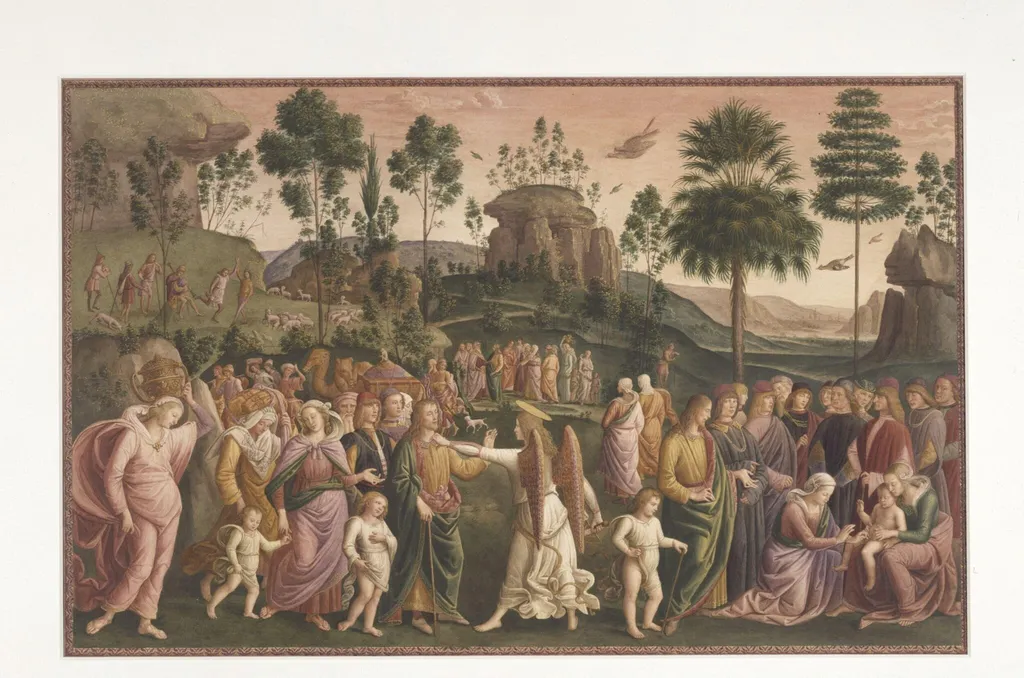
Copy after the painting Moses and the Angel by Perugino in the Collegio del Cambio, Perugia. is a watercolor work on paper by the Impressionist artist Eliseo Fattorini. It dates from 1871 and is held in the collection of the Victoria and Albert Museum. This watercolour, dated 1871, is a faithful reproduction of Perugino’s fresco depicting Moses conversing with an angel.
About this work
Overview
Commissioned by the Arundel Society to document Renaissance art, it was made using transparent pigments on paper to emulate the original’s luminosity.
This watercolour, dated 1871, is a faithful reproduction of Perugino’s fresco depicting Moses conversing with an angel. Commissioned by the Arundel Society to document Renaissance art, it was made using transparent pigments on paper to emulate the original’s luminosity. The work was later transferred to the National Gallery of London in 1995, where it remains part of its collection of reproductive watercolours.
Subject & Meaning
The scene illustrates the moment Moses receives divine instruction from an angel, as described in Exodus. Figures gather around him, their postures and gestures indicating reverence and attention. The central grouping emphasizes the sacred exchange, while the surrounding crowd—ranging from clergy to laypeople—suggests the communal significance of divine revelation. The temple-like structure in the distance reinforces the spiritual setting.
Technique & Style
Executed in watercolour, the piece employs layered washes to achieve subtle gradations of light and colour. Bright hues on the central figures contrast with muted tones in the landscape, guiding the viewer’s focus. The artist carefully replicated Perugino’s compositional balance and soft atmospheric perspective, using delicate brushwork to suggest texture in robes and foliage without overt detail.
History & Provenance
Created in 1871 for the Arundel Society, this watercolour was part of a broader effort to preserve and disseminate images of Italian Renaissance frescoes. The society commissioned artists to make accurate copies of works at risk of deterioration. The watercolour entered the National Gallery’s collection in 1995, having previously been held in the Society’s archives, where it served as an educational resource.
Context
In the late 19th century, the Arundel Society sought to make high-quality reproductions of medieval and Renaissance art accessible to scholars and the public. This watercolour reflects a period when photographic reproduction was still limited, and hand-painted copies were vital for study. Similar works were distributed to universities and museums across Britain to support art historical education.
Legacy
Though not an original work, this watercolour preserves the visual character of Perugino’s lost fresco details and remains a valuable record of 19th-century art documentation practices. It exemplifies the scholarly commitment to preserving visual heritage before modern imaging technologies. Its presence in the National Gallery underscores its role as a historical artifact of art conservation efforts.
Artist & collection

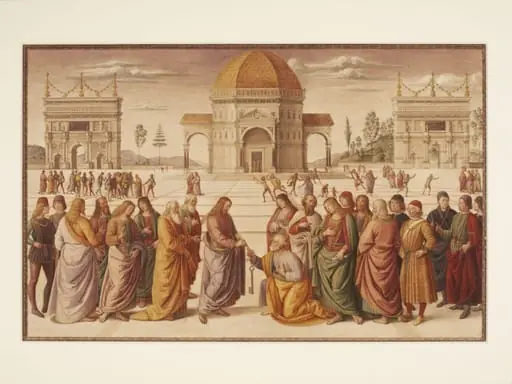 The Delivery of Keys to St Peter
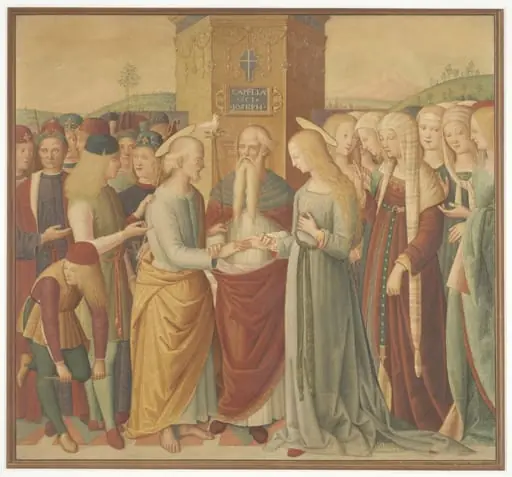 Copy after the painting Marriage of the Virgin by Perugino in S. Girolamo, Spello.
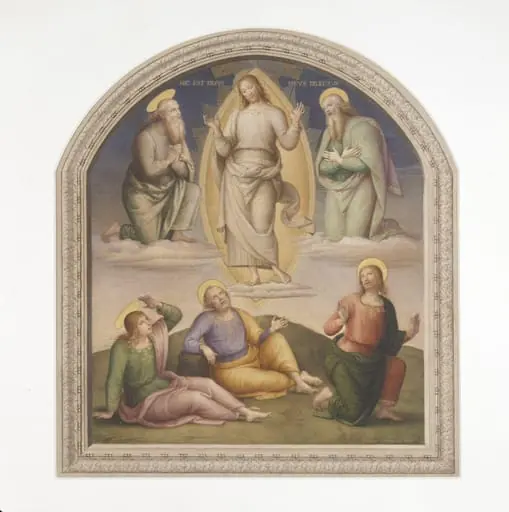 Copy after the painting The Transfiguration by Perugino in the Collegio del Cambio, Perugia.
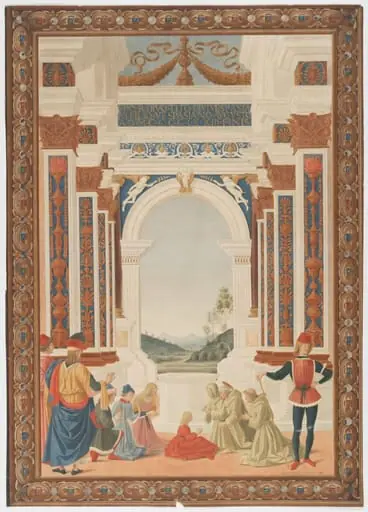 Copy after the painting St Bernard healing a man by Fiorenzo di Lorenzo in the Galleria Nazionale, Perugia.
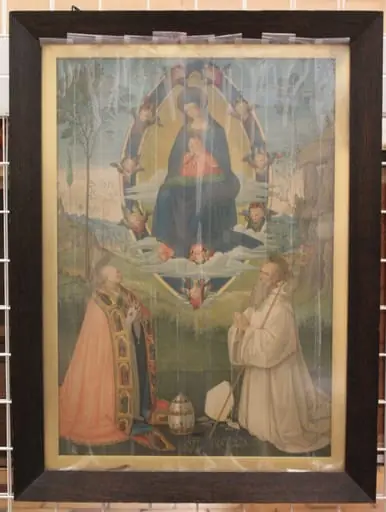 The Virgin in Glory
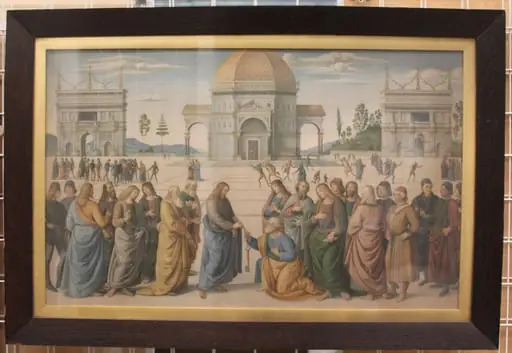 Christ's Charge to St Peter
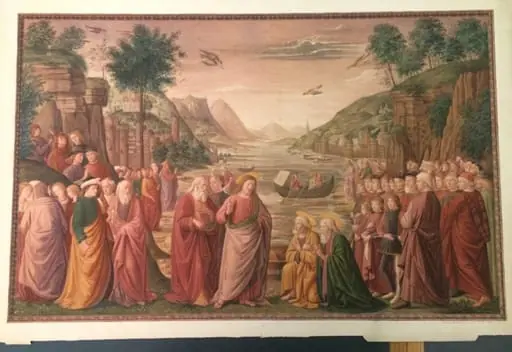 Copy after Calling of the Apostoles, Domenico Ghirlandaio in the Sistine Chapel, Vatican (Rome)
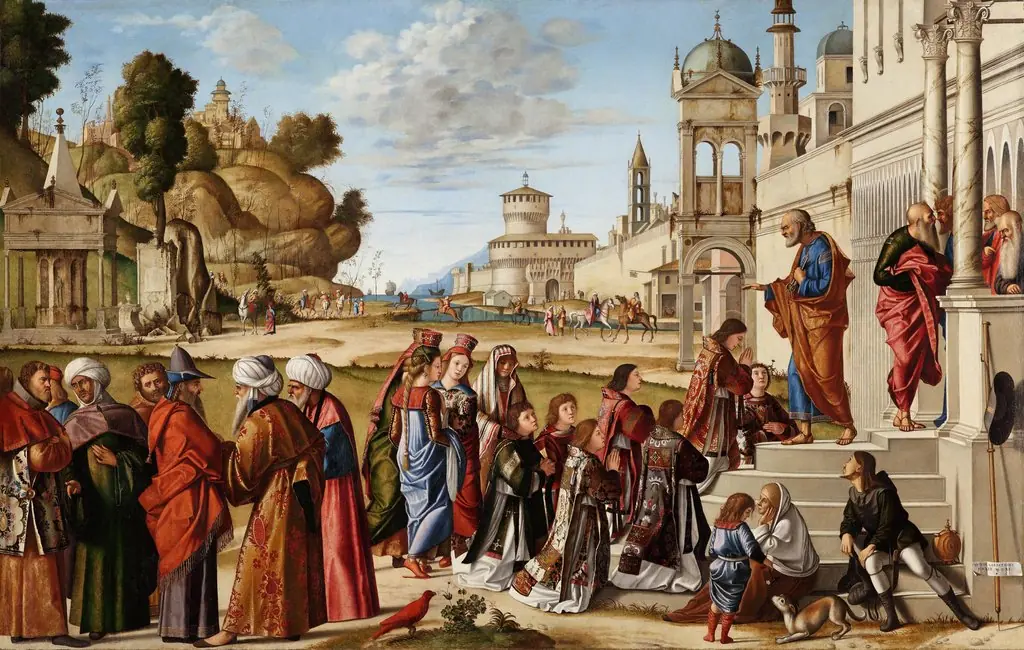 The Ordination of St. Stephen
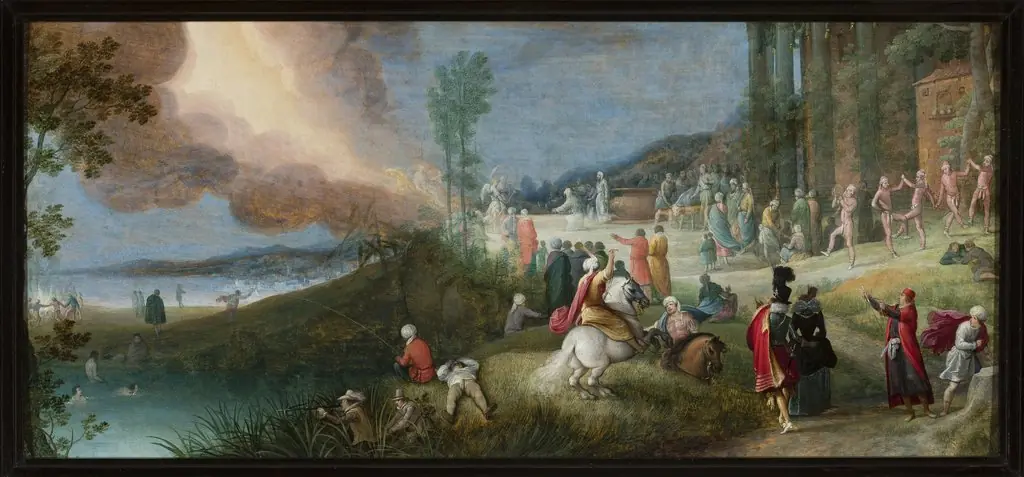 Offering scene
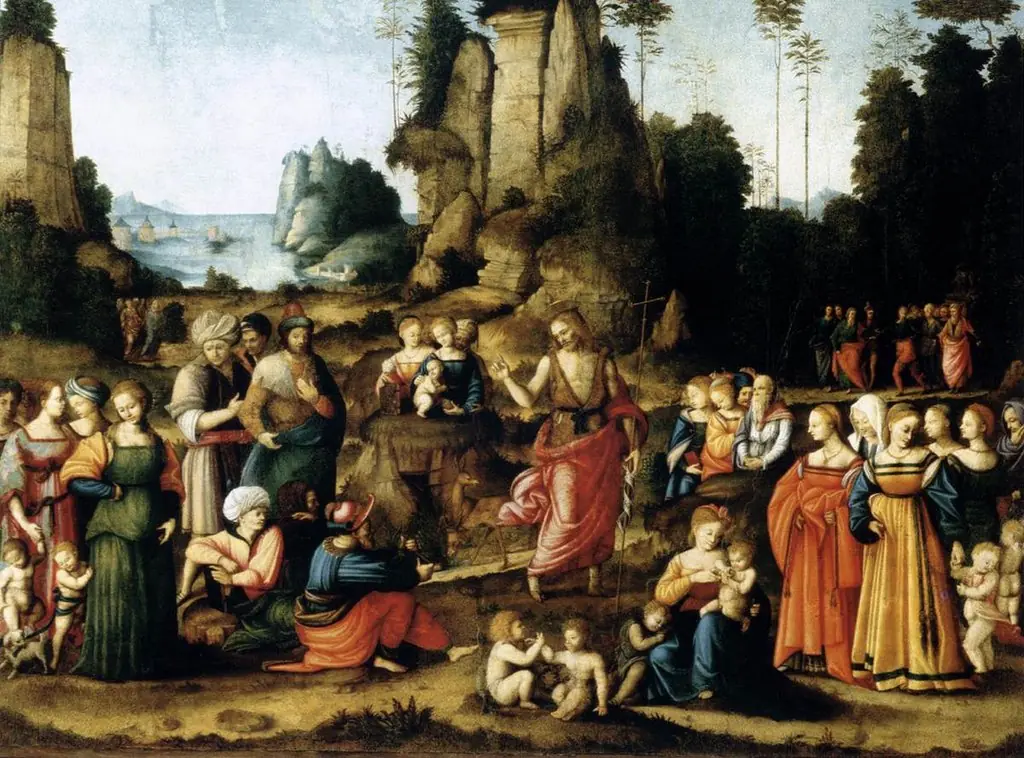 The Preaching of Saint John the Baptist
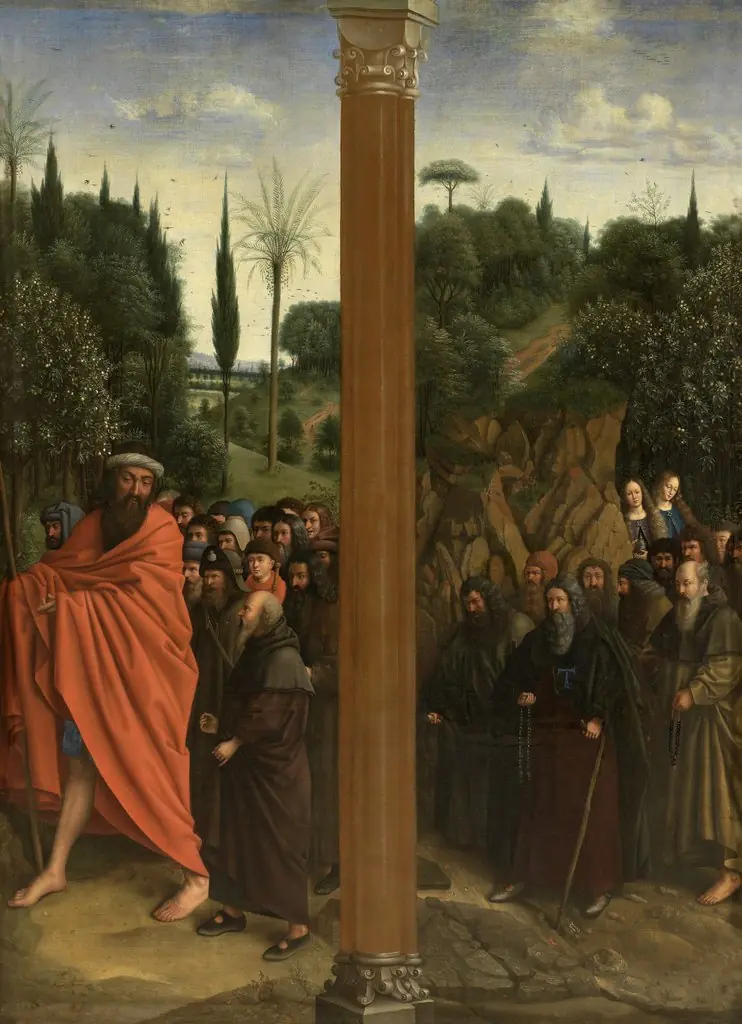 Holy Hermits and Holy Pilgrims
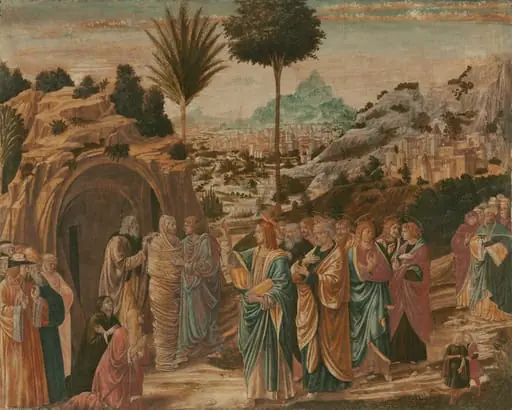 The Raising of Lazarus
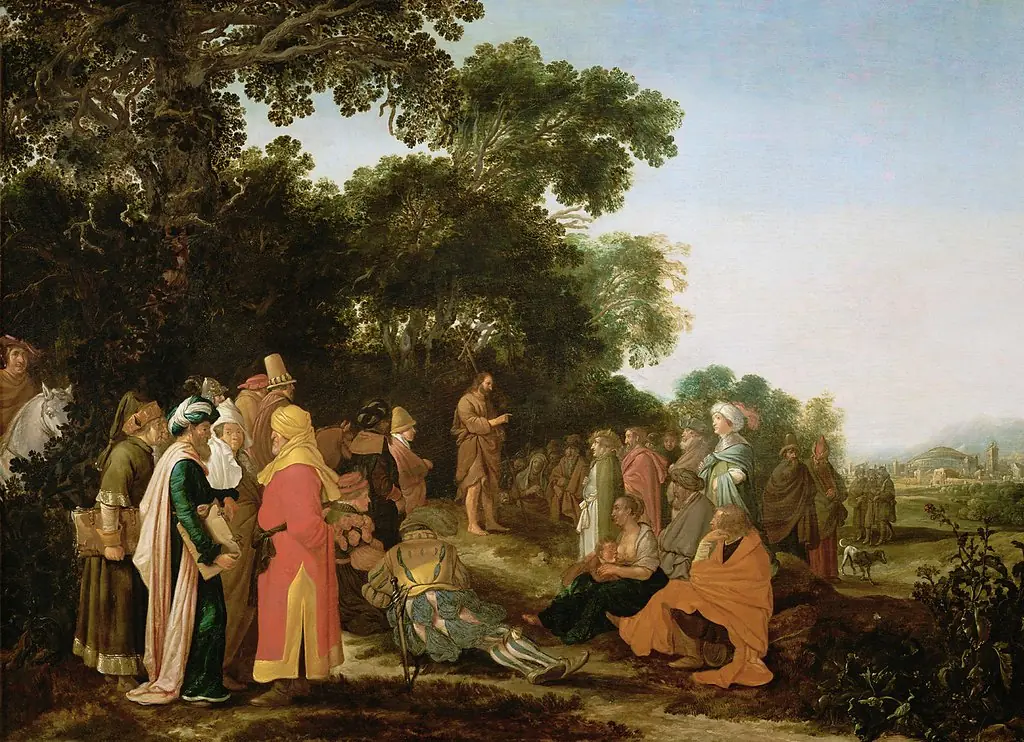 Predigt Johannes des Täufers
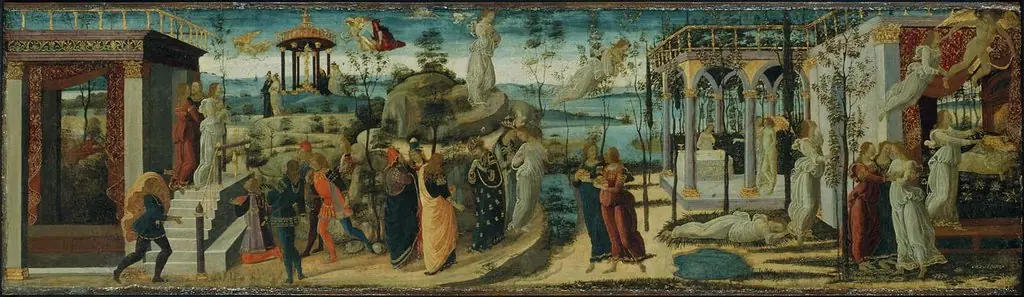 Story of Psyche
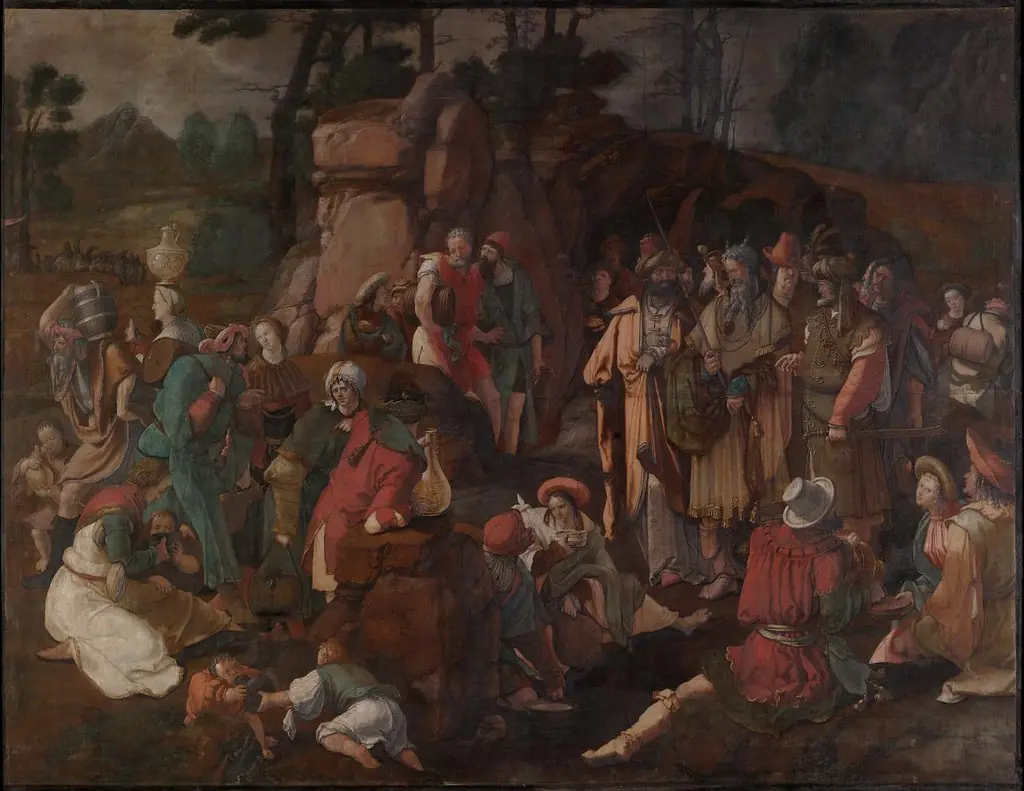 Moses and the Israelites after the Miracle of Water from the Rock