Artwork
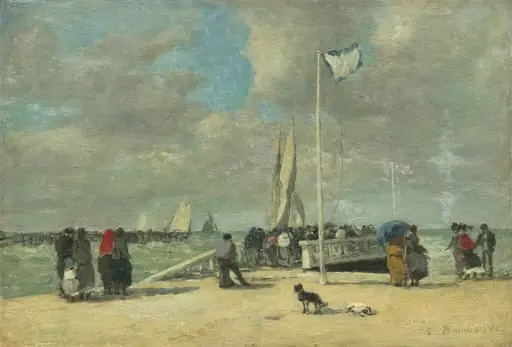
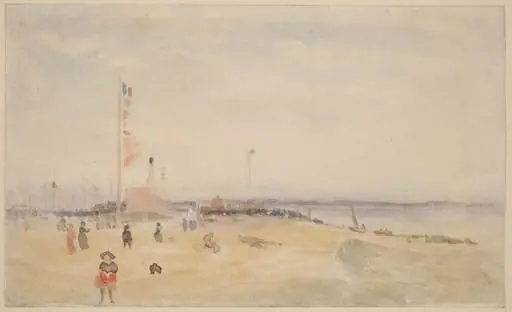
Beach House with Flags at Trouville
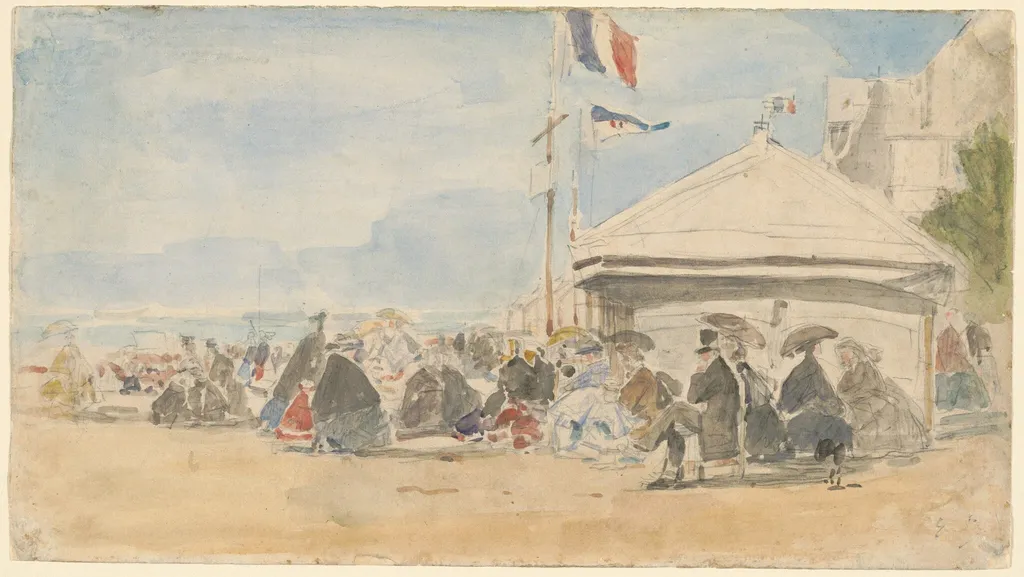
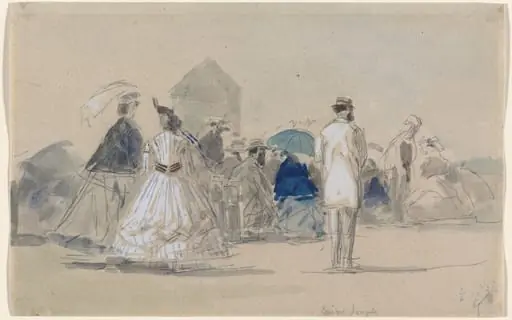
Beach House with Flags at Trouville is a graphite drawing by the Impressionist artist Eugène Boudin. It dates from 1865 and is held in the collection of the National Gallery of Art.
About this work
Overview
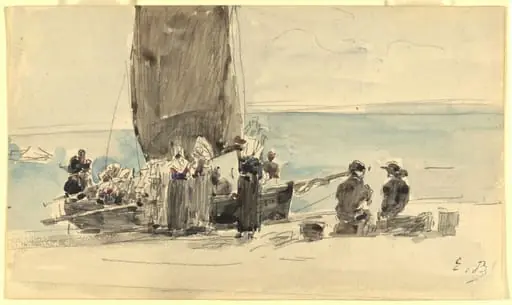
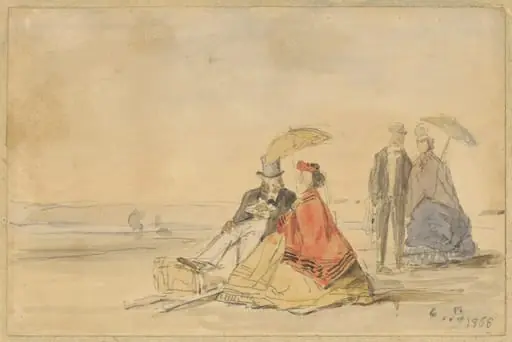
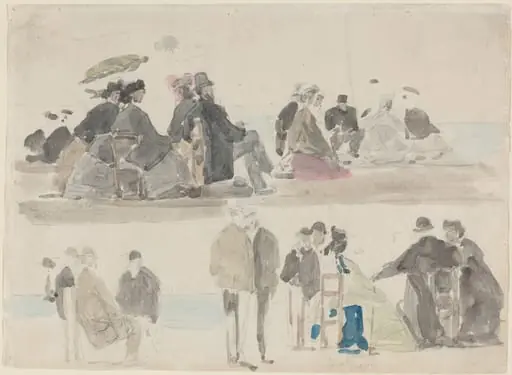
The work belongs to a series of observational sketches Boudin made en plein air, prioritizing direct engagement with natural conditions over studio refinement.
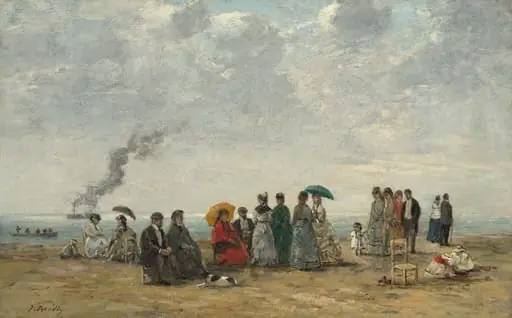
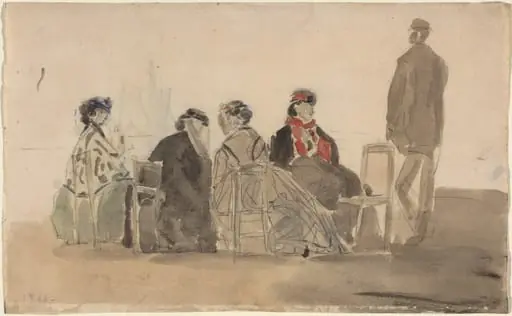
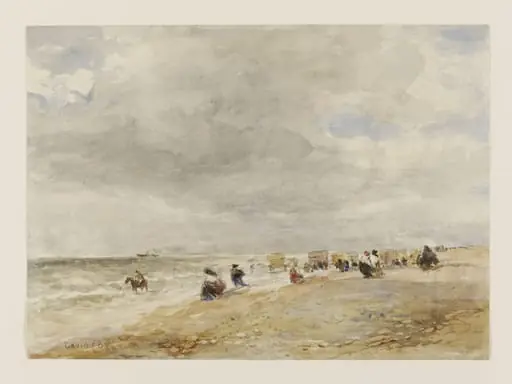
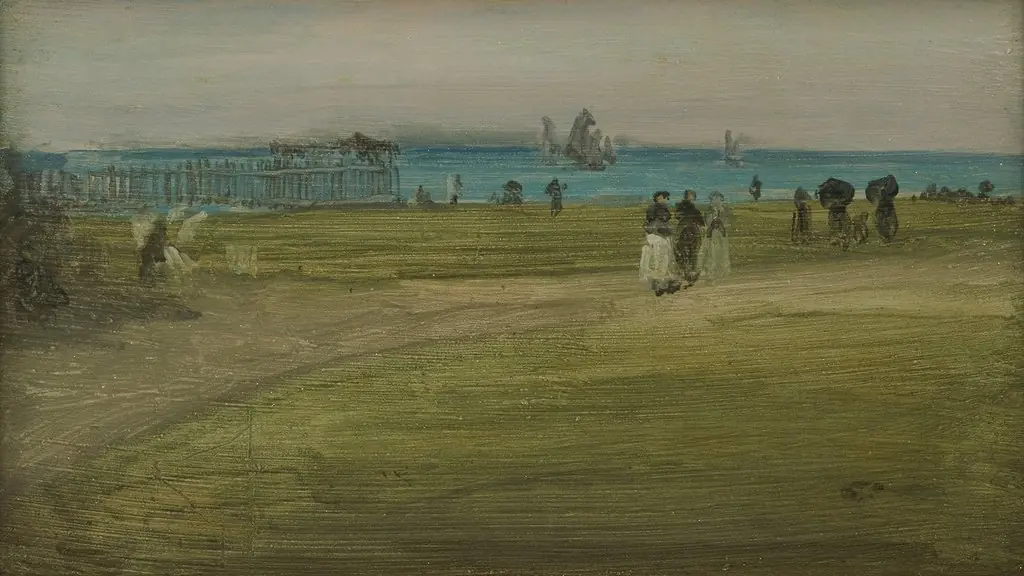
Created around 1865, this watercolor over graphite drawing by Eugène Boudin captures a modest seaside structure in Trouville, a coastal town in Normandy. The work belongs to a series of observational sketches Boudin made en plein air, prioritizing direct engagement with natural conditions over studio refinement. Its modest scale and medium reflect its function as a study rather than a finished exhibition piece.
Subject & Meaning
The scene centers on a simple beach house adorned with a few fluttering flags, likely signaling the presence of summer visitors or local maritime activity. Boudin avoids dramatic narrative, instead emphasizing the quiet rhythm of coastal life. The flags introduce subtle movement and human presence, grounding the landscape in the everyday rather than the idealized.
Technique & Style
Boudin applied translucent watercolor over a light graphite underdrawing to suggest shifting light and air. His brushwork is loose yet deliberate, with washes layered to convey the humidity of the seaside atmosphere. The graphite outlines anchor the structure without dominating, allowing the watercolor to dominate the visual experience with its fluidity and transparency.
History & Provenance
The drawing emerged during Boudin’s most active period of coastal observation, when he frequently returned to Trouville and Deauville. It likely passed through private collections in France before entering a public institution, though its early ownership remains undocumented. Its survival as a working sketch underscores its value to Boudin’s artistic process rather than its market appeal.
Context
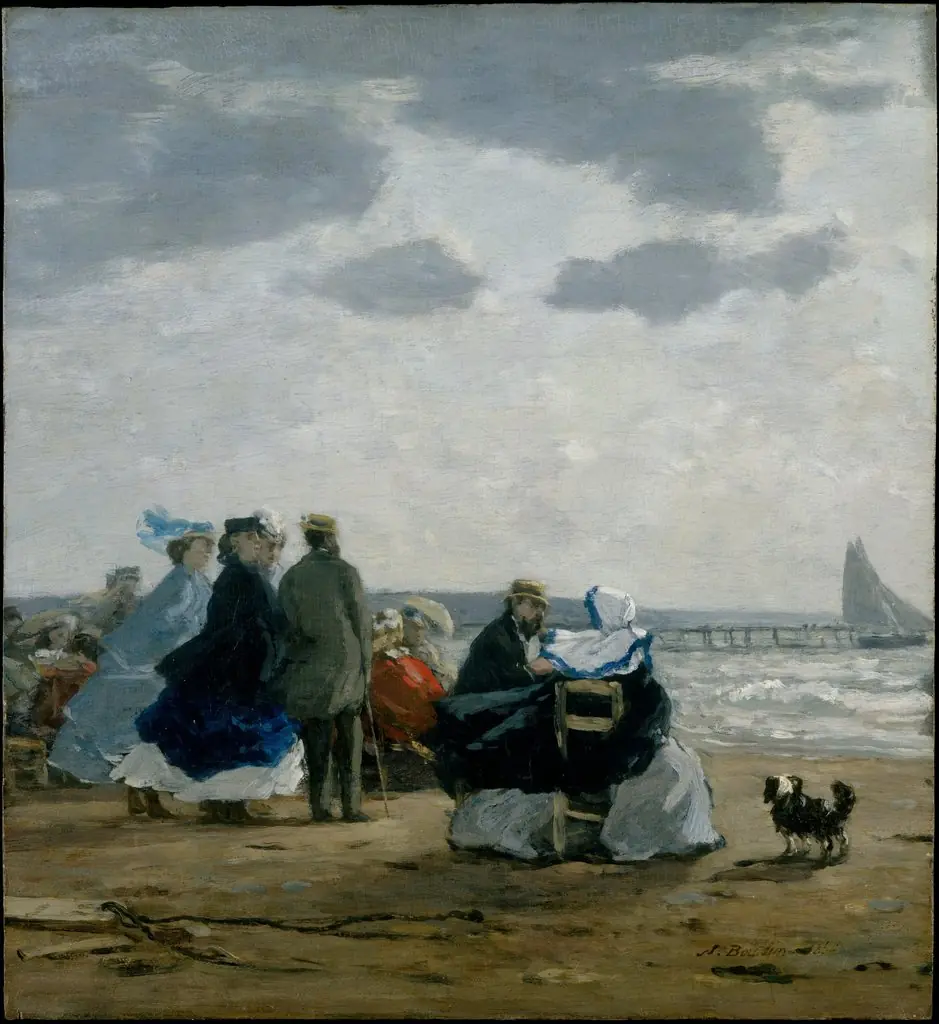
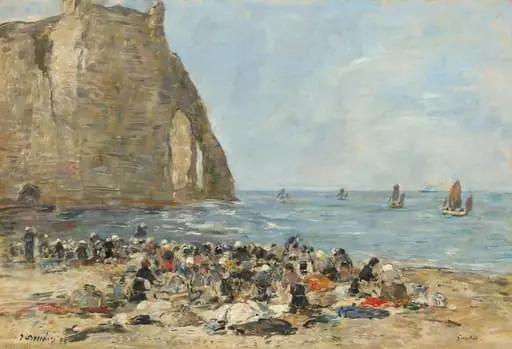
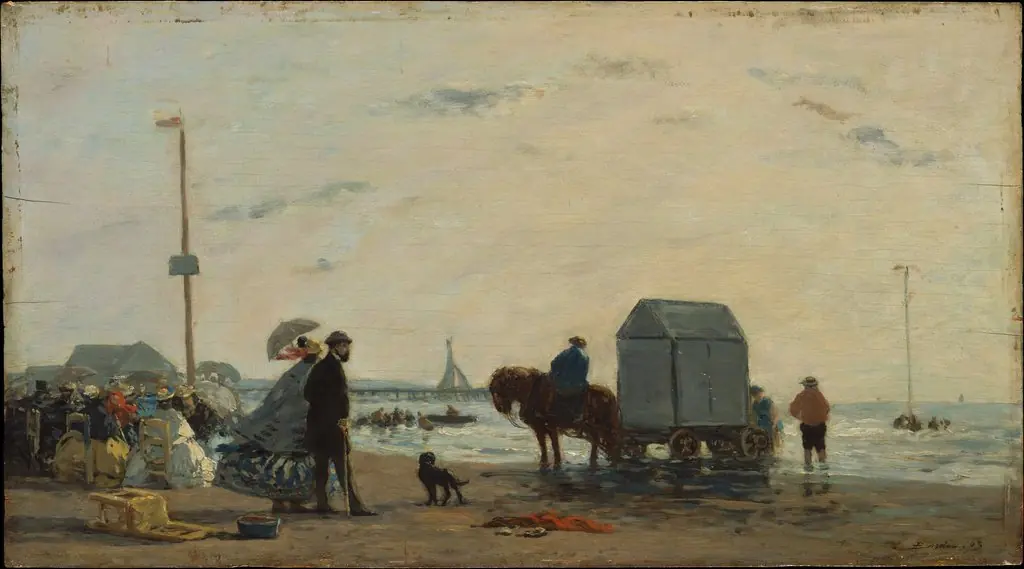
In the mid-1860s, Boudin was among the first French artists to consistently paint outdoors, influencing younger contemporaries like Monet. His focus on ordinary seaside scenes contrasted with the historical or mythological subjects favored by the Academy. This work exemplifies a growing interest in modern life and transient natural effects that would later define Impressionism.
Legacy
Though not widely exhibited in his lifetime, Boudin’s sketches like this one laid groundwork for the Impressionist movement’s emphasis on light, atmosphere, and direct observation. His unembellished depictions of coastal leisure helped redefine landscape painting’s subject matter, shifting focus from grandeur to the subtle, fleeting moments of everyday existence.
Artist & collection
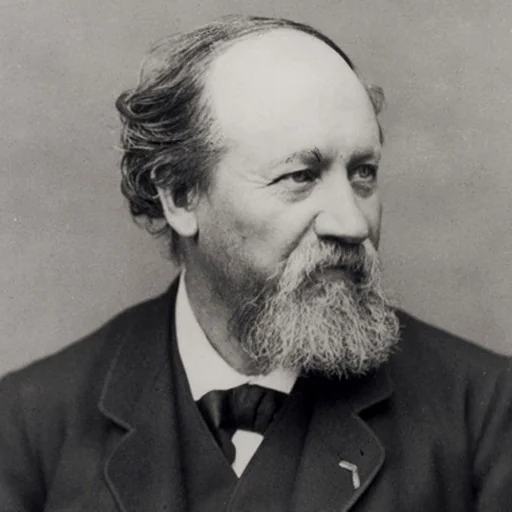
Artist
Eugène Louis Boudin (French: ; 12 July 1824 – 8 August 1898) was one of the first French landscape painters to paint outdoors.