Artwork
Crinolines on the Beach
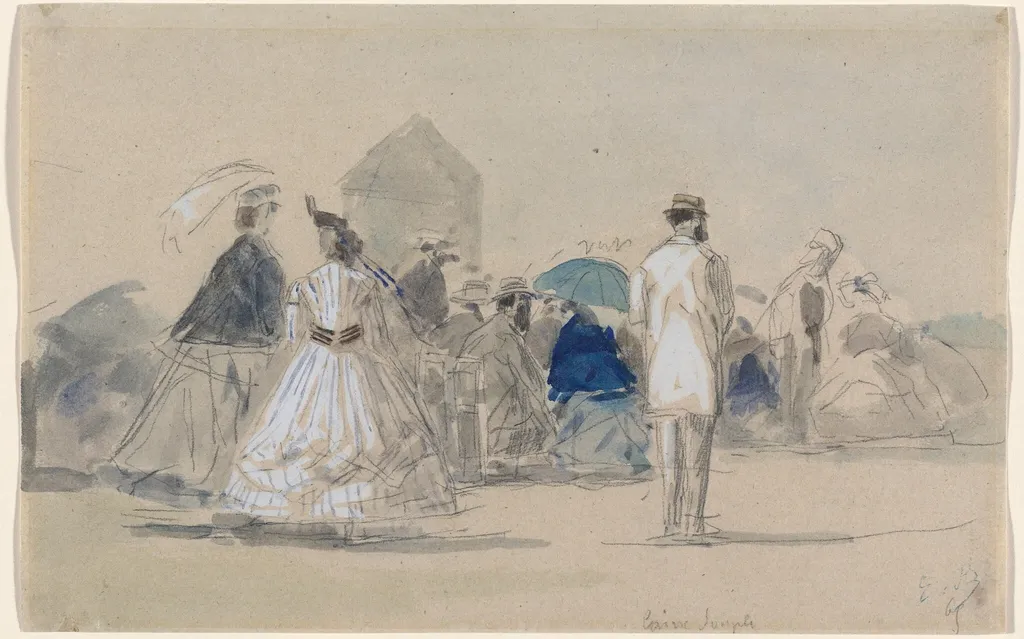
Crinolines on the Beach is a gouache drawing by the Romanticist artist Eugène Boudin. It dates from 1865 and is held in the collection of the National Gallery of Art.
About this work
Overview
Created circa 1865, *Crinolines on the Beach* is a watercolor and gouache drawing executed on buff paper over a graphite underdrawing. French painter Eugène Louis Boudin, noted for his plein‑air studies of coastal life, employed a light, sketch‑like approach to record a fleeting seaside scene.
Subject & Meaning
The composition depicts a small group gathered on a rocky shoreline. A woman in a striped, full‑skirted dress turns toward companions, while other figures hold umbrellas or walk away, suggesting a moment of casual interaction amid the sea breeze. The work emphasizes the transitory quality of leisure on the beach.
Technique & Style
Boudin’s handling combines loose graphite lines with translucent washes of watercolor and opaque gouache, creating soft edges and a sense of immediacy. The glazing technique allows layered hues to suggest shifting light, while the sketchy strokes convey movement rather than precise detail.
History & Provenance
The drawing belongs to Boudin’s mid‑career period when he focused on marine subjects that earned admiration from contemporaries such as Charles Baudelaire and Jean‑Baptiste-Camille Corot. Its provenance traces back to private collections before entering a museum holding of 19th‑century French drawings.
Context
During the 1860s Boudin was part of a circle of artists interested in capturing atmospheric effects and everyday coastal life. This work reflects the broader shift toward plein‑air observation that would later influence the Impressionists, illustrating the artist’s interest in light, weather, and modern leisure attire.
Artist & collection
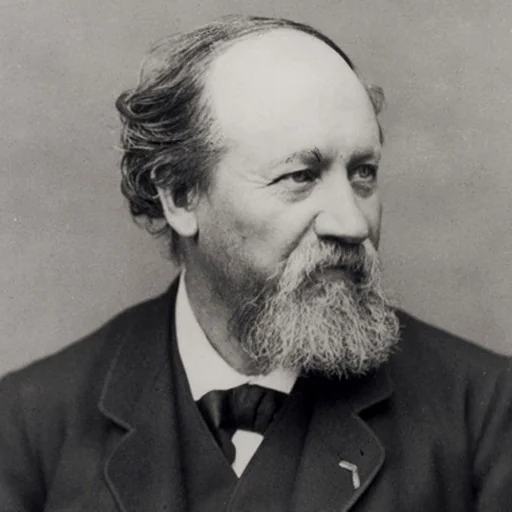
Artist
Eugène Louis Boudin (French: ; 12 July 1824 – 8 August 1898) was one of the first French landscape painters to paint outdoors.

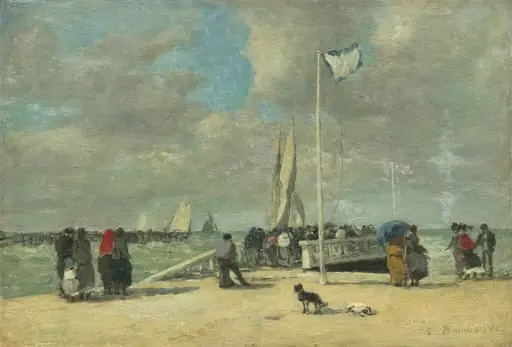
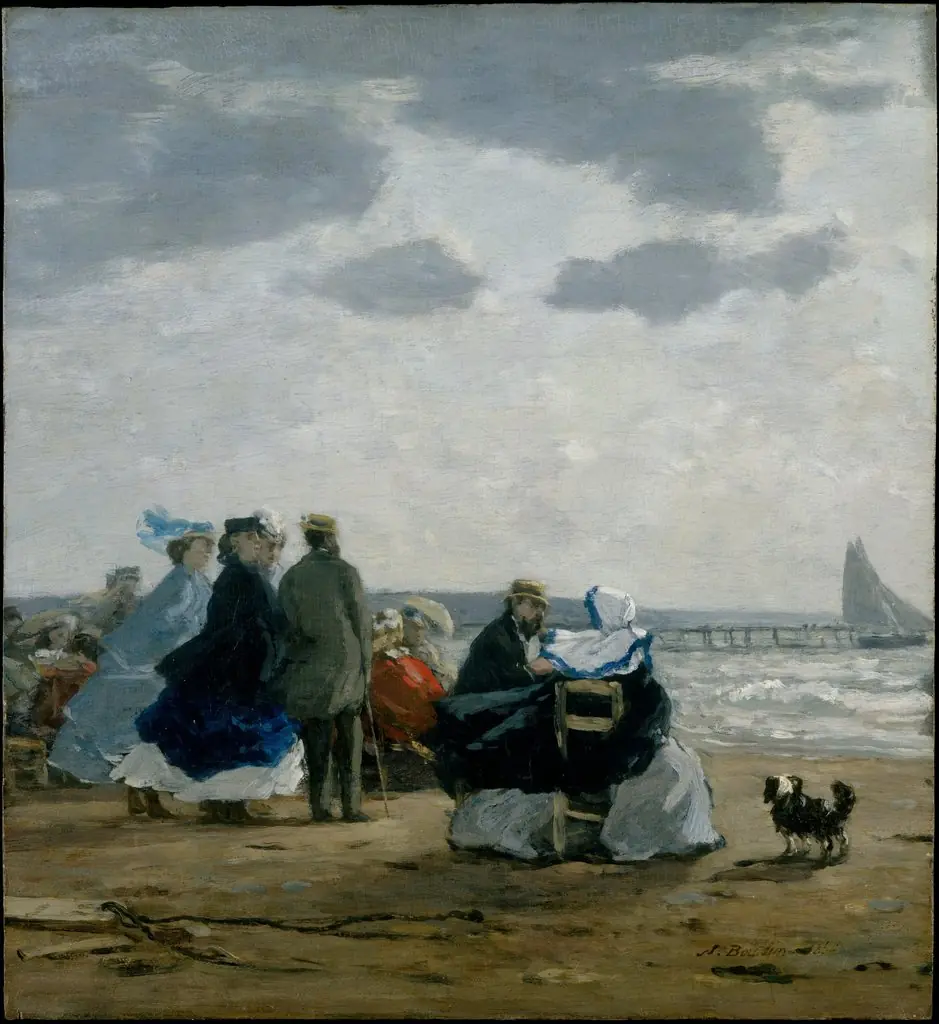
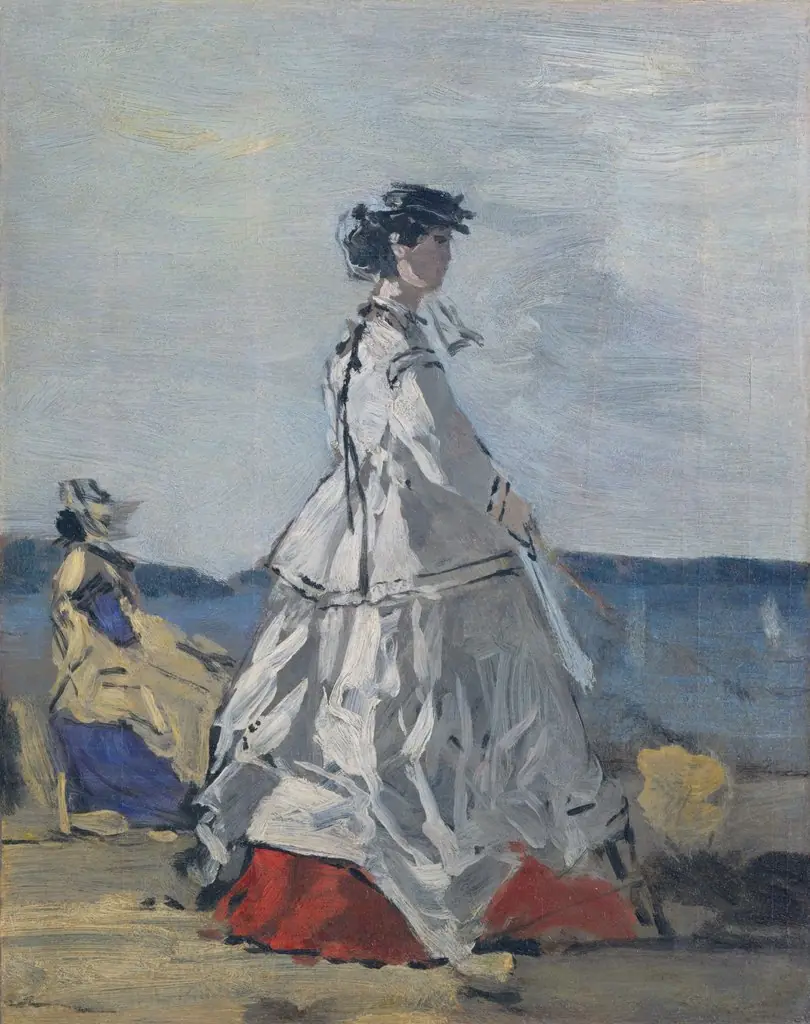
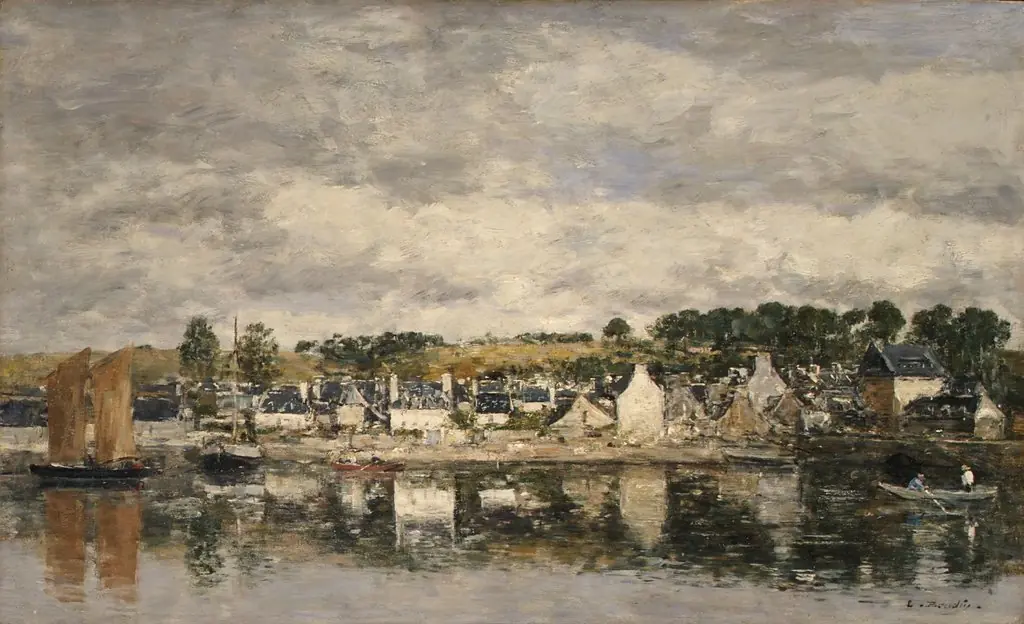
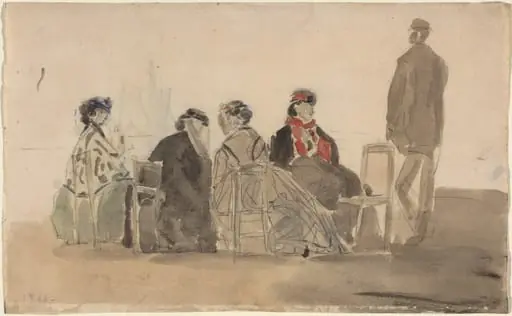 Four Ladies Seated at Trouville
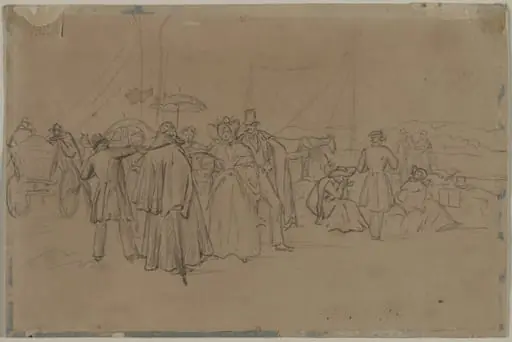 Passengers for Rhine Steamer (recto)
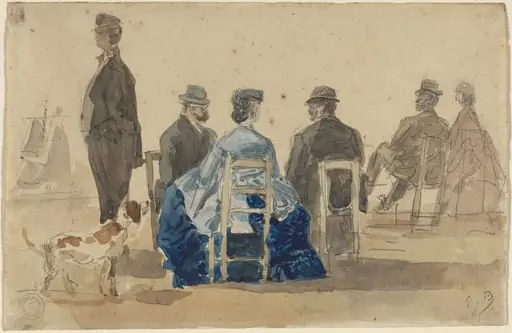 Ladies and Gentlemen Seated on the Beach with a Dog
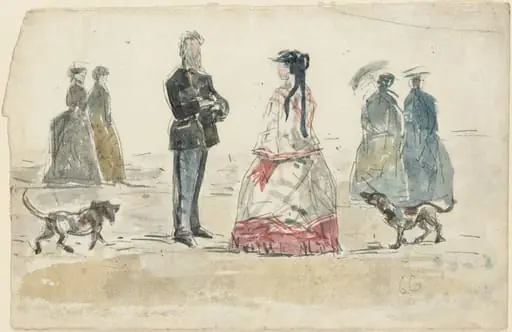 Ladies and Gentleman Walking on the Beach with Two Dogs
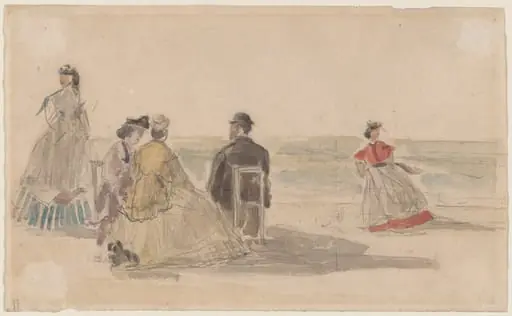 Noon at Deauville
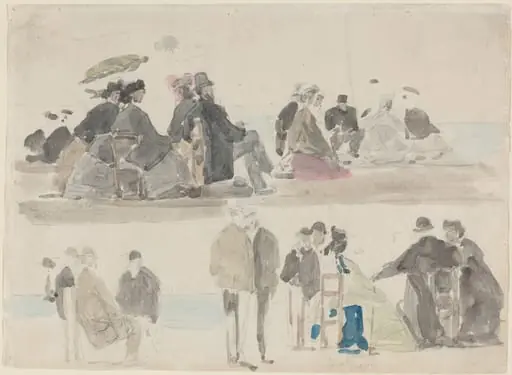 Ladies and Gentlemen on the Beach, in Two Registers
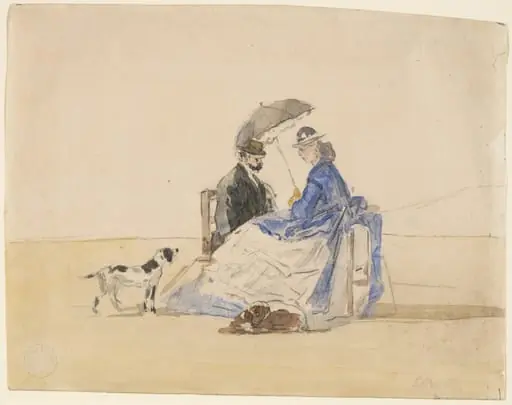 A Couple Seated on the Beach with Two Dogs
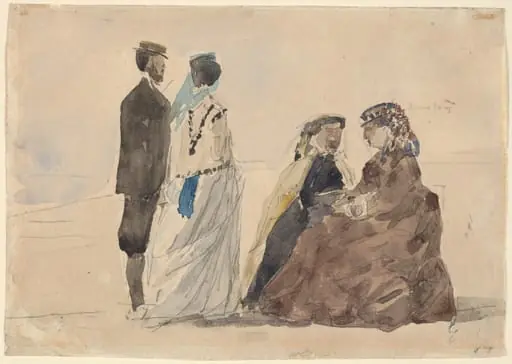 Two Ladies Seated and a Couple Walking on the Beach
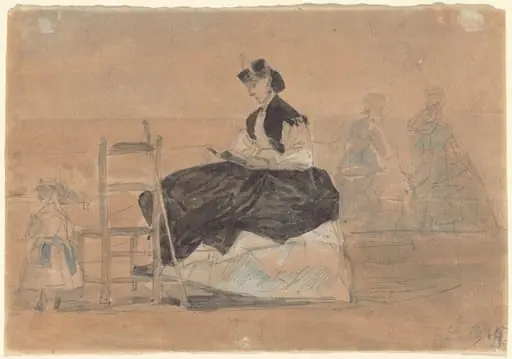 Woman in a Crinoline on the Beach of Trouville
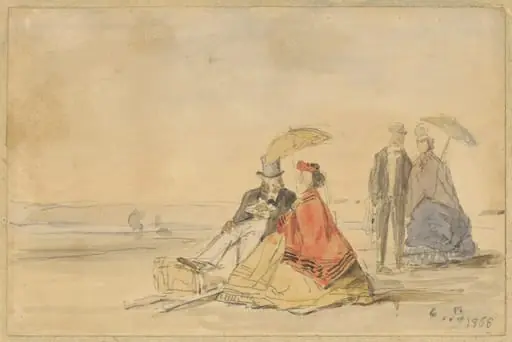 A Couple Seated and a Couple Walking on the Beach
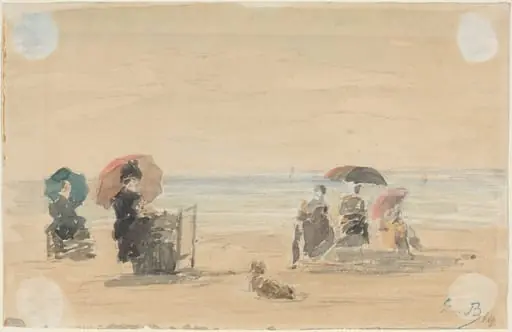 Sun-Shades, Trouville
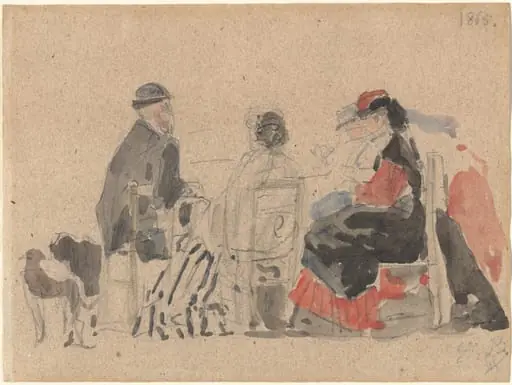 Conversation on the Beach