Artwork
Sun-Shades, Trouville
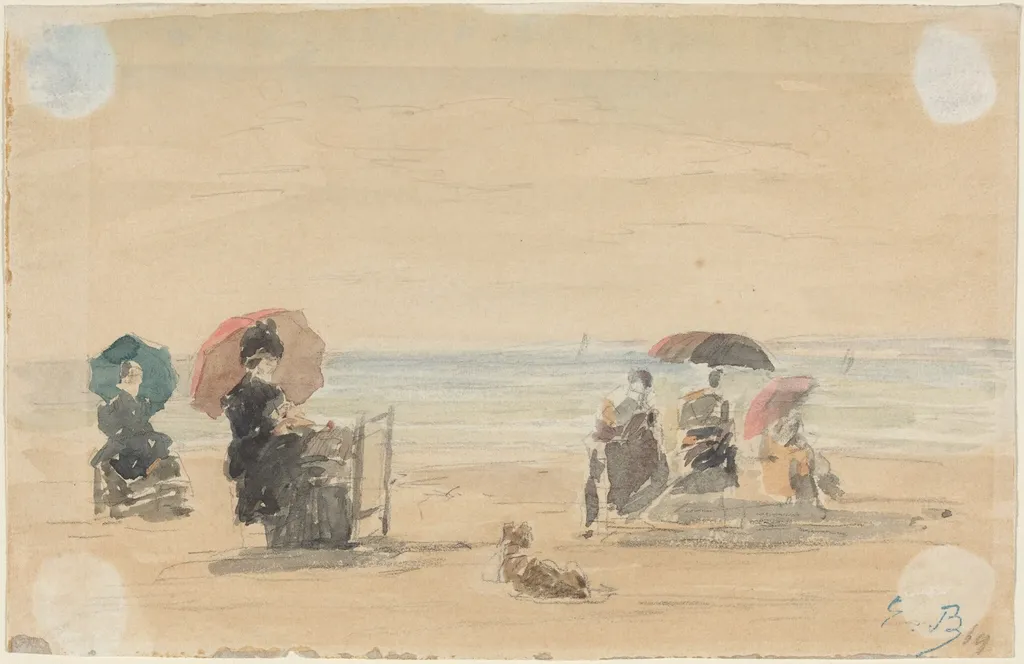
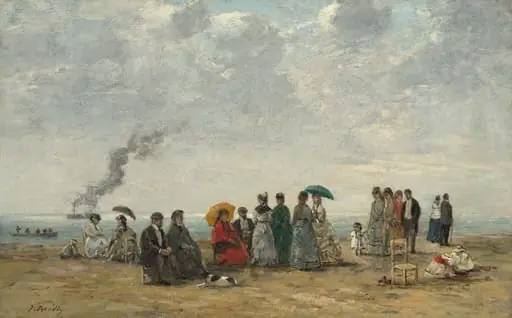
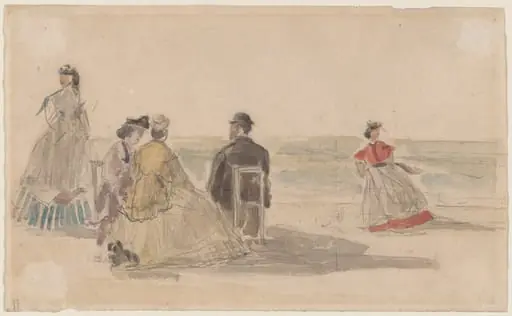
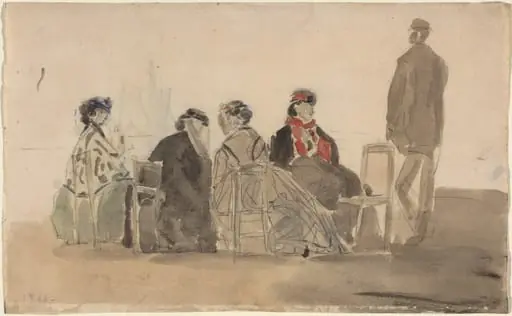
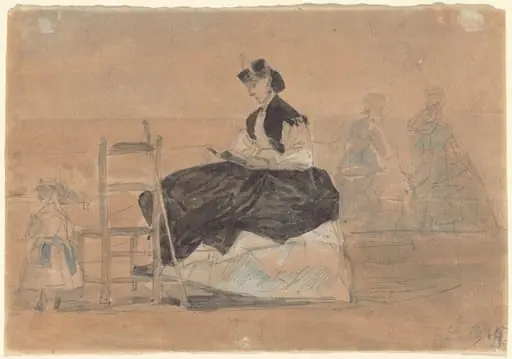
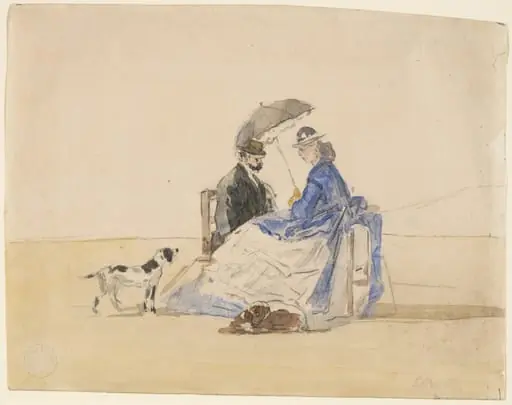
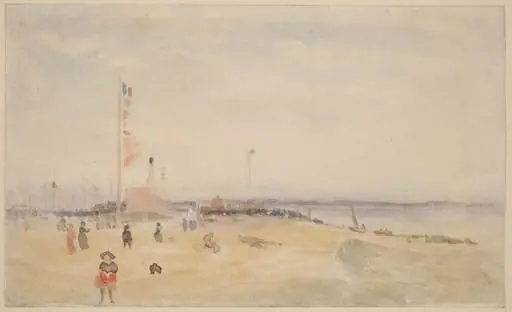
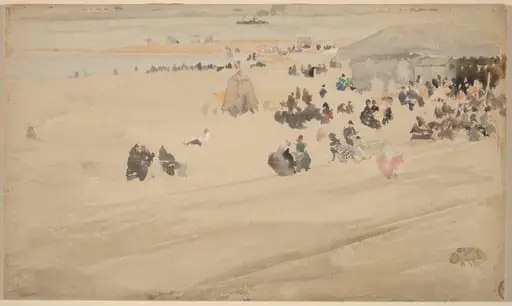
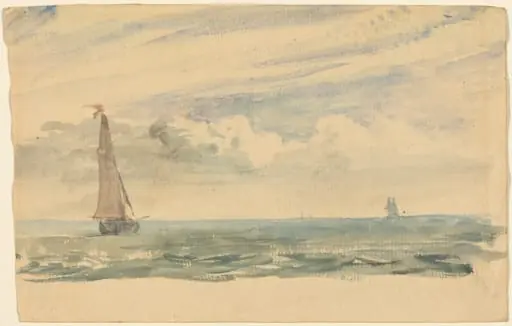
Sun-Shades, Trouville is a graphite drawing by the Impressionist artist Eugène Boudin. It dates from 1869 and is held in the collection of the National Gallery of Art.
About this work
Overview
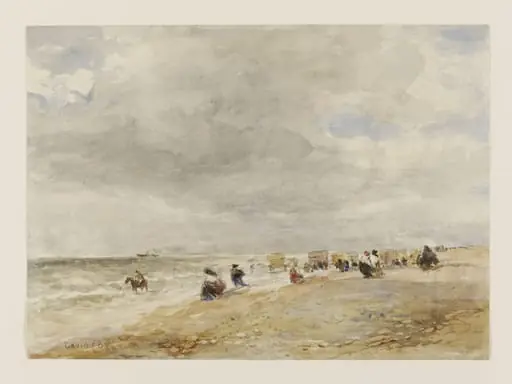
Eugène Boudin’s 1869 drawing *Sun‑Shades, Trouville* combines watercolor and graphite to depict a fleeting seaside moment on the Normandy coast. Executed en plein air, the work records the play of light on a beach scene, emphasizing the transitory quality of atmosphere that characterizes Boudin’s marine subjects.
Subject & Meaning
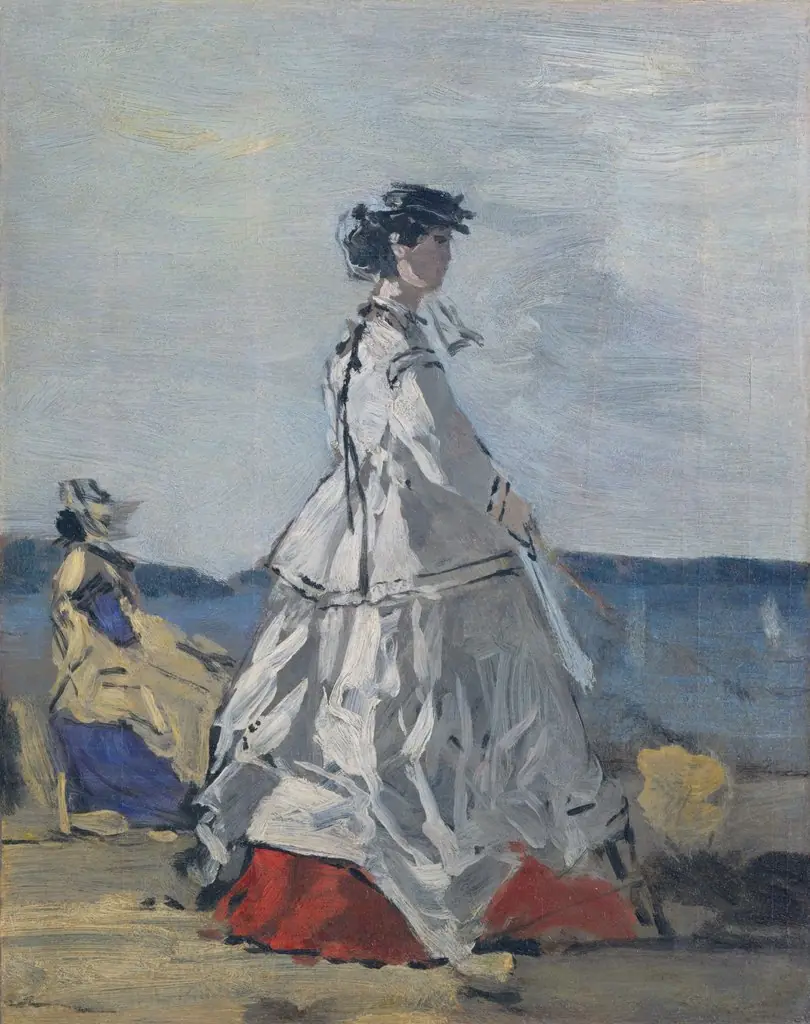
The composition centers on a row of tilted umbrellas shielding beachgoers from the sun. A pink parasol provides a vivid accent against an overcast sky, while two women in modest, dark dresses walk beneath the shelter, suggesting everyday leisure along the shore.
Technique & Style
Boudin applied watercolor swiftly to capture the changing illumination, allowing the pigment’s transparency to convey the hazy light. Underlying graphite sketches remain visible, revealing the artist’s preparatory marks and his habit of working directly on location to seize the momentary effects of weather and shade.
History & Provenance
Created in 1869, the drawing reflects Boudin’s mature period of coastal studies, during which he earned praise from contemporaries such as Baudelaire and Corot for his atmospheric rendering. The piece has been included in exhibitions of his beach scenes, notably alongside works held by the National Gallery of Art in Washington.
Context
Boudin’s focus on seaside leisure and the interplay of light and shadow aligns with the broader mid‑nineteenth‑century interest in plein‑air painting. His emphasis on everyday subjects and natural illumination contributed to the development of Impressionist approaches that would follow.
Artist & collection
Artist
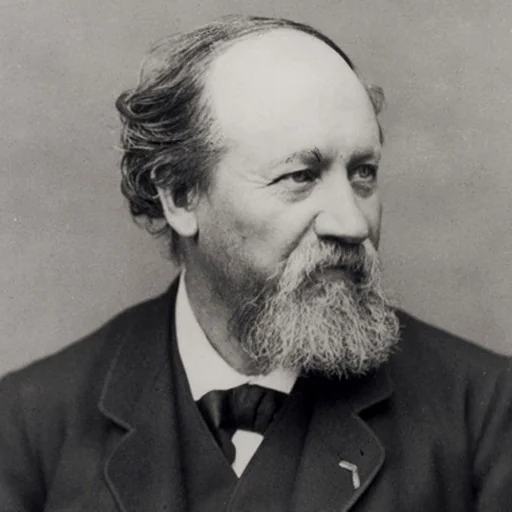
Eugène Louis Boudin (French: ; 12 July 1824 – 8 August 1898) was one of the first French landscape painters to paint outdoors.