Artwork
Noon at Deauville
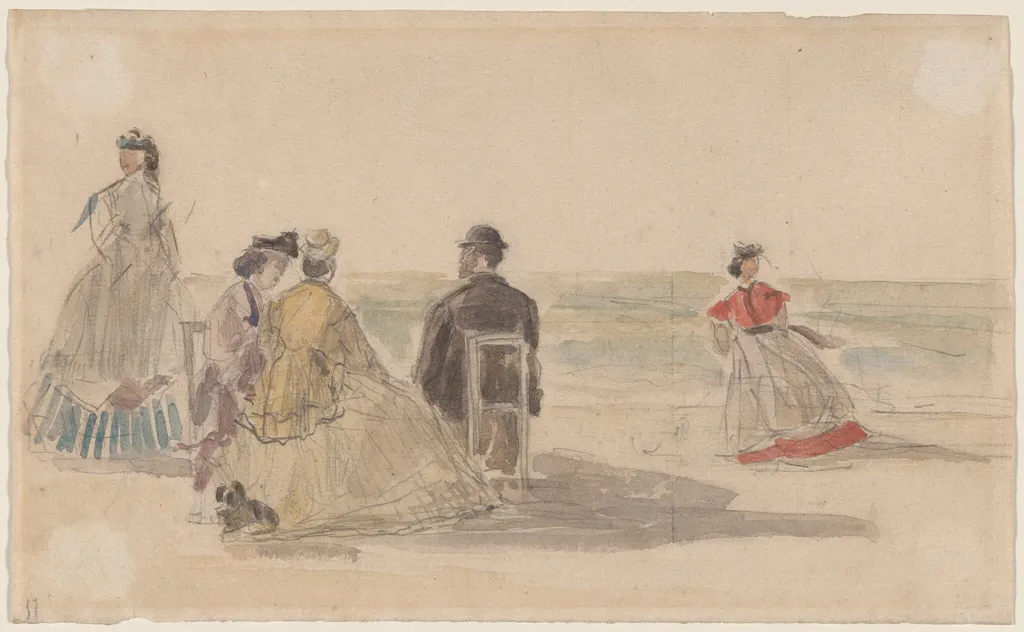
Noon at Deauville is a graphite drawing by the Impressionist artist Eugène Boudin. It dates from 1865 and is held in the collection of the National Gallery of Art.
About this work
Overview
Created around 1865, *Noon at Deauville* is a watercolor and graphite drawing by French artist Eugène Boudin.
Created around 1865, *Noon at Deauville* is a watercolor and graphite drawing by French artist Eugène Boudin. It captures a quiet moment on the Normandy coast, reflecting his dedication to painting outdoors. Boudin’s focus on transient effects of light and weather positioned him as an early advocate of plein air practice, influencing later Impressionists through his direct observation of natural conditions.
Subject & Meaning
The scene depicts four figures on a beach at midday: a woman stands alone with a folded cloth, two others approach in vivid yellow and red garments, and a man sits with his back turned. Their positions suggest casual, unposed leisure, emphasizing the rhythm of daily life rather than narrative drama. The stillness of the sea and soft sand reinforce a sense of quiet, unremarkable time passing.
Technique & Style
Boudin employed loose, rapid watercolor washes and delicate graphite lines to convey movement and atmosphere. Colors are restrained yet luminous, mimicking natural daylight without idealization. The wet-on-wet technique allows hues to blend softly, while the graphite defines subtle contours, giving structure to the fleeting impressions of figures and shoreline.
History & Provenance
The drawing emerged during Boudin’s formative years in Deauville, a growing seaside resort in the 1860s. Though not widely exhibited at the time, it aligns with his broader practice of documenting coastal scenes for private collectors and fellow artists. Its survival reflects its value as a study in observational technique rather than a finished exhibition piece.
Context
In mid-19th century France, landscape painting was shifting from studio-based idealism to direct observation. Boudin’s work, supported by figures like Corot and Baudelaire, helped legitimize sketches made outdoors as legitimate artistic expressions. Deauville’s popularity as a summer destination provided him with a steady subject: the intersection of nature and modern leisure.
Legacy
Boudin’s approach to capturing light and movement in watercolor laid groundwork for the Impressionist movement. Though less known today than his contemporaries, his emphasis on immediacy and naturalism influenced Monet and others who adopted plein air methods. *Noon at Deauville* exemplifies how modest, spontaneous drawings contributed to a broader transformation in artistic practice.
Artist & collection
Artist
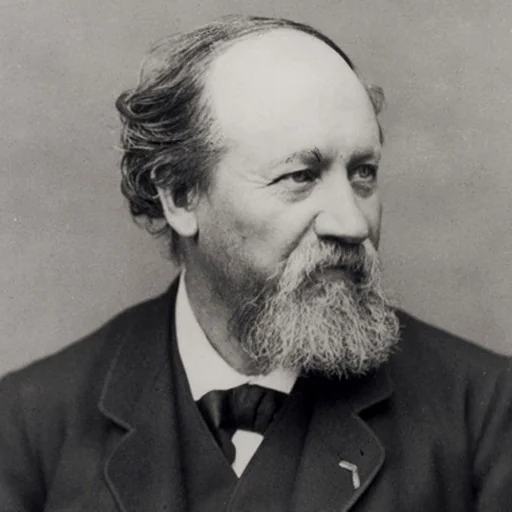
Eugène Louis Boudin (French: ; 12 July 1824 – 8 August 1898) was one of the first French landscape painters to paint outdoors.

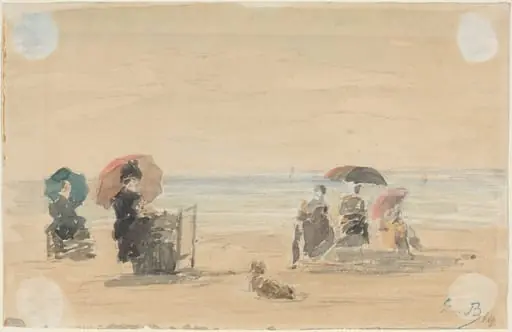 Sun-Shades, Trouville
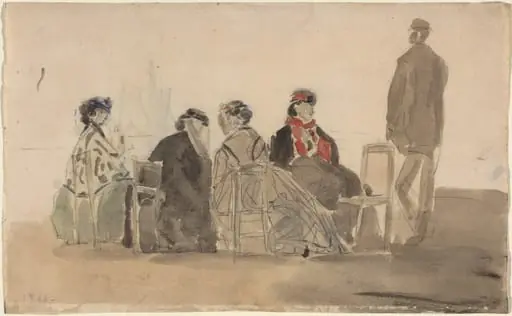 Four Ladies Seated at Trouville
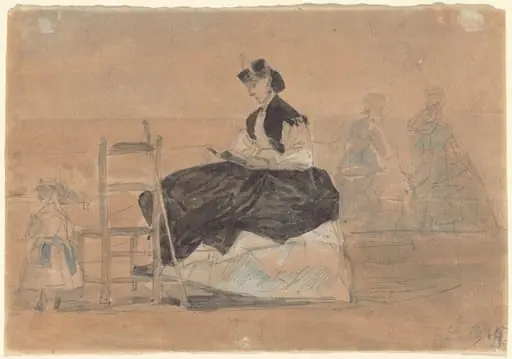 Woman in a Crinoline on the Beach of Trouville
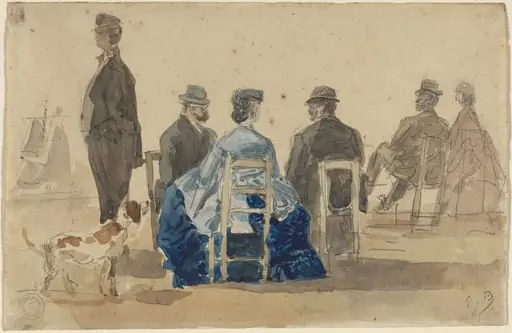 Ladies and Gentlemen Seated on the Beach with a Dog
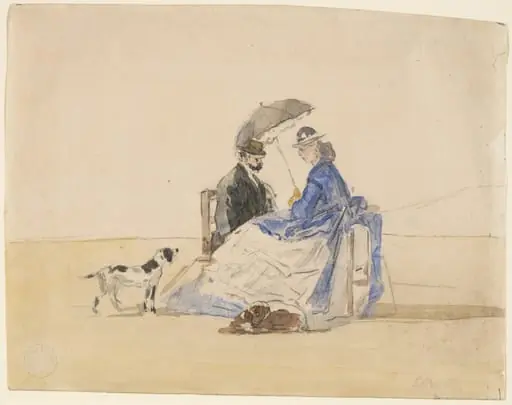 A Couple Seated on the Beach with Two Dogs
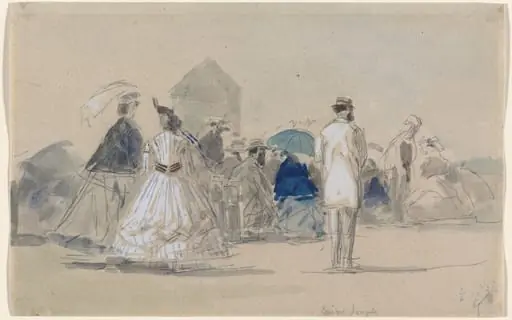 Crinolines on the Beach
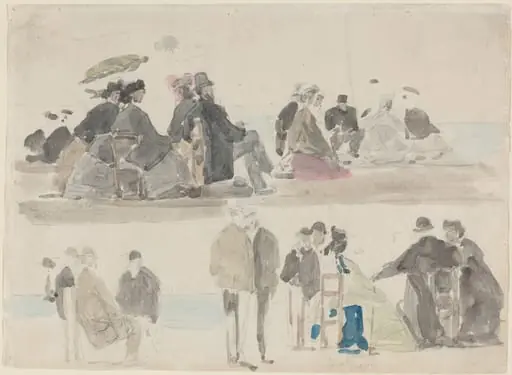 Ladies and Gentlemen on the Beach, in Two Registers
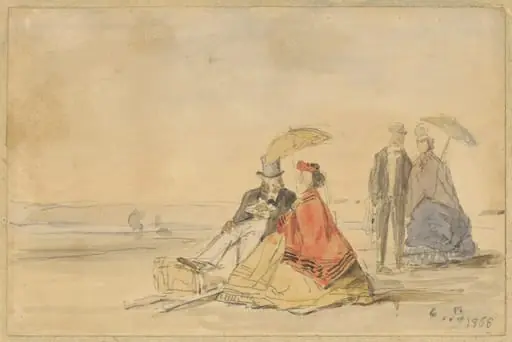 A Couple Seated and a Couple Walking on the Beach
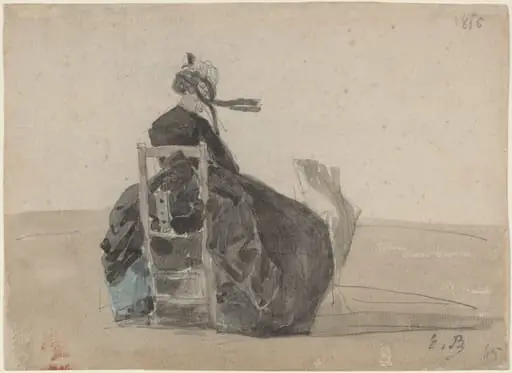 Seated Lady in Black, Trouville
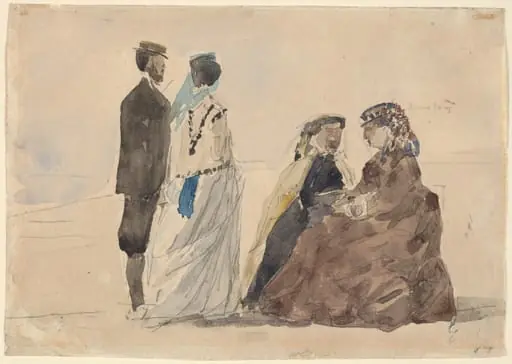 Two Ladies Seated and a Couple Walking on the Beach
 Lagoon: Noon
 Pourville-sur-Mer