Artwork
Three Women at Trouville
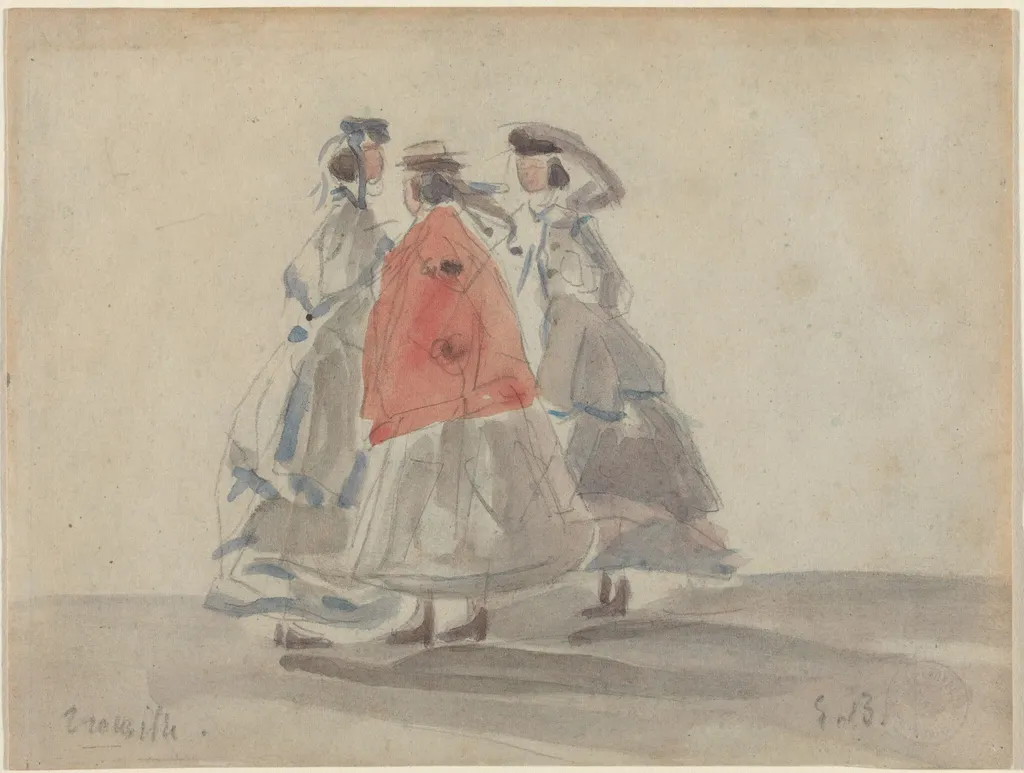
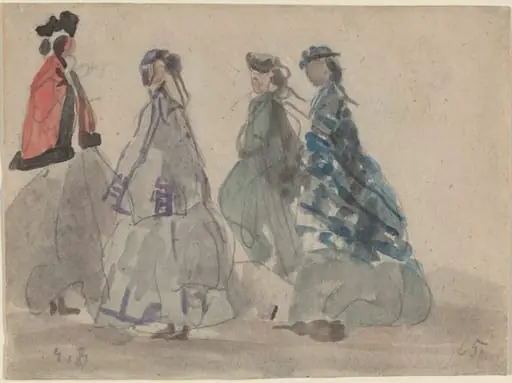
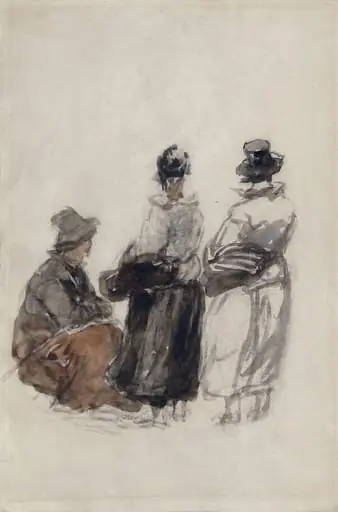
Three Women at Trouville is a graphite drawing by the Romanticist artist Eugène Boudin. It dates from 1865 and is held in the collection of the National Gallery of Art.
About this work
Overview
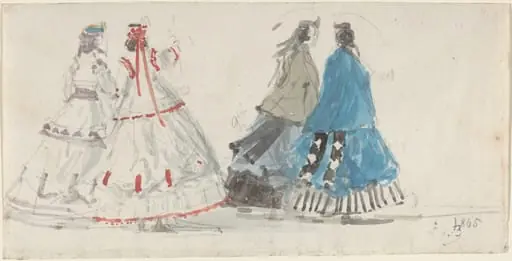
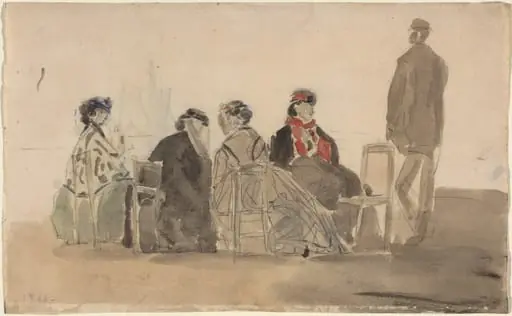
Created around 1865, this watercolor and graphite drawing by Eugène Boudin captures a quiet moment on the Normandy coast.
Created around 1865, this watercolor and graphite drawing by Eugène Boudin captures a quiet moment on the Normandy coast. Executed on laid paper, the piece exemplifies his commitment to outdoor observation and his mastery of transient effects. Boudin’s focus on everyday seaside life distinguished him from academic traditions, positioning him as a key figure in the shift toward modern landscape painting.
Subject & Meaning
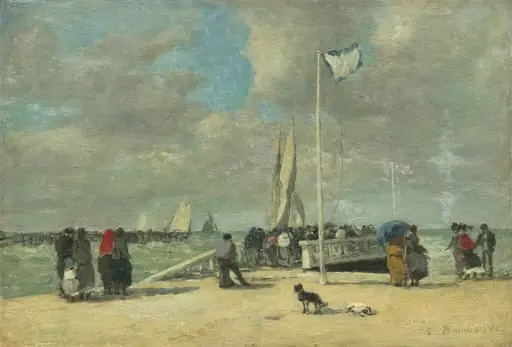
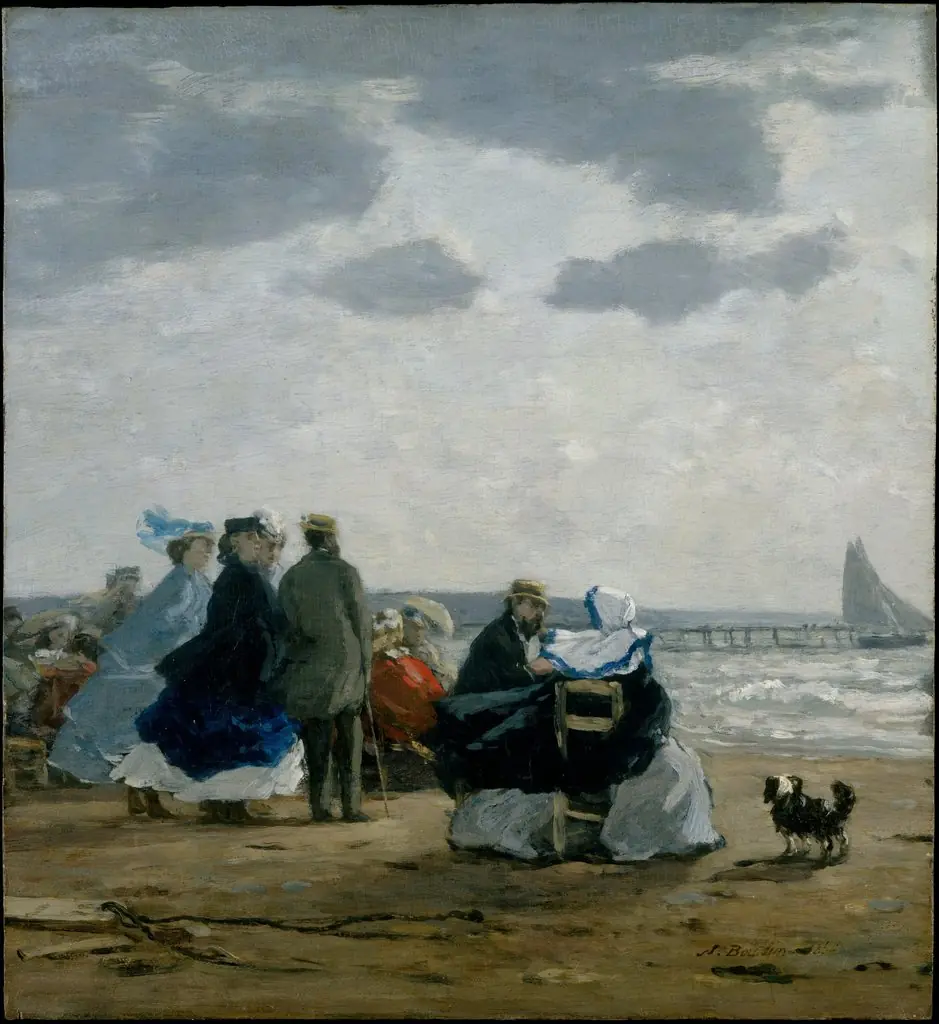
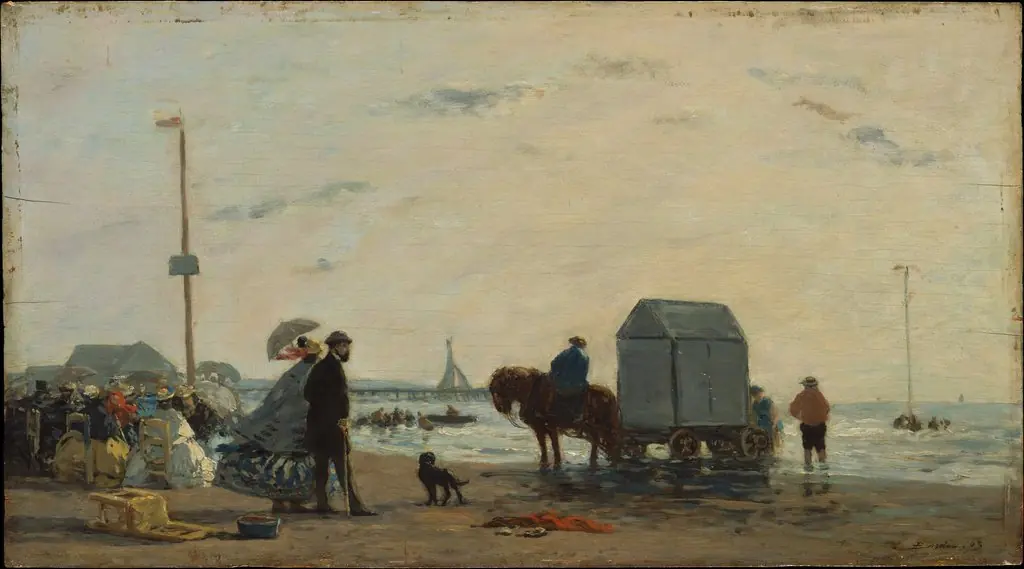
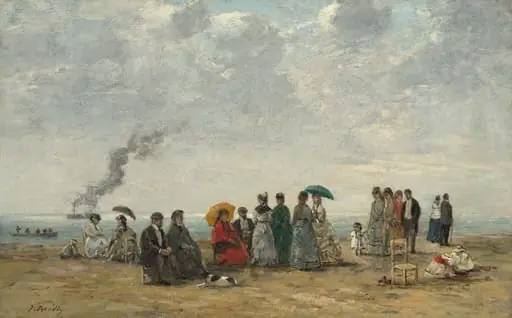
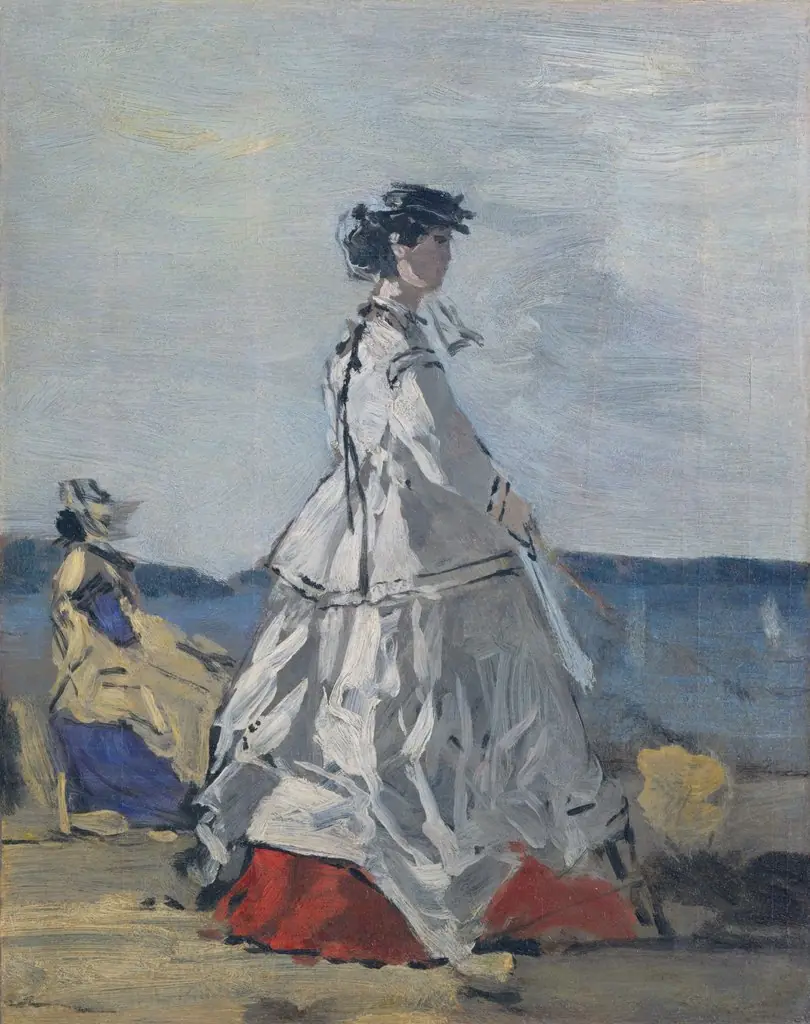
The drawing portrays three women standing near the shore, their postures relaxed and unposed, engaged in the mundane rhythms of coastal leisure. No narrative is imposed; instead, the scene conveys a sense of quiet presence and temporal stillness. Boudin’s choice to depict ordinary figures in a public space reflects a growing interest in civilian life, free from idealization or mythological reference.
Technique & Style
Boudin employed loose, swift graphite lines to define forms, overlaid with transparent washes of watercolor to suggest light and texture. His economy of means—minimal detail, restrained palette, and fluid brushwork—conveys atmosphere without embellishment. The paper’s texture subtly enhances the sense of air and moisture, reinforcing the coastal setting through material as much as mark.
History & Provenance
The work dates from Boudin’s most active period in Trouville, a growing seaside resort where he frequently painted. While its early ownership is undocumented, it entered public collections in the 20th century, recognized for its role in documenting the emergence of plein-air practice. Its preservation reflects its status as a representative example of 19th-century French drawing.
Context
In the 1860s, French artists increasingly turned from studio-based history painting to direct observation of nature. Boudin’s coastal scenes, admired by contemporaries like Corot and later by the young Monet, helped lay groundwork for Impressionism. His focus on light, weather, and ordinary subjects aligned with broader cultural shifts toward realism and the aesthetics of the everyday.
Legacy
Though less celebrated than his Impressionist successors, Boudin’s drawings like this one influenced the visual language of modern landscape art. His ability to distill fleeting moments with precision and restraint became a model for artists seeking authenticity over ornament. The work remains a quiet testament to the value of direct observation in an era of artistic transformation.
Artist & collection
Artist
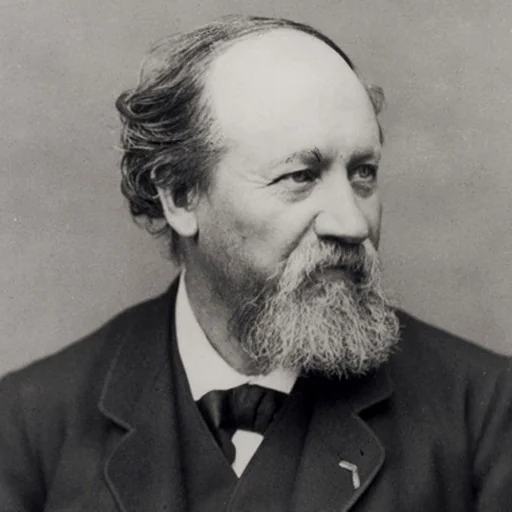
Eugène Louis Boudin (French: ; 12 July 1824 – 8 August 1898) was one of the first French landscape painters to paint outdoors.