Artwork
Male Nude Seated on Rocks
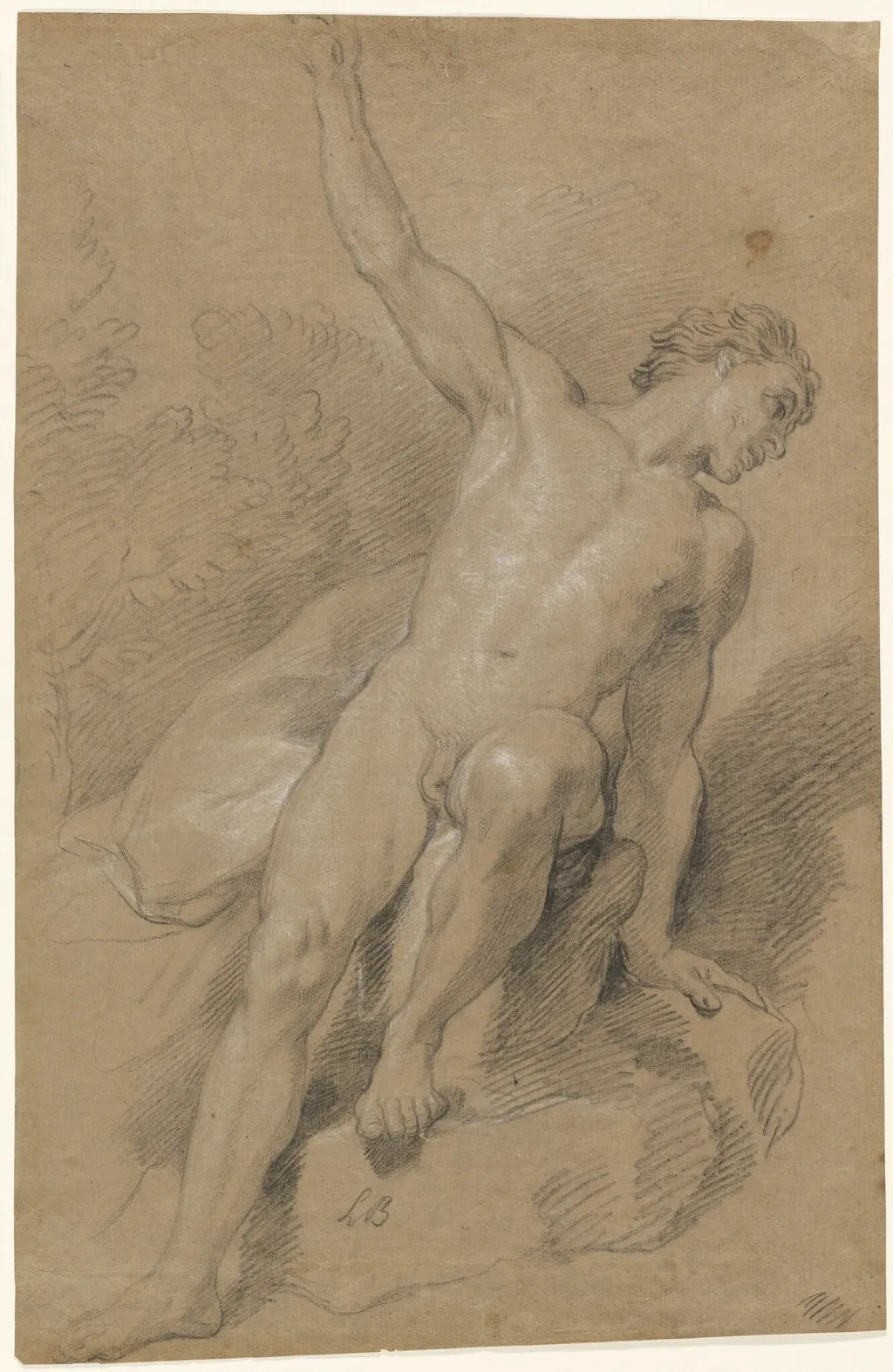
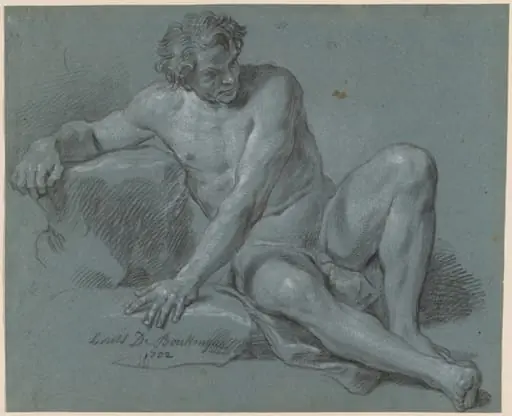
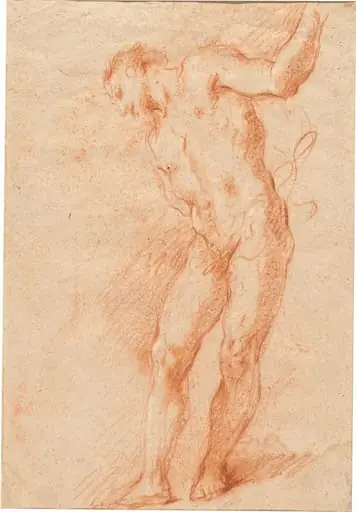
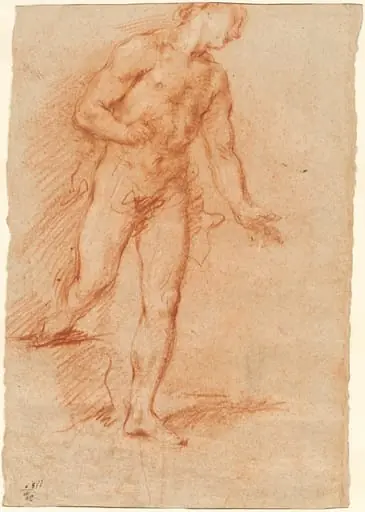
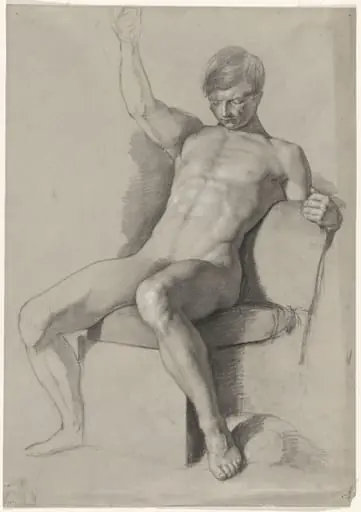
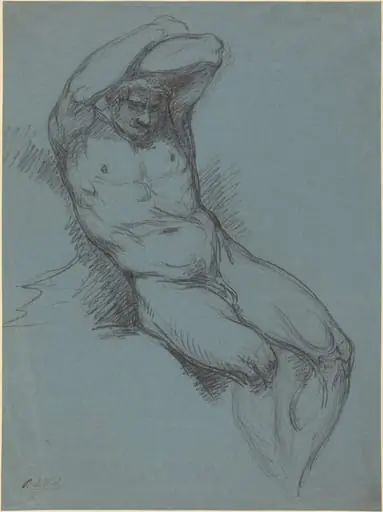
Male Nude Seated on Rocks is a chalk drawing by the Baroque artist Louis de Boullogne the Younger. It dates from 1710 and is held in the collection of the National Gallery of Art.
About this work
Overview
Louis de Boullogne the Younger’s drawing, titled Male Nude Seated on Rocks, dates to around 1710. Executed on brown laid paper, the work combines black chalk for the primary contours with touches of white chalk to model the flesh. It is a single‑figure study, rendered as a drawing rather than a finished painting, and measures roughly the size of a typical sketch sheet of the period.
Subject & Meaning
His legs are folded, one foot planted on the ground, while his arms are extended backward, suggesting a moment of twisting or reaching.
The composition presents a robust male figure perched upon a jagged rocky outcrop. His legs are folded, one foot planted on the ground, while his arms are extended backward, suggesting a moment of twisting or reaching. The pose emphasizes the tension of musculature and the interaction between the body and an implied, uneven terrain, focusing attention on the study of human form rather than narrative content.
Technique & Style
Boullogne employs a restrained palette of dark chalk lines to define the silhouette, supplementing with white chalk highlights that convey the play of light across the torso and limbs. The brown paper provides a warm ground tone, enhancing the chiaroscuro effect. The drawing’s swift, gestural strokes reveal a preparatory nature, typical of Baroque artists who often produced such studies to explore anatomy, movement, and lighting before completing larger works.
Historical Context
Created in the early eighteenth century, the piece reflects the lingering influence of the Baroque’s dramatic dynamism, even as French art was moving toward the more restrained Rococo. Male nude studies were common in academic training, serving both as exercises in anatomy and as references for larger mythological or historical compositions that demanded idealized yet physically convincing bodies.
Provenance
The drawing is attributed to Louis de Boullogne the Younger, a member of a prominent artistic family active in the French Royal Academy. While specific ownership records are scarce, the work’s attribution aligns with his known practice of producing preparatory sketches for larger commissions during his career in the early 1700s.
Artist & collection