Artwork
The Rest on the Flight into Egypt
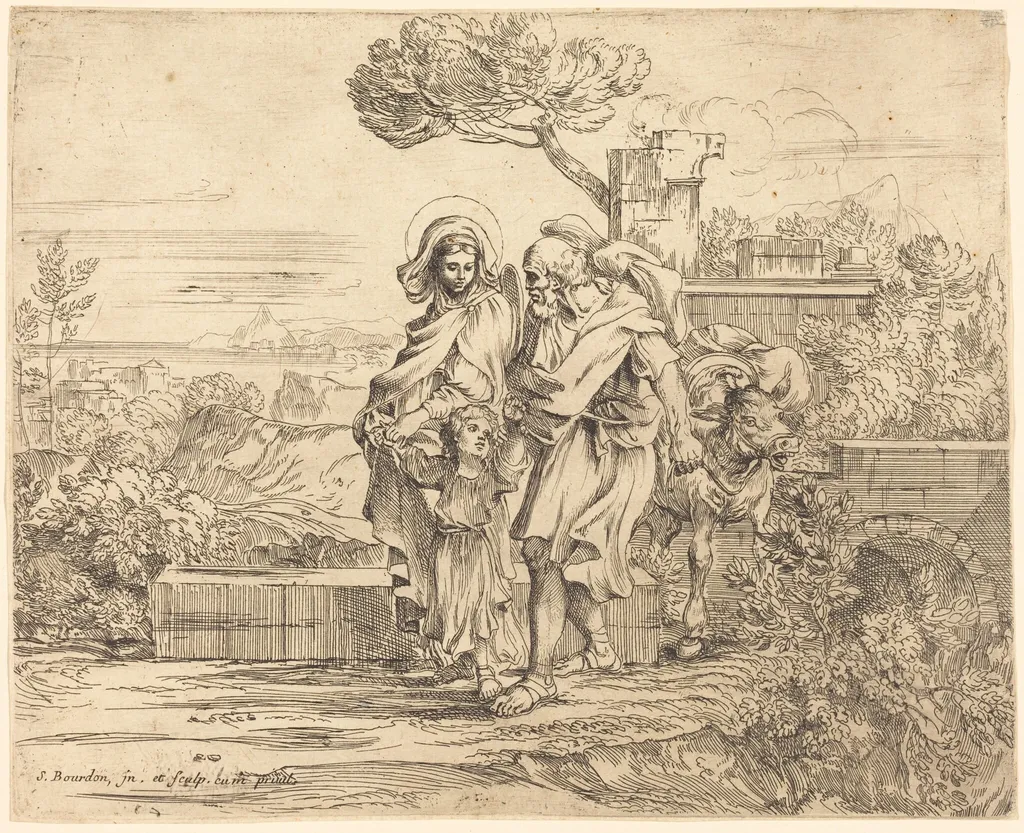
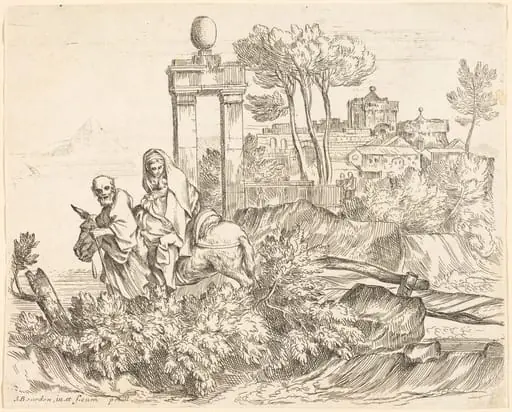
The Rest on the Flight into Egypt is an ink print by the Baroque artist Sébastien Bourdon. It dates from 1644 and is held in the collection of the National Gallery of Art.
About this work
Overview
Sébastien Bourdon produced this etching with counterproof in 1644, capturing a quiet moment from the biblical Flight into Egypt.
Sébastien Bourdon produced this etching with counterproof in 1644, capturing a quiet moment from the biblical Flight into Egypt. As a French artist active in both painting and printmaking, Bourdon frequently turned to religious narratives. This work is one of his lesser-known prints, distinguished by its intimate scale and subdued tone, reflecting his interest in human vulnerability within sacred stories.
Subject & Meaning
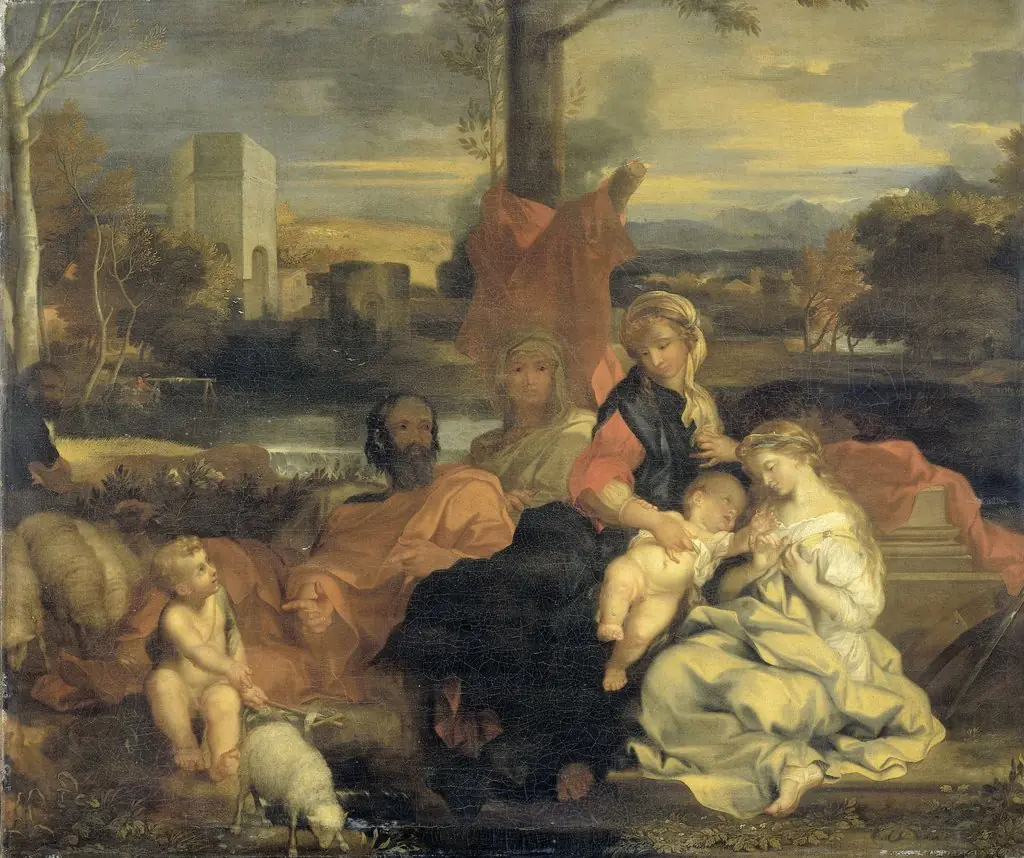
The scene portrays the Holy Family resting beside a well during their escape from Herod’s persecution. The figures—Joseph, Mary, and the infant Jesus—exhibit physical exhaustion, their postures conveying weariness rather than divine grandeur. The stillness of the moment emphasizes endurance and quiet faith, aligning with Counter-Reformation ideals that valued humility and human emotion in religious imagery.
Technique & Style
Bourdon employed fine, controlled lines to render fabric folds, the stone well, and the distant landscape with delicate precision. The counterproof technique, made by pressing the inked plate onto another sheet, resulted in a reversed image with softer tonal contrasts. This method enhanced the sketchlike quality, lending the scene an immediacy and intimacy uncommon in more polished prints of the period.
History & Provenance
Created during Bourdon’s time in Rome, the etching reflects his exposure to Italian artistic traditions and his growing interest in printmaking. Few impressions of this specific counterproof survive, suggesting limited circulation. Its early date places it within a phase of his career when he was transitioning from painting to more experimental graphic work, though it remained largely unrecorded in major collections until later centuries.
Context
In mid-17th-century Europe, religious prints served devotional and educational purposes, especially in regions affected by the Reformation. Bourdon’s depiction aligns with a broader trend among Northern and French artists to humanize biblical figures through everyday gestures. The inclusion of a humble well and barren hills reflects a preference for naturalistic settings over idealized landscapes, a shift gaining traction in religious art of the era.
Legacy
Though not widely reproduced or studied in his lifetime, this etching contributes to understanding Bourdon’s versatility beyond painting. It reveals his sensitivity to emotional nuance in printmaking, influencing later artists who sought to convey spiritual quietude through understated composition. Today, it stands as a modest but thoughtful example of French Baroque graphic art.
Artist & collection
Artist
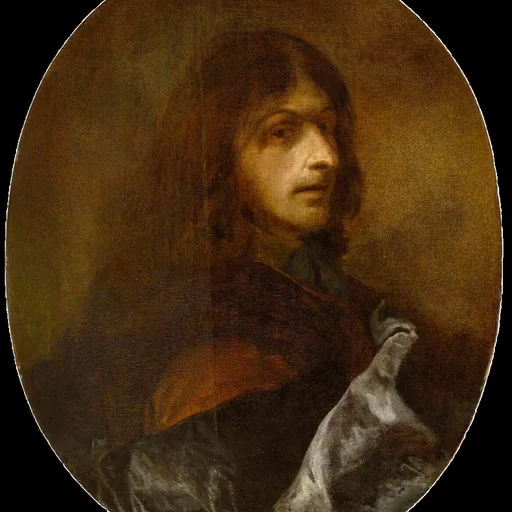
Sébastien Bourdon (French pronunciation: ; 2 February 1616 – 8 May 1671) was a French painter and engraver. His chef d'œuvre is The Crucifixion of St. Peter made for the cathedral of Notre Dame.

 The Flight into Egypt
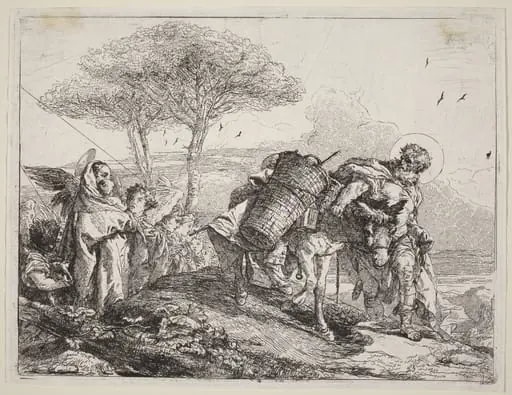 The Madonna and Child at Left, with a File of Angels
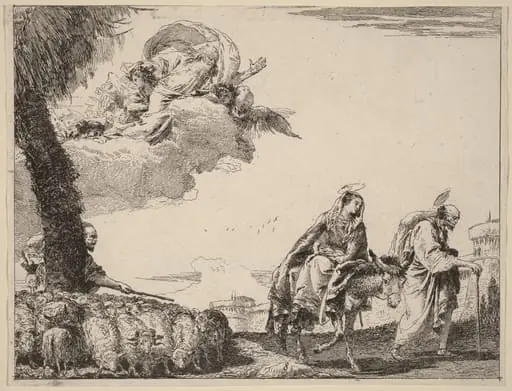 The Flight with the Holy Family at the Right
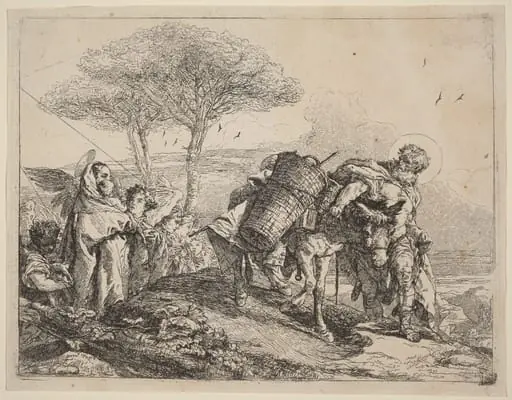 The Madonna and Child at Left, with a File of Angels
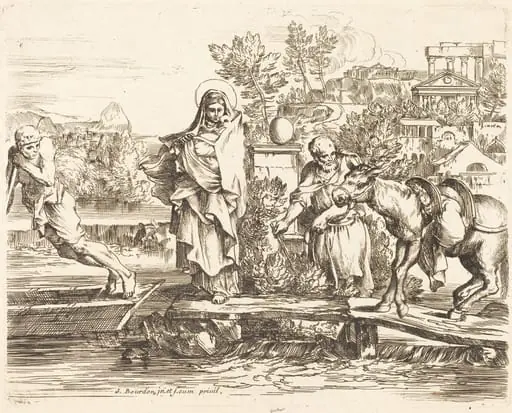 The Holy Family Preparing to Embark
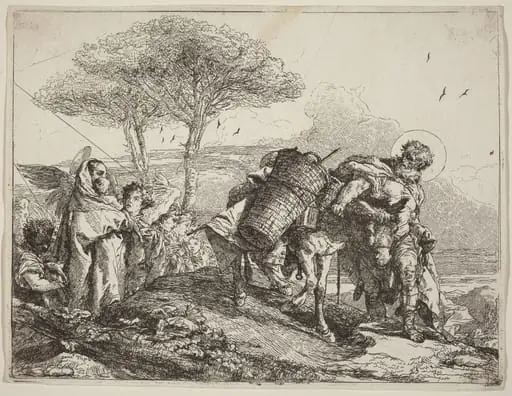 The Madonna and Child at Left, with a File of Angels
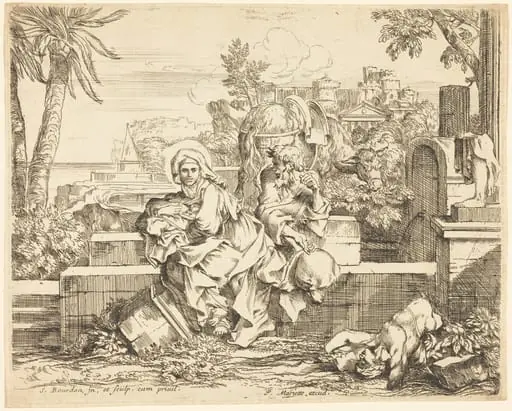 Rest on the Flight into Egypt
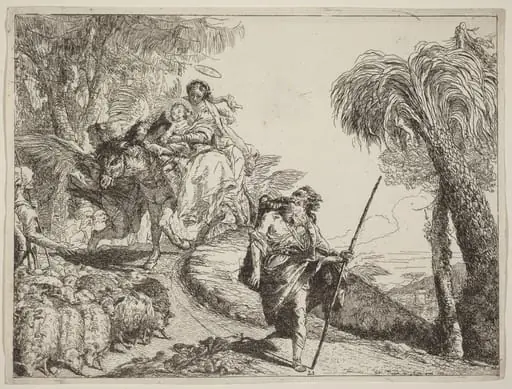 The Flight with Joseph in the Foreground
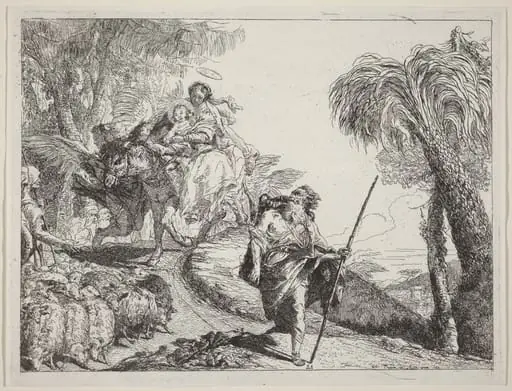 The Flight with Joseph in the Foreground
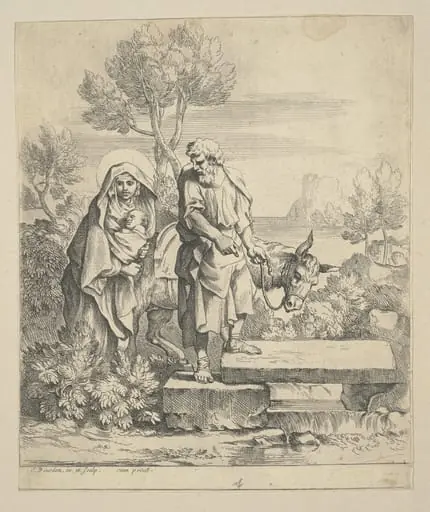 Flight into Egypt
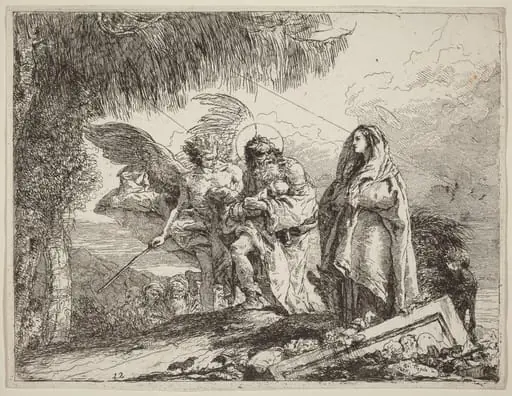 The Flight, Holy Family Walking with Angel
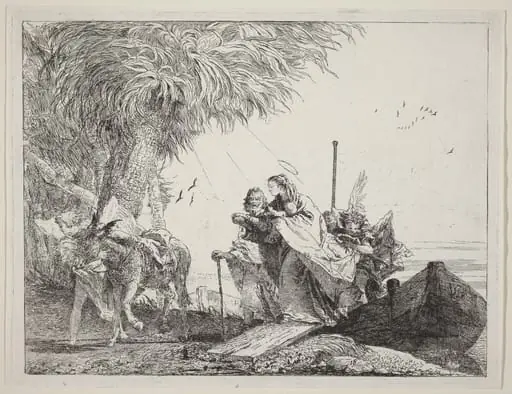 The Holy Family Disembarking