Artwork
Cairo
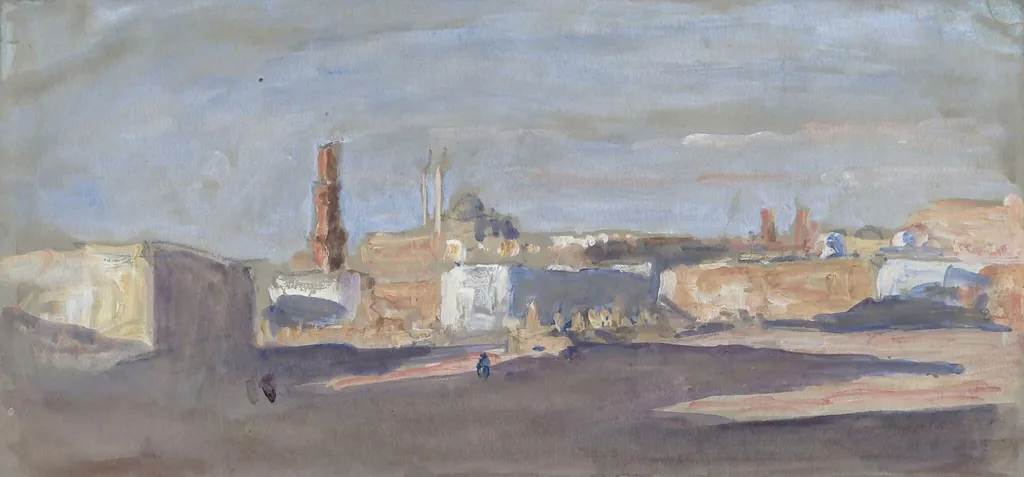
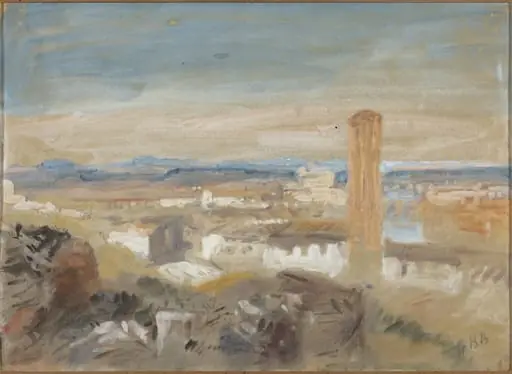
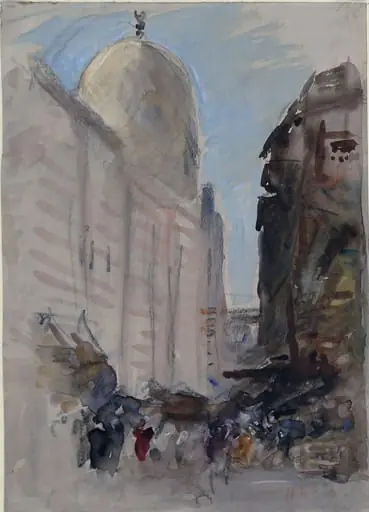
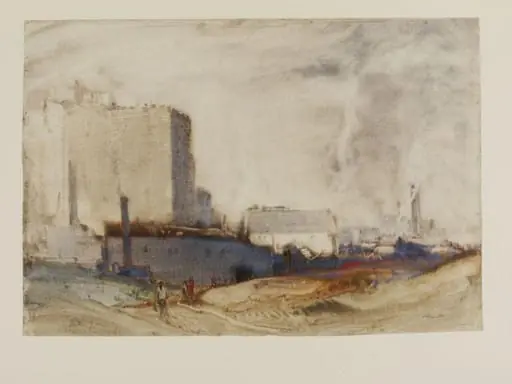
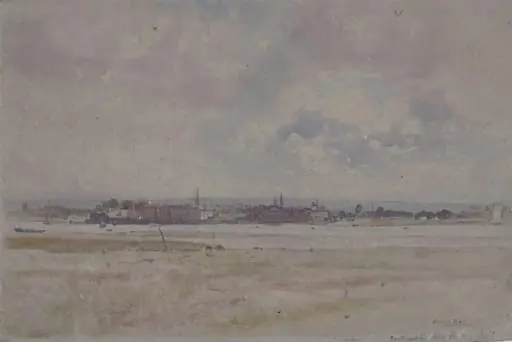
Cairo is a watercolor work on paper by the Orientalist artist Hercules Brabazon Brabazon. It dates from 1850 and is held in the collection of the Victoria and Albert Museum.
About this work
Overview
Cairo is a watercolour painting created by Hercules Brabazon Brabazon circa 1850, capturing a cityscape in a characteristic orientalist manner. The work is distinguished by its soft, watery palette and loose, expressive brushstrokes, evoking a sense of haze and distance.
Subject & Meaning
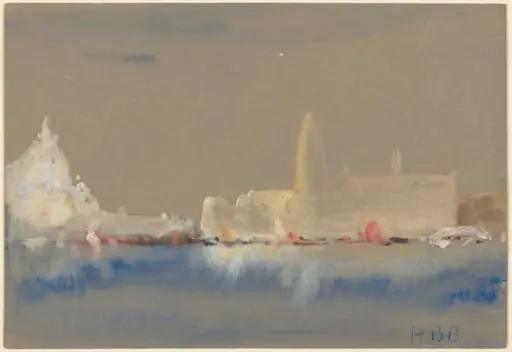
The painting depicts a North African or Middle Eastern city, likely inspired by the 19th-century European fascination with these regions. The contrast between the dark, rough waterfront in the foreground and the fading, domed buildings in the background may suggest the interplay of traditional and industrial elements.
Technique & Style
Brabazon employed quick, light strokes and blended muted colors (grays, browns, pale blues) to convey a sense of movement and atmosphere. The almost washed-out sky enhances the dreamlike, distant quality of the scene, reflecting Brabazon's watercolour technique influenced by J.M.W. Turner.
History & Provenance
Part of the Victoria and Albert Museum's collection, Cairo exemplifies Brabazon's contribution to 19th-century English watercolour painting, particularly in the orientalist genre.
Context
Created during a period of heightened European interest in North Africa and the Middle East, Cairo reflects the orientalist trend prevalent among artists of the time, who often depicted these regions with a mix of fascination and romanticization.
Artist & collection
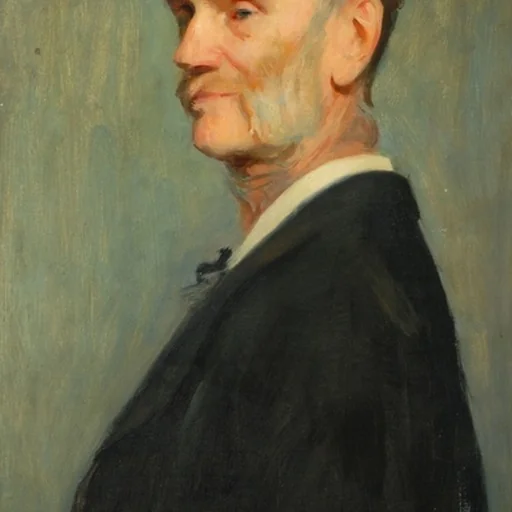
Artist
Hercules Brabazon Brabazon (born Hercules Brabazon Sharpe; 27 November 1821 – 14 May 1906) was an English artist, accomplished in Turner-manner watercolours.

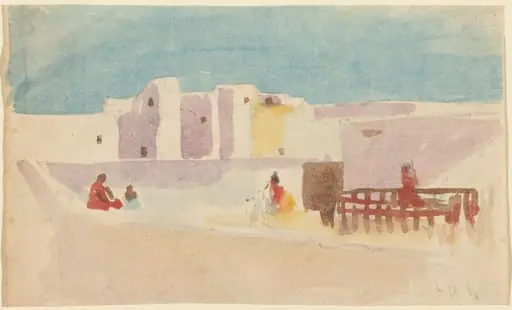 Walls of a North African City
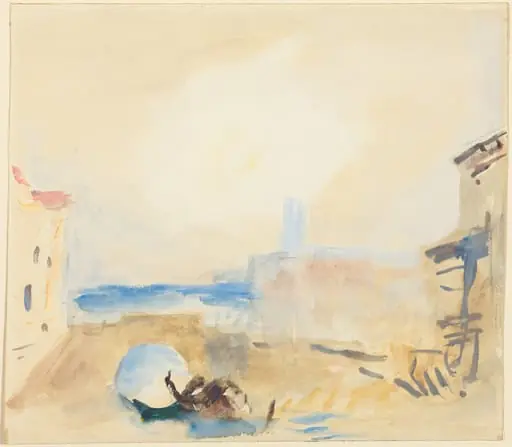 A Gondola Passing Under a Bridge in Venice
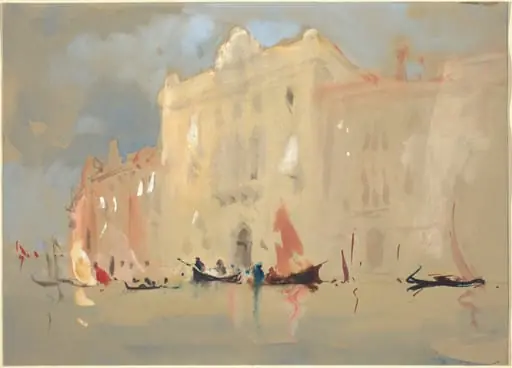 Gondolas Before a Palace on the Grand Canal in Venice
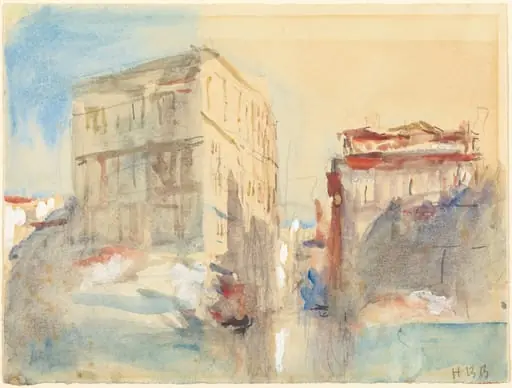 Palaces on the Grand Canal in Venice
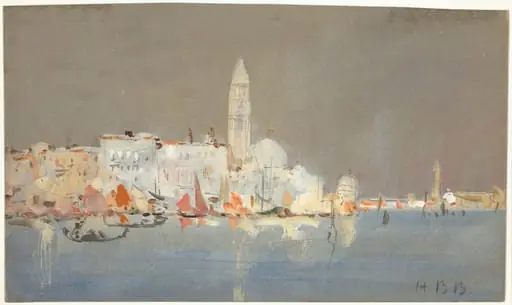 Venetian Capriccio with a Campanile
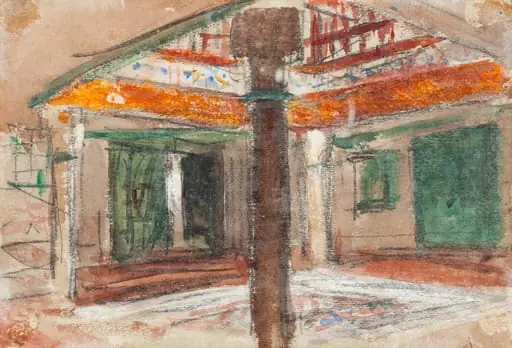 Interior of an Exotic Palace
 The Salute and the Palazzo Ducale from the Bacino di San Marco
 A Cornfield at Sunset