Artwork
Head of a Cock
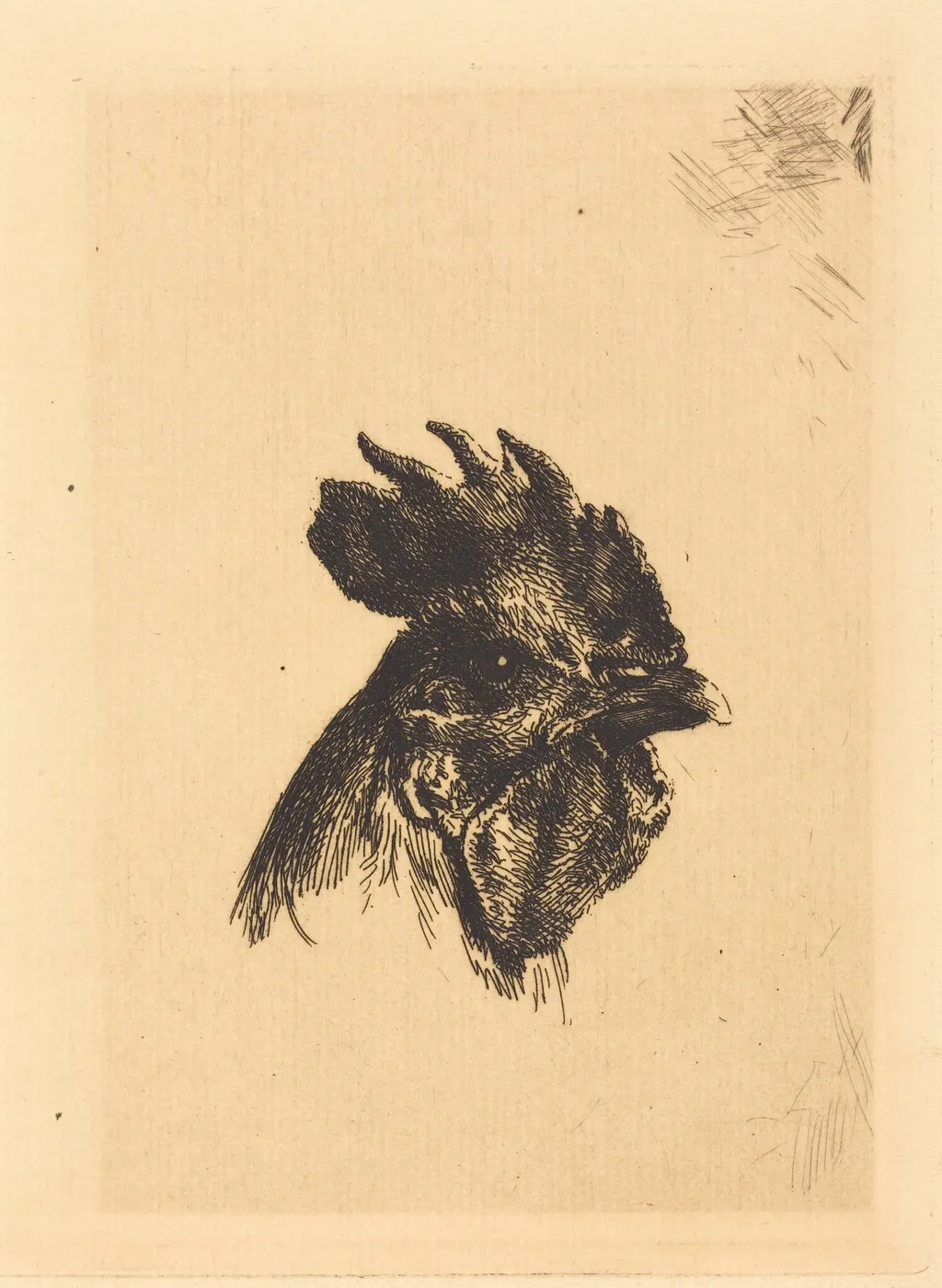
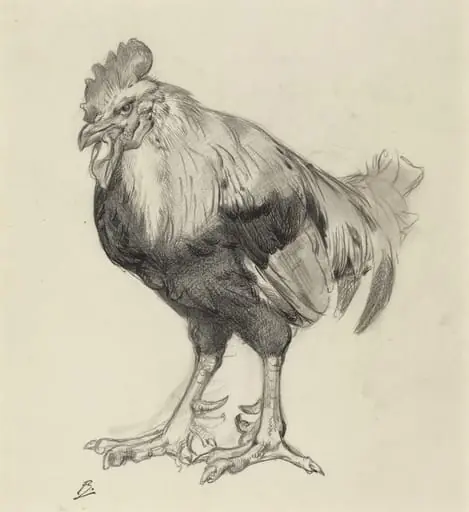
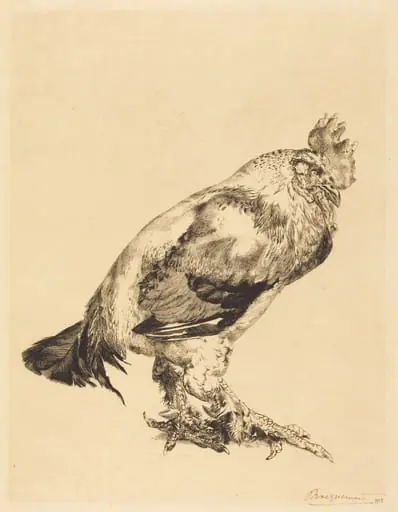
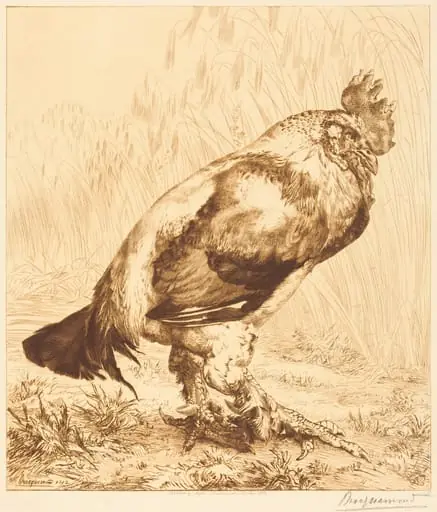
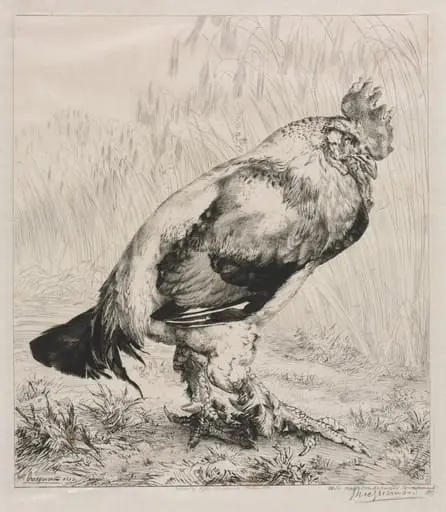
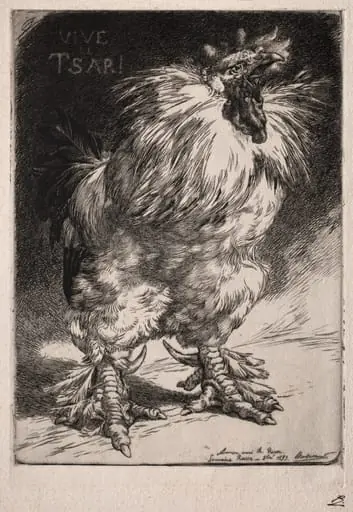
Head of a Cock is an ink print by the Romanticist artist Félix Bracquemond. It dates from 1874 and is held in the collection of the National Gallery of Art.
About this work
This print shows a rooster’s head in sharp black and white. The lines are scratchy where the drypoint needle dug in.
The artist, Félix Bracquemond, cut this in 1882 straight onto a copper plate. He kept the edges rough, so the bird looks alert and alive.
Try your own drypoint on a plastic plate—see how the needle changes the line.
Overview
Head of a Cock, an etching on laid paper, was created by Félix Henri Bracquemond in 1874. The work showcases a rooster’s head in stark black and white, characterized by scratchy lines indicative of drypoint technique.
Subject & Meaning
The subject, a rooster’s head, is rendered in a manner that conveys alertness and vitality, achieved through the deliberate preservation of rough edges.
Technique & Style
Bracquemond utilized drypoint, directly incising the design onto a copper plate in 1882, resulting in expressive, scratchy lines that contribute to the piece’s dynamic appearance.
History & Provenance
Created in 1874 (etched) and 1882 (drypoint on copper), the piece reflects Bracquemond’s pioneering role in 19th-century printmaking revival.
Context
Part of Bracquemond’s broader artistic contributions, including his influence on Japonisme through pottery and encouraging fellow artists (like Manet and Degas) to adopt printmaking.
Legacy
As a key figure in reviving printmaking, Bracquemond’s techniques and innovations, as seen in *Head of a Cock*, influenced subsequent generations of artists.
Own this work as a print
Artist & collection

Artist
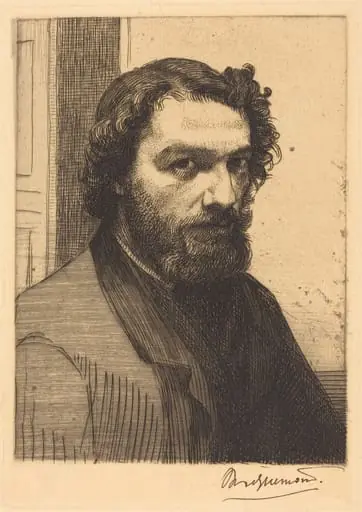
Félix Henri Bracquemond (French pronunciation: ; 22 May 1833 – 29 October 1914) was a French painter, etcher, and printmaker.