Artwork
Müllerinn (Miller)
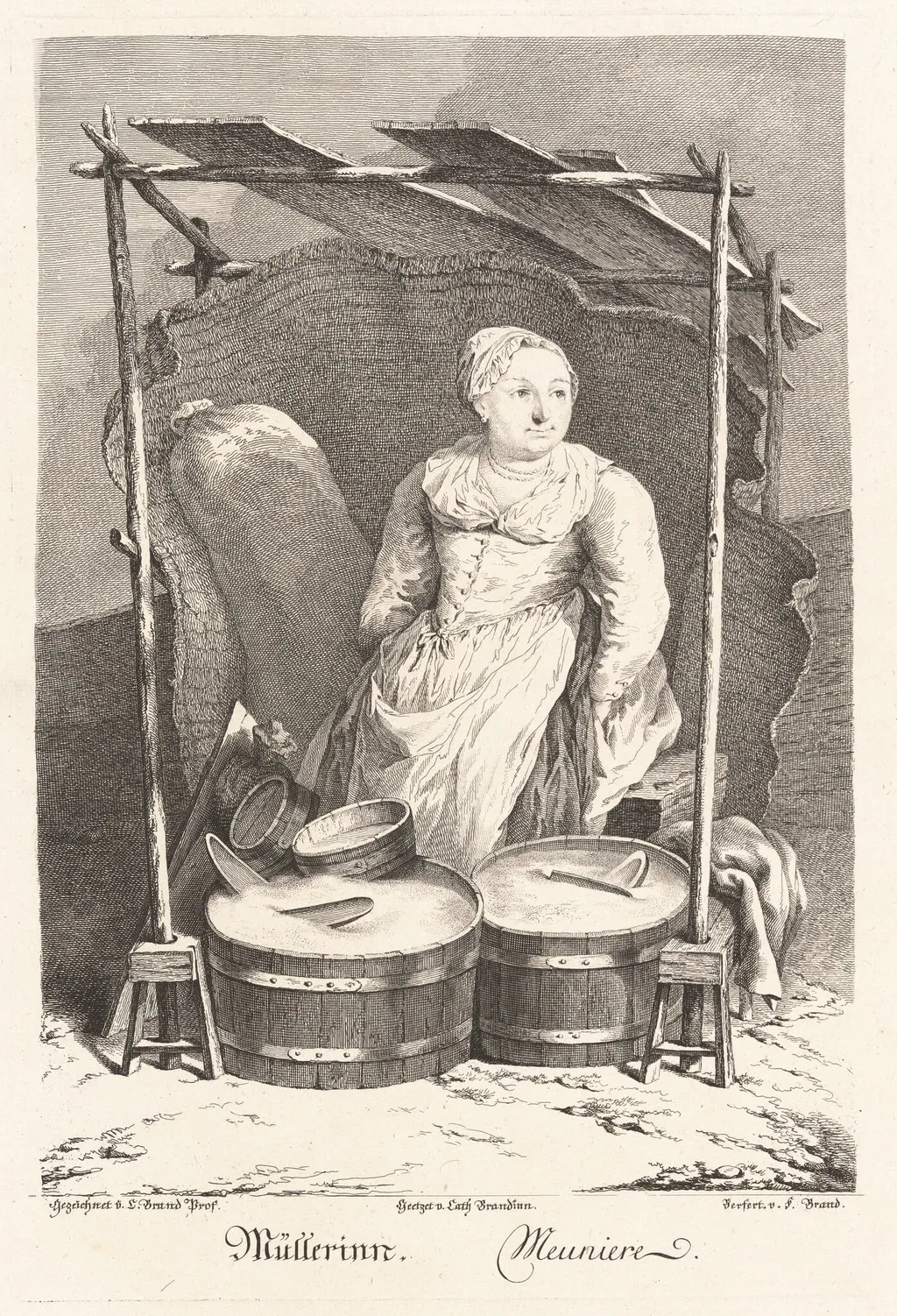
Müllerinn (Miller) is an ink print by the Romanticist artist Friedrich August Brand. It dates from 1775 and is held in the collection of the National Gallery of Art.
About this work
Overview
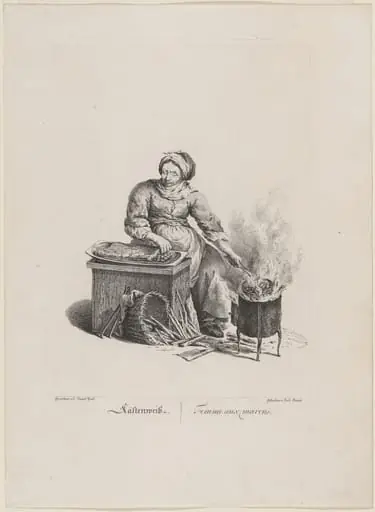
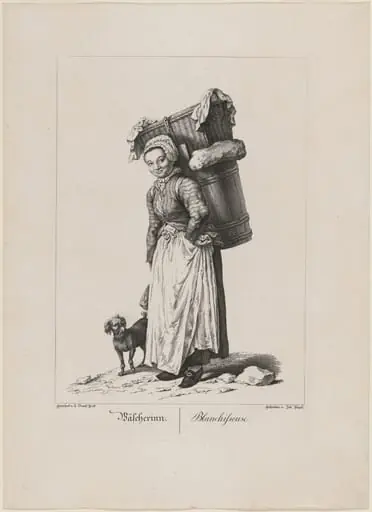
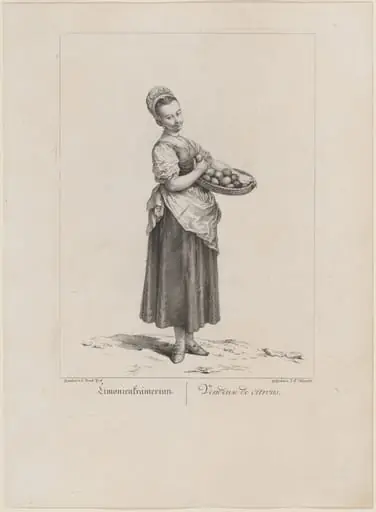
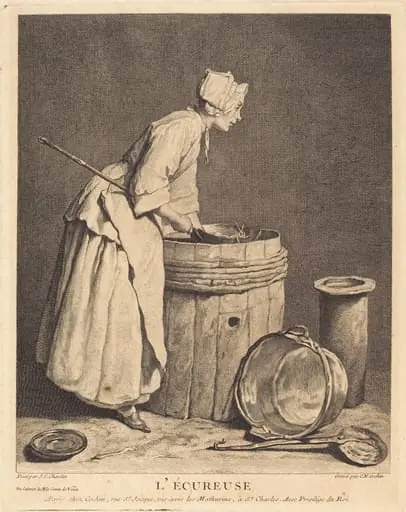
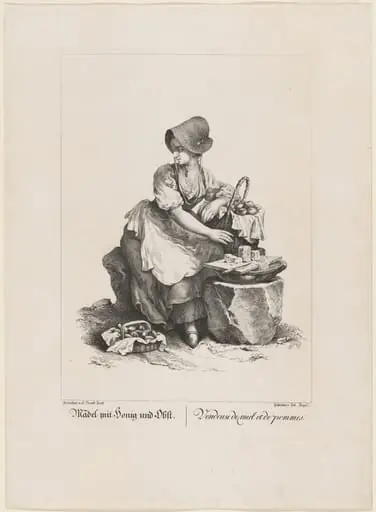
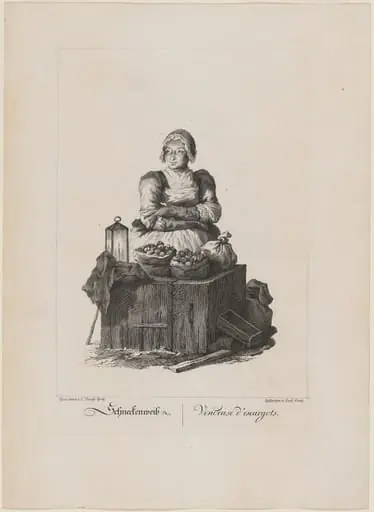
Friedrich August Brand’s engraving titled *Müllerinn* (Miller) dates from 1775. Executed in black‑and‑white, the print depicts a solitary woman positioned behind a modest market stall. She wears a plain apron and cap, and is captured in the act of stirring a large pot with a wooden spoon, surrounded by barrels, bowls and a ladle.
Subject & Meaning
The scene presents a domestic laborer, likely a miller’s wife, engaged in the preparation of food for sale. The inclusion of the stall, the cooking implements, and the title together suggest a focus on everyday economic activity, emphasizing the role of women in sustaining market life during the late eighteenth century.
Technique & Style
Brand employs the fine line work characteristic of eighteenth‑century engraving, using cross‑hatching and delicate shading to model forms and convey depth. The contrast between the dark outlines and lighter planes creates a sense of three‑dimensional space, while the precise rendering of textures—wooden poles, metal ladle, fabric—demonstrates the artist’s technical skill.
History & Provenance
Created in 1775, the print is part of Brand’s early output, produced before his later career as a painter and professor. Surviving copies have appeared in several European print collections, indicating that the work was circulated among connoisseurs of genre scenes during the period.
Context
Genre prints of market and domestic labor were popular in the Enlightenment era, reflecting a growing interest in the lives of ordinary people. Brand’s *Müllerinn* aligns with this trend, offering a realistic, unidealized glimpse of a working woman, and contributes to the broader visual documentation of everyday Austrian life at the time.
Artist & collection