Artwork
Cästenweib (Chestnut Seller)
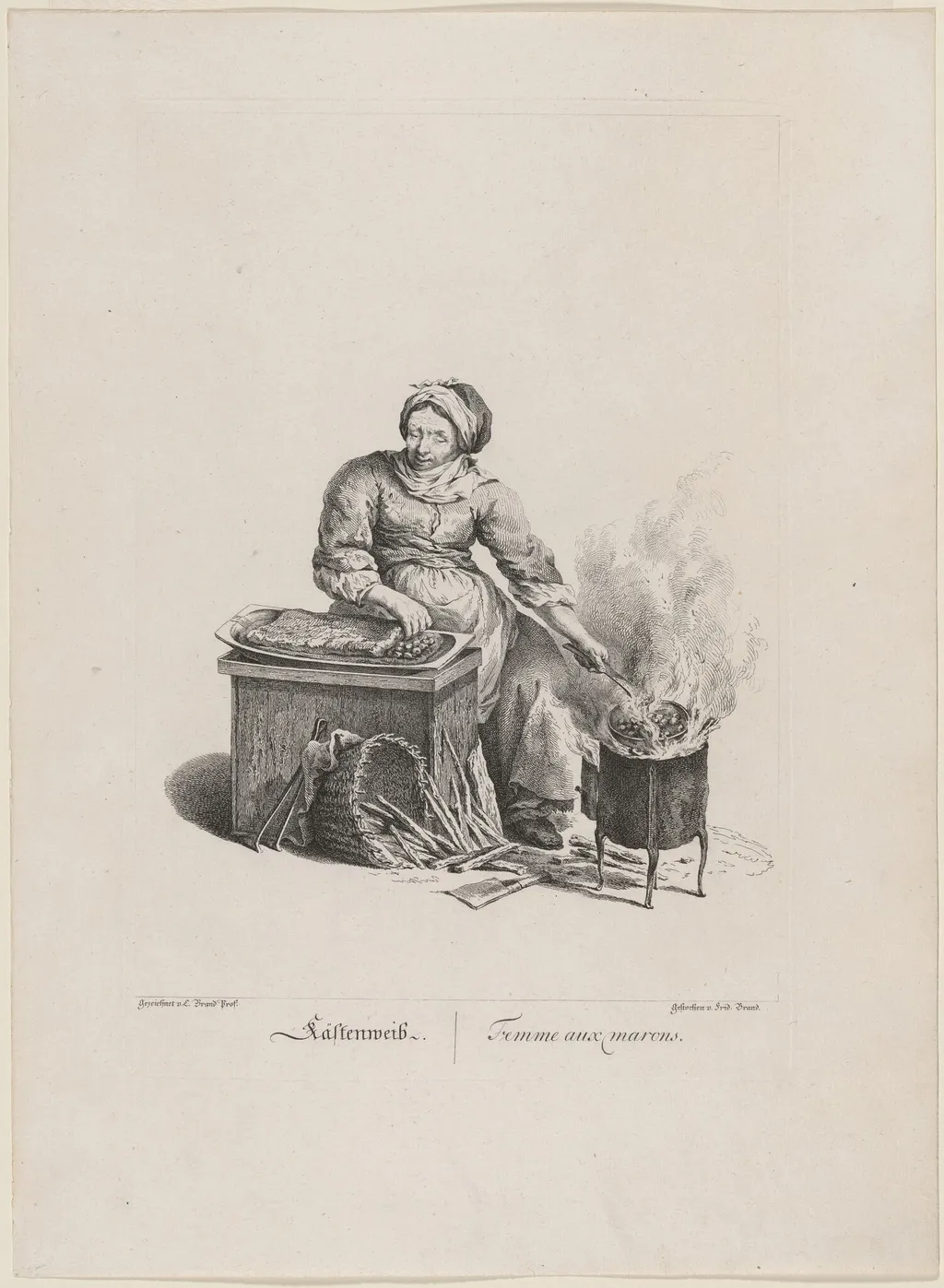
Cästenweib (Chestnut Seller) is an ink print by the Romanticist artist Friedrich August Brand. It dates from 1775 and is held in the collection of the National Gallery of Art.
About this work
Overview
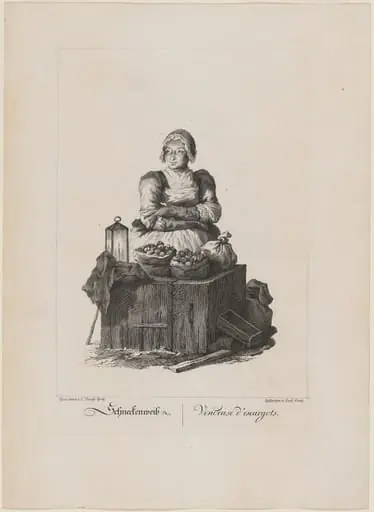
Friedrich August Brand’s 1775 print, titled Cästenweib (Chestnut Seller), is an engraving with etching on laid paper. The image presents a solitary woman seated on a stool, engaged in the preparation of chestnuts, and is rendered in a restrained tonal palette that emphasizes the figure against a light background.
Subject & Meaning
The work depicts a female street vendor, identifiable by her headscarf and long dress, holding a pan over a modest fire while a basket of chestnuts rests nearby. Her solemn expression and downward gaze suggest a moment of quiet labor, inviting contemplation of everyday life and the dignity of work.
Technique & Style
Brand combines traditional engraving with etching, allowing for fine line work alongside broader tonal washes. The laid paper surface contributes a subtle texture, while the light background isolates the figure, a compositional choice characteristic of late‑18th‑century Romantic sensibilities that favored emotional nuance over elaborate scenery.
History & Provenance
Created in 1775, the print belongs to the period when Brand was active as a German artist known primarily for portraiture and landscape studies. It survives in several museum collections, though specific acquisition histories vary, reflecting its circulation among collectors of German prints in the 19th and early 20th centuries.
Context
Cästenweib aligns with the Romantic movement’s interest in ordinary subjects rendered with emotional depth. By focusing on a modest vendor rather than aristocratic or mythological themes, the work mirrors contemporary shifts toward portraying the lives of common people within the visual arts.
Artist & collection