Artwork
Hünerträmer (Poultry Seller)
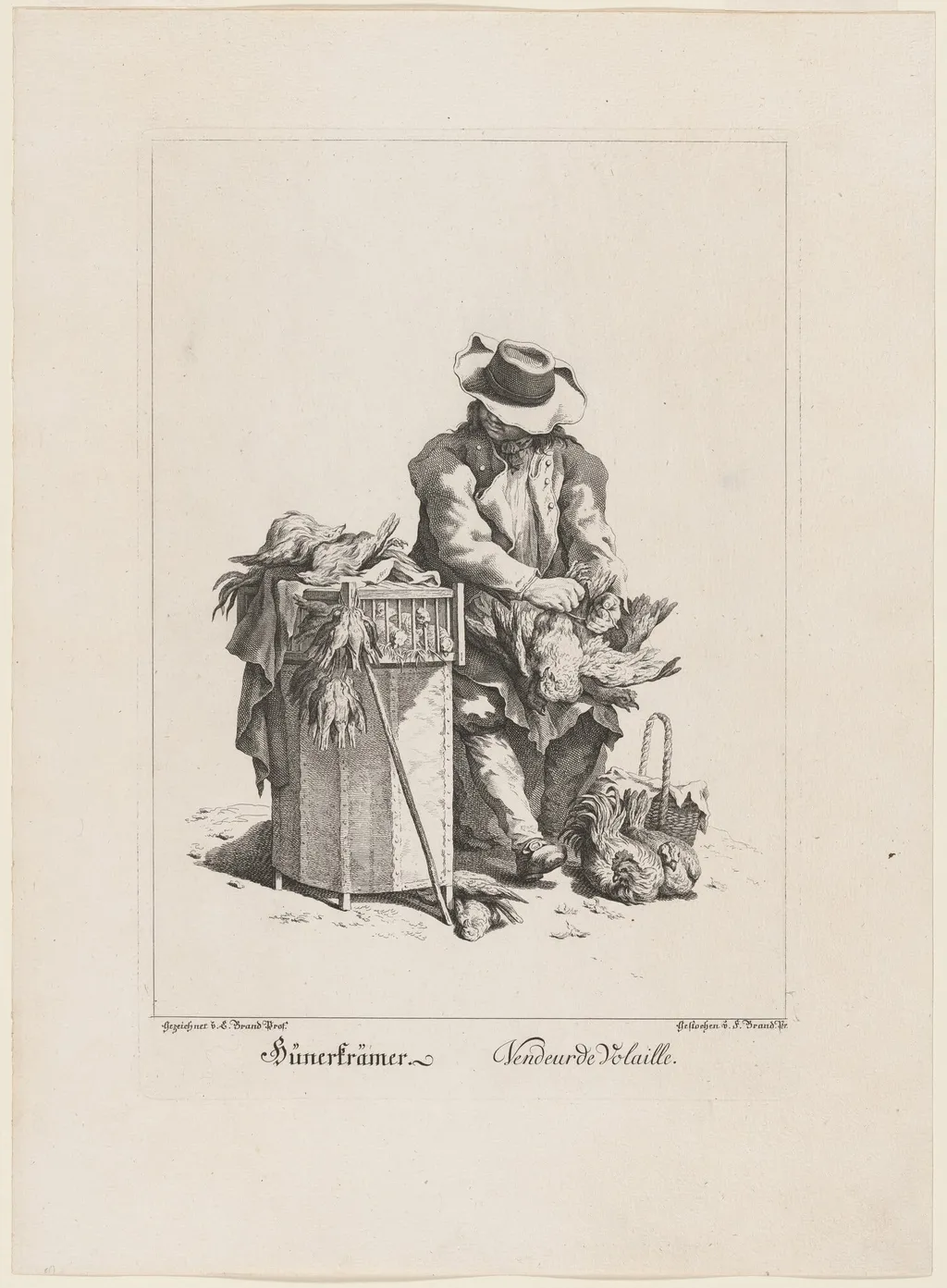
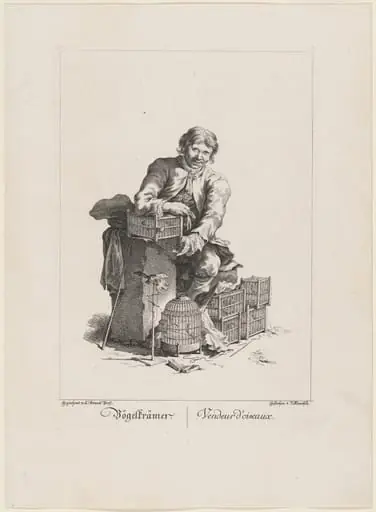
Hünerträmer (Poultry Seller) is an ink print by the Romanticist artist Friedrich August Brand. It dates from 1775 and is held in the collection of the National Gallery of Art.
About this work
Overview
Friedrich August Brand’s 1775 engraving titled Hünerträmer, translated as “poultry seller,” presents a monochrome scene of a vendor engaged in the trade of live birds. Rendered in black ink on paper, the image captures a moment of everyday commerce, focusing on the interaction between the seller and his wares.
Subject & Meaning
The central figure, seated on a low stool and clad in a wide-brimmed hat and loose coat, holds a chicken while reaching into a basket filled with feathers and smaller birds. A cloth‑covered cage leans nearby, and additional feathers lie on the floor, suggesting the routine of sorting, displaying, and possibly selling poultry in a market setting.
Technique & Style
Brand employed fine, closely spaced lines and cross‑hatching to model texture, giving the feathers, fabric, and plumage a tactile quality. The engraving’s tonal gradations are achieved through varied density of strokes, a common practice in 18th‑century metal‑plate work that allowed for subtle shading within a purely linear medium.
History & Provenance
Created in 1775, the print reflects the period’s interest in genre scenes that document ordinary labor. While specific ownership records are limited, the work is catalogued among Brand’s prints and has been held in several European print collections, illustrating the artist’s engagement with commercial subjects during the late Enlightenment.
Context
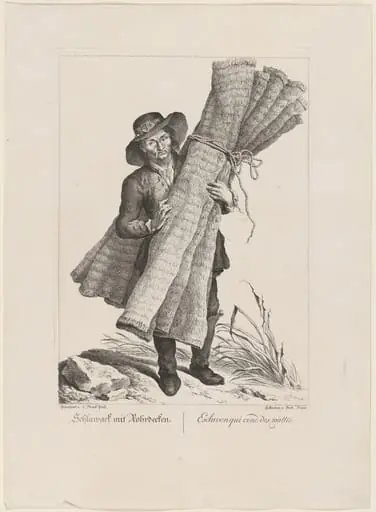
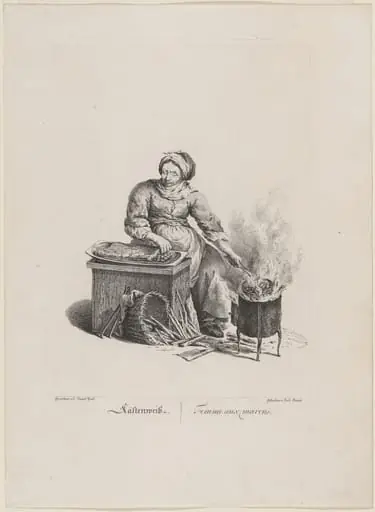
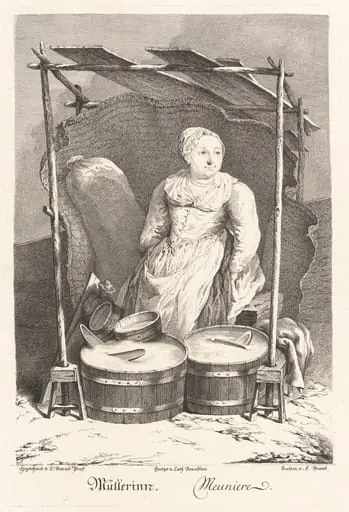
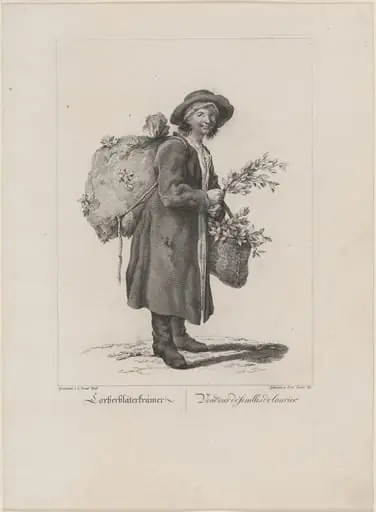
In the late 1700s, engravings served both as artistic expressions and as means of disseminating images of daily life to a broader audience. Brand’s depiction of a poultry seller aligns with contemporary interests in realistic portrayals of market activities, offering insight into the economic and social fabric of urban centers of the time.
Artist & collection