Artwork
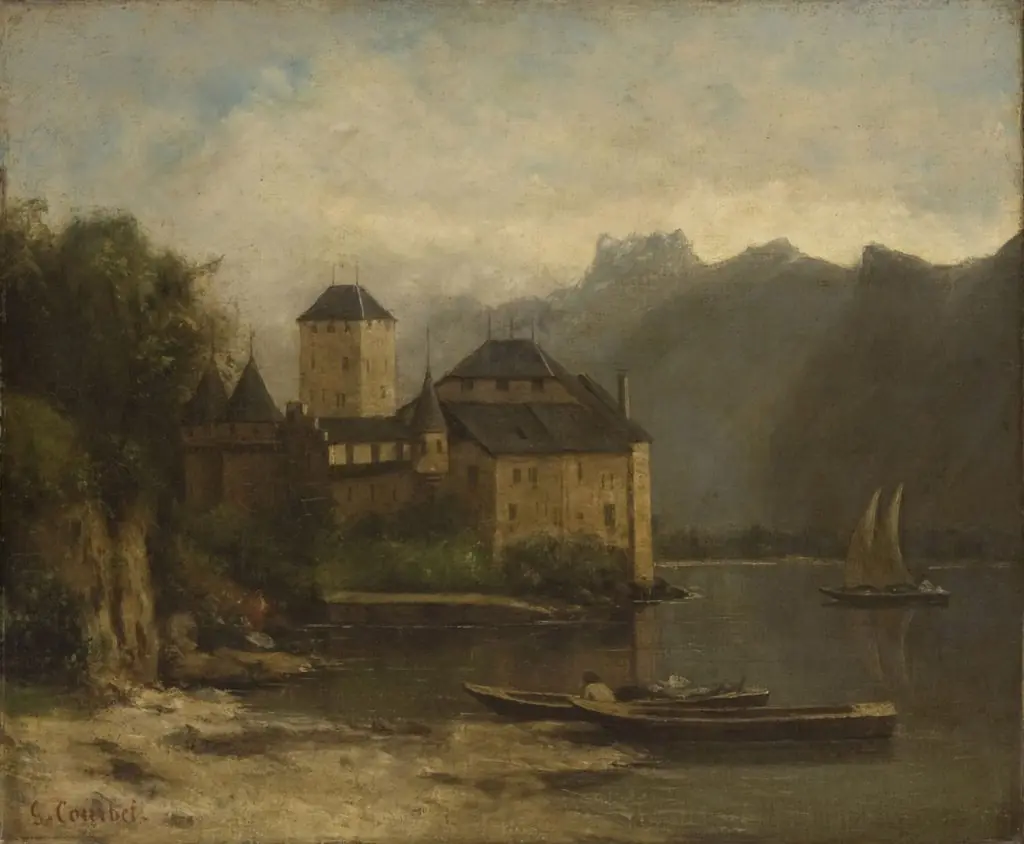
The Castle of Chillon
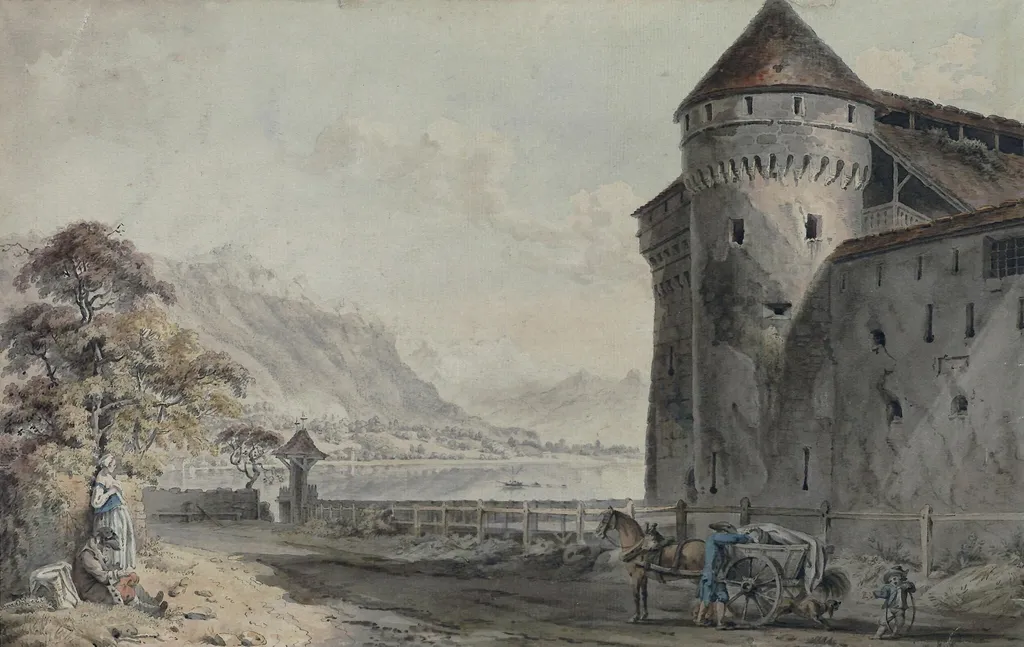
The Castle of Chillon is a watercolor work on paper by Michel Vincent Brandoin. It dates from 1750 and is held in the collection of the Victoria and Albert Museum.
About this work
Overview
Painted in 1750 by Michel Vincent Brandoin, this watercolour captures the Castle of Chillon on the shores of Lake Geneva. The work is signed by the artist and executed in delicate, muted tones. Despite the medium’s transparency, Brandoin achieves a sense of architectural weight through careful modulation of light and shadow, suggesting depth without heavy pigments.
Subject & Meaning
The scene presents the castle as a quiet sentinel beside the water, flanked by a solitary woman near a tree and a man guiding a horse-drawn wagon along a dusty path. A small boat drifts on the lake, hinting at quiet human activity. The composition avoids drama, instead emphasizing stillness and the enduring presence of the fortress amid daily life.
Technique & Style
Brandoin employs watercolour with restrained washes, favoring soft greys and earthy browns to convey the stone structure and landscape. Subtle chiaroscuro models the castle’s forms, lending volume and solidity despite the medium’s fragility. The brushwork is precise yet unobtrusive, allowing the natural texture of the paper to contribute to the atmospheric effect.
History & Provenance
The work originates from the mid-18th century and bears the artist’s signature, indicating it was intended as a finished piece rather than a sketch. Its survival suggests it was valued by a private collector, possibly someone with ties to Swiss travel or topographical art. No documented exhibition or public ownership history is known prior to its current record.
Context
In the 1750s, watercolour was gaining traction among European artists for landscape documentation, especially in regions like Switzerland, where natural and architectural scenery attracted travelers and scholars. Brandoin’s work aligns with this trend, offering a quiet, observational record rather than a romanticized view, reflecting the era’s growing interest in topographical accuracy.
Legacy
Though not widely exhibited, the painting stands as a modest example of 18th-century Swiss topographical watercolour. It reflects the period’s quiet aesthetic—favoring observation over grandeur—and contributes to a broader understanding of how lesser-known artists recorded regional landmarks with technical restraint and sensitivity.
Artist & collection
Artist
A Swiss artist working in watercolour during the late 1700s, Michelle Vincent Brandoin painted scenes from everyday life and landmark views.

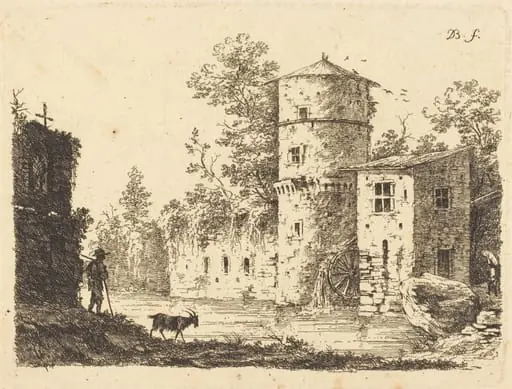 Ancient Tower with a Water Mill
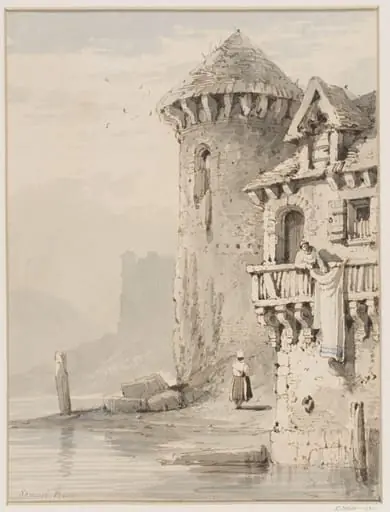 Drawing
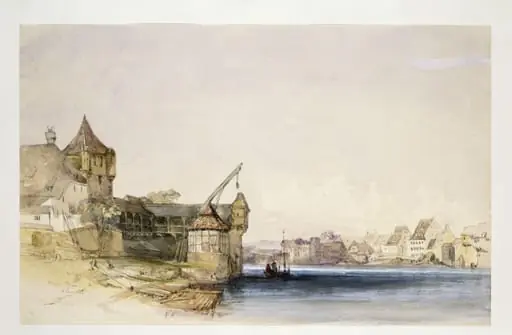 View at Basle
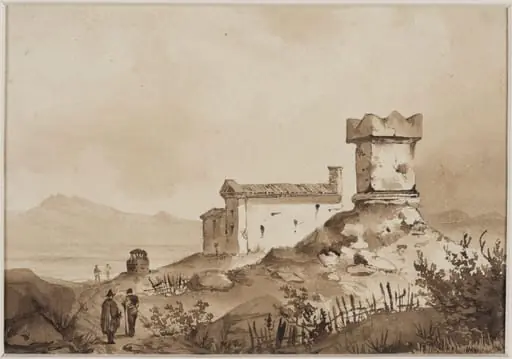 Italian landscape, with an ancient Roman sarcophagus
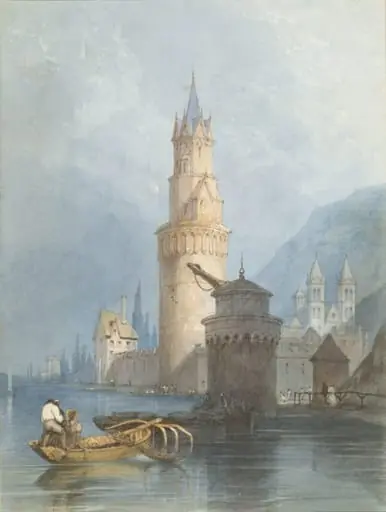 Tower and Mill at Andernach on the Rhine
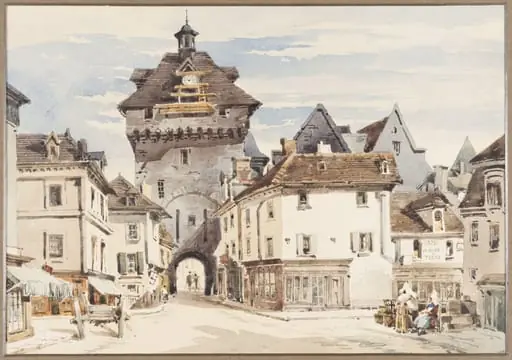 Street Scene in Loches, France
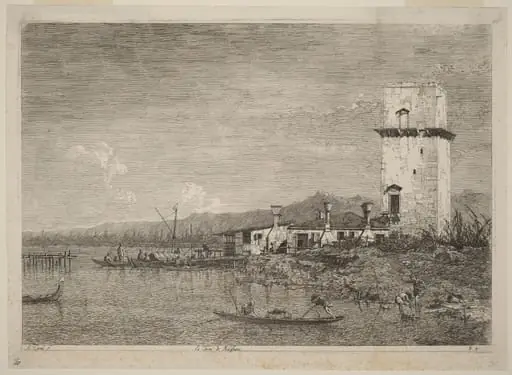 La Torre di Malghera
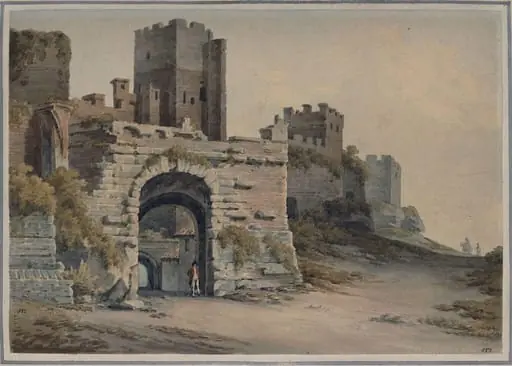 Porta Tiburtina, Rome, seen from the inside
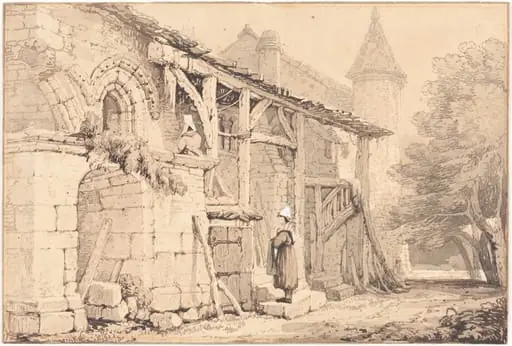 Scene at Jumièges
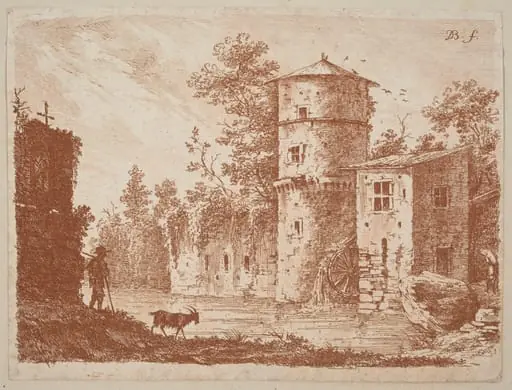 Ancient Tower at a Water Mill
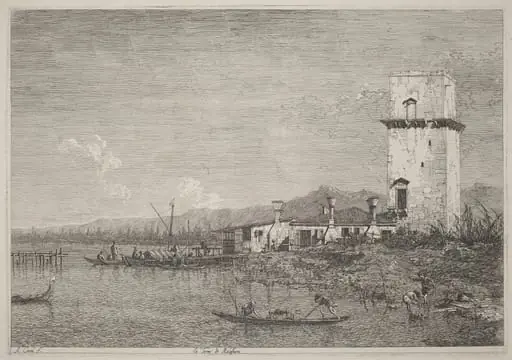 La Torre di Malghera
 Château Chillon