Artwork
Street Scene in Loches, France
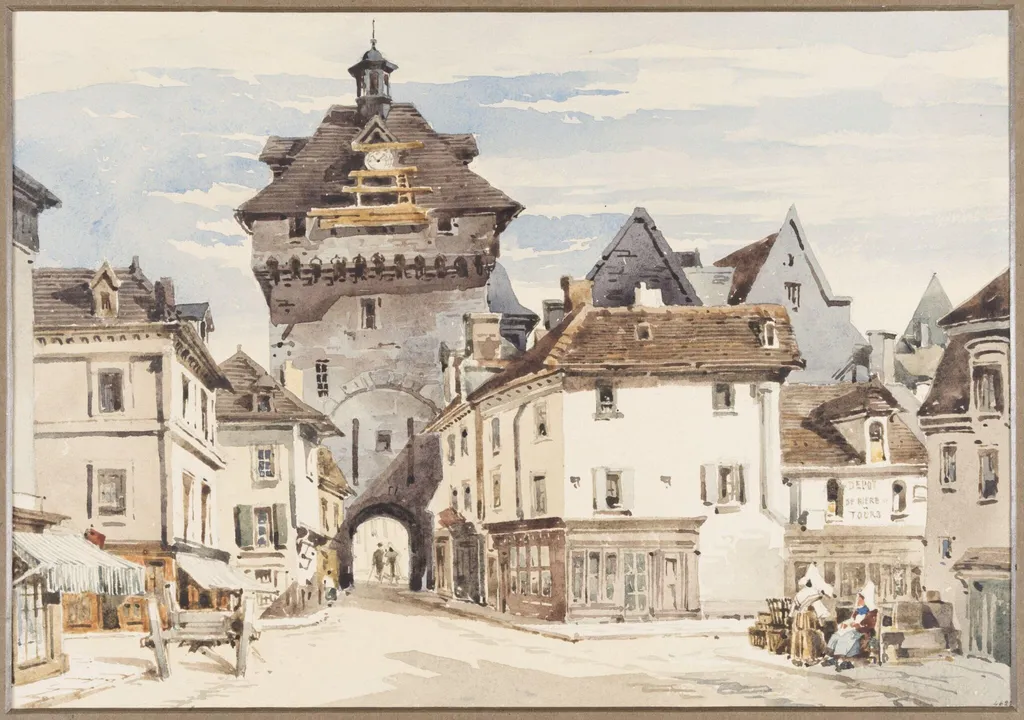
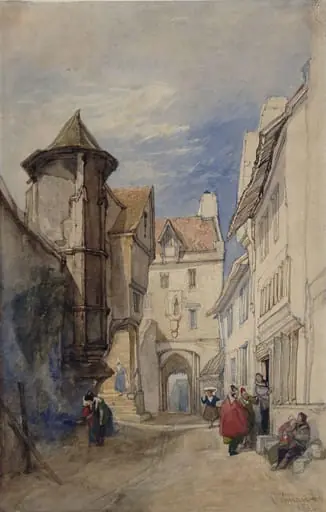
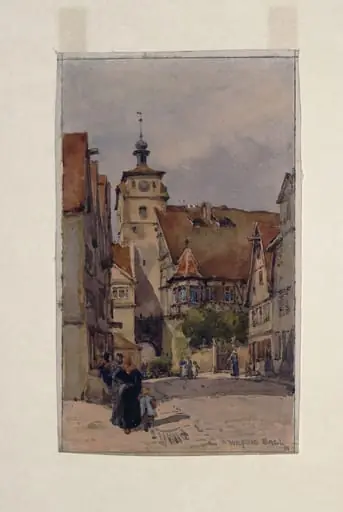
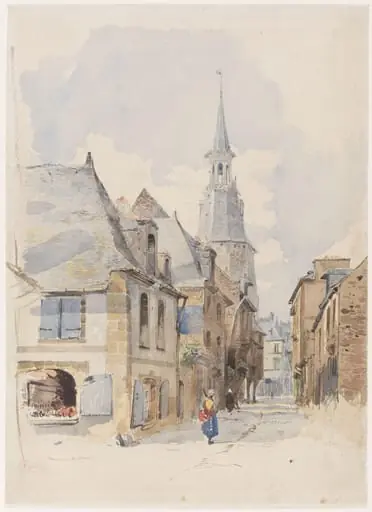
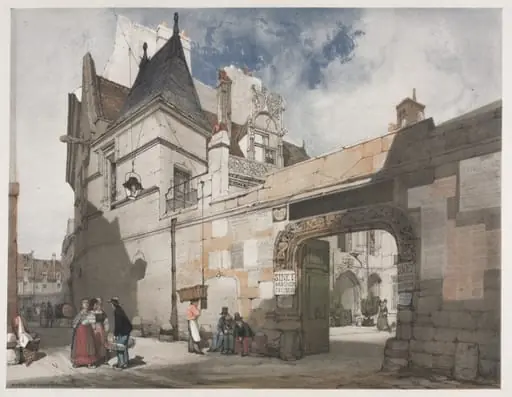
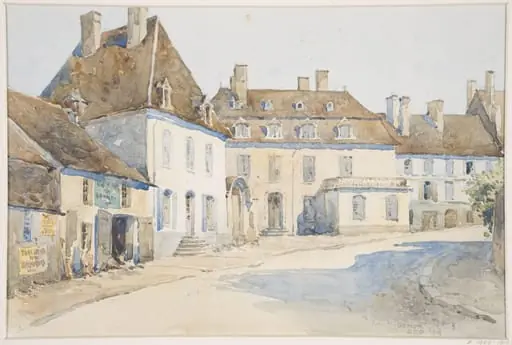
Street Scene in Loches, France is a watercolor work on paper by the Realist artist Charles Claude Pyne. It dates from 1822 and is held in the collection of the Victoria and Albert Museum. This watercolour depicts a quiet street in Loches, France, capturing the town’s architectural rhythm with quiet precision.
About this work
Overview
The central focus is a tall stone town hall with a clock tower and arched entrance, flanked by modest white dwellings with brown tiled roofs.
This watercolour depicts a quiet street in Loches, France, capturing the town’s architectural rhythm with quiet precision. The central focus is a tall stone town hall with a clock tower and arched entrance, flanked by modest white dwellings with brown tiled roofs. The composition draws the eye along the street toward the underpass, where a few figures move subtly, grounding the scene in everyday life without theatricality.
Subject & Meaning
The painting presents an unidealized view of provincial French life, emphasizing the quiet dignity of ordinary spaces. Rather than celebrating grandeur, it finds significance in the mundane: the rhythm of foot traffic, the texture of weathered stone, and the interplay of light on narrow streets. The absence of dramatic action invites contemplation of place and routine, reflecting a quiet appreciation for the overlooked details of small-town existence.
Technique & Style
The artist employs transparent watercolour washes to build soft tonal gradations, allowing the paper’s white to suggest highlights and atmospheric depth. Delicate brushwork defines architectural details without hard outlines, while muted earth tones—grey, ochre, and brown—create a cohesive, subdued palette. The medium’s fluidity lends the scene a gentle, transient quality, enhancing its sense of stillness and quiet observation.
History & Provenance
The work originates from the late 19th or early 20th century, a period when watercolour was widely used by amateur and professional artists alike for travel sketches and topographical studies. While the artist’s identity remains unconfirmed, the subject suggests a connection to regional French tourism or local documentation. Its survival as a standalone piece indicates it was likely kept as a personal memento rather than a commercial work.
Context
During this era, French provincial towns like Loches attracted artists drawn to their preserved medieval character amid rapid urbanization. Watercolour offered a portable, immediate means to record architecture and daily life, often for private collections or scholarly interest. This work aligns with a broader trend of documenting regional identity through quiet, observational art, contrasting with the more dramatic narratives of academic painting.
Legacy
Though not widely exhibited or reproduced, the painting contributes to a quieter archive of French regional documentation. It reflects a pre-photographic era’s reliance on hand-rendered observation to preserve the appearance of everyday spaces. Its endurance lies in its unassuming authenticity, offering a modest but valuable record of a town’s physical and social texture at a specific historical moment.
Own this work as a print
Artist & collection