Artwork
Landscape
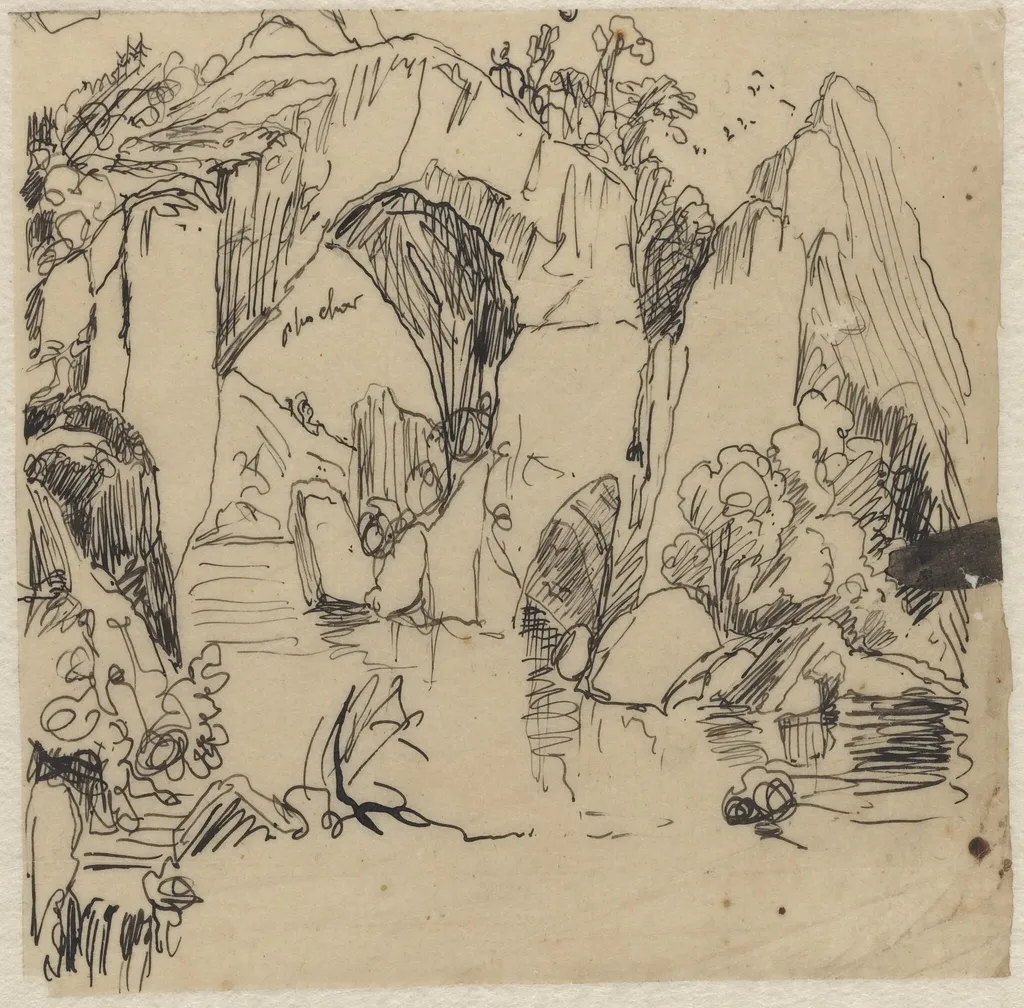
Landscape is an ink drawing by the Impressionist artist Rodolphe Bresdin. It dates from 1858 and is held in the collection of the National Gallery of Art.
About this work
Overview
Landscape is a pen and ink drawing on tracing paper, created by French artist Rodolphe Bresdin around 1858. Characterized by quick, expressive lines and a focus on capturing the natural world, the work exemplifies Bresdin's dedication to landscape drawing.
Subject & Meaning
The drawing depicts a dense forest or thicket, with intertwined tree branches rendered in tangled, overlapping lines. This subject reflects Bresdin's lifelong fascination with landscape, influenced by his experiences of rural wandering and transient living.
Technique & Style
Bresdin employed rapid, unrefined pen strokes and crisscrossed shading to convey light and shadow. The use of thin tracing paper and the overall urgency of the lines suggest a quickly executed, possibly spontaneous, draft.
History & Provenance
Created in Paris circa 1858, Landscape was produced during Bresdin's association with the city's bohemian circles, which included notable figures like Charles Baudelaire and Victor Hugo. Bresdin's early life in the Breton countryside also informed his artistic approach.
Context
Landscape reflects the artistic tendencies of mid-19th-century France, where detailed, expressive drawings were valued. Bresdin's work, with its emphasis on natural themes and expressive technique, aligns with the broader interests of his bohemian contemporaries.
Legacy
While specific legacy details of this piece are not provided, Bresdin's overall body of work, including Landscape, contributes to the history of French draughtsmanship and the evolution of expressive, detailed landscape drawing.
Artist & collection

Artist
Rodolphe Bresdin (12 August 1822 – 11 January 1885) was a French draughtsman and engraver.

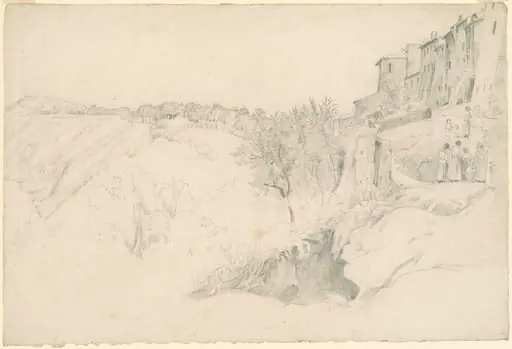 Hillside with Houses and Figures
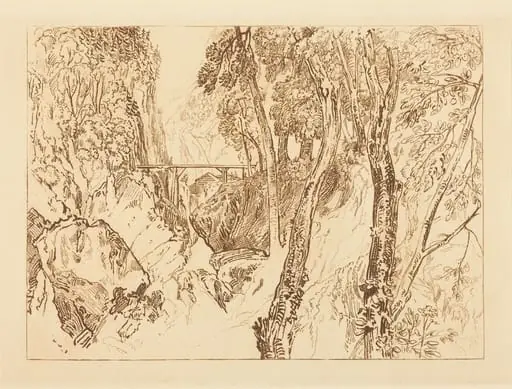 Mill near the Grand Chartreuse
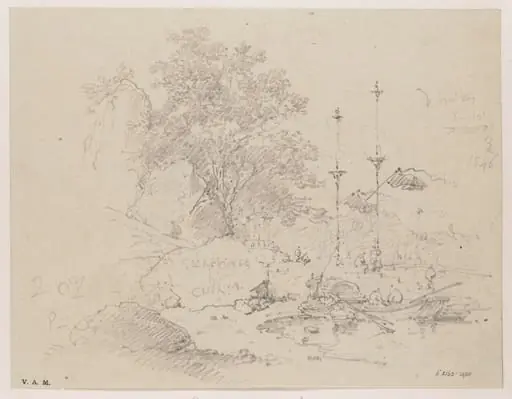 Rocks and part of the A-Ma Temple, Macau
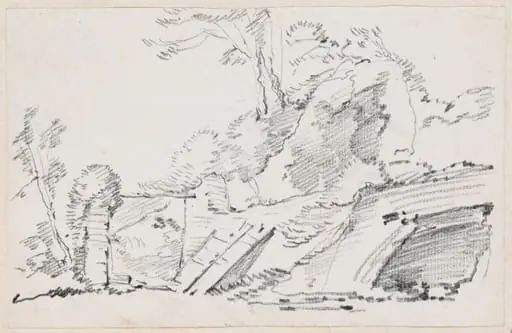 An Ancient Wall with a Ruined Gate
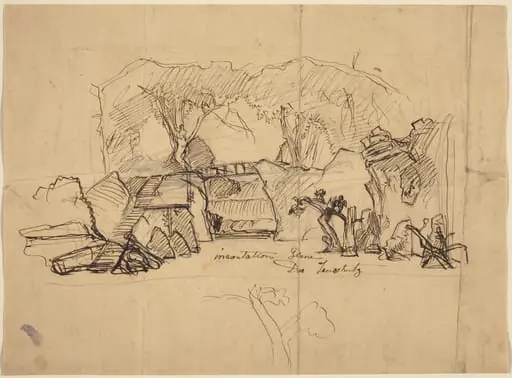 Incantation Scene from "Der Freischutz"
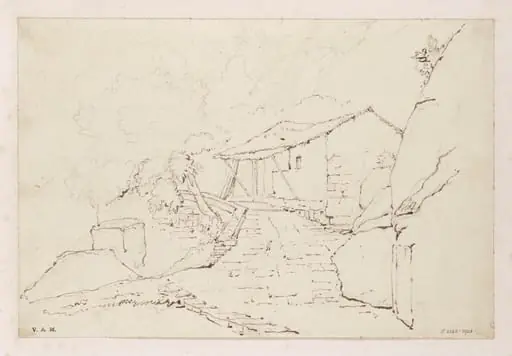 A small building on a rocky hillside, Macau
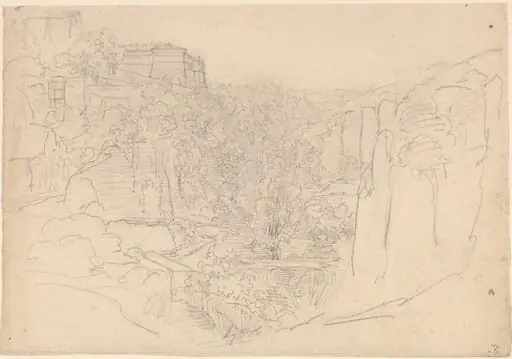 Fortified Castle Above a Narrow Valley
 Study of Old Tree Trunk
 Casa Garden, Macau
 A Waterfall near a Hilltown in Italy
 A High Bridge in Tivoli
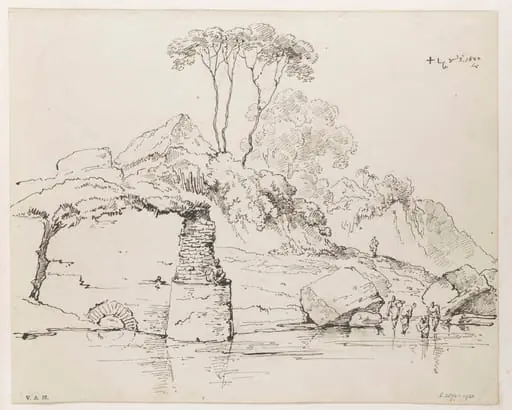 Ruined walls and rocks on a bank of the River Hugli