Artwork
A Waterfall near a Hilltown in Italy
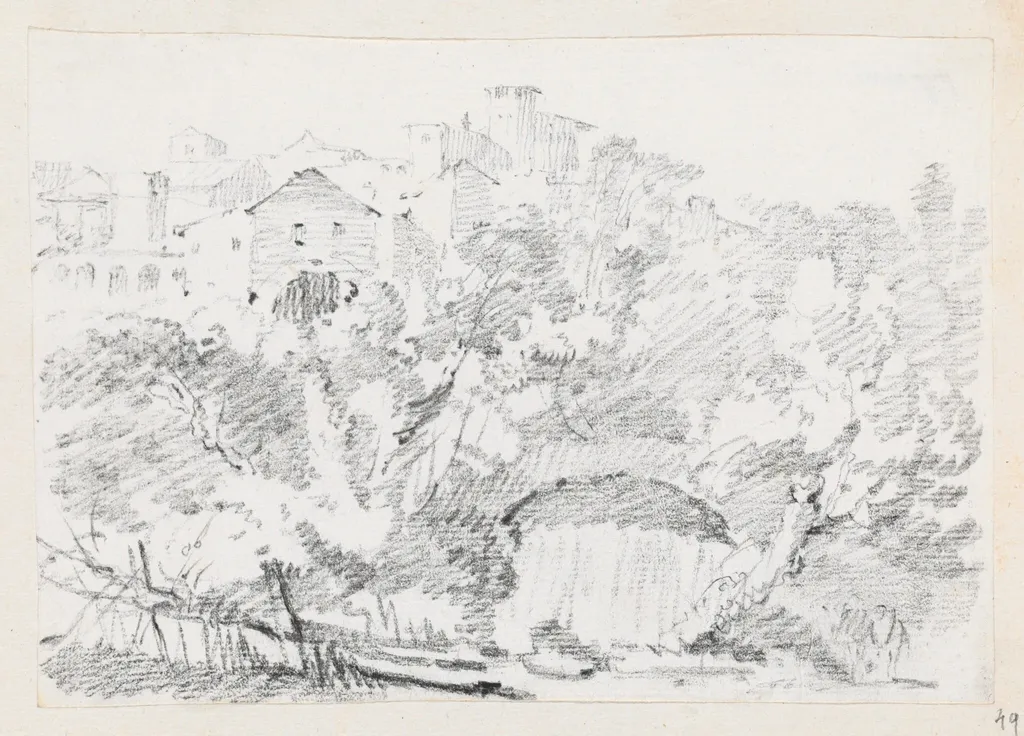
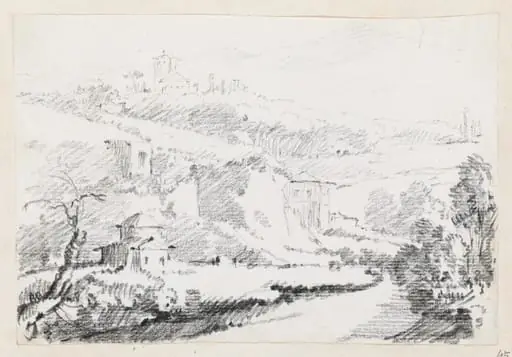
A Waterfall near a Hilltown in Italy is a graphite drawing by the Baroque artist Joseph-Marie Vien. It dates from 1747 and is held in the collection of the National Gallery of Art.
About this work
Overview
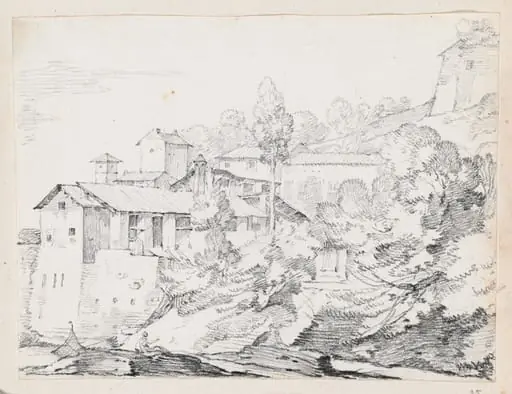
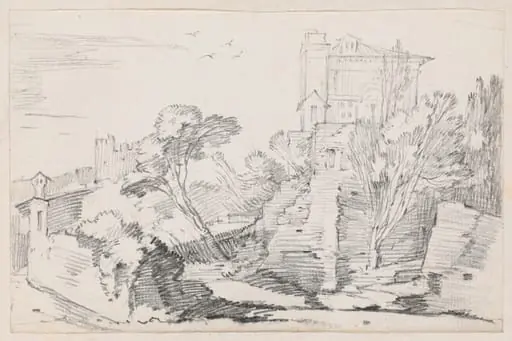
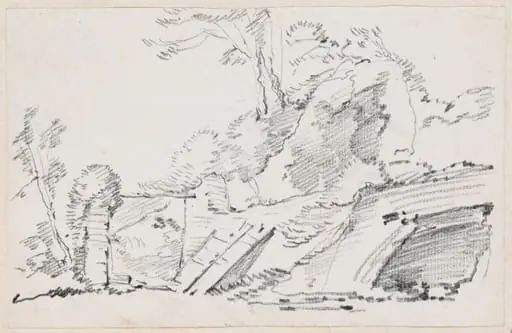
Created in 1747, this graphite drawing by Joseph-Marie Vien captures a tranquil Italian hillside with a waterfall descending a rocky slope. Executed on handmade laid paper, the work reflects Vien’s early artistic development before his appointment as Premier peintre du Roi. Its spontaneous quality suggests it may have been made en plein air, emphasizing observation over polished finish.
Subject & Meaning
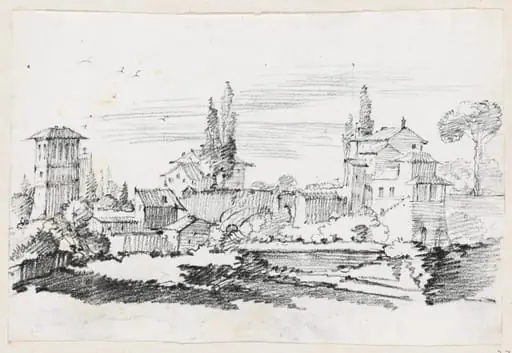
The scene portrays a modest settlement nestled among trees atop a sloping terrain, with a waterfall cascading down the rock face below. No human figures are present, and the architecture is simplified, suggesting a focus on natural harmony rather than narrative. The quiet, unassuming composition reflects an emerging interest in landscape as a subject worthy of study in its own right.
Technique & Style
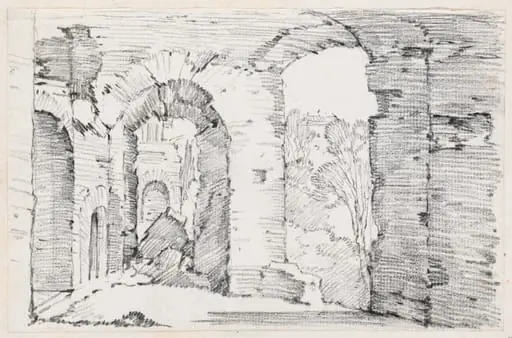
Vien employed loose, fluid graphite strokes to suggest the textures of foliage, stone, and moving water. The absence of rigid outlines and the absence of heavy shading create a sense of immediacy. The paper’s visible laid lines, a product of its handmade origin, further reinforce the drawing’s informal, observational character, aligning it with sketchbook practices of the time.
History & Provenance
Made during Vien’s formative years, this drawing predates his official royal patronage and his later neoclassical style. It belongs to a period when French artists were increasingly drawn to Italian scenery as part of the Grand Tour tradition. While its early ownership is undocumented, its survival offers insight into the artist’s preparatory process before his academic rise.
Context
Produced during the Rococo era, the drawing diverges from the period’s ornamental tendencies by favoring naturalism over decoration. It aligns with a growing trend among French artists to study landscape directly from nature, anticipating the later emphasis on topographical accuracy and atmospheric effect that would influence Romantic and realist traditions.
Legacy
Though not widely exhibited, this work exemplifies the shift in 18th-century French drawing toward direct observation and modest, unidealized scenery. It stands as a quiet precursor to the landscape studies that would become central to academic training and later movements, revealing Vien’s foundational engagement with the natural world.
Own this work as a print
Artist & collection
Artist
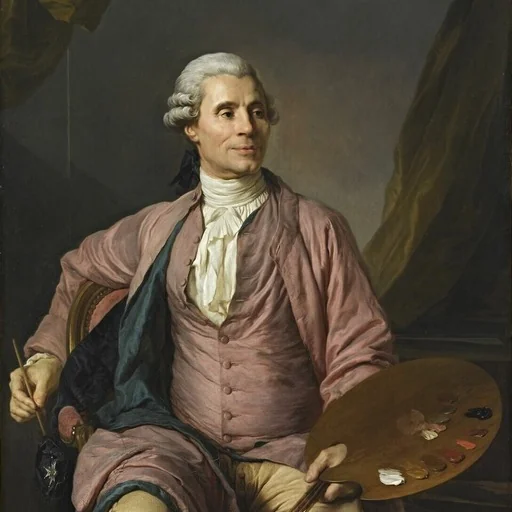
Joseph-Marie Vien (18 June 1716 – 27 March 1809) was a French painter. He was the last holder of the post of Premier peintre du Roi, serving from 1789 to 1791, before it was abolished during the French Revolution.