Artwork
Rocks and part of the A-Ma Temple, Macau
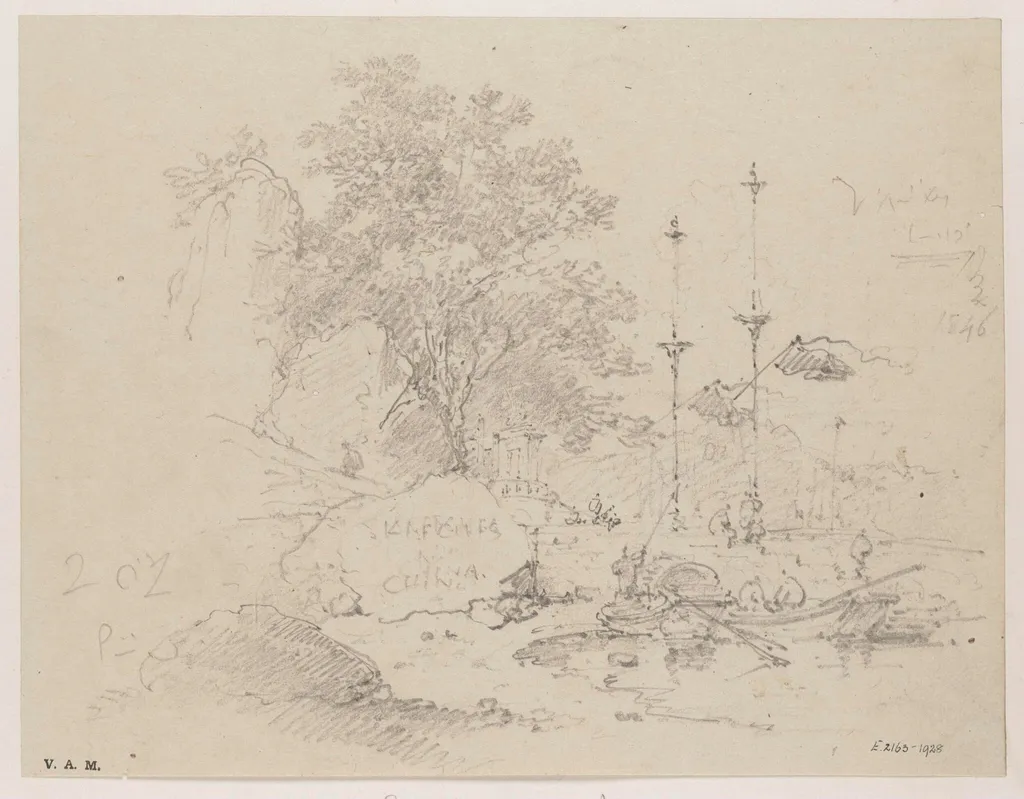
Rocks and part of the A-Ma Temple, Macau is a drawing by the Romanticist artist George Chinnery. It dates from 5 and is held in the collection of the Victoria and Albert Museum. This pencil or ink drawing depicts a coastal scene in Macau, centered on the rocky shoreline adjacent to the A-Ma Temple.
About this work
Overview
This pencil or ink drawing depicts a coastal scene in Macau, centered on the rocky shoreline adjacent to the A-Ma Temple. The temple’s tall masts rise above the foreground, while Tanka fishing boats rest near the sea wall. Created as the frontispiece for a published collection of sketches, it was designed to introduce viewers to the visual character of Macau’s maritime landscape.
Subject & Meaning
The composition juxtaposes natural rock formations with human-made structures, emphasizing the temple’s integration into the coastal environment. The Tanka boats, associated with a seafaring community, suggest daily life along the shore. The temple’s masts, visible above the rocks, signal spiritual presence amid the physical terrain, reflecting a quiet harmony between faith, labor, and nature.
Technique & Style
Rendered with precise linear detail, the drawing uses controlled hatching and tonal variation to suggest texture in the rocks and the weathered surfaces of the temple. The perspective is low and close, drawing attention to the shoreline’s irregular contours. The absence of color and the focus on structure align with topographical sketching traditions of the early 19th century.
History & Provenance
Created by George Chinnery during his time in Macau in the 1820s–1830s, the drawing was intended as the opening image for a portfolio of his works documenting southern Chinese coastal life. Though the full volume’s publication history is incomplete, this piece survives as one of the earliest Western visual records of the temple and its surroundings.
Context
In the early 19th century, Macau was a Portuguese trading post with a significant Chinese population, including the Tanka people who lived on boats. Chinnery, a British artist resident in the region, recorded local scenes with observational accuracy. His drawings served as both personal records and cultural documents for European audiences unfamiliar with southern China’s coastal communities.
Legacy
The drawing remains a valuable historical artifact, offering insight into Macau’s pre-colonial urban and maritime landscape. It contributes to a broader archive of Western artists’ responses to China’s southern coast during a period of increasing foreign presence. Its function as a frontispiece underscores its role in shaping early visual narratives of the region for international viewers.
Artist & collection
Artist
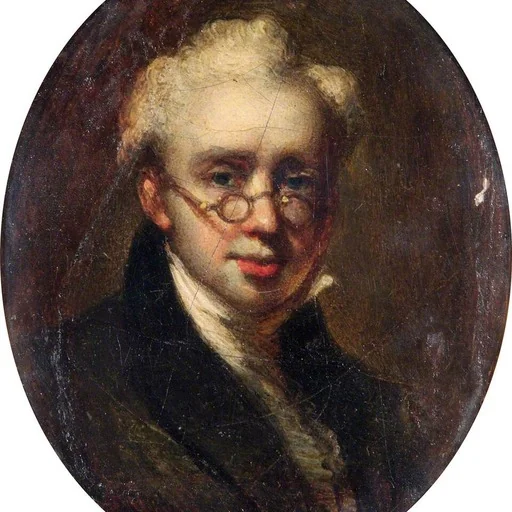
George Chinnery (Chinese: 錢納利; 5 January 1774 – 30 May 1852) was an English painter who spent most of his life in Asia, especially India and southern China.

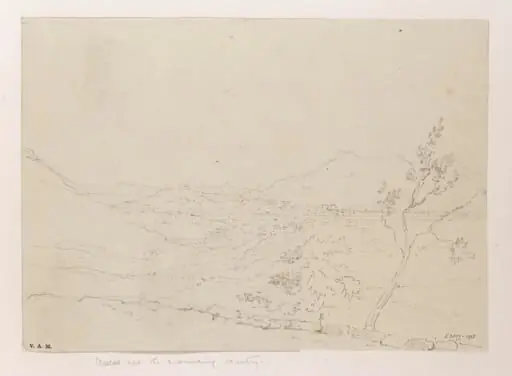 Macau, looking south-west along the peninsula
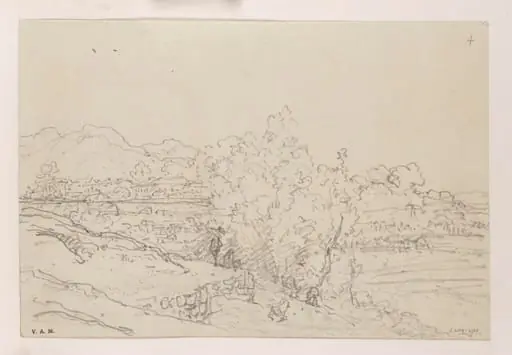 Fields and trees, with the city of Macau in the distance
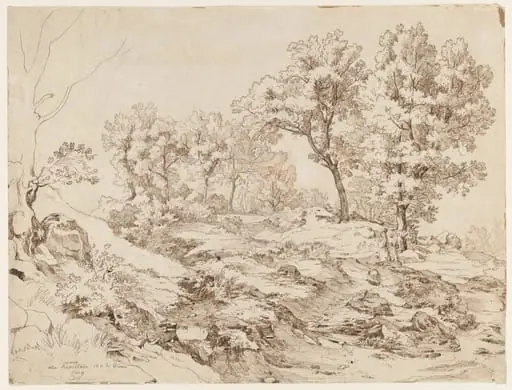 La Serpentara near Olevano
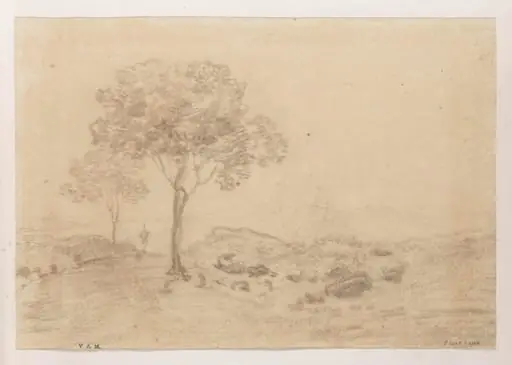 Two trees in a landscape
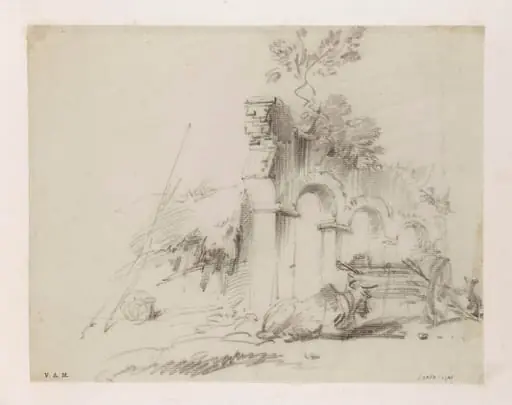 An ox and cart by a ruined building, Bengal
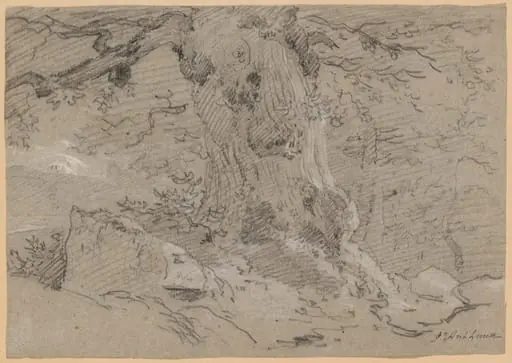 Study of Old Tree Trunk
 A sea fight
 Study for "The Mountain Ford"
 The buildings of Macau seen across fields from a tree-lined lane
 Landscape
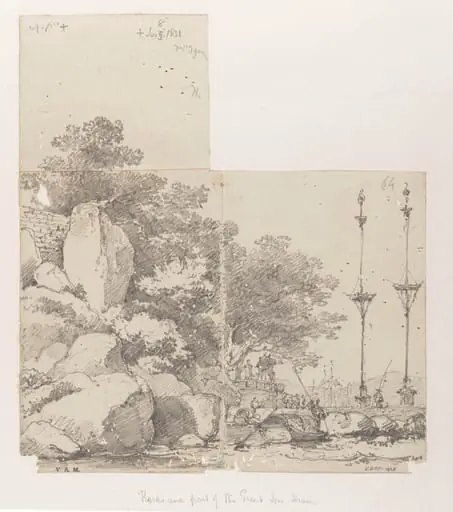 The rocky shore by the A-Ma Temple, Macau
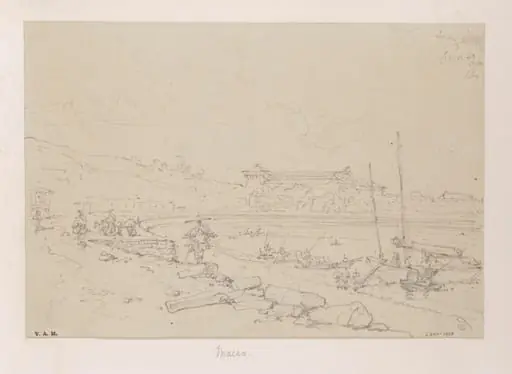 The church and convent of S. Francisco, Macau, from across the bay