Artwork
The Shore
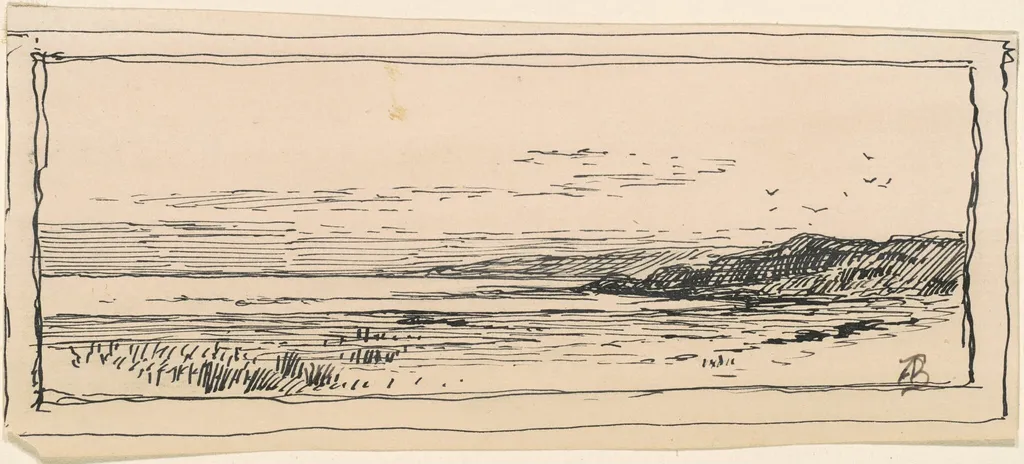
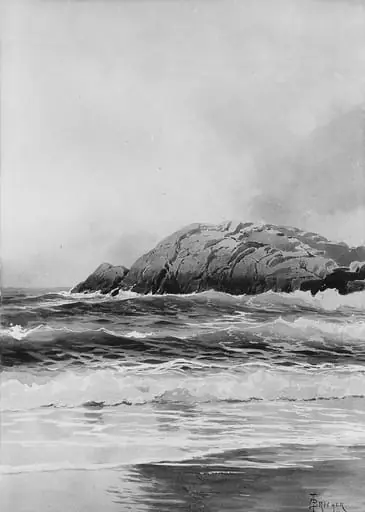
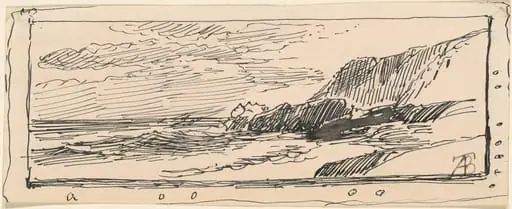
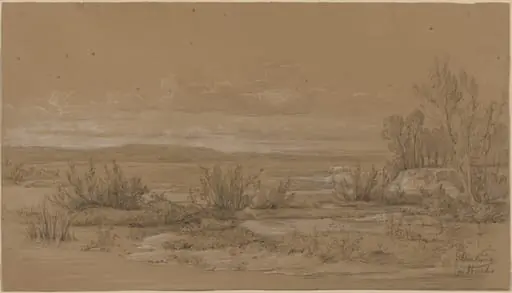
The Shore is an ink drawing by the Impressionist artist Alfred Thompson Bricher. It dates from 1870 and is held in the collection of the National Gallery of Art.
About this work
Overview
Created in 1870, The Shore is a pen-and-ink drawing on wove paper by Alfred Thompson Bricher. It captures a quiet coastal scene with minimal detail, relying on tonal gradations to suggest space and atmosphere. The work belongs to a body of American drawings that emphasize natural quietude over narrative, reflecting the artist’s interest in subtle environmental observation.
Subject & Meaning
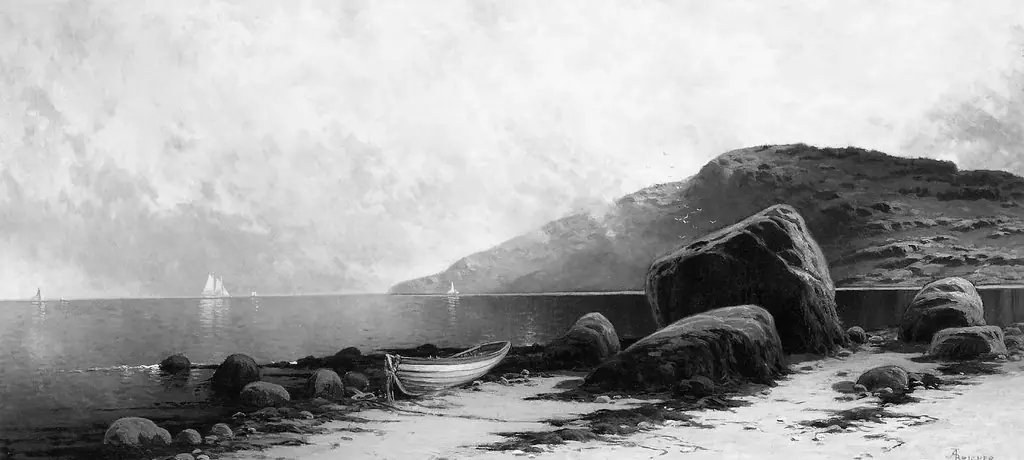
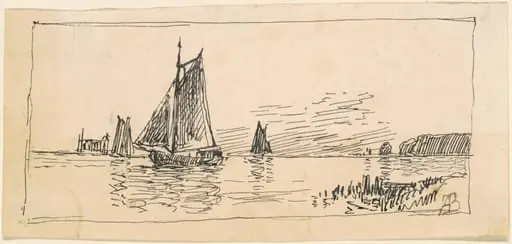
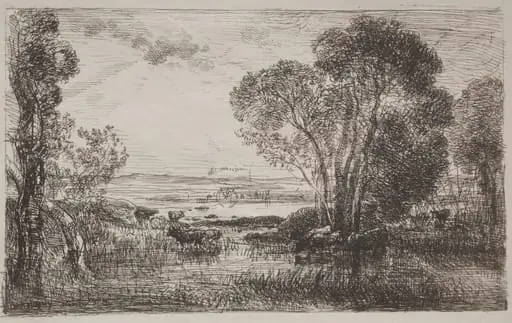
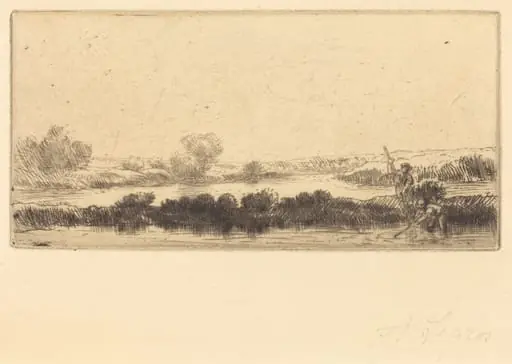
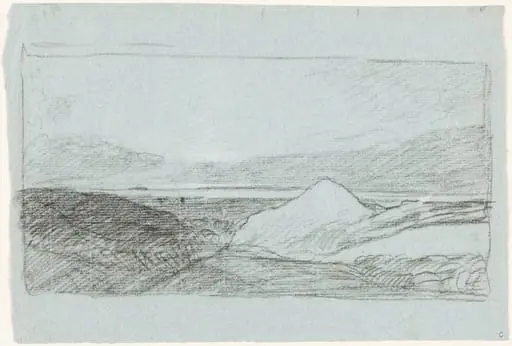
The scene depicts a still shoreline under a muted sky, with no human figures or overt activity. The water, rendered in darker ink, meets a faintly suggested edge of land, where sparse lines imply reeds or stones. The absence of drama or movement conveys stillness, inviting contemplation rather than storytelling. The work evokes a sense of solitude inherent in the natural world.
Technique & Style
Bricher employed fine pen strokes to build subtle tonal variations, using the paper’s white surface as a light source. Grays range from deep near the waterline to pale in the upper sky, creating atmospheric depth without color. The wove paper’s smooth texture allowed precise line control, reinforcing the drawing’s restrained, meditative quality through disciplined mark-making.
History & Provenance
The drawing was made during Bricher’s active period as a coastal landscape artist, likely during a sketching trip along the northeastern U.S. shoreline. It remained in private hands until entering a public collection in the 20th century. Its modest scale and medium suggest it was a study or personal record rather than a commissioned piece.
Context
Produced during the height of American Realism, The Shore aligns with a broader trend of artists turning to unidealized natural scenes. Unlike grand Romantic vistas, Bricher’s work favors quiet observation, echoing the influence of Hudson River School sensibilities while embracing a more intimate, understated approach to landscape.
Legacy
The drawing exemplifies Bricher’s contribution to American ink drawing, demonstrating how minimal means could convey emotional resonance. It remains a reference for artists exploring tonal harmony and restraint, and it continues to be studied as an example of 19th-century American draftsmanship focused on atmospheric effect over detail.
Artist & collection