Artwork
Untitled
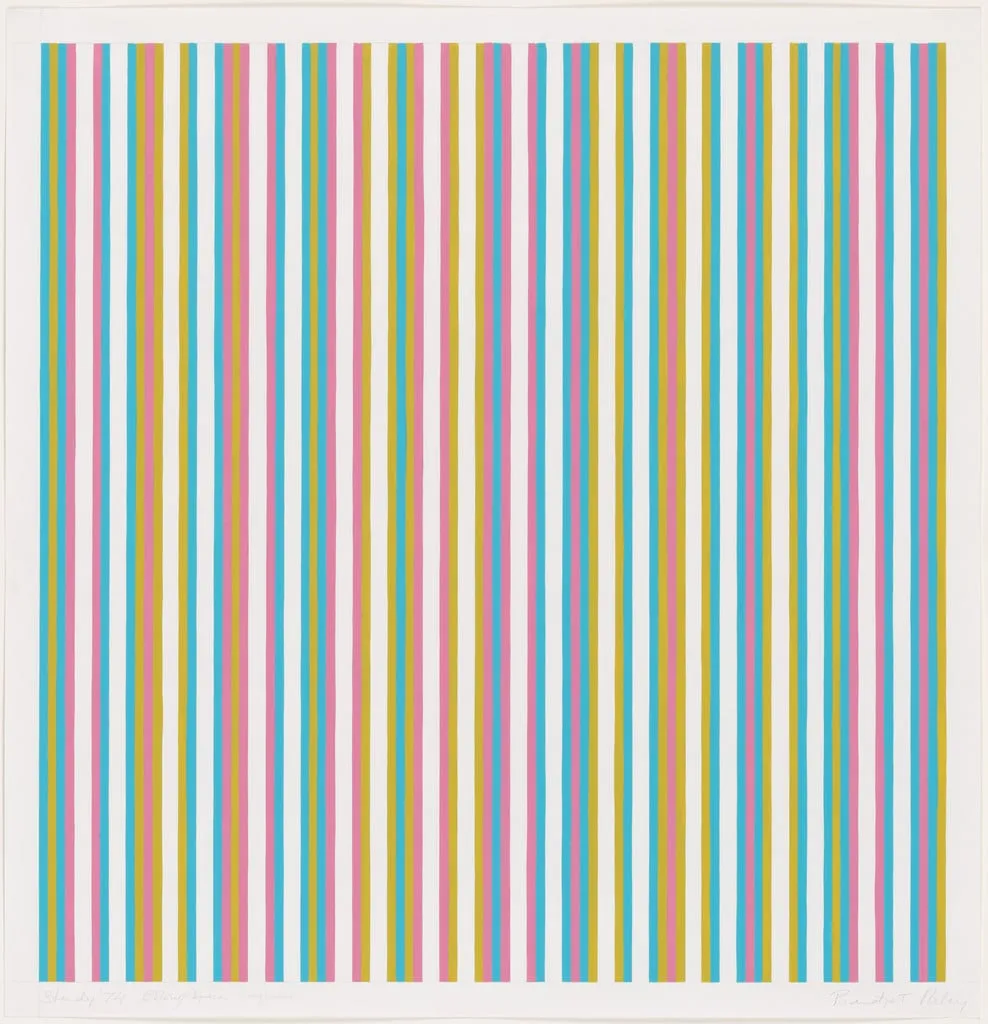
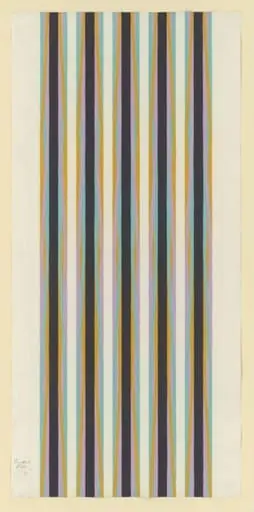
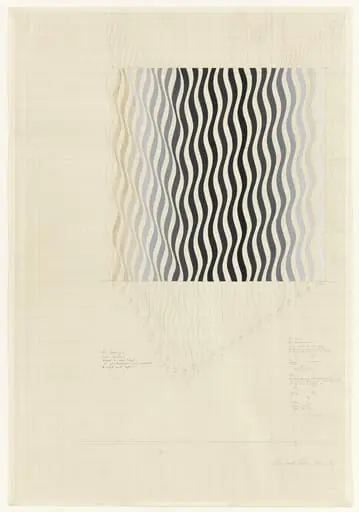
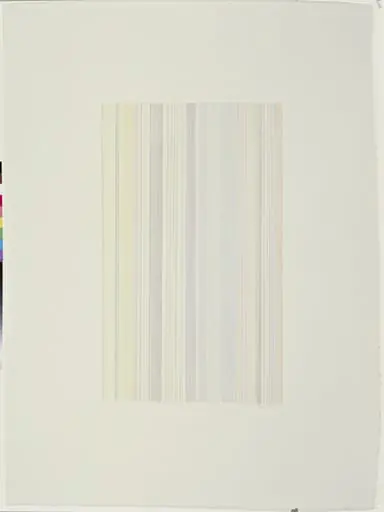
Untitled is a gouache drawing by Bridget Riley. It dates from 1974 and is held in the collection of the Museum of Modern Art.
About this work
Overview
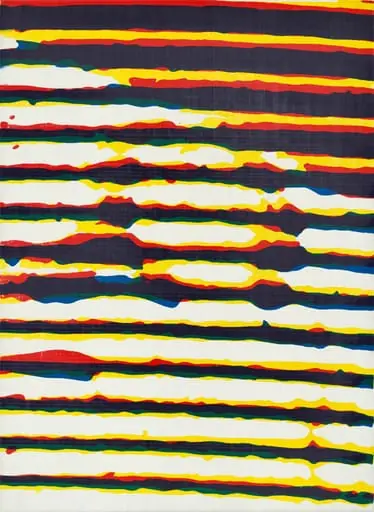
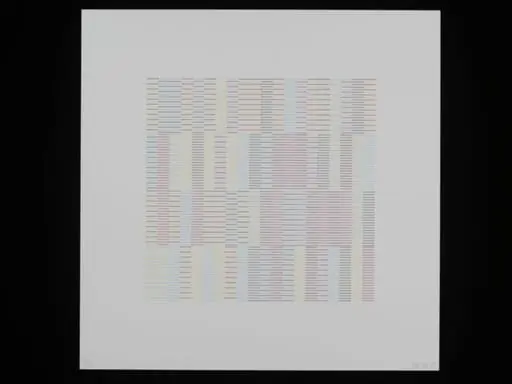
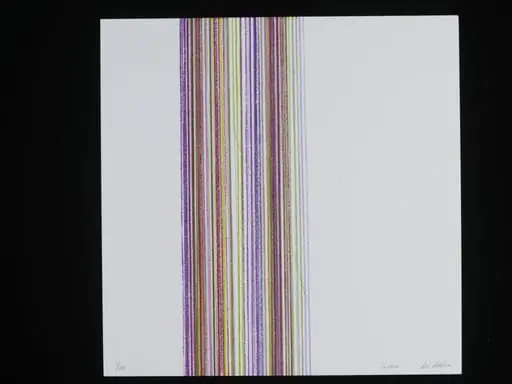
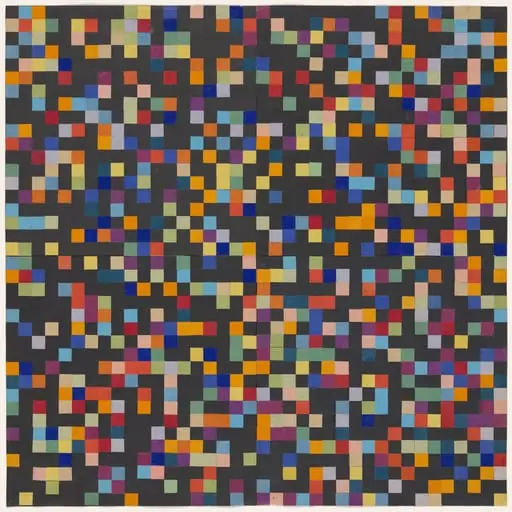
Created in 1974, this drawing by Bridget Riley is executed in gouache and pencil on paper. It belongs to the collection of The Museum of Modern Art in New York. As part of Riley’s broader investigation into optical effects, the work exemplifies her shift toward more complex, hand-drawn compositions during the early 1970s, moving beyond earlier purely mechanical renderings.
Subject & Meaning
The absence of figuration directs attention to the perceptual experience of the viewer, emphasizing how the eye interprets structured repetition.
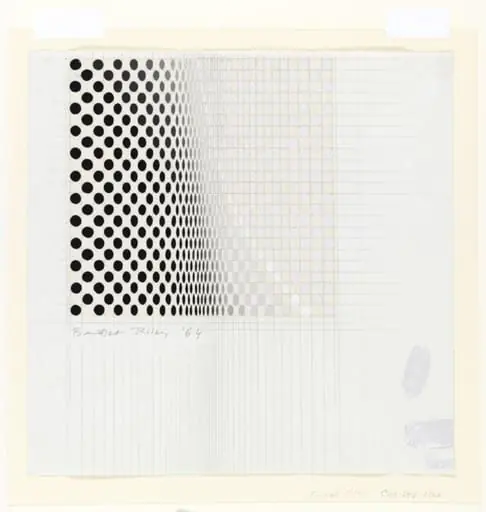
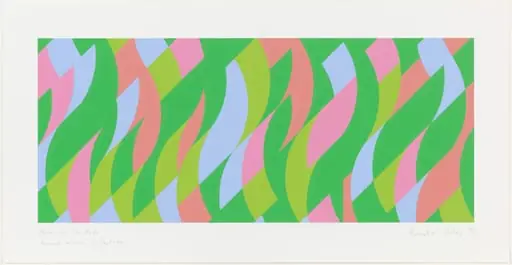
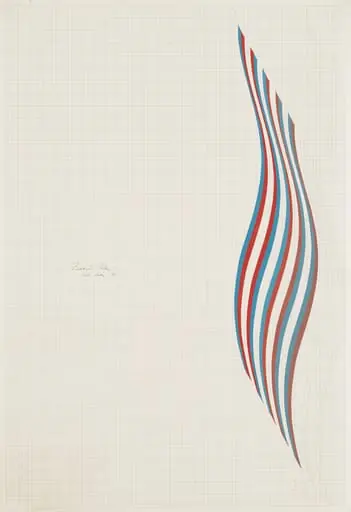
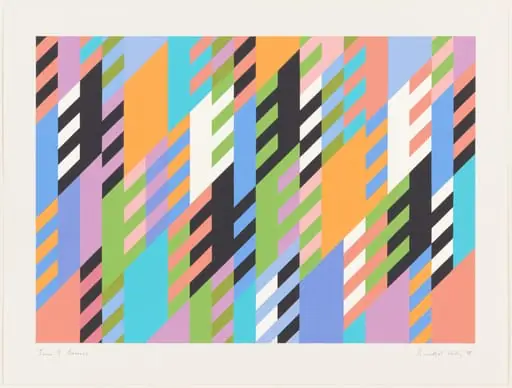
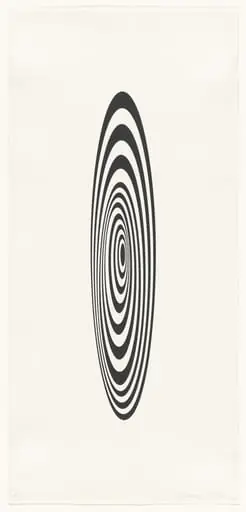
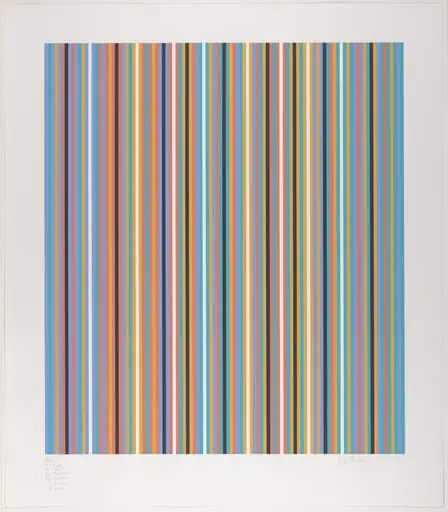
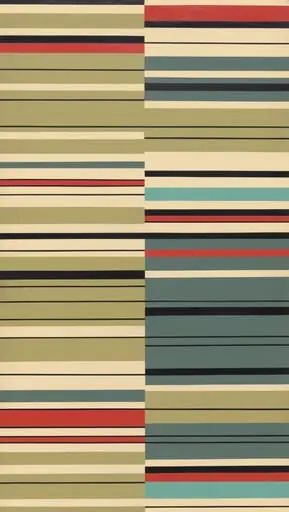
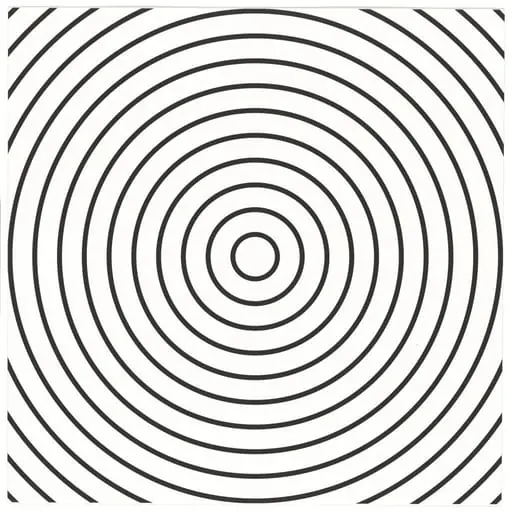
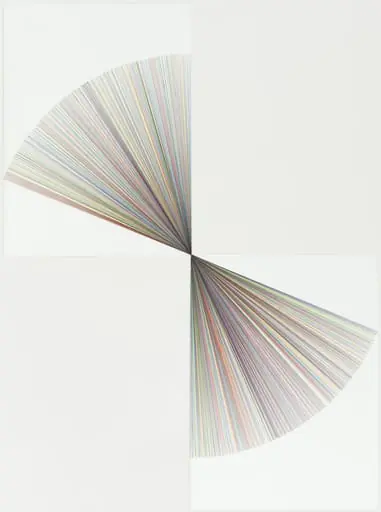
The work presents no representational imagery but instead focuses on the interaction of geometric forms and rhythmic line patterns. Its visual impact arises from the precise arrangement of intersecting strokes, which generate subtle illusions of movement and depth. The absence of figuration directs attention to the perceptual experience of the viewer, emphasizing how the eye interprets structured repetition.
Technique & Style
Riley employed gouache for its opaque, matte quality, allowing sharp contrasts and layered tones without gloss. Pencil underdrawing guided the placement of forms, ensuring precision. The intricate network of lines reflects her hand-drawn process, distinguishing this work from her earlier use of mechanical aids. The method prioritizes control and subtle variation in line weight and spacing to activate visual tension.
History & Provenance
The drawing entered The Museum of Modern Art’s collection shortly after its creation, reflecting the institution’s early recognition of Riley’s contributions to postwar abstraction. It was produced during a period when Riley was refining her approach to perception-based abstraction, following her rise to prominence in the 1960s Op Art movement. Its preservation in a major public collection underscores its significance in her oeuvre.
Context
In the early 1970s, Riley moved away from the high-contrast black-and-white compositions of her earlier work, experimenting with muted palettes and denser linear structures. This piece reflects her engagement with theories of visual perception and the psychological effects of pattern. Her work during this time intersected with broader inquiries in cognitive science and phenomenology, though she remained focused on sensory experience rather than theoretical exposition.
Legacy
This drawing contributes to Riley’s enduring influence on contemporary art’s engagement with perception and structure. Its handcrafted precision challenged assumptions that Op Art was purely mechanistic, demonstrating that optical effects could emerge from meticulous manual labor. Subsequent artists have cited her work as foundational in redefining abstraction as an experiential, rather than purely formal, practice.
Artist & collection
Artist
Bridget Louise Riley (born 24 April 1931) is an English painter known for her op art paintings. She lives and works in London, Cornwall and the Vaucluse in France.