Artwork
Untitled
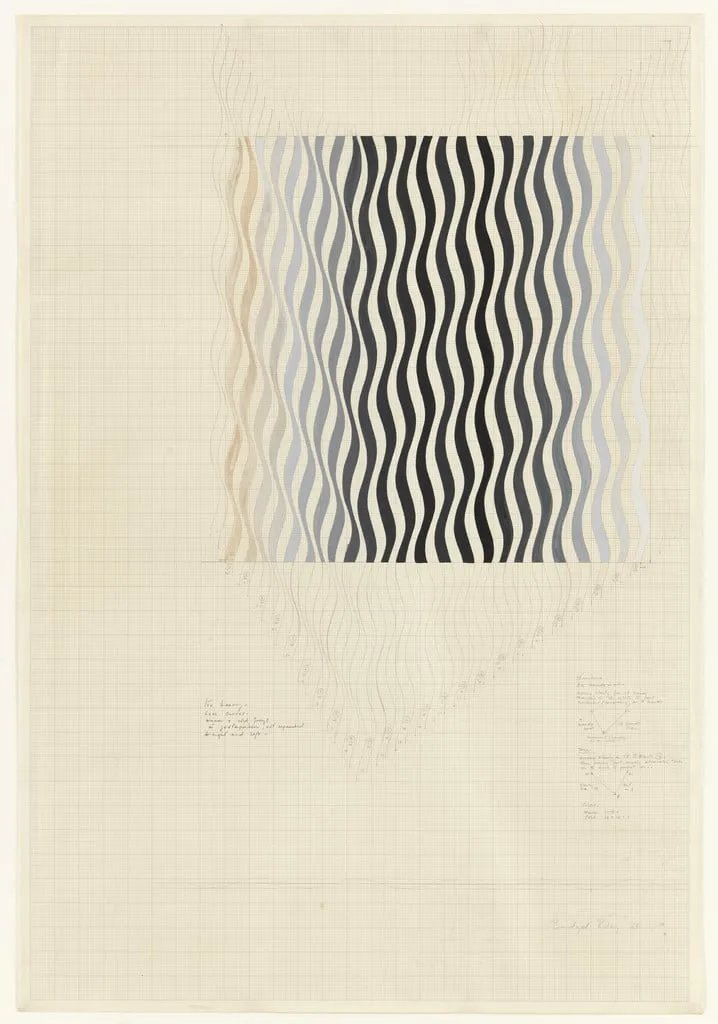
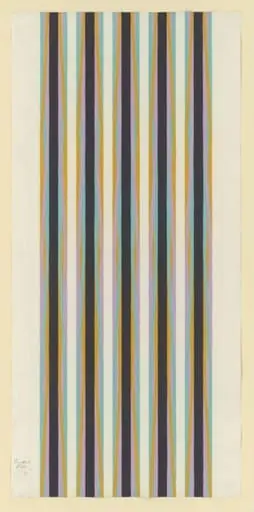
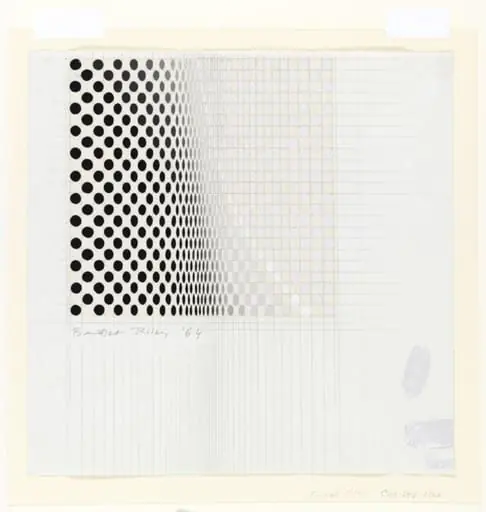
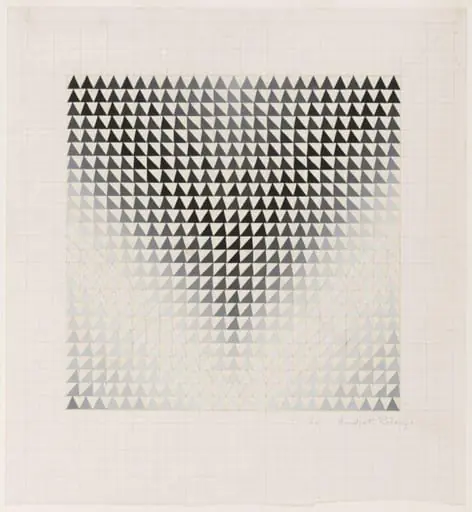
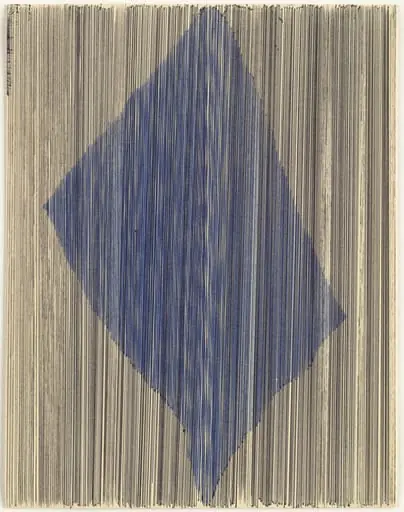
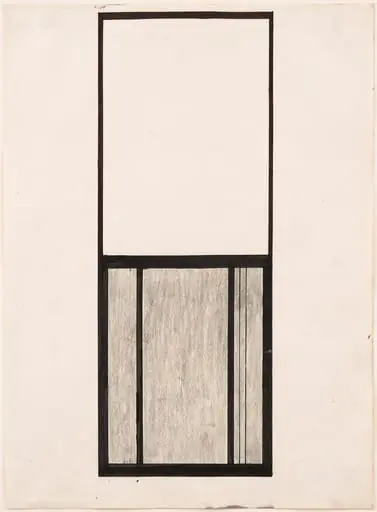
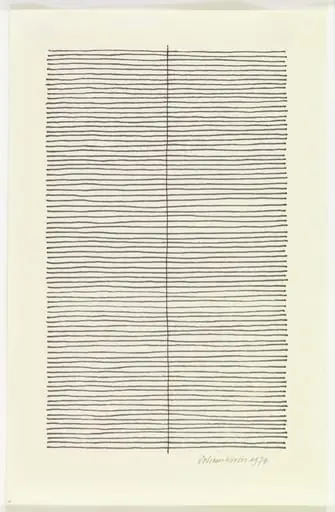
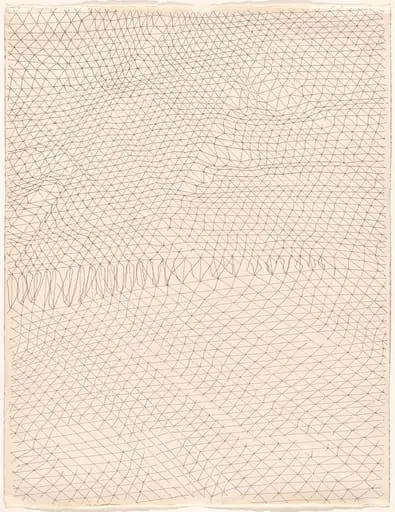
Untitled is a gouache drawing by Bridget Riley. It dates from 1965 and is held in the collection of the Museum of Modern Art.
About this work
Overview
It serves as a preparatory study for larger optical paintings, capturing the artist’s exploration of visual rhythm.
Created in 1965, this small drawing by Bridget Riley combines gouache and pencil on graph paper. It serves as a preparatory study for larger optical paintings, capturing the artist’s exploration of visual rhythm. Though modest in scale and material, it reflects the precision and systematic approach central to her practice. The work is part of The Museum of Modern Art’s collection, representing a key moment in the development of Op Art.
Subject & Meaning
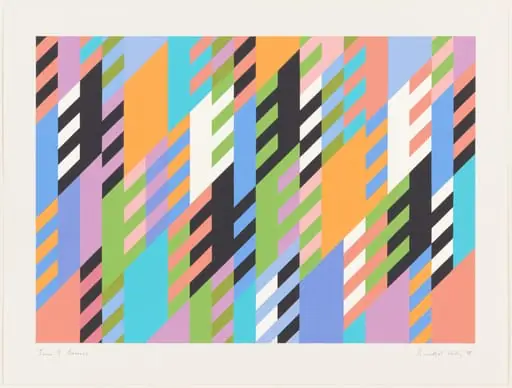
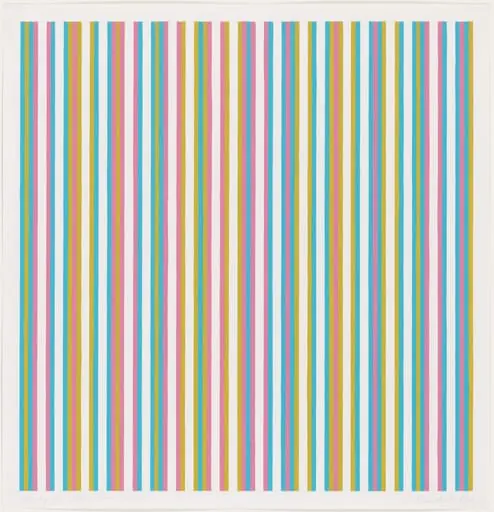
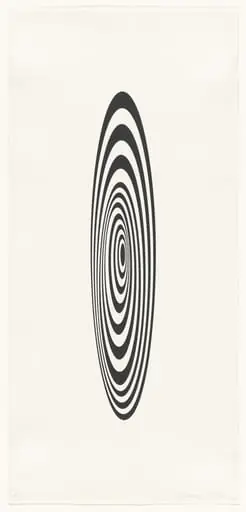
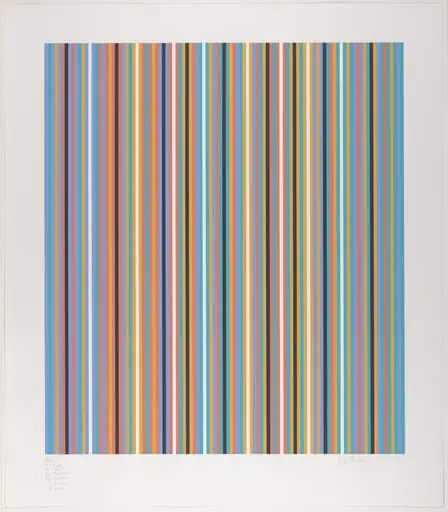
The drawing features alternating black and white stripes that undulate across the grid, creating an illusion of motion without depicting any actual movement. Riley investigates perception itself—how the eye interprets pattern and contrast. The work does not represent external subjects but instead focuses on the physiological response to geometric arrangement, challenging the viewer’s sense of stability and depth.
Technique & Style
Riley used pencil to lay out the underlying structure on graph paper, then applied gouache for sharp, flat areas of black and white. The precision of her hand and the restraint of her palette emphasize control and calculation. The grid beneath the lines anchors the composition, allowing subtle deviations to produce dynamic visual effects. This methodical process distinguishes her work from expressive abstraction.
History & Provenance
This study was made during a period when Riley was refining her signature style, transitioning from smaller works to large-scale paintings. It was acquired by The Museum of Modern Art in the late 1960s, shortly after her rise to international prominence. Its preservation as a study highlights the importance of process in her practice, offering insight into how monumental works were conceived on a human scale.
Context
In the mid-1960s, Riley emerged alongside other artists exploring perception and optical effects, responding to postwar interest in science, psychology, and visual theory. Her work diverged from the emotional intensity of Abstract Expressionism, favoring impersonal, structured compositions. This drawing reflects a broader cultural shift toward systems-based art and the investigation of sensory experience through form.
Legacy
Riley’s small studies like this one became foundational to her reputation, demonstrating how minimal means could generate complex perceptual experiences. They influenced subsequent generations of artists working with pattern, motion, and viewer interaction. The drawing remains a touchstone for understanding how intentionality and restraint can produce profound visual effects without narrative or symbolism.
Artist & collection
Artist
Bridget Louise Riley (born 24 April 1931) is an English painter known for her op art paintings. She lives and works in London, Cornwall and the Vaucluse in France.