Artwork
An Answer to the Print of John Wilkes Esq. by Wm. Hogarth
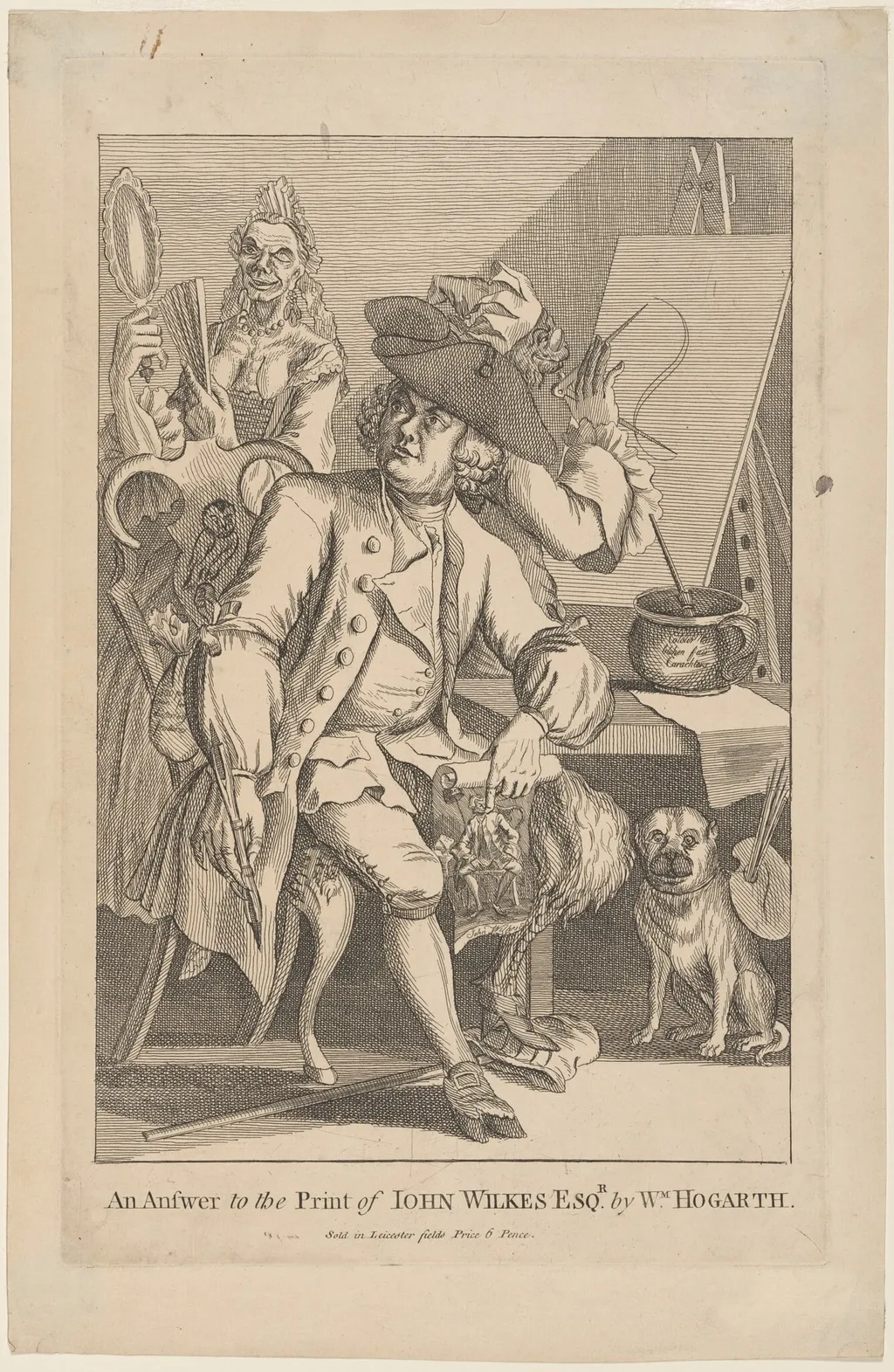
An Answer to the Print of John Wilkes Esq. by Wm. Hogarth is an ink print by the Romanticist artist British 18th Century. It is held in the collection of the National Gallery of Art. William Hogarth’s etching titled “An Answer to the Print of John Wilkes Esq.
About this work
Overview
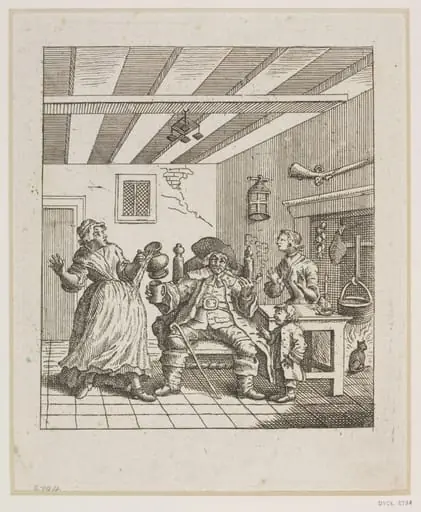
William Hogarth’s etching titled “An Answer to the Print of John Wilkes Esq.” presents a cramped interior populated by a disheveled man slumped in a chair, a well‑dressed woman holding a mirror and fan, and a small dog. A pot marked “Gin” rests on a table, while a broken guitar leans against the wall, creating a sense of disorder and excess.
Subject & Meaning
The central figure is identified by an inscription as John Wilkes, a controversial political figure of the mid‑18th century. Hogarth’s composition satirizes Wilkes, emphasizing his alleged drunkenness and moral decay through visual cues such as the empty gin pot and the chaotic surroundings, thereby offering a pointed commentary rather than a flattering portrait.
Technique & Style
Executed as an etching on laid paper, the work relies on precise, incisive lines that heighten the scene’s turbulence. Hogford’s use of strong contouring and exaggerated proportions amplifies the caricature, while the inclusion of textual elements at the bottom integrates image and inscription, a hallmark of his narrative printmaking.
History & Provenance
Created in the 1750s, the print forms part of Hogarth’s series of political satires responding to contemporary pamphlets and caricatures. It circulated among pamphleteers and collectors interested in the heated debates surrounding Wilkes, reflecting the print’s role as both artwork and polemical instrument in the public sphere.
Context
The etching emerges from a period of intense partisan conflict in Britain, where prints served as rapid, affordable means of political persuasion. Hogarth, known for his moralizing scenes of urban life, employed his graphic skill to critique figures like Wilkes, aligning his artistic practice with the broader culture of pamphleteering and public discourse.
Artist & collection

Artist
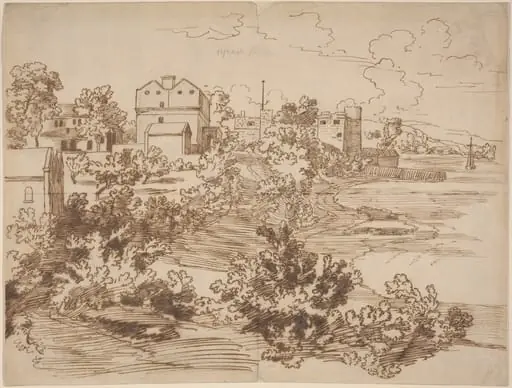
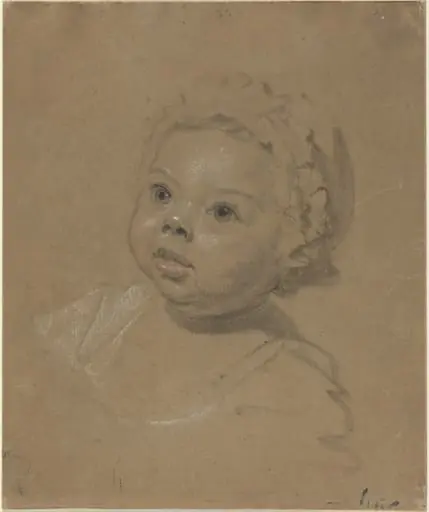
This artist left small, precise pictures from 18th-century Britain—buildings, faces, and landscapes etched or drawn in ink and chalk.