Artwork
Before and After
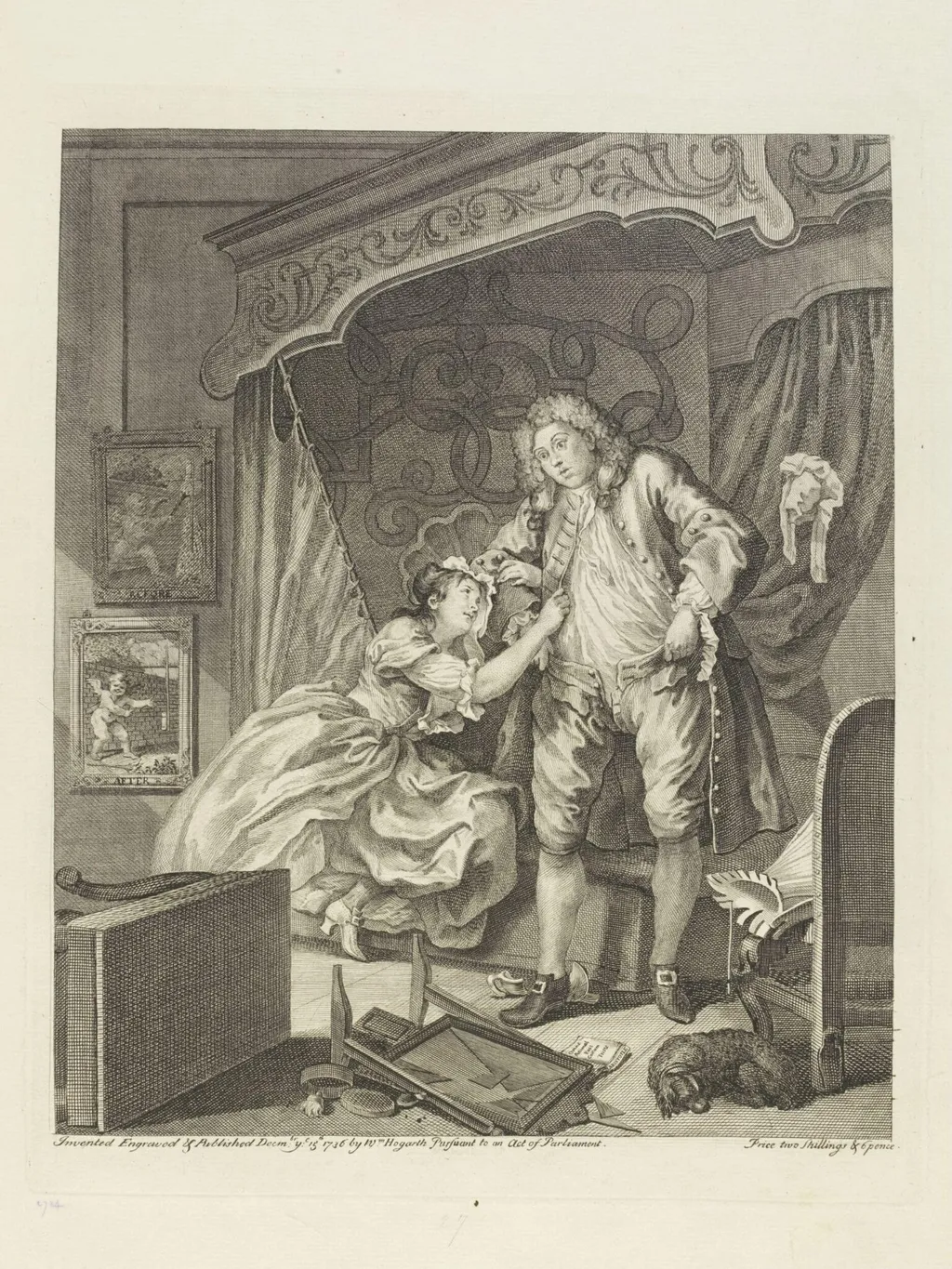
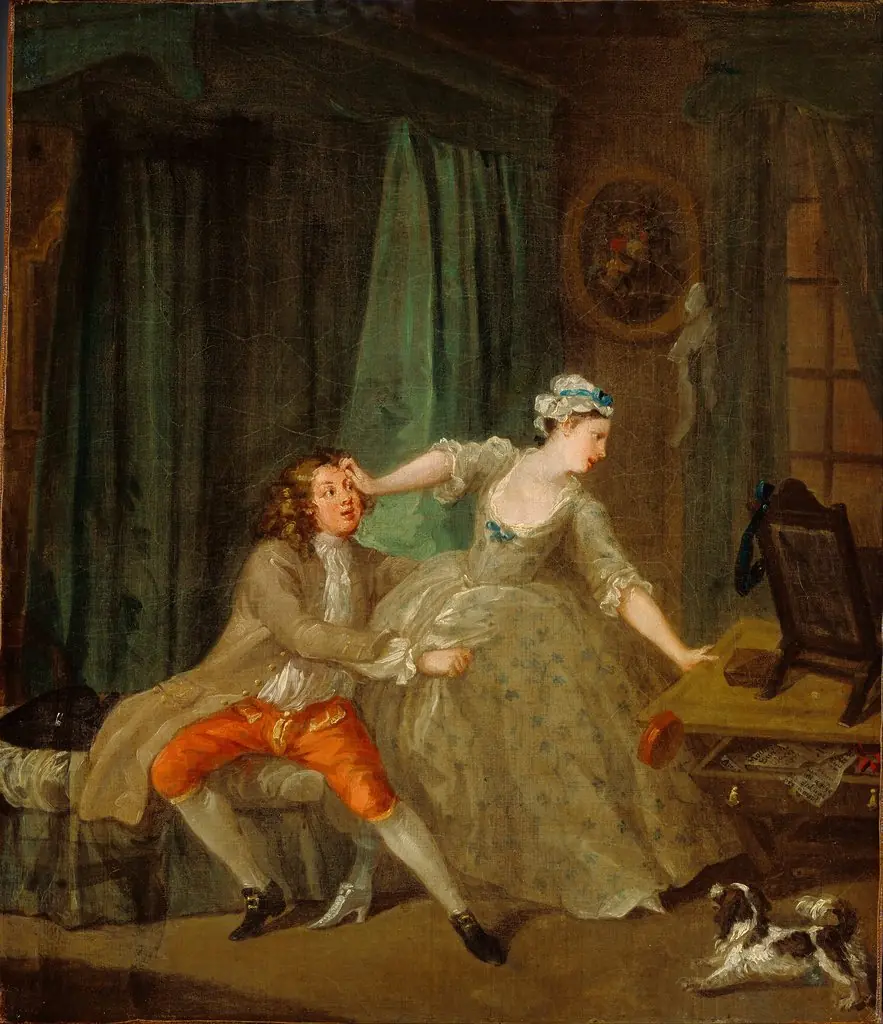
Before and After is a print by William Hogarth. It dates from 1750 and is held in the collection of the Victoria and Albert Museum.
About this work
Overview
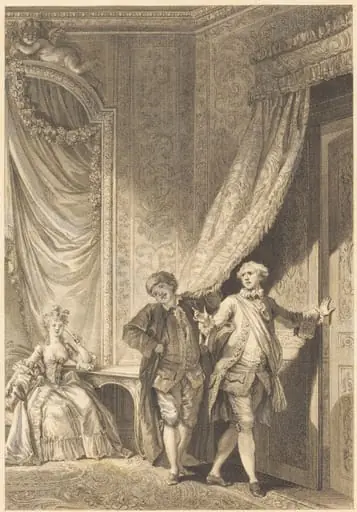
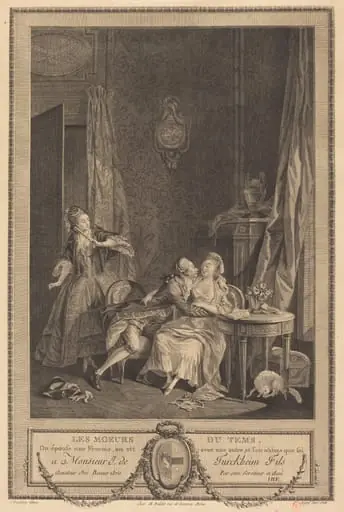
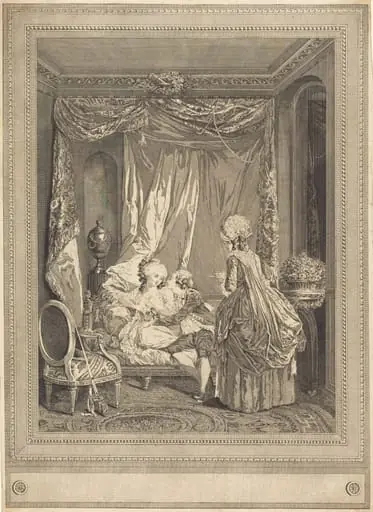
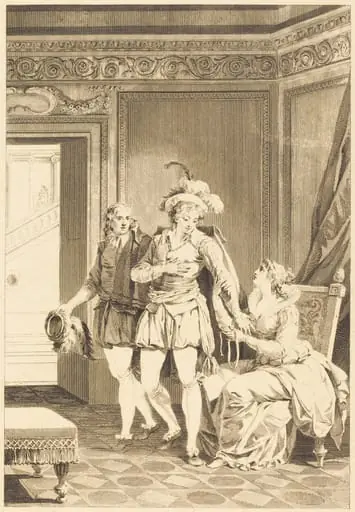
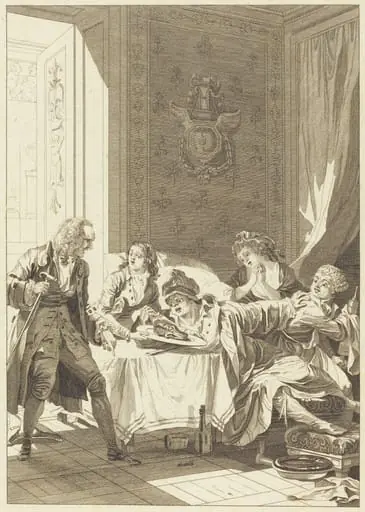
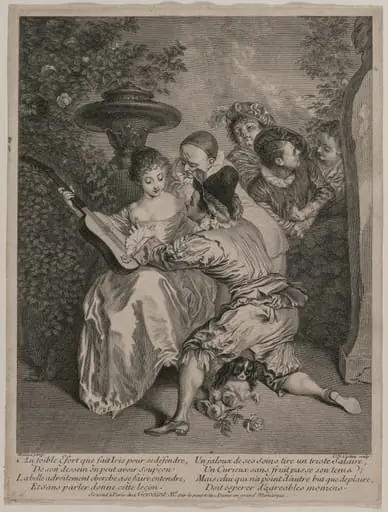
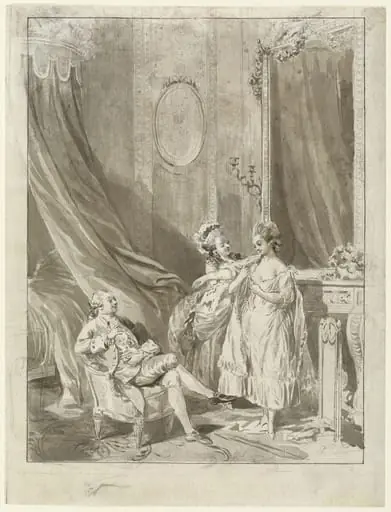
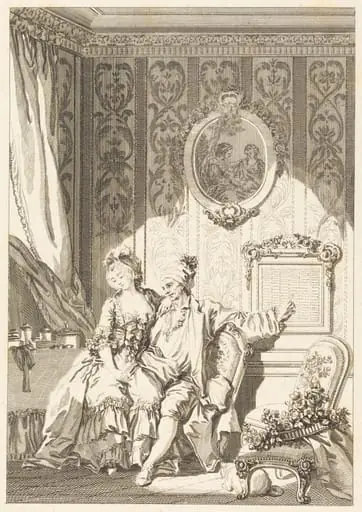
Executed in intaglio on paper, the work presents a domestic interior in disarray, capturing a moment of aftermath following an intimate encounter.
William Hogarth’s 1750 engraving *Before and After* is one of two companion prints that depict contrasting moments in a single narrative. Executed in intaglio on paper, the work presents a domestic interior in disarray, capturing a moment of aftermath following an intimate encounter. The composition is tightly framed, emphasizing the cluttered space and the emotional distance between the two figures, inviting viewers to infer the events that preceded this scene.
Subject & Meaning
The print portrays a man in fashionable attire assisting a woman who has just risen from the floor, her dress disordered and posture slumped. Around them, scattered books, a broken chair, and a sleeping dog suggest neglect and disorder. The man’s upright stance and confident grip contrast with her passive compliance, implying a power imbalance. The scene functions as a moral commentary, likely critiquing the consequences of indulgence and the erosion of social decorum.
Technique & Style
Hogarth employed fine-line engraving to render intricate details: the texture of fabric, the grain of wood, and the ornamental patterns on the bed’s upholstery. The second state of the print darkens these decorative elements, heightening the sense of opulence now decayed. His use of chiaroscuro and precise linework directs the viewer’s eye across the chaotic room, reinforcing narrative clarity without overt symbolism. The style is observational, rooted in the traditions of satirical genre painting.
History & Provenance
Created in 1750, *Before and After* was issued as part of a pair intended for public sale, reflecting Hogarth’s practice of using prints to reach a broad audience. The work was produced during a period when he was actively engaging with moral themes through sequential imagery. Early impressions were widely circulated, and surviving copies are held in major institutional collections, including the British Museum and the Victoria and Albert Museum, attesting to its enduring presence in 18th-century print culture.
Context
Hogarth’s prints responded to rising urban middle-class anxieties about morality, gender roles, and financial excess. In a society increasingly shaped by consumerism and shifting social norms, *Before and After* tapped into fears of moral decline following private indiscretions. The work aligns with his broader series, such as *A Harlot’s Progress* and *A Rake’s Progress*, which used domestic scenes to critique societal vices through accessible, sequential storytelling.
Legacy
The print contributed to the development of narrative visual storytelling in British art, influencing later illustrators and cartoonists who sought to convey complex social commentary through single images. Its structural clarity and psychological nuance set a precedent for depicting moral ambiguity without didacticism. Though not widely exhibited today, it remains a key reference in studies of 18th-century print culture and the evolution of satirical visual narrative.
Artist & collection
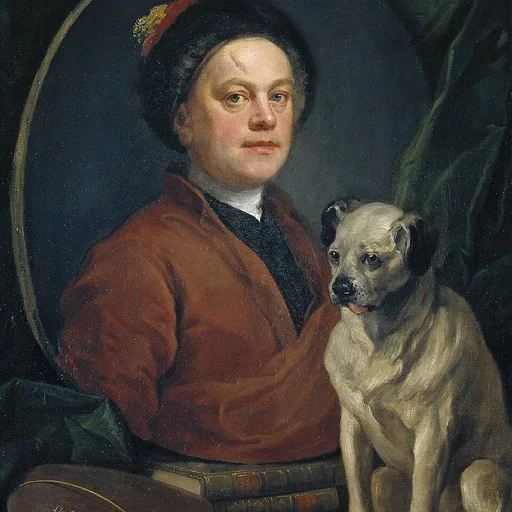
Artist
William Hogarth (; 10 November 1697 – 26 October 1764) was an English painter, engraver, satirist, cartoonist and writer.