Artwork
Crowning of Queen Victoria, June 28, 1838 [right half]
![Crowning of Queen Victoria, June 28, 1838 [right half], by British 19th Century, ink, 1801](https://artifactworldgallery.com/img/british-19th-century--crowning-of-queen-victoria-june-28-1838-right-half--2cf64e22ef97a31f-w1024.webp)
Crowning of Queen Victoria, June 28, 1838 [right half] is an ink print by the Romanticist artist British 19th Century. It dates from 1801 and is held in the collection of the National Gallery of Art. The print depicts the coronation ceremony of Queen Victoria on 28 June 1838, presented as a crowded interior of a church.
About this work
The artist used sharp lines and shading to show the details of the clothes and the church’s tall windows.
This print shows a big crowd inside a church, watching a woman in a long dress get crowned. She stands on a raised platform, holding hands with a man in fancy robes. Around them, nobles in powdered wigs and old-fashioned clothes stand in rows, looking up. Above, more people sit in boxes along the walls, watching the ceremony.
The title at the bottom says it’s the crowning of Queen Victoria in 1838. The artist used sharp lines and shading to show the details of the clothes and the church’s tall windows.
Next, check out how this was made using etching.
Overview
The print depicts the coronation ceremony of Queen Victoria on 28 June 1838, presented as a crowded interior of a church. A central figure in a long dress stands on a raised platform, hand‑in‑hand with a robed male attendant, while rows of nobles in period dress and powdered wigs line the aisles. Elevated galleries contain additional spectators, creating a layered view of the event.
Subject & Meaning
The composition emphasizes the hierarchical nature of the ceremony, foregrounding the monarch and her consort amid a sea of aristocratic onlookers. The arrangement of figures in tiers underscores the social order of the era, with the queen elevated both physically and symbolically, while the surrounding crowd reflects the collective participation of the nation’s elite in the rite of coronation.
Technique & Style
Executed through a combination of etching and engraving, the image relies on crisp linear incisions and subtle cross‑hatching to render intricate details of clothing, architecture, and facial expressions. The contrast between sharply defined outlines and graduated shading conveys depth within the church’s lofty windows and the textured fabrics of the participants’ attire.
History & Provenance
Created shortly after the 1838 coronation, the print served as a contemporary visual record of the event. It was produced as a single‑sheet work, likely distributed to the public and collectors interested in royal imagery, though specific ownership histories remain undocumented.
Context
The work belongs to a broader tradition of 19th‑century printmaking that documented state ceremonies, providing accessible representations of events otherwise limited to those present. Its focus on ceremonial dress and architectural setting reflects the period’s fascination with pageantry and the visual reinforcement of monarchical authority.
Artist & collection

Artist
This artist’s short life left behind a quiet obsession with water—whether the churn of a mill wheel, the choppy waves off England’s south coast, or the way light bounces off pond lilies.

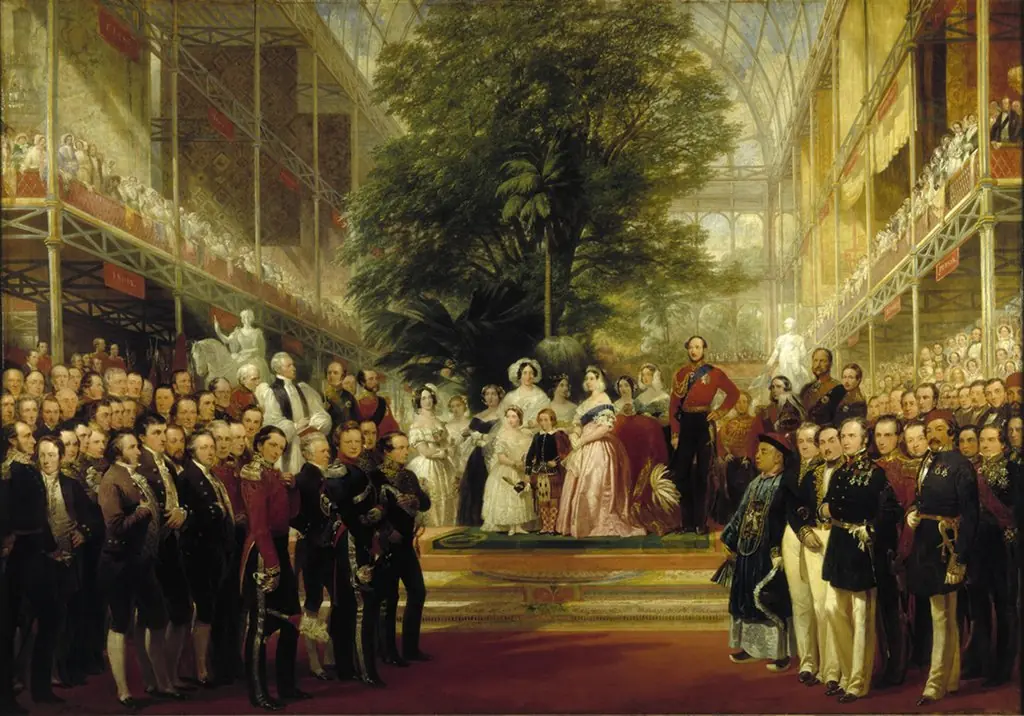 The Opening of the Great Exhibition by Queen Victoria on 1 May 1851
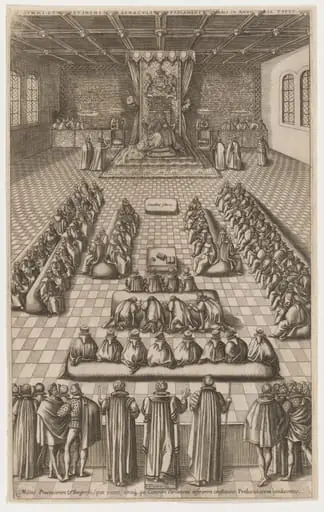 Queen Elizabeth in Parliament
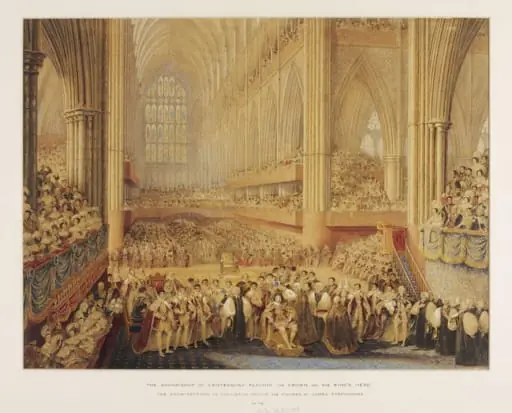 Topographical drawing
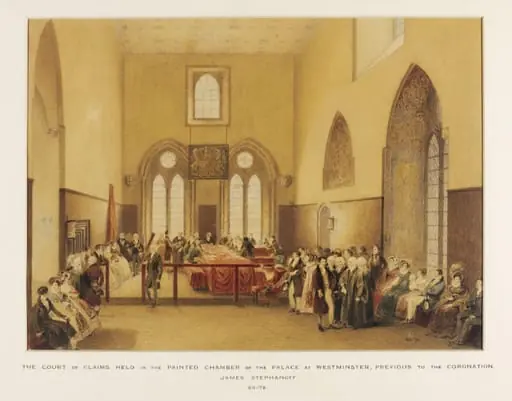 Untitled
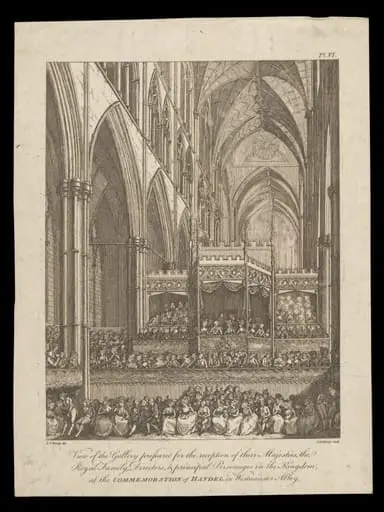 H Beard Print Collection
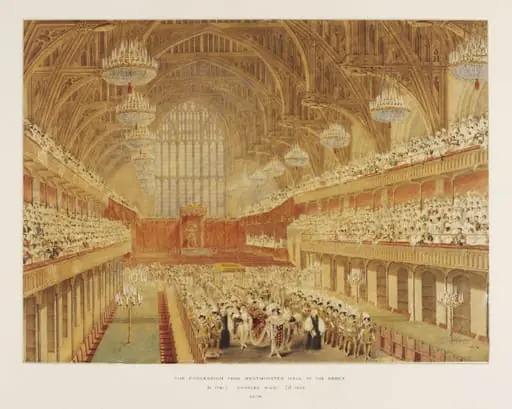 Untitled
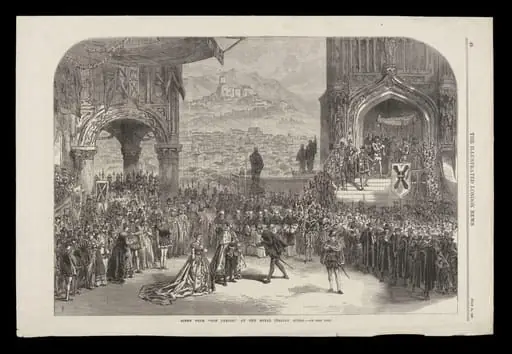 H Beard Print Collection
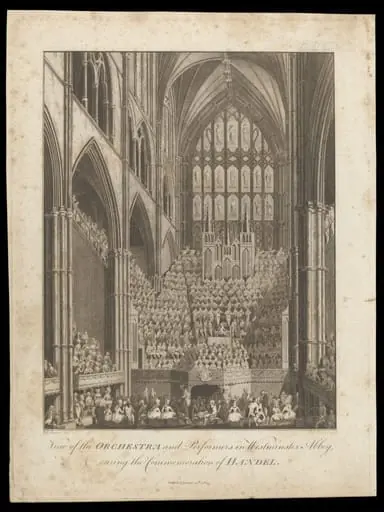 H Beard Print Collection
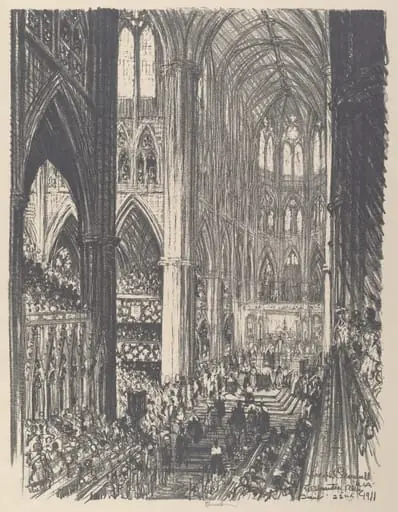 Coronation of King George V and Queen Mary in Westminster Abbey
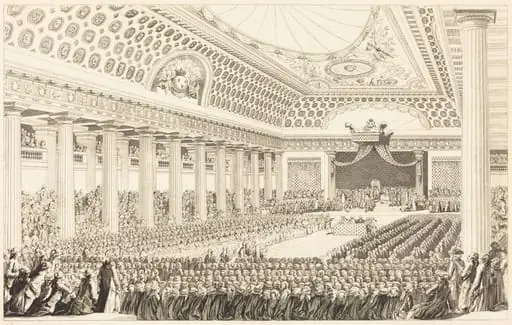 Ouverture des Etats-Généraux à Versailles, le 5 mars 1789
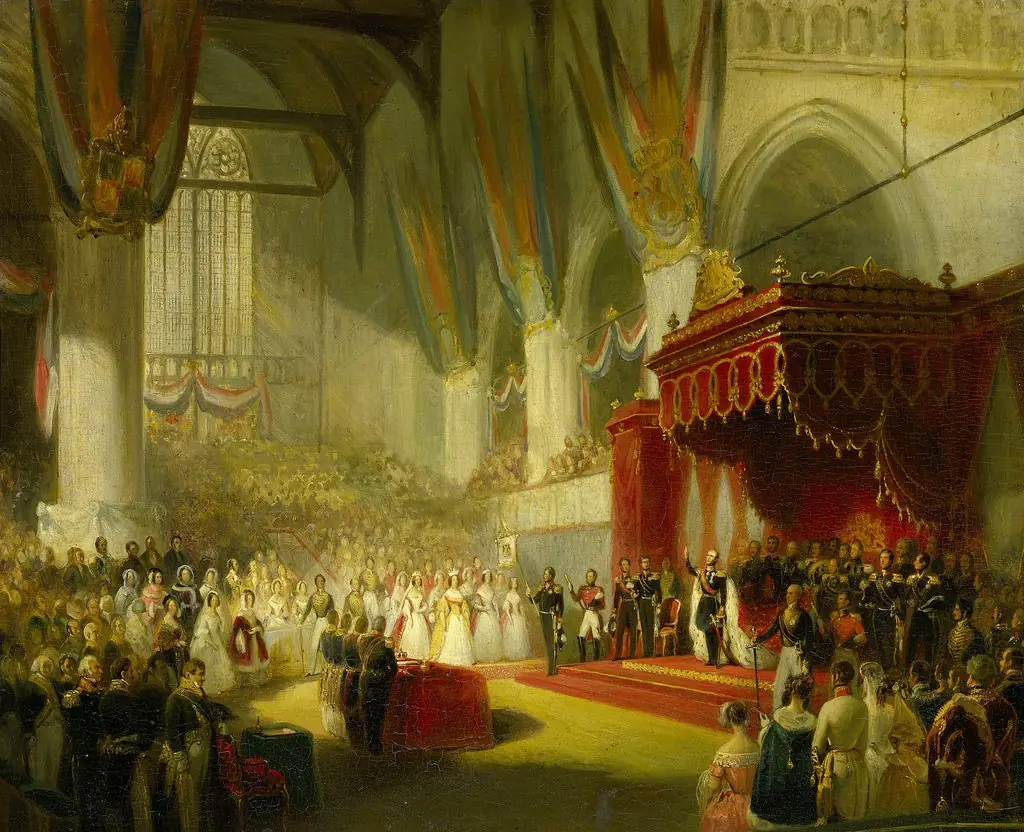 The Inauguration of King William II in the Nieuwe Kerk in Amsterdam on 28 November 1840
![Her Majesty Leaving Buckingham Palace, June 28, 1838 [left half], by British 19th Century](https://artifactworldgallery.com/img/british-19th-century--her-majesty-leaving-buckingham-palace-june-28-1838-left-half--89605c7062182303-w320.webp) Her Majesty Leaving Buckingham Palace, June 28, 1838 [left half]
Her Majesty Leaving Buckingham Palace, June 28, 1838 [left half]